I have been thinking about making a full suspension mid drive e-bike lately. Has anyone built one or have opinions on what the anti-squat should be given they have a lot more chain tension going on?
I too have been thinking about this and have been planning some build options. My ideal would be to use a Pinion MGU or an intra drive GD8 but those are unobtainable in the USA. I am leaning towards Bosch as of now. Chris at VPL (Chris@vpl.bike) has been super helpful and if you reach out to him, he can get you set up with all the CAD and documentation you need to plan out your build if you go Bosch.
I’ve seen a lot of Mid Drive full suspension E-bikes with the anti squat ranging from 100% to 120%. I’m guessing you’ve spent time in Linkage to work things out, but the anti squat is highly dependent on your center of gravity, so I’d make sure that you’ve got that accurate. (unsolicited advice, but I have made that mistake before)
Thats handy, thanks for the info. Yeah I found out about the CG thing from one of PVD’s blogs a while ago. Though I should probably measure where it is again because my bike riding position has changed a bit over the iterations.
I am probably going to be using a Bafang motor, I have designed a laser cut motor housing for that. I heard from some folks in the industry that Pinion don’t want to sell the MGU outside the EU til they have ironed out all the kinks, but that would be the dream motor for me I think.
@Pi_bikes I realized now that in my excitement to talk motor selection, I didn’t even address the question you were asking. Sorry about that. My uneducated opinion on e-bike anti squat is less-than-average is probably better. My reasoning is more anti squat = more efficiency but less traction (usually). Since the motor is doing most of the work, I will take the traction, so my current design is sitting at 85-95% for the climbing gears. But I haven’t tested this so we shall see.
2 Likes
Disclaimer: I have never ridden a full suspension e-mtb for longer than a few moments, let alone anywhere near “real” offroad stuff…
But that doesn’t stop me from thinking about the question and a possible approach 
On an acoustic bike, the variation of pedaling torque is quite severe. On a single crank arm, it can for example vary between +40 and -10 Nm when the pedal is not completely unloaded. Of course, when you overlay R/L sides, then it becomes less in total but there is still quite a lot of variation.
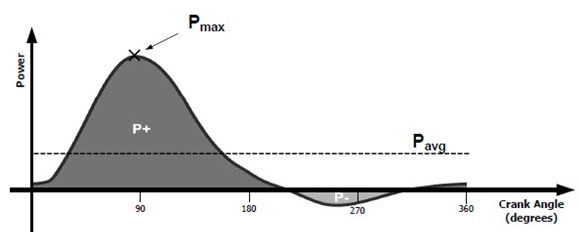
Now when you add a constant 80-100Nm from the motor to that, the percentage of variation will be less, but the effect the more constant power has will probably be different.
I assume that on a bike with a very low antisquat number, the dominant effect from only pedaling will be the dreaded pedal bob, while it will more or less permanently compress the suspension if motor power plays the biggest role.
So I guess, the goal for deciding on how much AS you want must be different than on an acoustic bike, because the cause and effect it has on the suspension should be different.
2 Likes
Thats an interesting thought. I guess it means whatever you do the suspension will get stiffer under pedalling. If it squats you progress to a higher spring rate, but if you have a bunch of antisquat the chain tension will cause the rear end to firm up. so I guess it may be a question of how you want the bike to sit in the travel as much as anything
1 Like