Those sizes you list that are close to 28x19 are made from 24.0 mm round tube. So they’re interchangeable in the sense that you can make them fit and work well, with a little manipulation sometimes needed (though the fork factories just hammer ‘em in!)
But an oval made for 25.4 mm tube is absolutely not interchangeable. Of course you wouldn’t even try putting the bigger blade in the smaller socket since that’s an obvious no-go no matter how big your hammer is. Putting the smaller blade in the bigger socket is something I can imagine a beginner trying, but neither shimming nor blacksmithing is likely to make a safe fork.
Well, that’s a maybe on the shimming. I actually did it once, for a very small and light rider who wanted “as light as possible”. I used 22.2 chainstays as fork blades, ovalized and shimmed to fit a 28x19 crown. I brass-brazed the shims to the blades, then silver brazed those subassemblies to the crown. The shims were longer than the crown sockets, so they looked like another lug shoreline maybe a cm down from the lug edge, for strain relief.
I don’t think I heard any report from the rider, but I probably would have heard about it, if it broke. Smaller wheel (skinny-tire 650c) means shorter blades, which helps too.
Any attempt to braze both the blades and shim to the crown in one heat cycle would make me nervous. Specifically, how you would know you got full penetration of braze on both sides of the shim (the blade side and the crown side)? In theory it could work, but how would you really know? Without destructive testing that is.
That was my impression too, that shims are technically a solution, but a rather complicated and risky one. Well thanks for confirming, I’ll see if I can get a good result from ovalizing a 1”, otherwise I’ll just choose a different crown
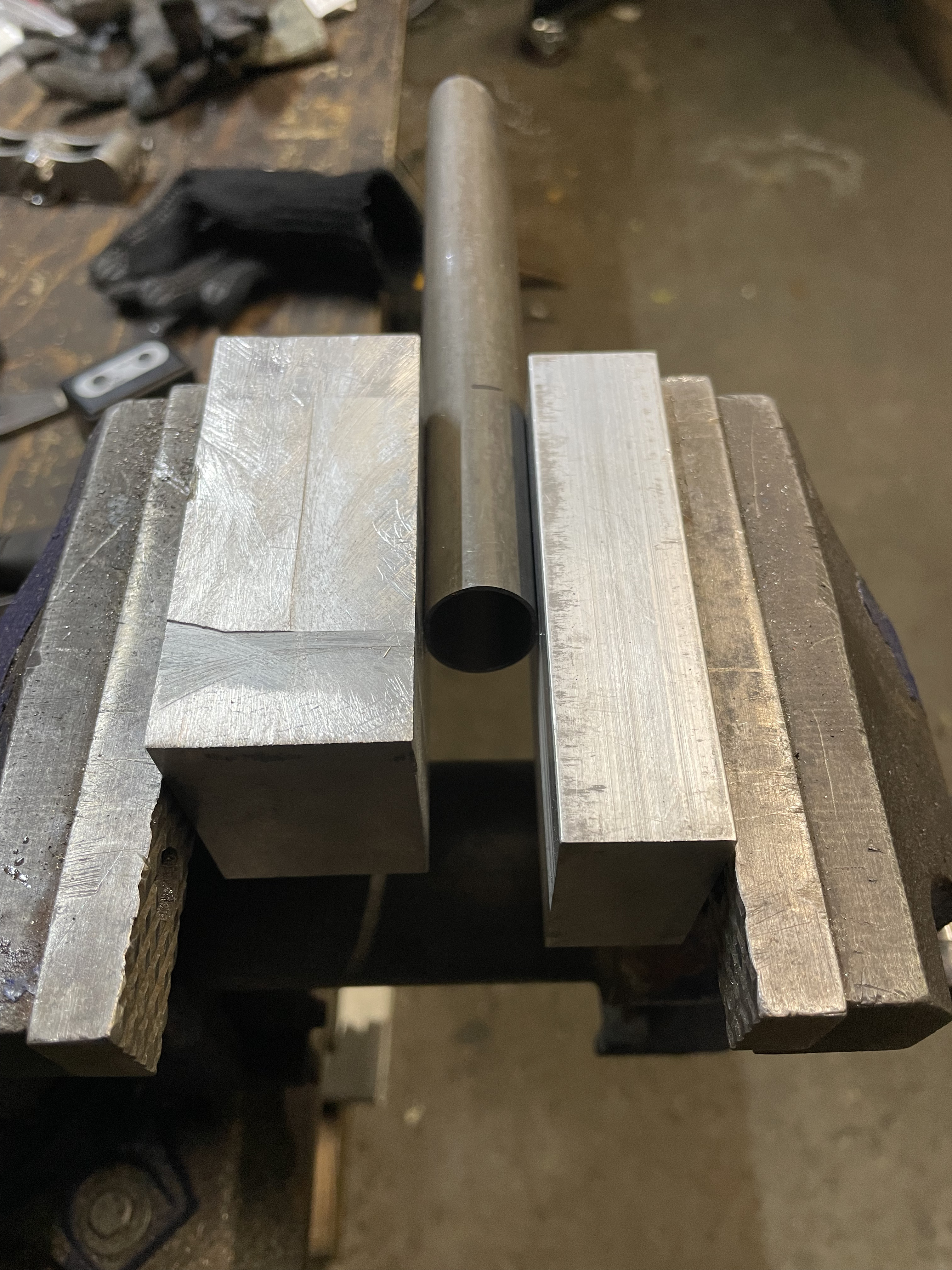
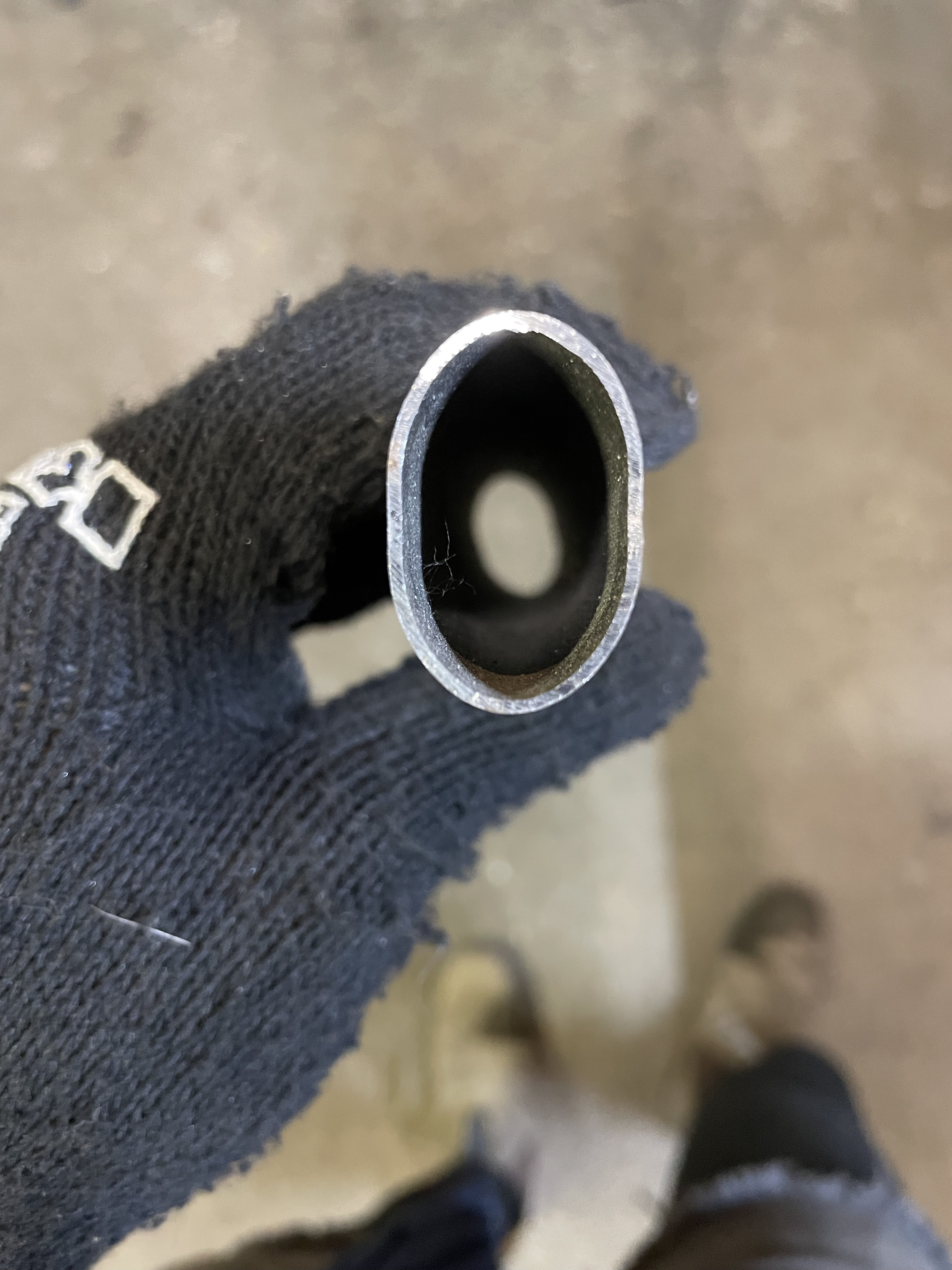
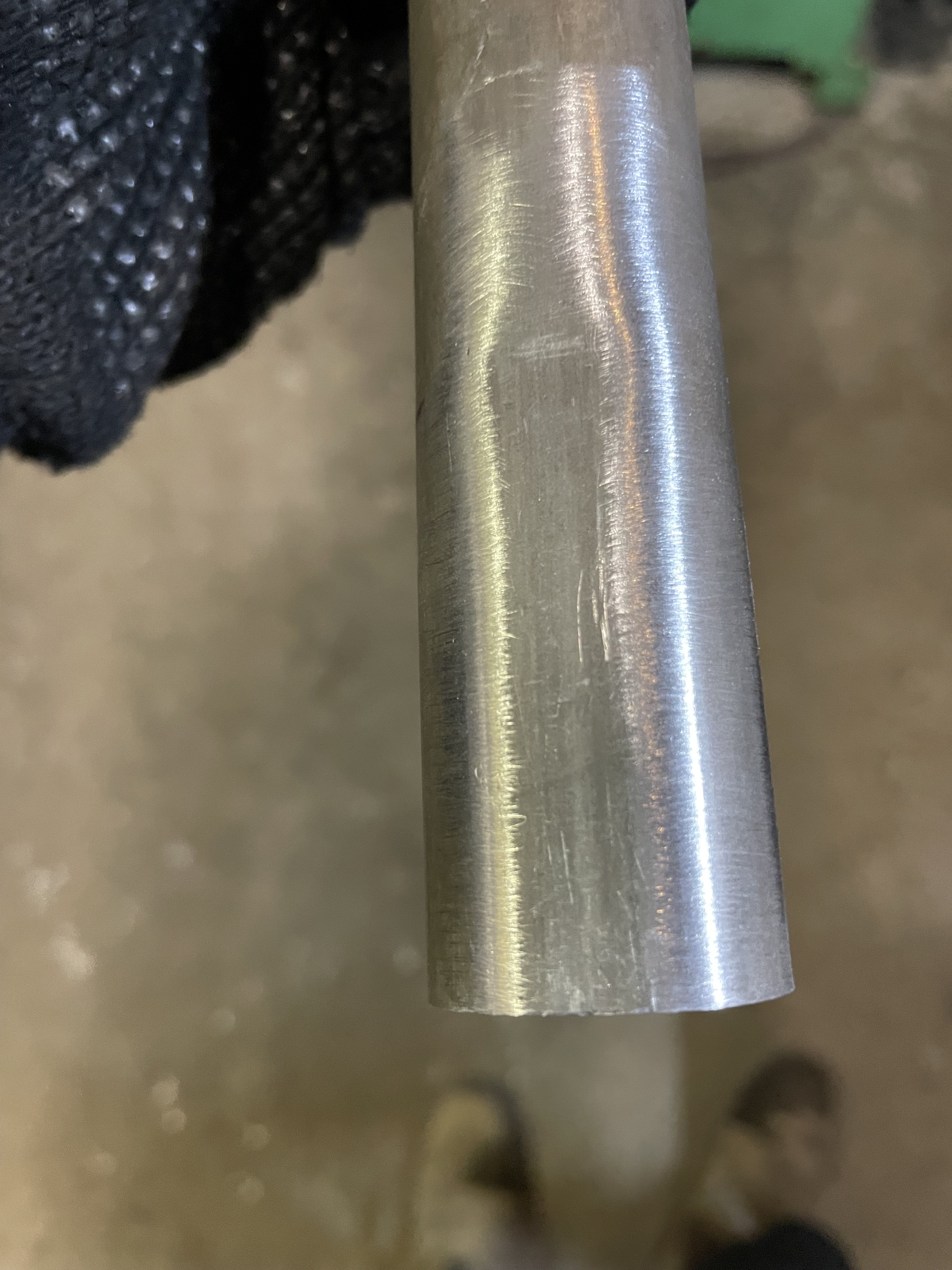
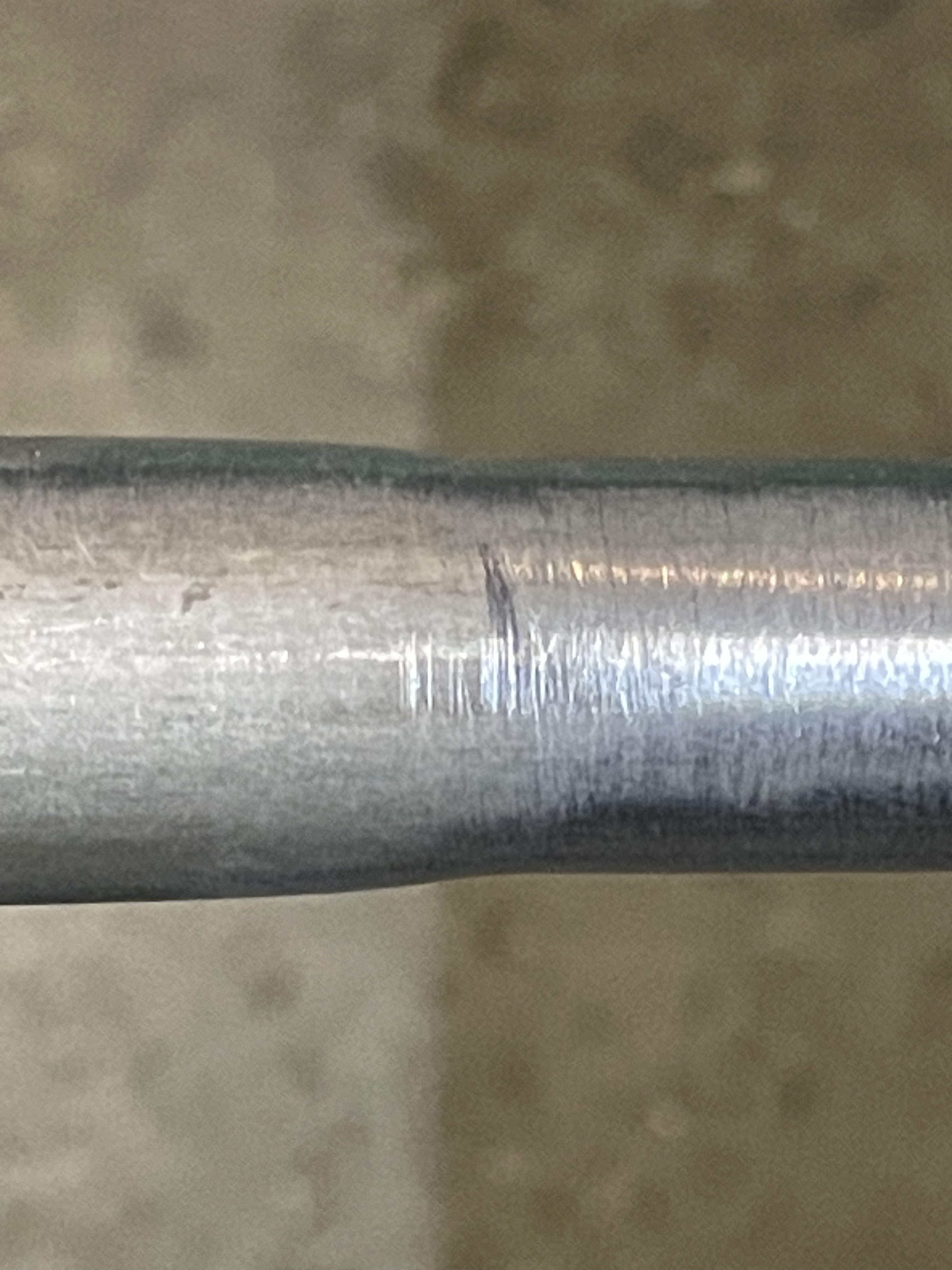
So I did a quick test with a small piece of 25.4x1mm tubing and two random blocks of aluminum, and I don’t think I’m quite satisfied with the result (see pictures below). I did manage to get the dimensions right and could fit the “blade” in the fork crown, it’s a pretty tight fit and needed a bit of hammering. On the longer side of the oval the tube caved in a little, but didn’t buckle (pic #2). It was clear when quickly sanding the mill scale with sand paper, as you can see some mill scale left in the middle of the oval (pic #3). Then still on this side of the tube, the transition from oval to round is pretty abrupt (pic #3 and #4). Again it doesn’t look like it buckled, but there isn’t really any taper per say.
My questions are:
Would you consider these results safe to use? I’m worried the sharp “taper” might create a stress riser and eventually cause failure.
Any simple tricks or methods that could improve the result? Would Sklar’s hinge method help with the taper?
I’m entirely open to go a different path because so far I’m not particularly pleased with this approach, but my problem lies in fork crown availability. Like I mentioned in previous posts I’m trying to keep the cost down for my first build, and the only other two options I found are the Pacenti MTB crown and Crust Evasion crown. The Crust is much wider than for my needs, and I like the Pacenti but I already have it on one of my bike, and plan on using it for another fork, so I’d like to switch it up a bit. Any other options out there for 1-1/8” crowns with enough clearance for 26x2.2” with fenders? Would 60mm blade-to-blade crown be enough?
It would probably be fine. That doesn’t look like too much of a stress riser. People put way worse dimples in chainstays (although those are backed up by seat stays and I believe they do sometimes fail at the dimples). I suppose you could fill it in with a bit of braze and then sand it into a nice smooth shape. Something to experiment with perhaps anyway.