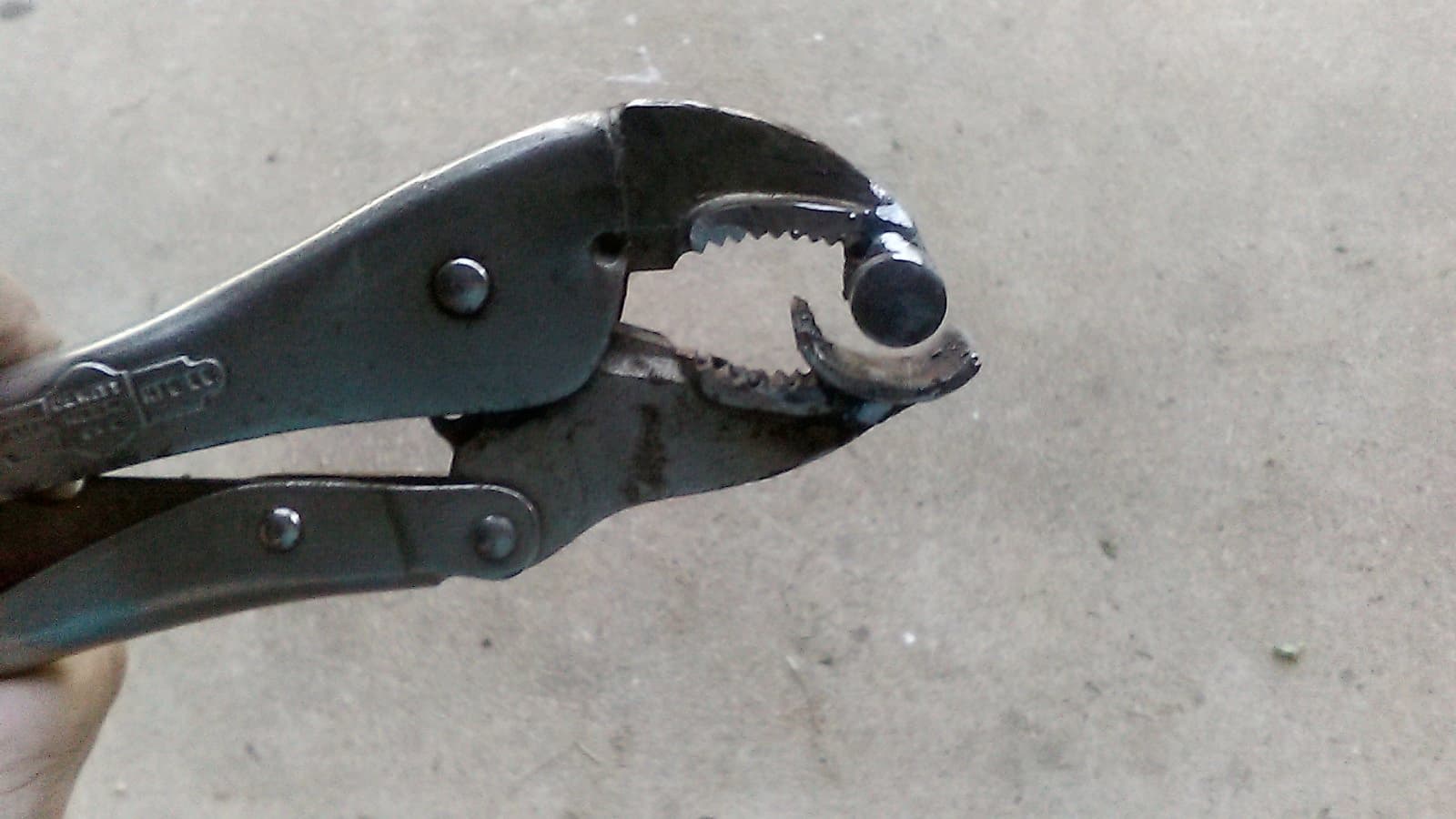
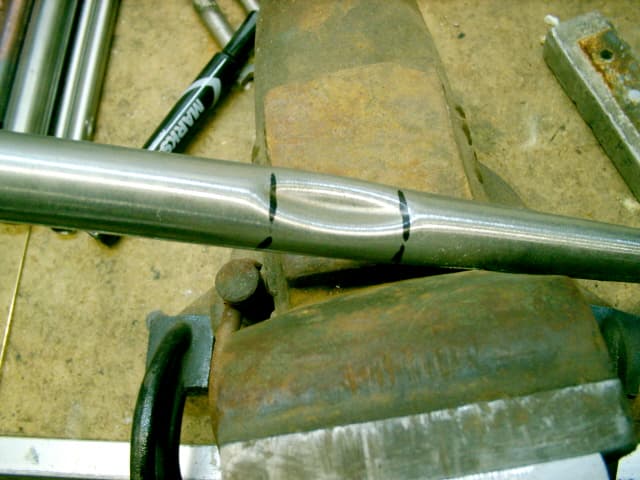
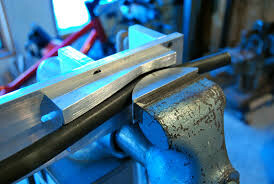
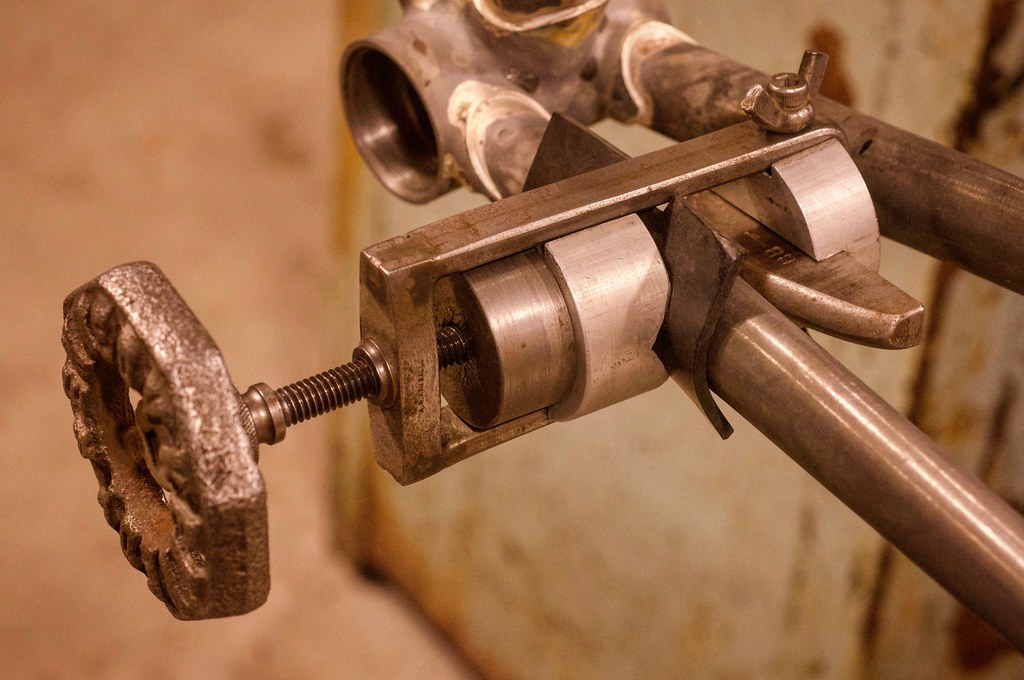
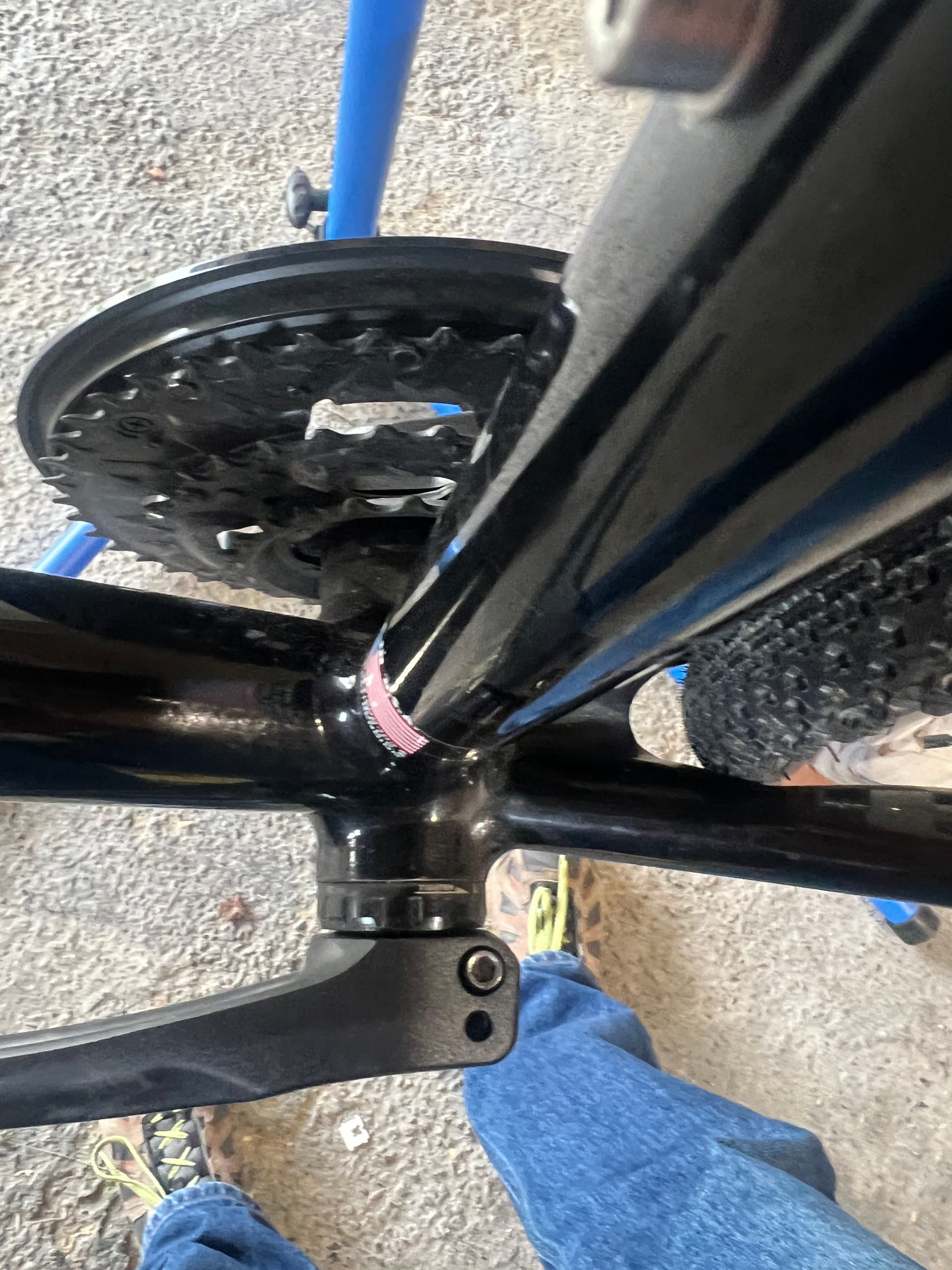
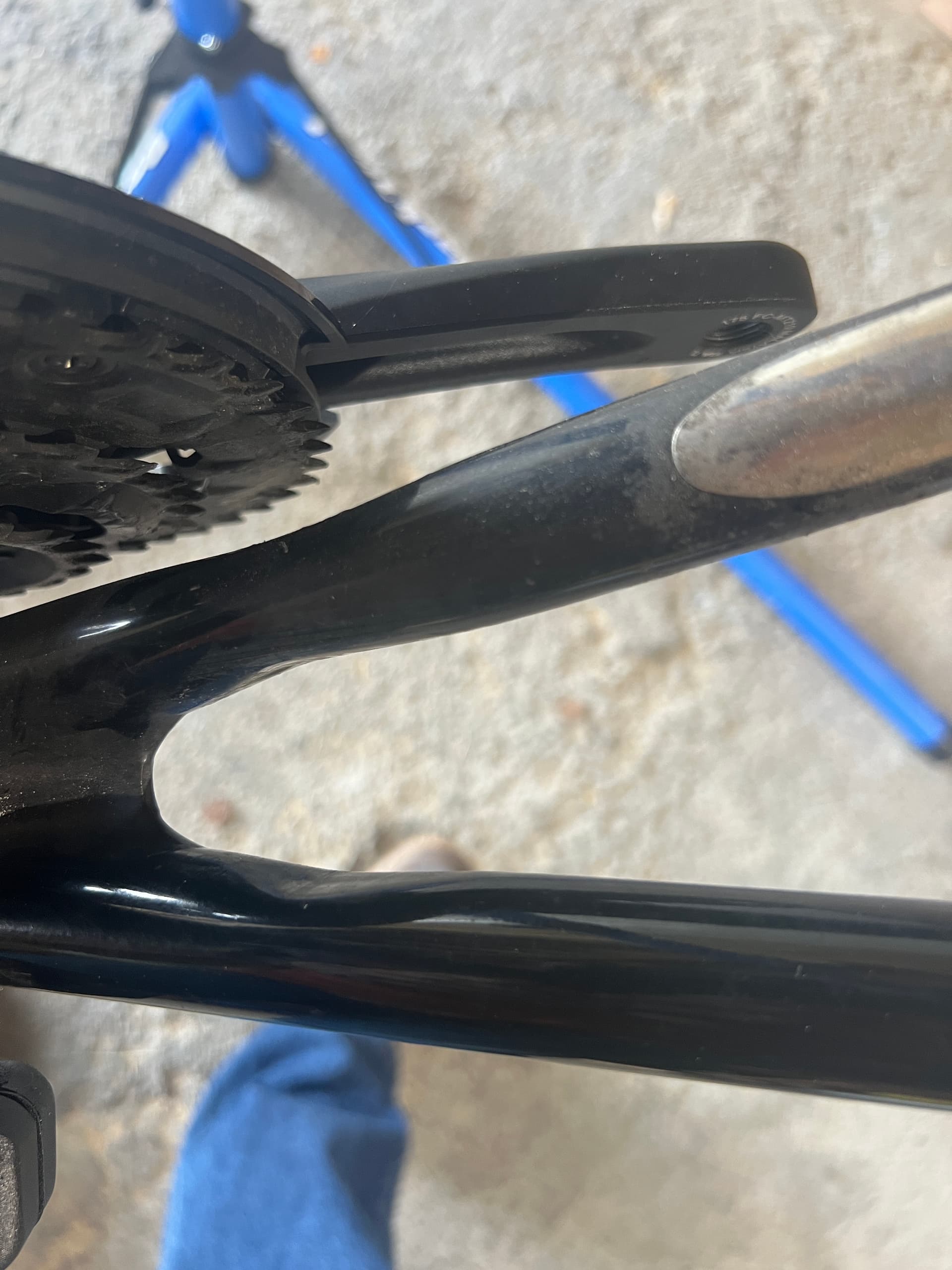
Also - there seem to be two schools of thought - making a thin dent like
… or making a bigger impression like
Curious to know what works well for people.
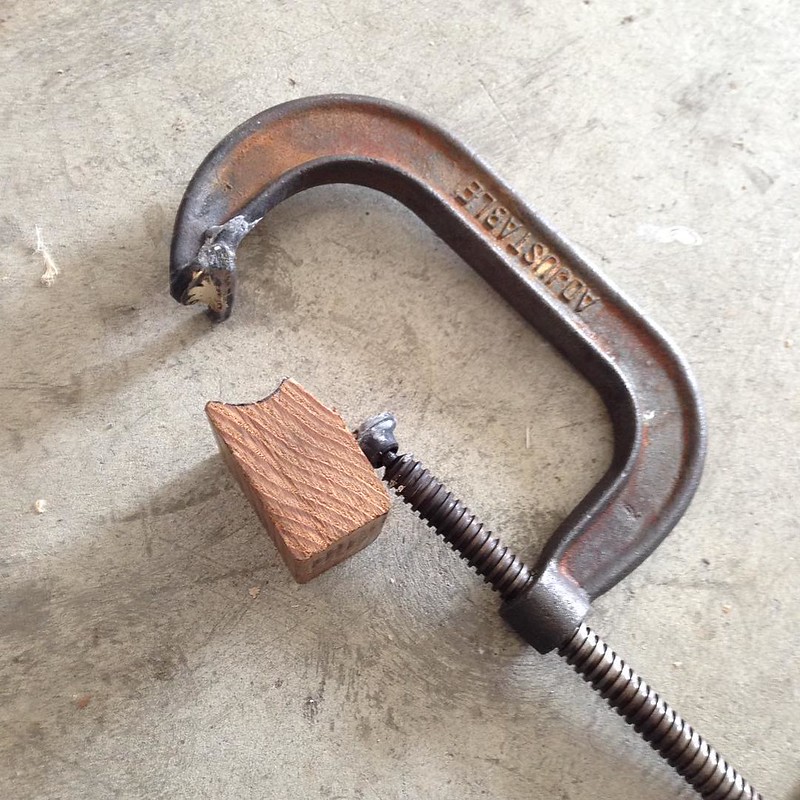
Just to re-state, I’m looking to make a tool for dimpling stays on already-built frames. I have a great tool for dimpling before the chainstays are stuck on.
With the c-clamp one, how hard is it to turn the screw? Did you add an extra long lever or anything?
One problem with the Vise-grip one I used is that the non-dimple side still left a small impression on the tube. The wood block design seems better in that regard - you can make or use a different block depending on the shape of the outside of the chainstays.
On the few frames I’ve squished, it wasn’t that hard to turn the screw – I didn’t need a cheater bar or anything like that. Though I suppose it depends on the wall thickness of the particular chainstays.
Floppywonka, I know, that’s what I am thinking but strong alloy would allow for a little bit of bending wouldn’t it? Klein’s special “ZR9000” alloy, whatever that is, has Zirconium in it which would make it malleable, no? Might be very thin though and proximity to the gusset is almost certainly too close.
Most of that ZR9000 stuff is marketing speak. Aluminum does not do well if pushed past it’s yield point. I’d see what others say here who have experience with aluminum.
my understanding, and i could be wrong here, is that aluminum frames are heat treated after they are welded to make them strong and stiff.
once heat treated they really don’t like being messed with and can crack easily if you’re trying to bend or dent them. it’s why repairing an aluminum frame that breaks is rarely worth it, because to do it correctly you’d need to heat treat the frame again after doing any welding repair.
again, i may be wrong, i don’t have much interest in playing with aluminum so i never really put much time into learning about it. i didn’t respond to you sooner because i was hoping someone who actually knew what they’re talking about would chime in haha.
Thanks both. I hear you. This is very sloppy research on my part, but I saw a YouTube video- some experiments done annealing and bending what looked like hexagonal shaped tubing. They annealed the tube, heated it and let it cool down once, did a very extreme bend. Then did it again to demonstrate the tube breaking but it didn’t break the second time. So I mean, even though the rule is aluminum only allows for deformation once or twice w heat treatment, we’re talking about 3-4 mm indent at the edge of an existing indent so the tube’s fibers are not being stressed in a new direction. If anything it’s a continuation of the first indent? (This is probably not true in the cases where there is a crease along the edge of dimple on stays, which is prob more susceptible to damage after it has set? But this indent is soft. I don’t know.
The stays are tensile forces anyway right. Except for turns of course, and that might be the crux as far as tire width goes, because the wheel does bend a little in each direction on turns, as someone may have already pointed out earlier. I’d be eager to hear from anyone that has experience with aluminum. Thanks again.
Klein Quantum has collector value. Normally I say take the risk if you find mind breaking the frame, but this is one that I don’t think deserves to be broken.
Klein did make frames with wider tire clearance, maybe look for one of those? Klein Performance and Klein Navigator. I think the latter got relabeled as the Trek 540 at some point.