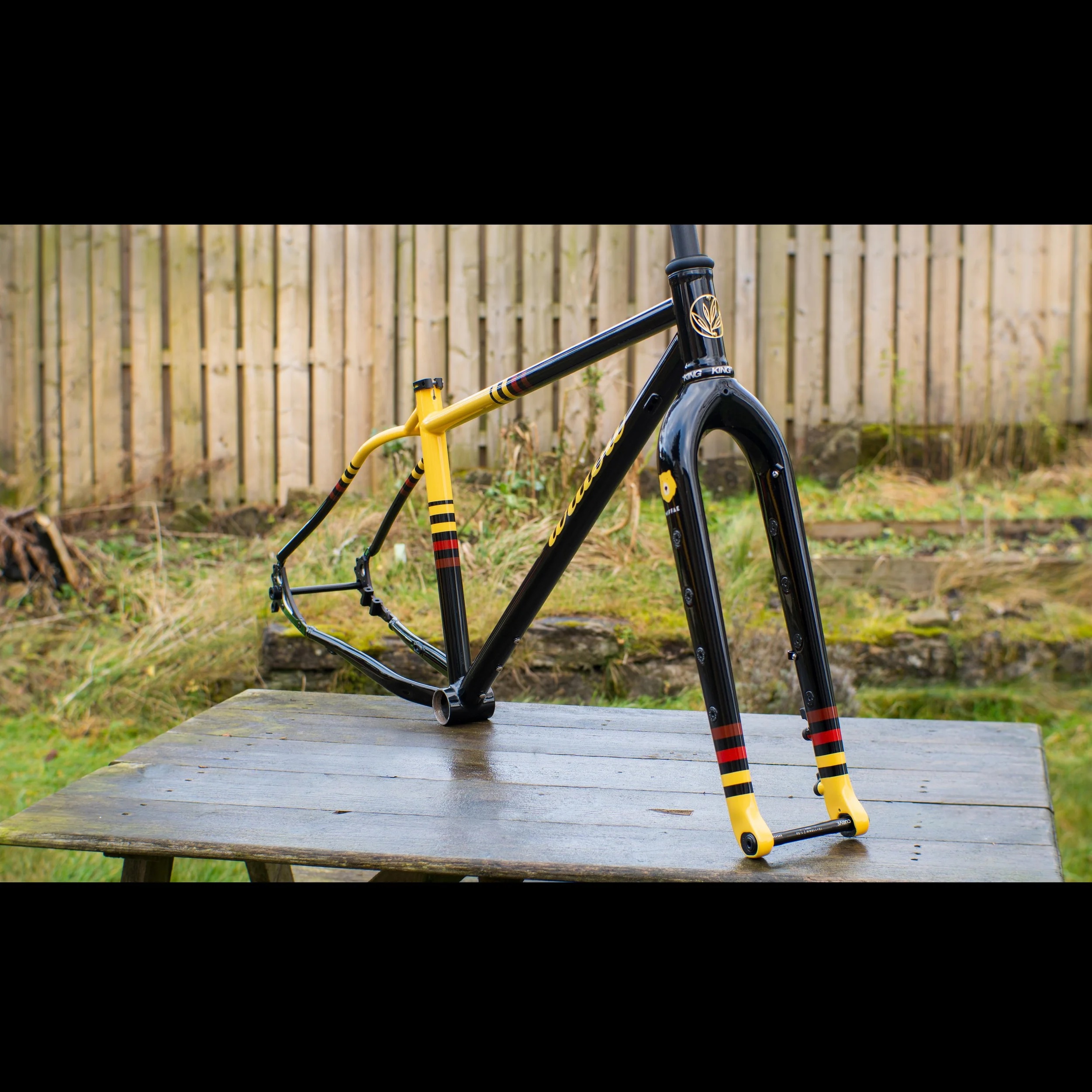
Making this post to introduce the various forks, handlebars and other small accessories available from Curve Cycling, as I think it’s probably not very well known that we offer special pricing to support independent framebuilders and small to medium brands who may rely on third parties for forks etc.
Full disclosure: My full-time job is as a product developer at Curve, where I do all the design and CAD work (amongst other things). I’ve been hesitating to make a post like this, as I’m very conscious of the risk it would be seen as self-promotion or advertising. Hence, I recently reached out to @Daniel_Y and got the go-ahead to post this.
In my obviously biased opinion, we have some really good forks and handlebars in our lineup, some with geo specs and features that set them apart from the usual suspects.
I won’t post pricing here since it can change unexpectedly. I know many of you here are located in the US, so tariffs and import costs can be an issue. Hopefully that changes soon!
Just get in touch via PM here, or ideally via the Curve contact form, if you have any questions or want to explore placing an order.
I have not included any photos in this post at this stage, as it’s already taken me far too long to type up, but I will add some later. I’ve put in links to each product page where you can see all the details incl. photos.
Forks:
We’ve used our longstanding “Race | Ride | Seek” slogan to categorise the forks, and the (approximate) length of each model is also indicated in the name.
Race = No cargo mounts | Ride = Mainly gravel | Seek = Offroad & bikepacking
Race 370
The simplest fork in our lineup. It’s a traditional road disc fork.
SPECS NOTES Length: 370.7mm [Axle to crown] Offset: 45mm Steerer: Tapered 1 1/18" - 1.5", 300mm long Max 30mm spacer limit Brake: Flat Mount, 140/160mm native Cables: Semi-internal Hub Spec: 12 × 100mm thru-axle Axle Spec: M12 × 1.5p, 125mm length Tyre Clearance: 700c × 33mm Mounting Points: None Weight: ~415g Kit Includes: Steerer Expander w. topcap, Axle Other: 120kg system weight rating
Race 380 - Currently in production - Release TBC
Our latest fork that’s due to be available to order in the coming months. Designed as a “Road+” fork for our new generation road/allroad endurance model. One staff member is using it on his CX bike. Option to run fully internal or semi-internal brake routing. The cable port on the shoulder of the fork leg has a cover when not used as a cable exit.
SPECS NOTES Length: 380mm Offset: 47mm Steerer: Tapered 1 1/18" - 1.5", 370mm long 45° integrated crown race Max 30mm spacer limit Brake: Flat Mount, 160/180mm native Cables: Semi-internal, full internal Hub Spec: 12 × 100mm thru-axle Axle Spec: M12 × 1.5p, 117mm length 90° conical head Tyre Clearance: 700c × 40mm w. fender, will clear >42mm without a fender. Mounting Points: Fender mounts on leg and under crown Under-crown mount can be used for a light as well (light mount in the works) Weight: ~415g Kit Includes: Steerer Expander w. topcap, Axle, cable port plugs Other: 120kg system weight rating 3D printed Ti entry port for the brake hose. Internal dynamo routing compatible
Ride 415 VGM
The second-generation Ride 415 fork that we use for our gravel and 'Gravel-Plus" models. We re-tooled with a new mold to incorporate the “VGM” cargo mount system. And while we were at it, we also changed the Flat Mount spec to allow larger rotors. VGM stands for “Very Good Mounts” and was developed so we could finally get rid of those pesky rivnuts that always seem to cause problems. These mounts consist of two pieces that pierce both sides of the fork legs for extra support. The mounts are bonded to the fork, and the heads have a larger surface area than a rivnut. All our cargo-capable forks will use this system from now on.
Tuneable offset via flip-chips. All cable routing is external.
SPECS NOTES Length: 415mm [On-Axis] Offset: 46mm / 52mm Steerer: Tapered 1 1/18" - 1.5", 350mm long Max 30mm spacer limit Brake: Flat Mount, 160/180mm native Cables: External. Brake & dynamo cable clips included Hub Spec: 12 × 100mm thru-axle Can accept a 15mm axle hub with reduction sleeve Axle Spec: M12 × 1.5p, 125mm length Tyre Clearance: 29" × 2.4" Mounting Points: 3 x VGM mounts / leg, thru-crown ‘tunnel’ (not threaded) for M5 bolt to accept a rack or light Weight: ~554g Cargo Capacity: 8kg/leg (across 3 mounts) Kit Includes: Steerer Expander w. topcap, Axle, Flip-Chips, Cable Clips Other: 120kg system weight rating The inside of the VGM mounts have an M4 thread - can be used for fender struts Also available in a ‘Race’ version with no cargo mounts, semi-internal routing and 140/160mm Flat Mount Tech Links: BOM Dimensions Flip-Chip Manual
Seek 430 PM
The first generation of the fork we developed for our GMX+ platform. Non-suspension corrected off-road touring fork for up to 29" x 3.0" tyres.Currently on run-out pricing, and limited numbers are available - we may not produce the PM version of this fork again.
SPECS NOTES Length: 430mm [On-Axis] Offset: 55mm Steerer: Tapered 1 1/18" - 1.5", 300mm long Max 30mm spacer limit Brake: Post Mount, 180mm native May not fit especially bulky calipers. Contact me for details, or check the product FAQ. Cables: External. Brake & dynamo cable clips included Hub Spec: 15 × 110mm thru-axle Axle Spec: M15 × 1.5p, 143mm length Tyre Clearance: 29" × 3.0" Mounting Points: 6 x mounts / leg Weight: ~619g Cargo Capacity: 3kg/leg (across 3 mounts) Kit Includes: Steerer Expander w. topcap, Axle, Cable Clips Other: 140kg system weight rating (120kg rider + bike & cargo) Tech Links: Dimensions
Seek 430 FM
The second generation of the fork we developed for our GMX+ platform. Non-suspension corrected off-road touring fork for up to 29" x 3.0" tyres. Same dimensions and overall design as the Post Mount version above, but using a new mold to incorporate the VGM system, a longer steerer, and with Flat Mount instead of Post Mount.
SPECS NOTES Length: 430mm [On-Axis] Offset: 55mm Steerer: Tapered 1 1/18" - 1.5", 350mm long Max 30mm spacer limit Brake: Flat Mount, 160/180mm native Cables: External. Brake & dynamo cable clips included Hub Spec: 15 × 110mm thru-axle Axle Spec: M15 × 1.5p, 143mm length Tyre Clearance: 29" × 3.0" Mounting Points: 4 x VGM mounts / leg Weight: ~646g Cargo Capacity: 8kg/leg (across 3 mounts) Kit Includes: Steerer Expander w. topcap, Axle, Cable Clips Other: 140kg system weight rating (120kg rider + bike & cargo) Tech Links: Dimensions
Seek 500
Rigid MTB / Bikepacking fork that’s suspension-corrected to replace a 120-130mm travel fork. Tuneable offset via flip-chips as well as Boost / Non-Boost compatible thanks to a movable Post Mount bracket and “Deboosterator Pads”. Features our VGM mounts and a crown thru-hole for rack mounting, which is unusual on this type of fork. All cable routing is external.
SPECS NOTES Length: 497mm [On-Axis] Offset: 44mm / 52mm Steerer: Tapered 1 1/18" - 1.5", 350mm long Max 30mm spacer limit Brake: Post Mount, 180mm native Removable PM Mount has two lateral positions Cables: External. Brake & dynamo cable clips included Hub Spec: 15 × 110mm 15 × 100 thru-axle when using the optional “Deboosterator pads” Axle Spec: M15 × 1.5p, 143mm length Tyre Clearance: 29" × 3.0" Mounting Points: 4 x VGM mounts / leg, thru-crown ‘tunnel’ (not threaded) for M5 bolt to accept a rack or light Weight: ~740g Cargo Capacity: 8kg/leg (across 3 mounts) Kit Includes: Steerer Expander w. topcap, Axle, Flip-Chips, Cable Clips Other: 120kg system weight rating (rider, bike & cargo) Tech Links: BOM Dimensions Flip-Chip Manual & Flip-Chip Animation
Handlebars:
Walmer Bar
Alloy gravel/bikepacking handlebar. The wider sizes (50cm & up) are specifically intended for our GMX+ off-road touring model (or similar). Ridiculous width for a drop bar, which works surprisingly well on the right bike.
The narrower sizes also work well for road/allroad if you don’t mind the flare.
SPECS NOTES Width at Hoods: 40cm / 43cm / 46cm / 50cm / 55cm / 60cm Reach: 65mm 60mm (sizes 55 & 60) Drop: 110mm Flare: 29° Sweep: 7° Aerobar Compatible: Yes Wired Di2 Compatible: Yes Clamping Area: 120-220mm depending on overall width Weight: ~358g / 378g / 397g / 422g / 423g / 450g Other: Includes bar tape (made by Velo)
Carbon Walmer Bar
Carbon version of the Walmer handlebar. A little lighter. Slightly ‘aero’ tops for more comfort and compliance. Has an embedded Kevlar layer in clamping areas to reduce the risk of crush damage and catastrophic failure. Tested to the equivalent of XC MTB riding for a 120kg rider.
Also features a cable channel that eliminates the bump from the brake hoses when wrapping the bars.
The latest batch has been updated with internal routing compatibility.
SPECS NOTES Width at Hoods: 43cm / 46cm / 50cm Reach: 65mm 62.5mm (size 50) Drop: 108mm Flare: 30° Sweep: 7° Cable routing: External or Internal Aerobar Compatible: Yes Wired Di2 Compatible: Yes Clamping Area: 150mm (43cm), 180mm (46 & 50cm) Weight: ~304g / 316g / 334g Other: Includes bar tape (made by Velo)
Race Walmer Bar - Currently in production - Release TBC
Even lighter and even more aero version of the Walmer bar. Same overall drop shape, but with half the flare. The drops have recesses for blips. The recess can be filled with the included 3D printed insert before wrapping the bars for a more traditional grip feel.
The cable channel underneath the aero tops directs the cable back towards the steerer & under the stem for a nice and clean cable arrangement when running external cables.
Tested to the equivalent of gravel racing for a 120kg rider.We may at some point expand the size options to include a 38cm (maybe even 36cm) and a 42cm variant, depending on demand.
SPECS NOTES Width at Hoods: 40cm Reach: 65mm Drop: 108mm Flare: 14° Sweep: 5° Cable routing: External or Internal Aerobar Compatible: Yes Wired Di2 Compatible: Yes Clamping Area: 100mm Weight: ~220g Other: Includes bar tape (made by Velo) & Blip recess inserts
Other Parts
- Relaxle - 12 & 15mm Thru-axles developed for our own frames and forks, so sizes are limited. Features a 6mm allen key broach on either end with an M5 thread at the bottom for rack/fender mounting.
- Crown Race Mounts - Fits underneath the crown race on a 1.5" tapered steerer. GoPro or M6 fitment to attach a light, or a rack on forks with no crown thru-hole
- 3D printed front derailleur clamp - Stiff and minimal clamp. Available in Ø31.8 and Ø34.9mm sizes. Other sizes can be organised. A single M4 bolt to secure the clamp to the seattube. The bolt is tucked away nicely behind the derailleur, leaving a clean look.
- Flat Mount Adapter [+40mm] - Front Flat mount adapter to allow a fork with a 140/160mm FM interface to accept a 180mm rotor.
- 104BCD Spider for SRAM 8-bolt cranks - Designed and made this to be able to fit a Gates Sprocket on the latest SRAM MTB (T-Type) cranks. (~3mm offset with chainring mounted).