Not bad for a first effort! Much better if you use a self darkening hood and both hands. Rest one hand on the table or the work, and the gun hand on the first hand. Concentrate on holding the tip at a consistent distance.
If you do make a frame with this process I recommend doing some basic strength tests on your welds first. They can be surprisingly non-adhesive
I did learn to weld a bit in high school but that was a decade ago (wait wtf really? time flies wow) and back then I sucked at it.
I only did a little decent MIG welding at one occasion like 4 years ago at my previous job but I’ve forgotten basically everything. At least having done it a little in the past it should be a bit quicker to pick back up again.
And don’t you worry, there will be plenty of destructive testing!
It’s mainly practice. Everyone sucks at first. The big game changer for me was YouTube, especially the “welding tips and tricks” channel, especially important for TIG. The key is understanding what you’re doing wrong, and then practicing enough to not do it!
Ditto on what Guy said above. Just like when I TIG. Preparations and fitment is key despite what process you use. Don’t substitute by adding more filler for safety. If your weld looks like a pile of metal boogers and your two pieces are fused and assume its good to support a human being.
My post may be tongue in cheek for building a frame but I’m never trying to put my life or someone elses in danger by cutting corners. You can make a perfectly fine frame i believe from every welding pricess with the correct material. Fluxcore on actual frame tubing…oh heck no, or take my seamed tractor supply tubing frame on some double orange diamond trail. Use common sense.
At first thought I’d say eh it’s fine it’s just much thicker/heavier but when you think about it, bike tubing really is remarkably strong.
To match the tensile strength of the 0.8mm butt of a basic Reynolds 525 tube in yield strength with a standard S235 structural steel, you’d need a wall thickness of at least 2mm in theory!
Im trying to make it ride.
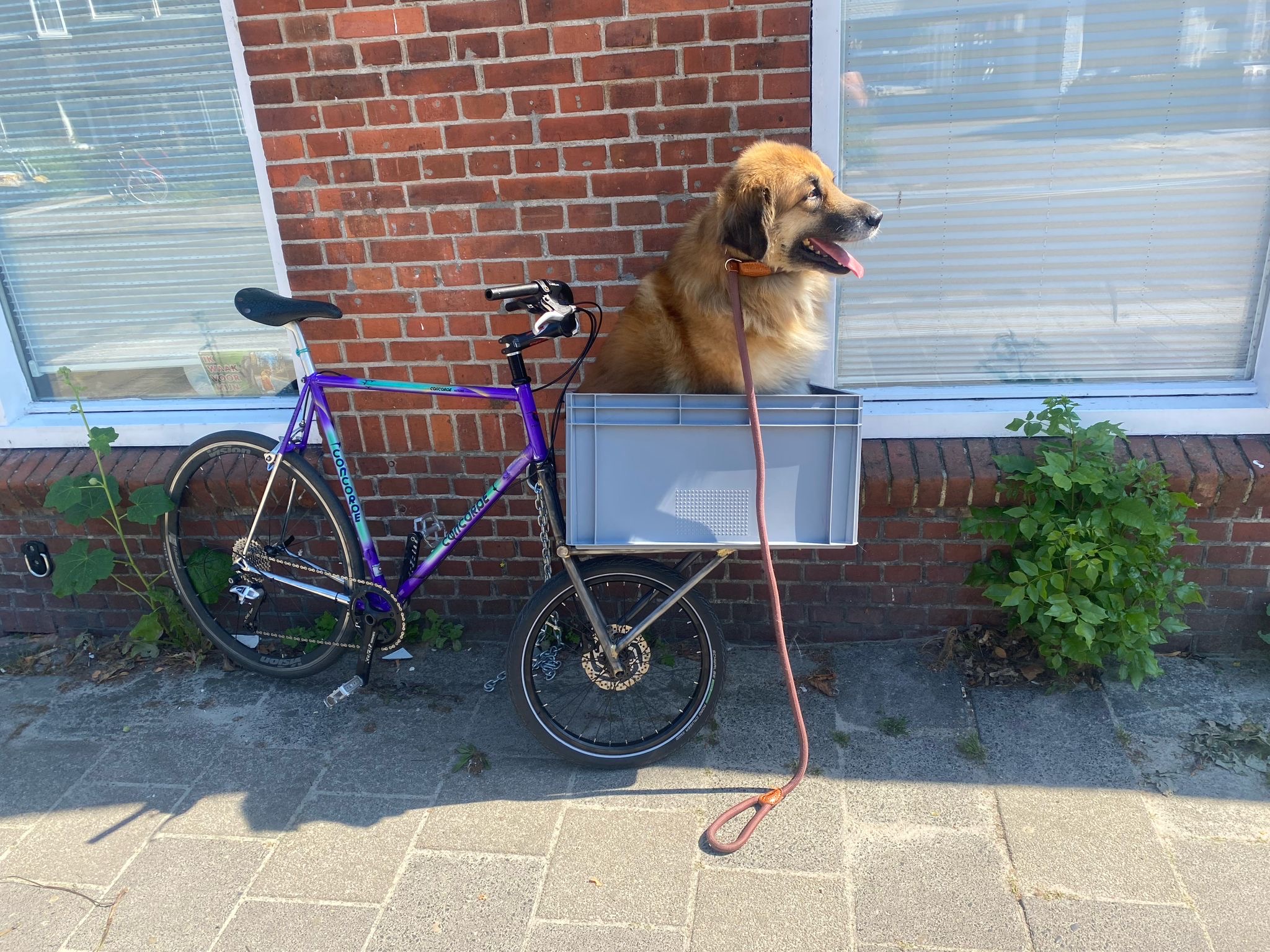
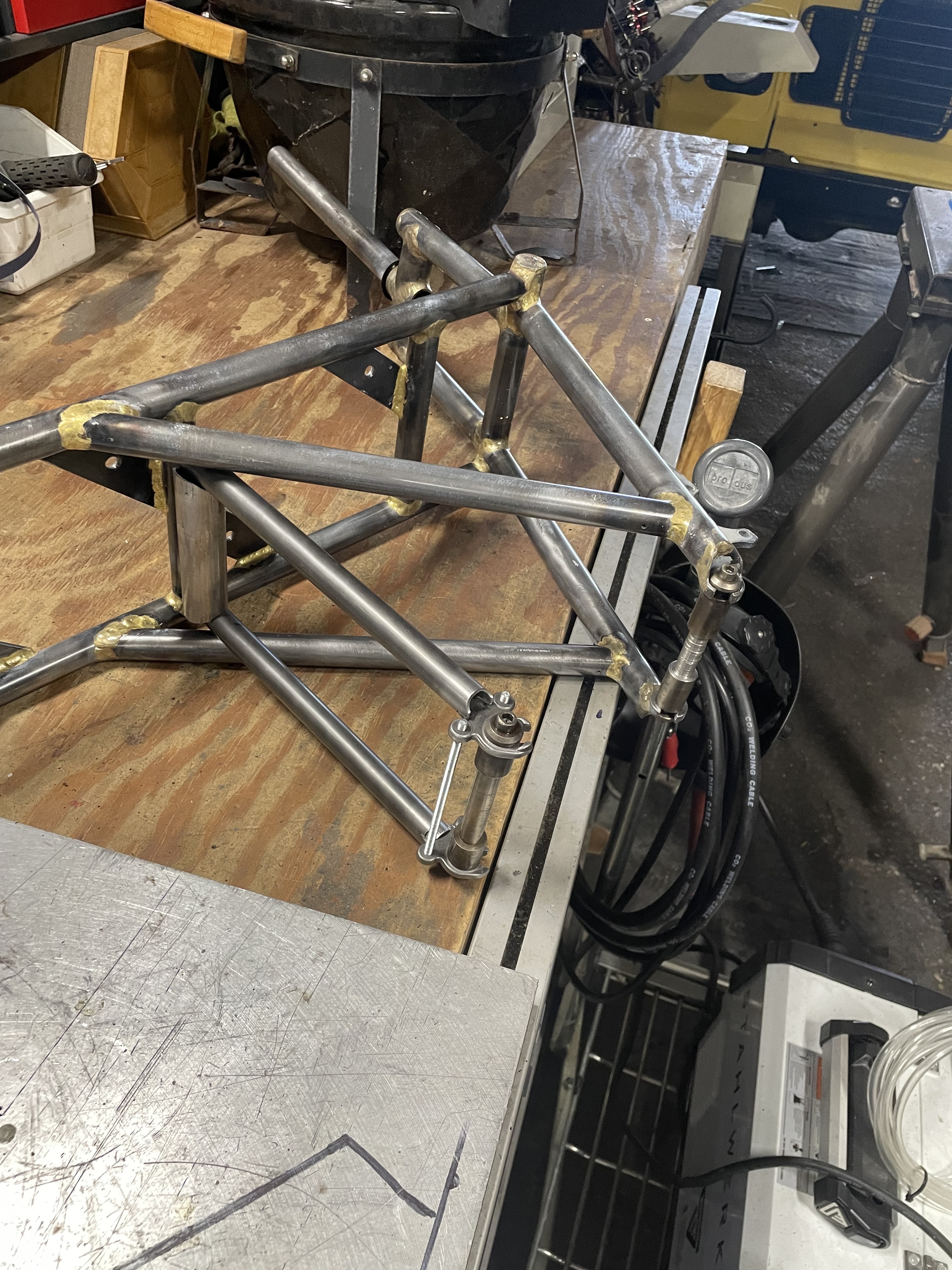
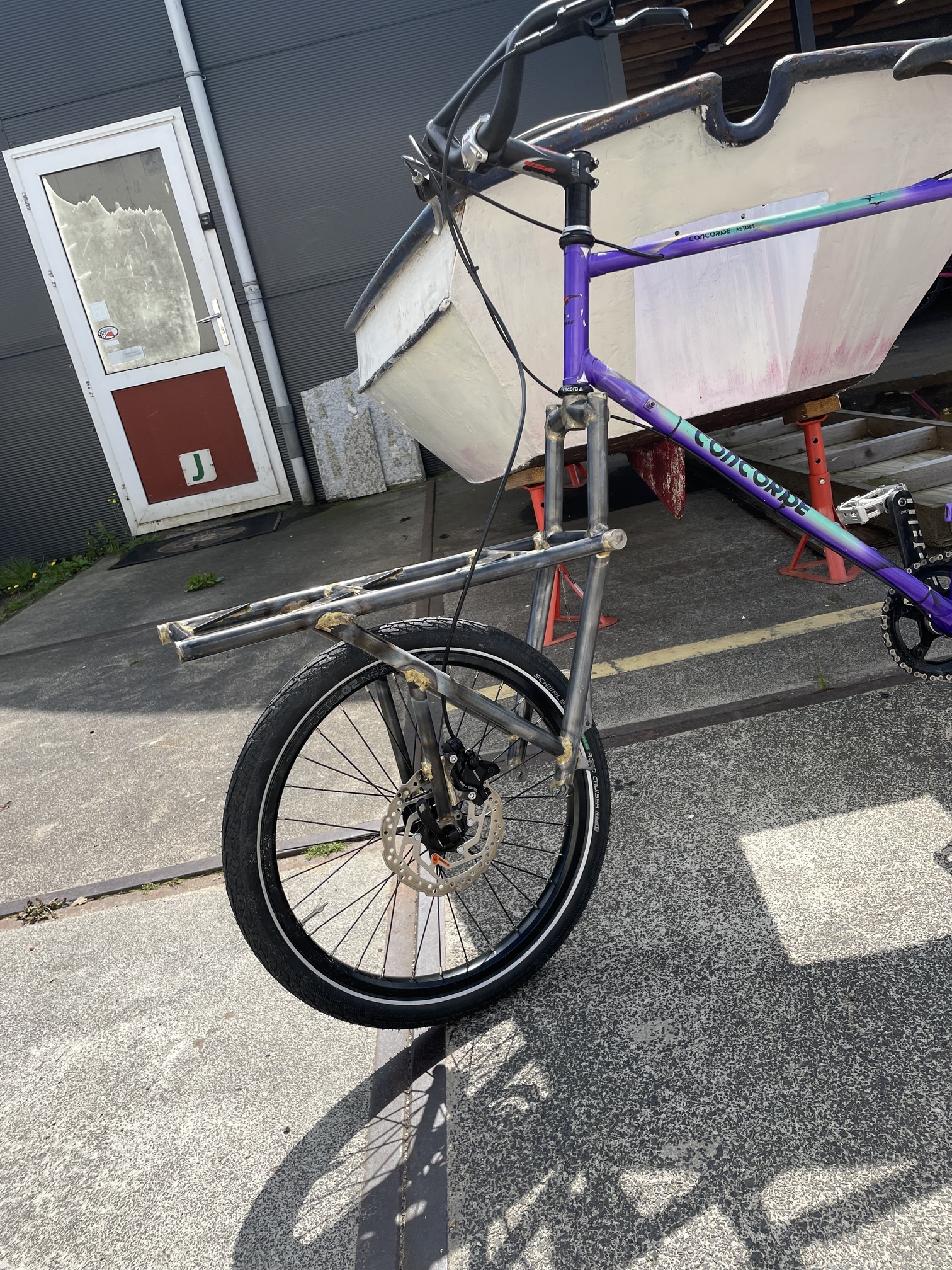
Build a cargofork to transport a big dog.
The bike rides fine without the dog, with dog it’s hard.
The solution we try now is, to move the axle more forward, it’s going to get a crazy high offset.
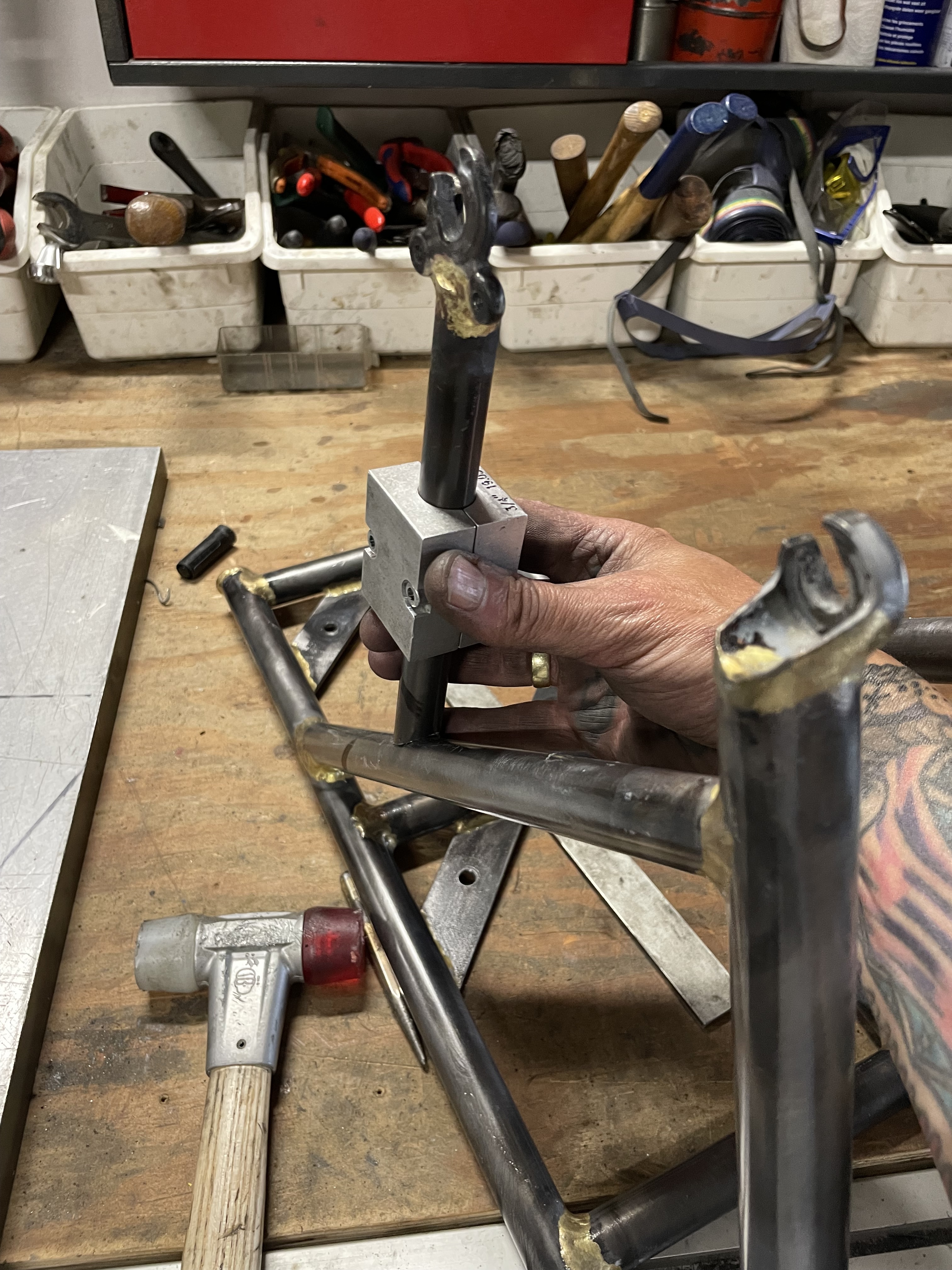
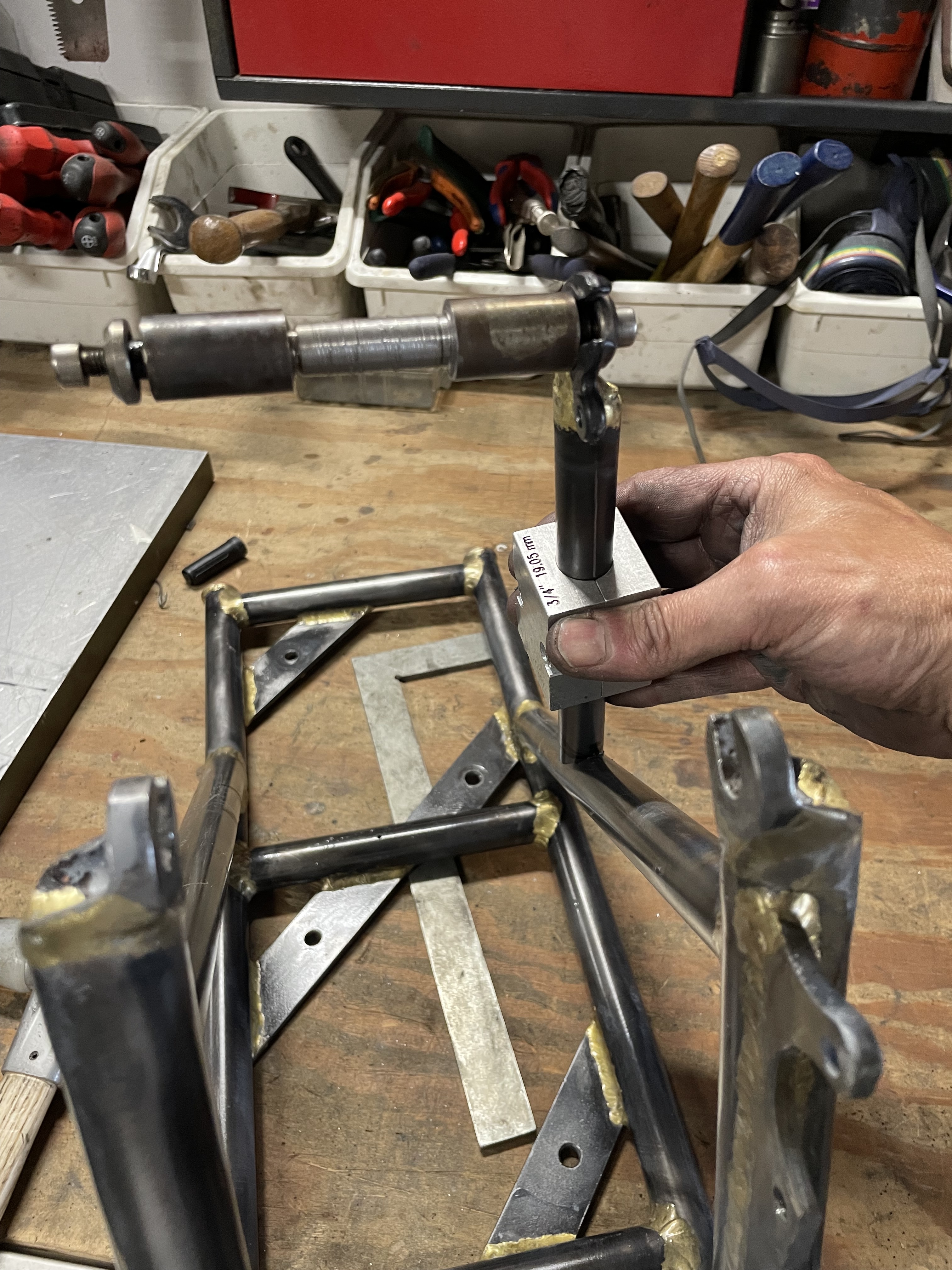
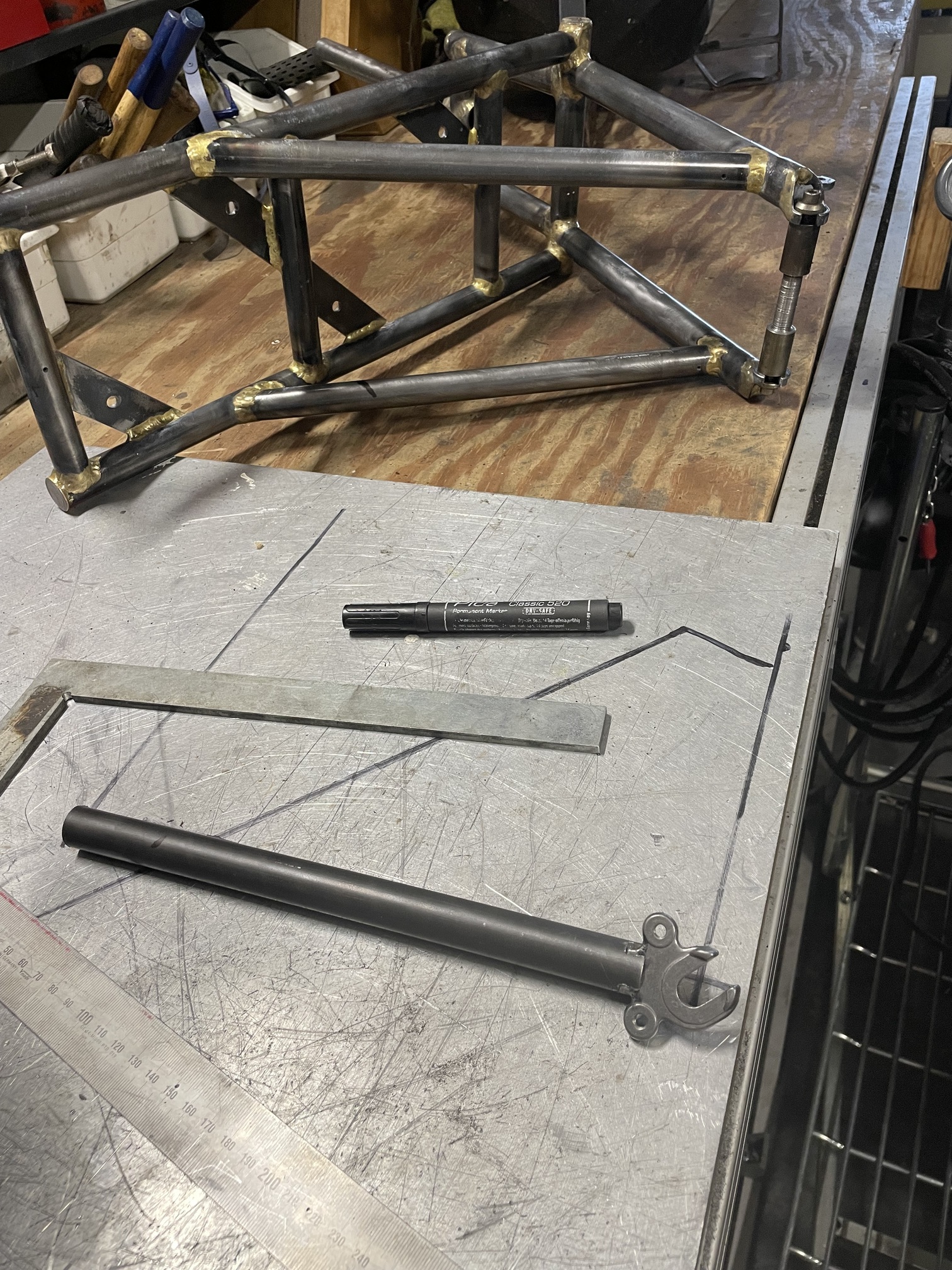
Unfortunately I mitered one of the fork legs wrong. Thinking in mirror viruses is hard for me.
Next week I will try and make it ride
Love the DIY effort but honestly I don’t think you’ll ever get a bike to handle well with with so much weight on fork like that. Just too make weight on the steering, especially hard with a dog that moves. I had a Crust Clydesdale for a few years and it was good for around 10kg but much more than that and it’s sketch.
What I can recommend is a linkage style cargo bike with a rack that’s attatched to the frame. I have an Omnium Mini-Max and it handles amazingly well. I’ve hit 60km/h on a gravel with the dog on the front. There are a few people on this forum who have built bikes with a similar design as well as a dozen or so examples by Bilenky who first popularised it. Good luck!
I would also think that with a pedigre race bike like that Concorde and assuming it has some nice tubing. Tossing that much weight would make things pretty hairy and probably a 74 head angle or plus a degree. I would imagine it to have that tail wagging the dog effect no matter who designed it. I guess in this case the bike wagging the dog. Good lord thats a big dog and to have it in front possible blocking your view. You’re more adventurous then me. I use a 7/8" .065 piece of 4130 that comes off my seat post with an elastic tether for my dogs.
Im assuming it has classic size tubing like 1" TT and 1-1/8" downtube and livelyer gauge Columbus tubing? Does that have a 1" headtube also? You’re braver then I am! Lol.
Let us know how you get on! I’m also going to be making a front rack for mild dog-packing on the e-bike I’ve just built. Much smaller dog though and I want to try to put the rack on the HT. I have a very long HT and a flat handlebar so everything should clear.
that’s a pull behind dog if i ever saw one lmao. a low slung cargo bike would be perf too. i carried my partner on my clydesdale fork for like 3 miles once and it was super sketch, your dog looks like she weighs more than my partner does haha
The guy I’m building this for rides his big dog around on a omnium. He wants a smaller bike to take with him on a camper van.
It’s a experiment at this point
Finished the monster cargo fork. Moved the axle about 150mm forward , so now there is 200mm offset.
It steers heavy, a lot op pressure on the headtube it seems.
this was, probably, negative trail before, but its definitely negative trail now. if you make it fixed gear I’d warrant a guess it’ll ride backwards way easier than a normal bike.
everything I know about single track vehicles says that if you hit a card corner, or bump, or both, at speed, the front wheel is gunna try become the back wheel REAL FAST. but also, I don’t really know how bikes work, it might be fine .
go fast, look good, stay safe. test this thing incrementally yeah?
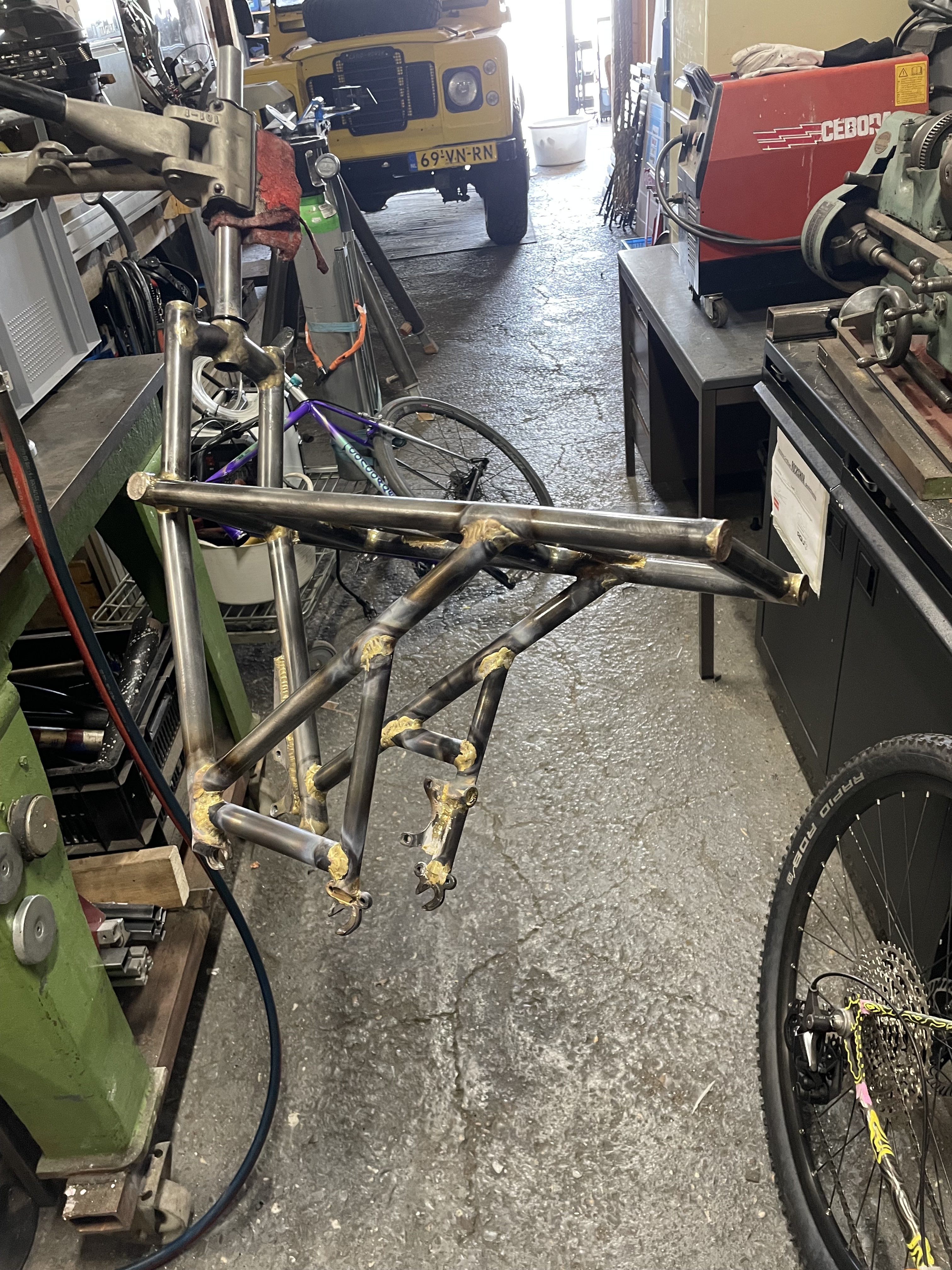
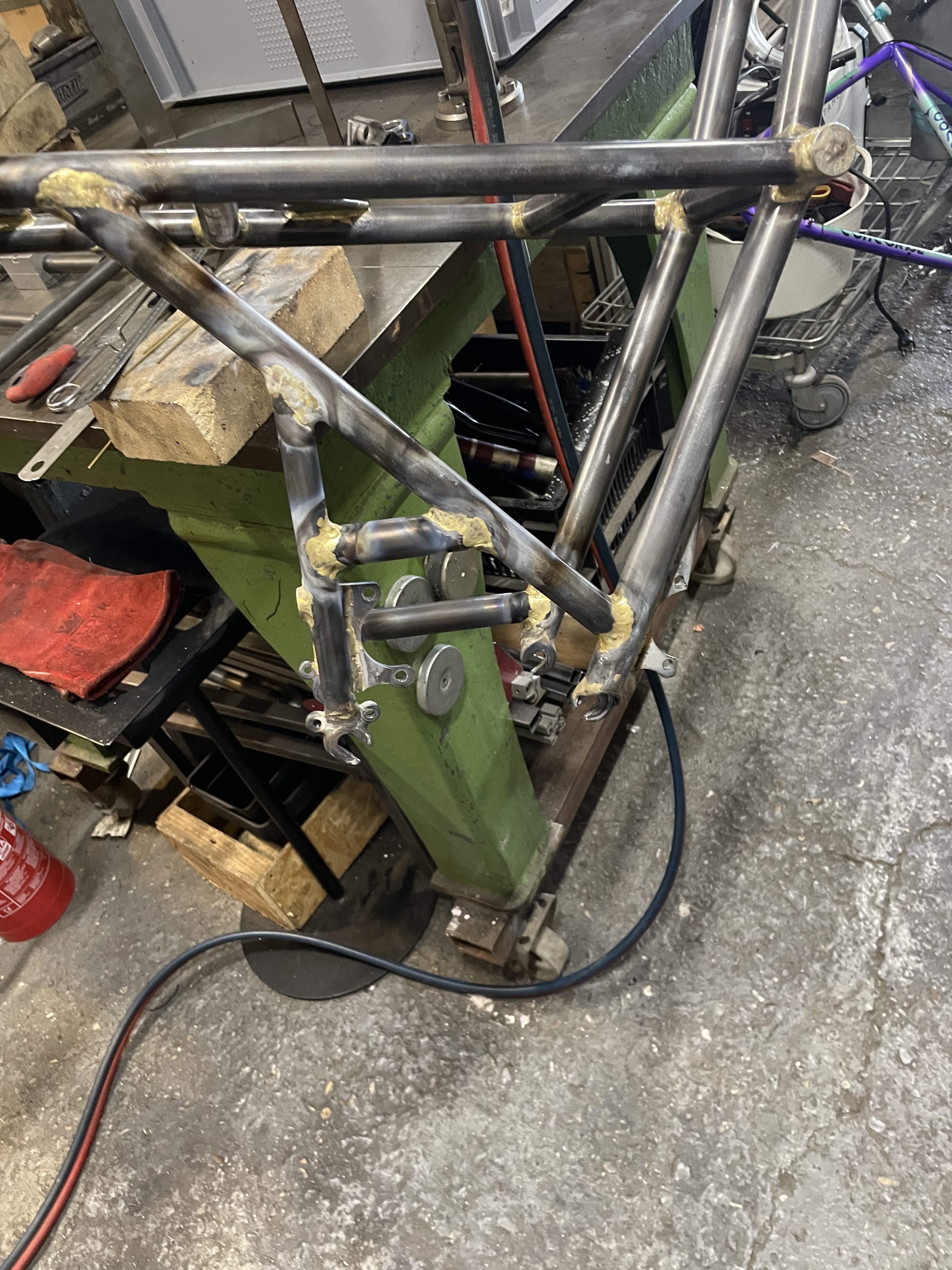
Started on the mountain mixte frame and started on the seat tube to the BB shell. Did a fusion pass and then grabbed some rod and went to town. I was like dang that stuff flowed really nicely. Then realized I grabbed a piece of bronze to do the whole ST/BB joint. Doh! Well I’m not turning back now and and this will be a learning piece. I’m just going to keep going and TIG braze this whole frame. More of a conversational piece and reminder to grab the correct filler rod.
A TIG braze is not as strong as a weld (and the last time I checked I think the UTS of the rod is less than that of the rods used for gas brazing a “fillet-brazed” frame).
However, it is still very strong, and I think plenty strong enough. But make sure you get a reasonably big fillet in there. That’s how you make up for having a weaker filler. In my break tests the braze nearly always starts to break up before the tube does. But not before the tube is massively bent. With a weld the tube usually fails before the weld does.
I use it on bridge tubes and sometimes on stays (attaching dropouts, depending on the kind I have, and sometimes at the top of seat-stays).
I have heard it’s used on the roll-cages of world rally cars (which will be made of some of kind of HSLA steel similar to cromoly, and probably a bit thicker-wall than bicycle tubes). If it’s good enough for them.

 .
.