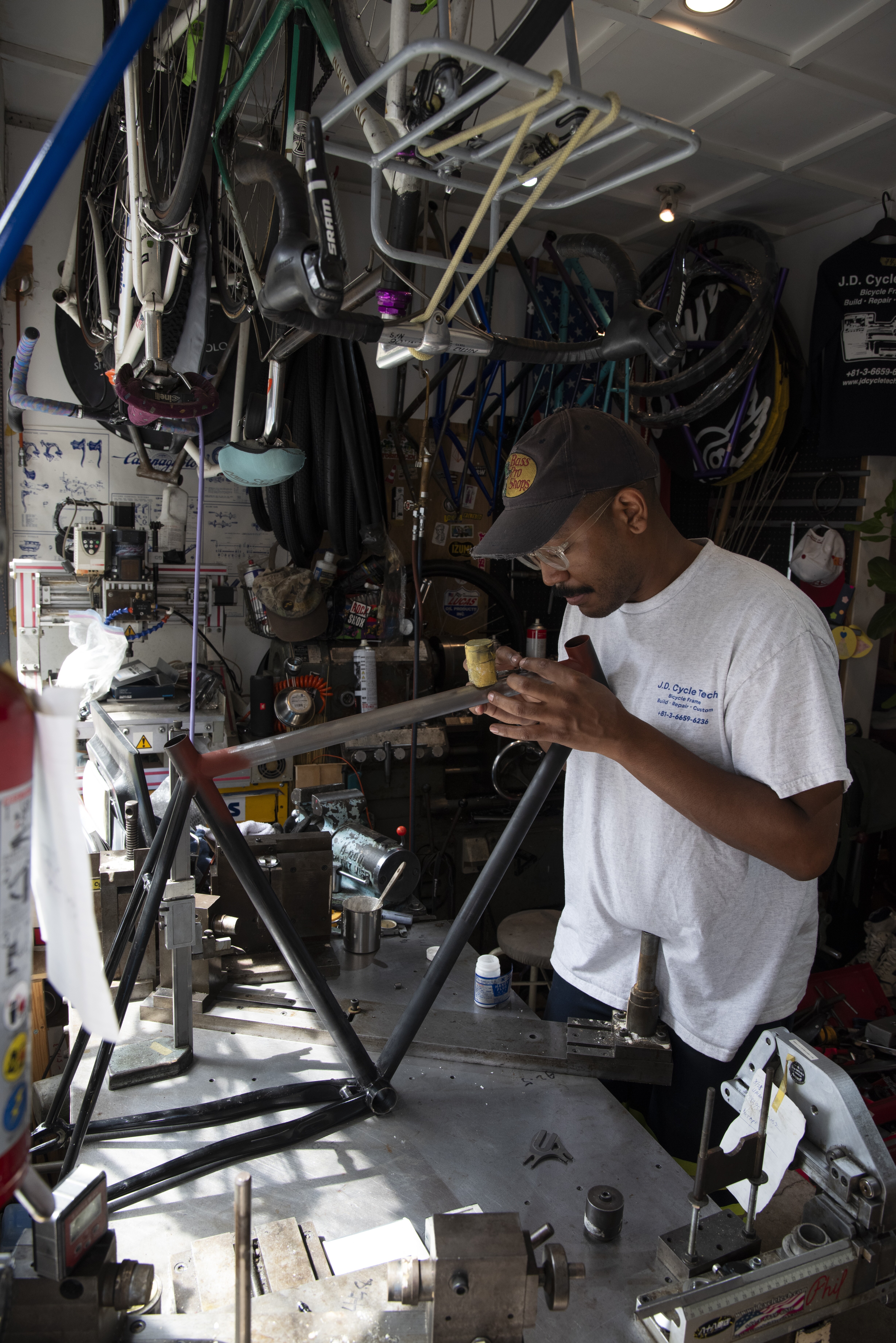
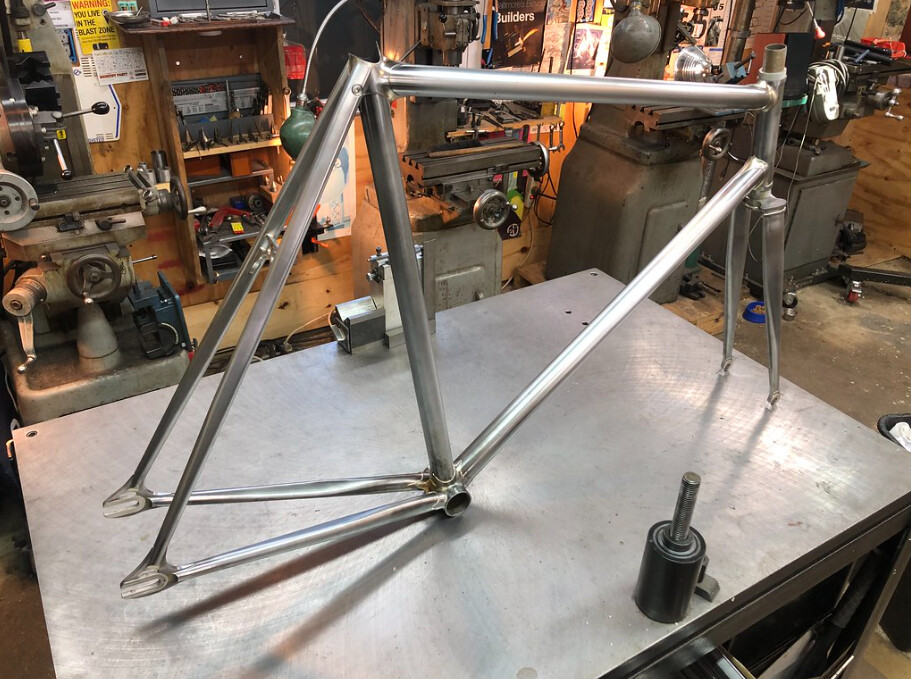
I am curious how folks would build out a small, one-person frame workshop if they had to start over again?
What would your ideal process look like? Minimize time in the shop, maximize fun building
Have been fillet brazing, moving towards tig welding
What sort of machines (and how many spindles) would you look for?
I want to hear everyone’s sky’s the limit ideas, without too many constraints. This is the fun dreaming part of it all!
Backstory:
I recently moved across the US to the east coast for various reasons and have decided to really step back on the business side of framebuilding. I am still needing it as a creative outlet, on a hobby level, but I’ve been spoiled by working in production shops. After some months completely off, I’m moving into a 190 sq-ft space.
I kept all my welding and mitering fixtures, torches, files, and hand tools in the move, but got rid of my mill, surface plate, and scrap aluminum.
Some initial thoughts:
Minimizing setup time with dedicated machines would really make mitering more streamlined. Joe at Cobra talks about the ‘boomerang’ method in his shop - material comes in one door, flies through the process, and ships out the same door.
My question to the community:
What does your dream shop look like?
Or which builders do you draw shop/process inspiration from?
That’s not a lot of square feet to use. Some of an answer might be dependent on whether you want to fab sub components needing a lathe or mill, or not. One can miter by hand but making bosses and tools like machine shop capacity. I would think about a drill press, good bench and vise, brazing stand (which could be the vise), bench grinder and the usual hand tools as a base. I really do like a flat surface, in my case that’s a 2’x3’ and used as a design surface and shit collector too. I also like peg board for tool hanging although my shop sees more than just building. As a hobbyist I don’t place much energy at streamlining my process or being quick, so my shop set up is more about the dirty end and the sort of cleaner end, the sanding/brazing end and the mechanical service end. Andy.
A fairly compact space is actually quite good from the standpoint of not having to move the welder around. My first jig was free-standing. But the second one was designed to just sit on the welding table, where everything already is, for tacking. That’s much better.
I think the main luxury I would add to my setup is just a second workbench in addition to the welding table. I use the welding table for everything, and then tidy it up whenever it’s time to do some actual welding. But then at least that forces me to do some tidying up
You might also want to think about indoor/outdoor. When it’s time to weld out the frame you absolutely need to be shut inside with it or a stray breeze can blow away the argon and ruin your day. But for everything else a bit of fresh air and natural light is preferable, and even working outdoors if you’re grinding (or painting, unless you have space to set up a proper indoor paint area, which is much better, but I don’t). And at some times of the year you might need heating.
A follow up- I just paced off my basement shop space. If I exclude the lathe, mill and storage I have close to 200 square feet, a bit less than I had thought. Still think I want more though:) Andy.
Just to present a contrary point. If I was doing it all over again, I would take a class once a year from a different school or builder and not rent space or buy machines. I love time in the shop, but I also really am interested in what other people are doing.
Is joining a shared workshop an option? I’ve been building a shared framebuilding space with a friend over the last couple of years in Rhode Island and it’s been lovely. I think a few cities along the East Coast have something similar. We’ve got about 400 square feet of shop floor space, plus maybe 150 square feet of “loft” space we built with pallet racking for computer stuff, 3D printing, and storage. Even with this much space it’s pretty densely packed (esp with 8 people sharing the space, but only 1 to 4 ever working there at any given time).
Similar to what Andy said above, we have a “clean” side and “dirty” side of the shop. Sort of. At the center of the space is our big table, which is actually two tables leveled with each other – one super flat surface table, and one Siegmund (the cheap one…) fixture table. Machine tools and welding/brazing tools are lined up around the perimeter. I’m super happy with the setup of the space, but really wish we had windows… A big filtering fume extractor does the work of keeping the air at least not wildly awful.
We are also located adjacent to a community bike shop, which has turned out to be great. Plus there are lots of times having a welding machine has been super useful for the bike shop (e.g. welding an old socket onto a super stuck BB cup, that kind of thing).
These are all great suggestions! The square footage is small, but it is not too dissimilar to the 1-car garage I used to build out of.
In that space there was a round column mill, mini lathe, 3’x4’ granite, 2 work benches, a welding table, belt sander, grinder, bandsaw, storage, and my frame fixture. I really crammed it in there!
What sold me on renting this space is there’s a window to the outside for venting, 220V power, and it’s in the back of an artist gallery with loads of community studios surrounding my space. So just about all the suggestions above!
@hahn_rossman I also love to see how other builders are building. Everyone ‘solves’ the process differently and the creativity is a spectacle itself.
Hahn- Not related to the topic but your comments: I have worked for/with/under/”studied” 4 different builders and really enjoyed the exposure to different ways to do stuff. Not that I was able to master any one’s methods completely:) Andy
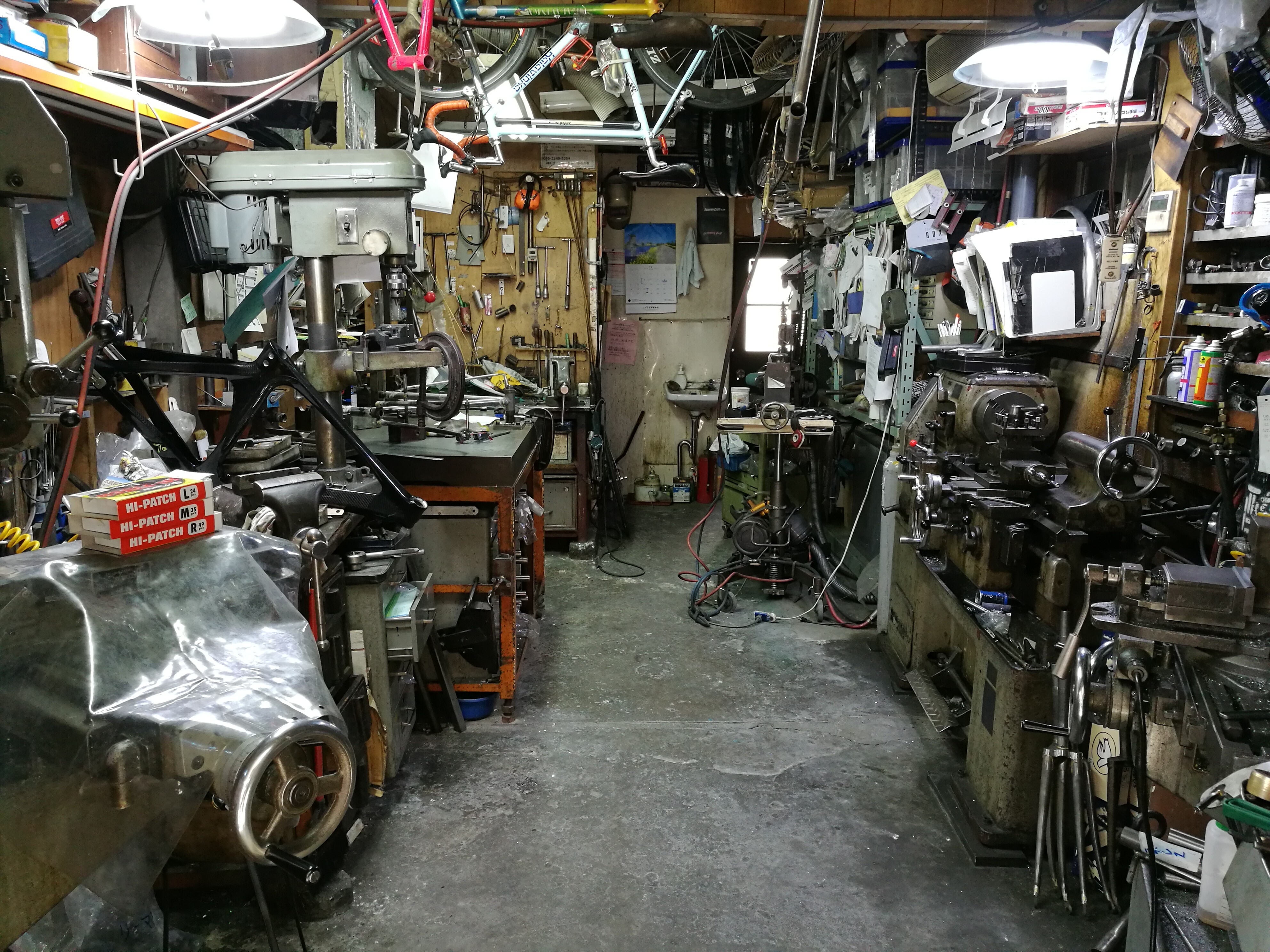
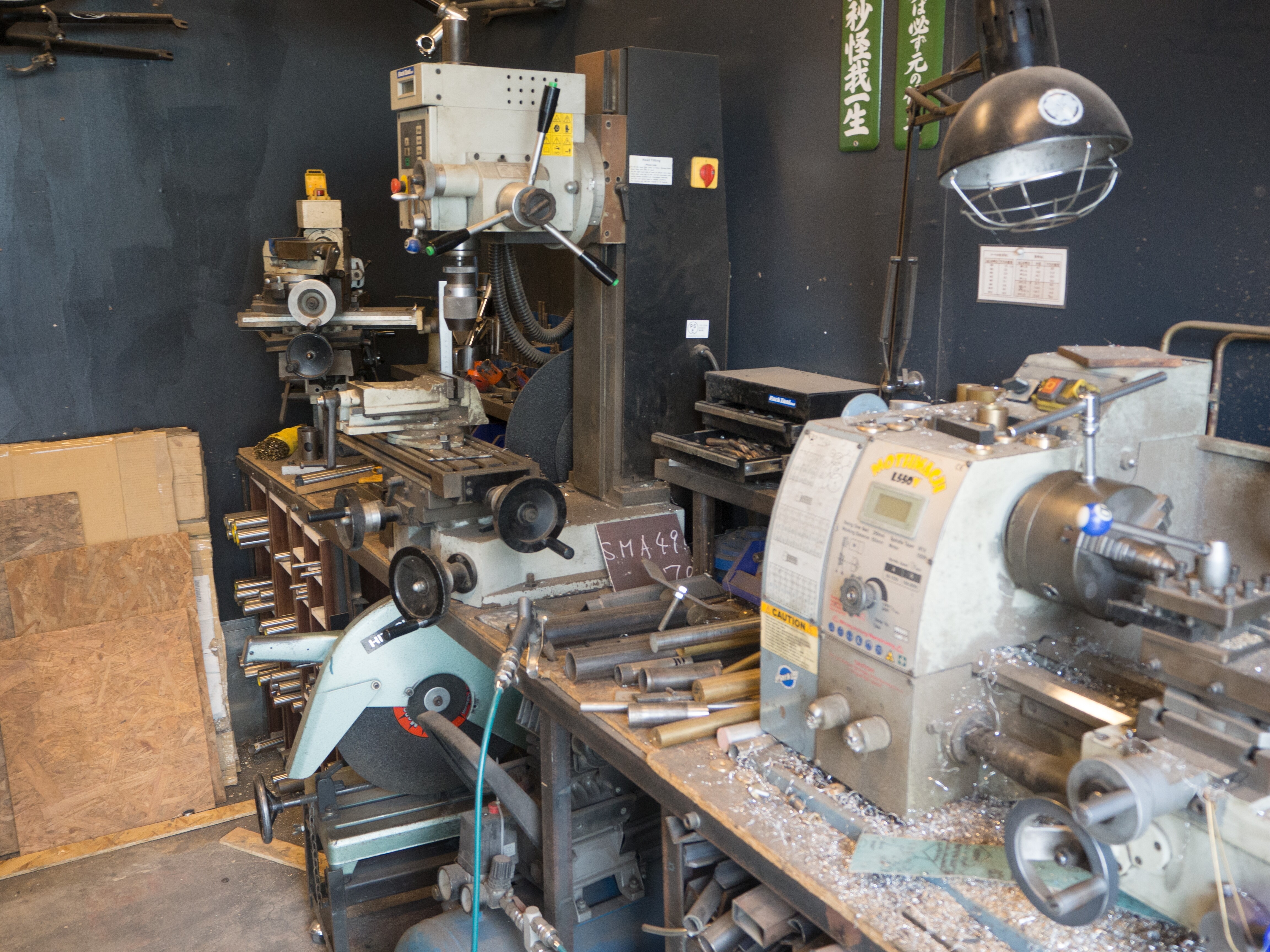
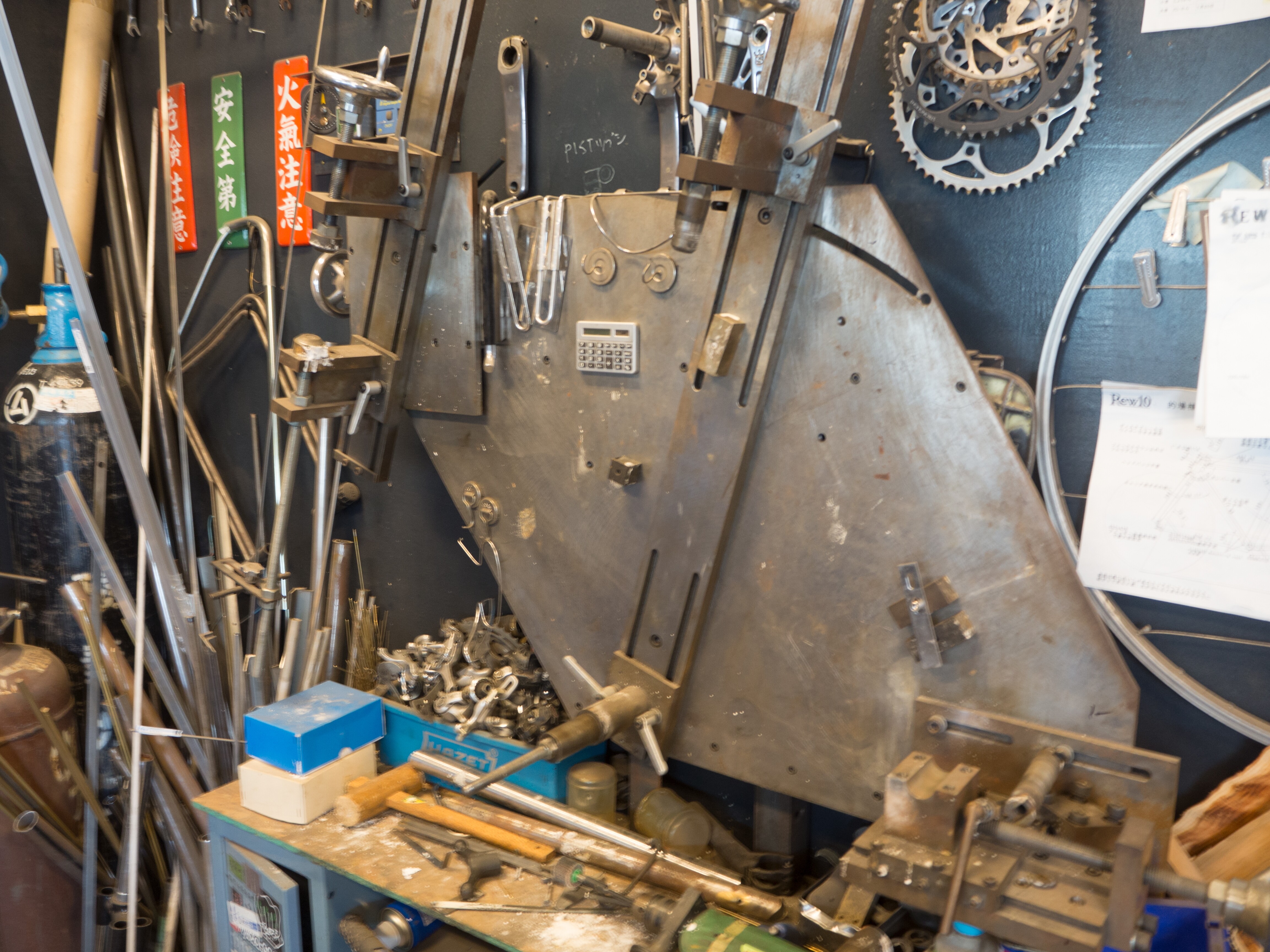
I think this is plenty of space. Most Japanese shops I’ve seen are simimar size. Milling machines require headroom, but if that’s sorted I see no problem in it. What I would like to see is PICTURES
Exactly @normaali ! I think it’s a fun challenge to have a fast and fun process in minimal space.
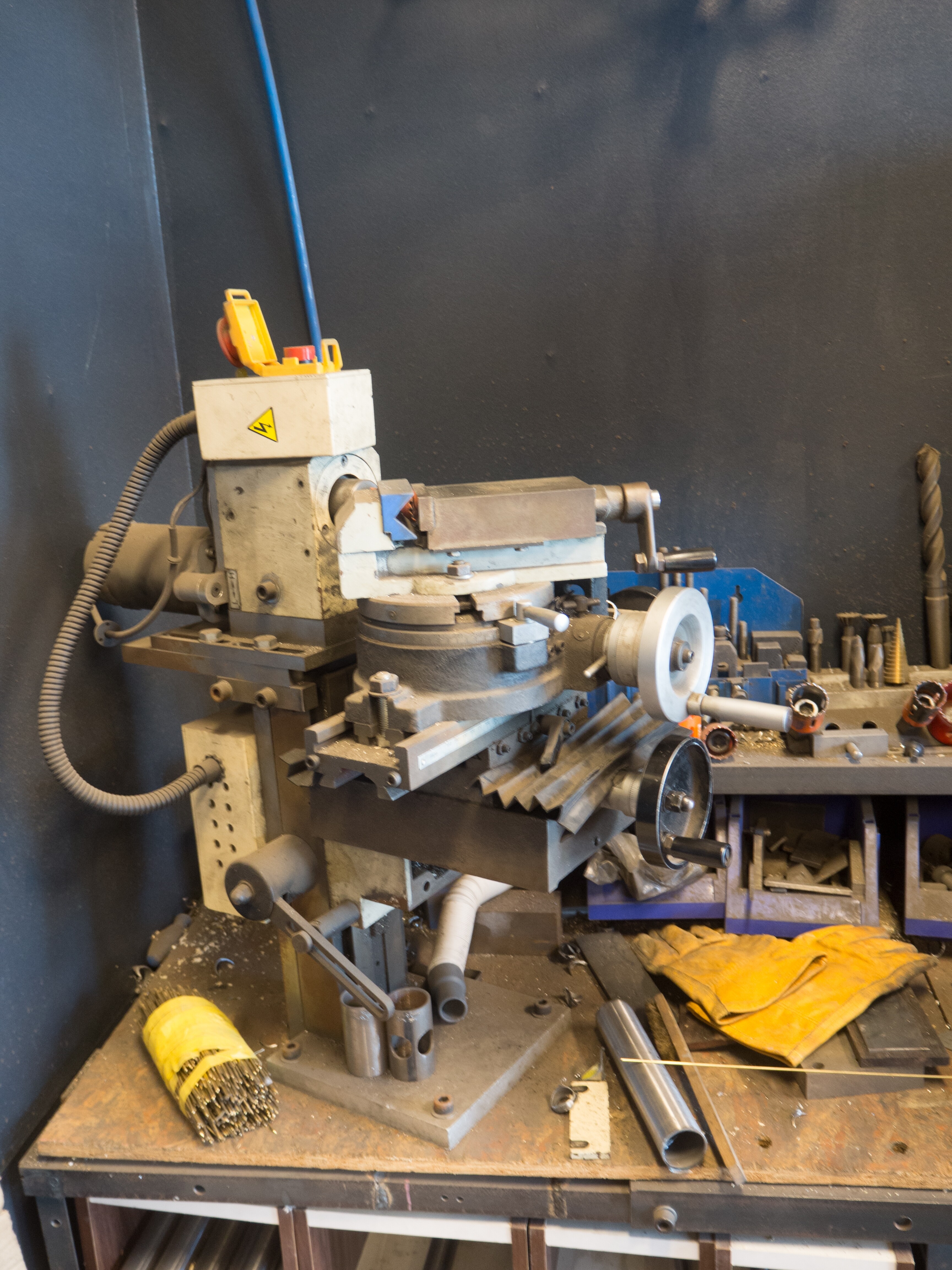
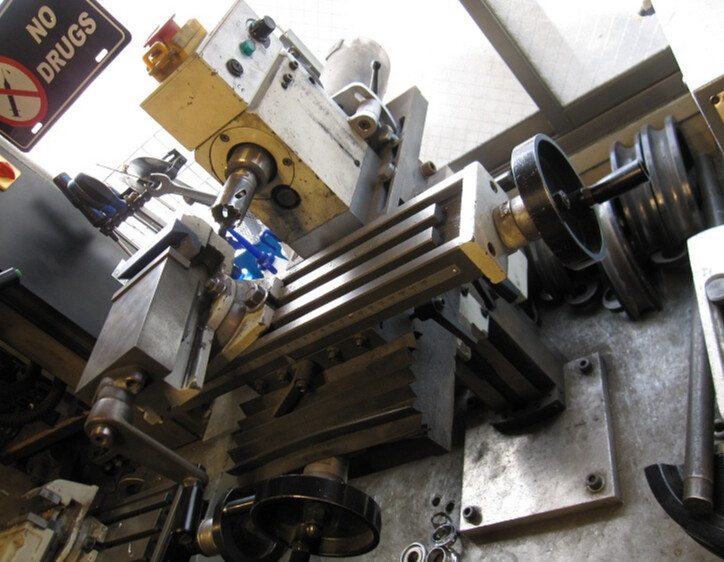
That mini horizontal mill from REW10 really should be a machine someone offers. It is exactly what I’m looking for. It looks like a mini mill with a mini lathe headstock on top.
I’ve been look at Bishop’s flickr and noticed the small army of milling machines in the background. It looks like each one is set up for one miter process
I’d focus on comfort and ergonomics - good lighting, good air filtration/movement, logical setup for your particular workflow. Nice coffee maker, some plants, easy to clean up.
I’d also argue that you need at least one spindle, minimum a ~10x28 ~1hp lathe. Just the amount of random bushings and crap you can knock out in a few minutes that make various jobs feasible/easier/accurate is pretty huge. You can always cobble something without a lathe with more time and effort, but having that just-right tap guide or bending form or whatever helps so much.
Depending on your 3d cad skills, I’d also argue a dependable 3d printer. There’s so much you can do accurately with hand tools if you print out a guide/jig/fixture - to the point that you can replace a mill for a lot of things when you’re just doing onesy-twosy work.
Everything else is personal preference and space dependent - a place with no windows needs different treatment than a space with a garage door at one end.
I’m in roughly 400sqft and wish I had more room. I store bikes in the space so that takes up a fair bit of room. Bikes are mine or customers in for frame repairs/mods. These are things I think about:
I agree 100% with @jellywerker - filtration/air exchange, HVAC/insulation and light are critical. Sound control (both for music and suppressing machine noise) is also super important. These are top priority.
Separating grinding/filing from machines and measurement is highly desired.
I have 10x24 lathe and small knee mill but would like to add a drill press for general drilling and horizontal mill dedicated to miters and slotting.
I wish my lathe had at least a 1-3/8” spindle bore (or bare minimum 1-3/16” bore for crown races on 1-1/8” steerers).
I would swap out my 3x4 granite plate for one of the really beefy welding tables (as heavy as I could reasonably find). Still plenty accurate for bikes but much more useful. I have a small 18x24 granite plate as well for “precise” measurements.
Finally, efficient ways to organize small parts, tubes, tools supplies etc.
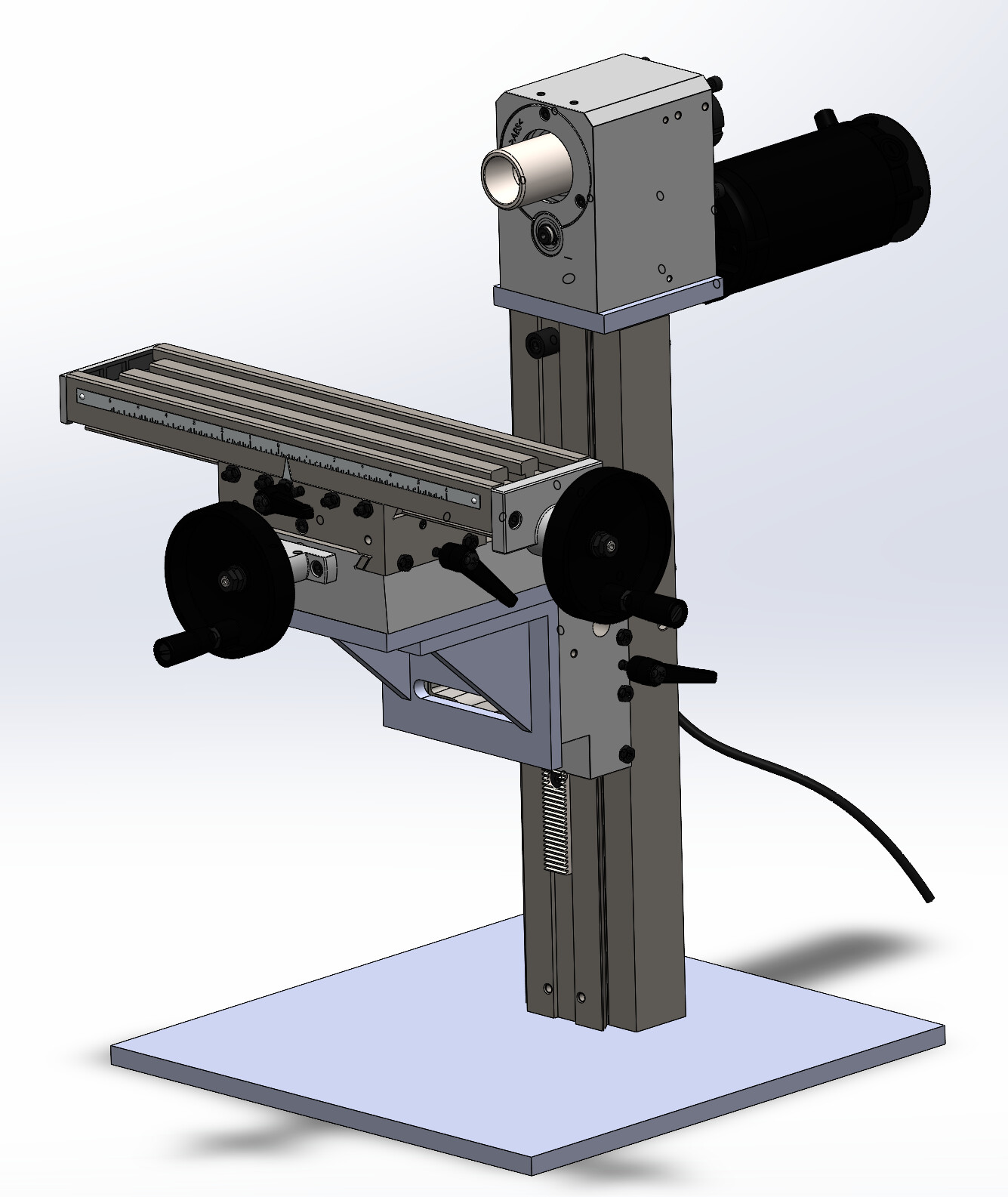
I found a model for the Sieg mini mills on GrabCAD and rearranged the parts. With 2 or 3 plates and a 90 angle block, one could recreate that tiny horizontal pretty easily it looks like.
Having gotten rid of my 3x4ft granite table, I would absolutely agree that a nice and flat-ish welding table would serve the same inspection purpose, while also having other functional benefits.
Organization will be a big staple in such a tiny shop.
I have found a metal lathe approximates a horizontal mill decently well for frame building purposes (I’ve only done this on 13x40 and 14x40 lathes which have been pretty rigid). It would be neat to get one that has t slots in the cross slide for more work holding versatility.
I think metal lathe, plus TIG welder, hand tools, and a good vise and flat welding table would be a solid setup. I always aspire to do my grinding outside like Paul Brodie, but without a covered area in the PNW, I never have the discipline.