Hmm. I can see what you’re saying but for me changing the sag in the fork menu just chances the effective A-C in the model. So the head tube length updates to fit the fork but the rest of the geo stays as it was. A true sagging of the fork would cause a rotation about the rear axle, steepening both the HTA and STA. Maybe I’m doing it wrong but I’m assuming this kind of geometric operation is difficult to do with the way BikeCAD models things. Maybe Brent (@BikeCAD) can chime in.
1 Like
As Noah said, the solution is to use the Lock Frame option: Lock Frame | www.bikecad.ca
5 Likes
Ahh damn. I feel like an idiot for not knowing that one haha. Appreciate the reply Brent!
Here is the revised geometry. borrowing heavily from @Daniel_Y’s suggestions and methodology.
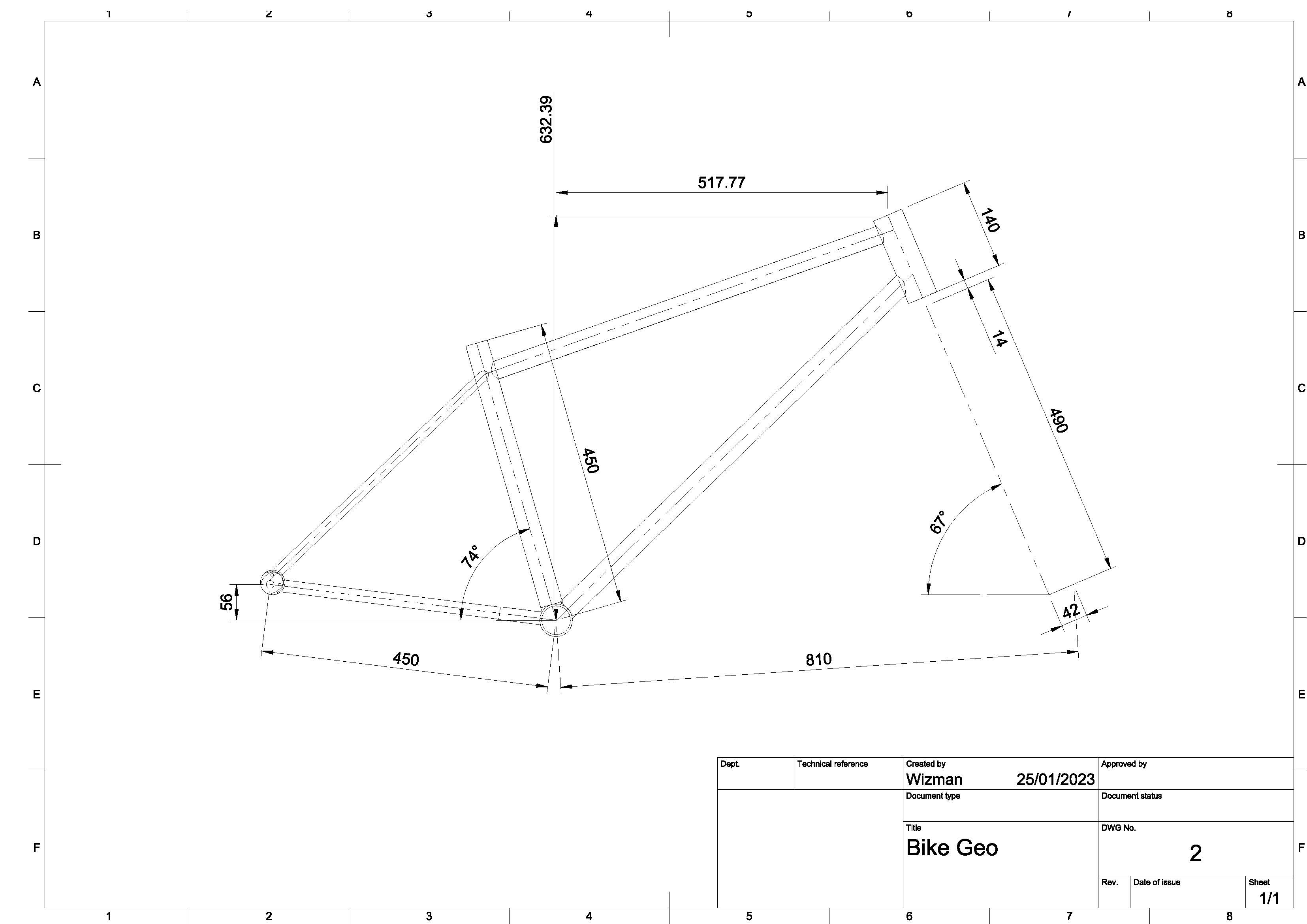
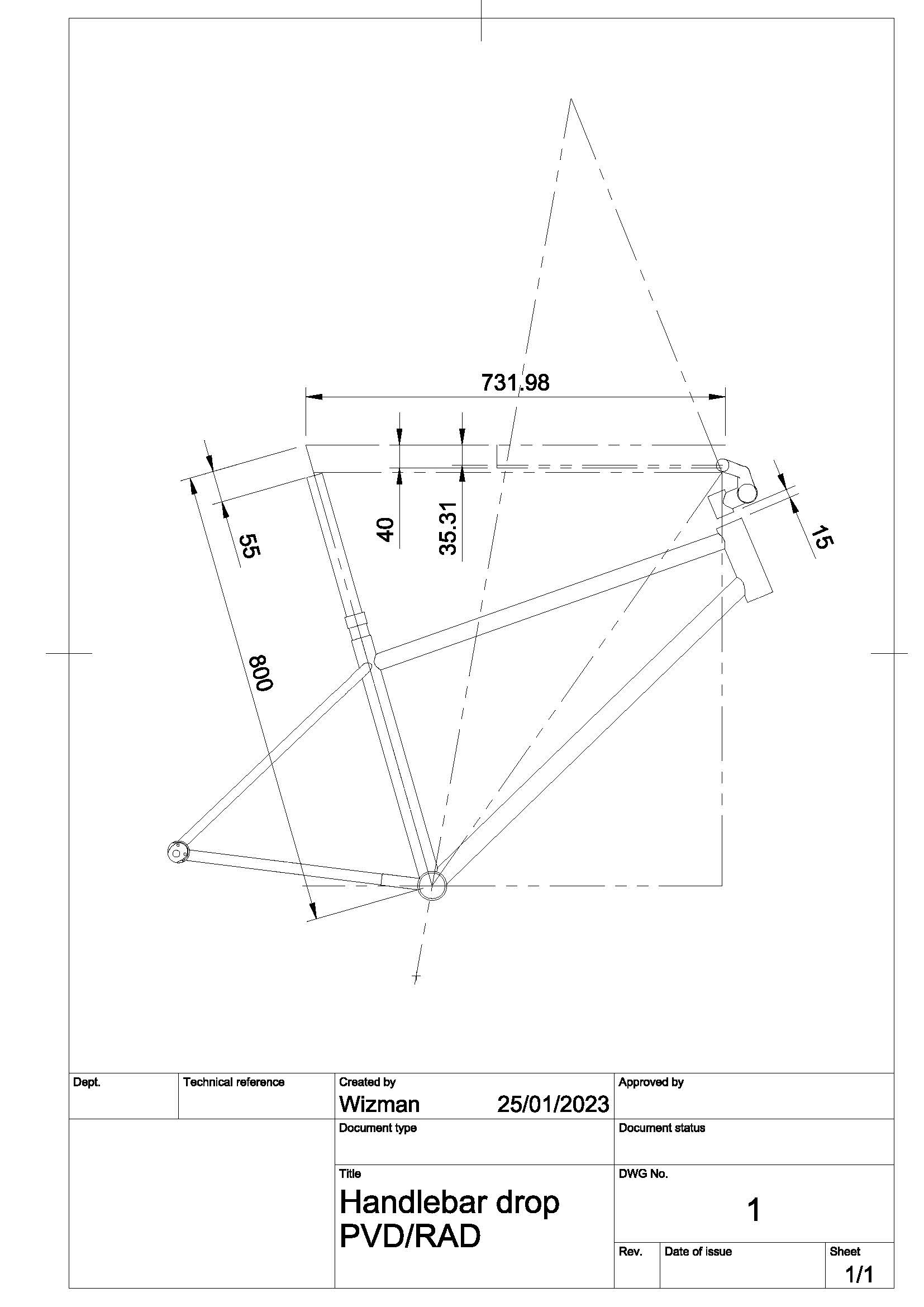
I quickly came to the conclusion that modelling parts is absolutely essential to figuring out how the system will actually fit. I’m sure everyone does this to some extent but it was a lightbulb moment for me. With that said, here is the relevant parts list.
- Atlas handlebar 1-1/4" / 31.75mm rise
- OneUp 240mm Dropper
- 50mm 0* rise stem (generic parametric model)
- Ergon saddle (unmodelled)
Having modelled the handlebars using drawings from PVD’s blog I think it would be super useful to have a 3D model repository of parts e.g. handlebars, posts, saddles etc. I can contribute some of the bits here to this.
So going through some of Daniels criteria, mainly where it differs from his suggestions.
Saddle Height
800mm from the BB. This is taken directly from my
current bike, accounting for a transition from 165mm to 175mm cranks.
5% Bar drop
I got this as close as I could using a riser and accounting for my RAD calculations. My thinking is that I can use a shorter stem if the reach is too much. As the fork i’m modelling the frame around is 41mm lower than the one Daniel suggested I can either make up for this difference in the frame itself (longer headtube) or in parts. Doing this in parts seems like a more forgiving option for a first timer. Tangent: the fork i’m planning on using is corrected for three different suspension fork sizes with a 30mm range. How is that possible?
Other than that the HT/ST angles and, FC/RC are all the same as Daniels suggestions. I feel as though the difference in fork length mainly changes fit, therefore the position of the rider on the bike. In this case providing a more upright position affecting handling in as much as this change in weight distribution will. I’m assuming 41mm is minimal enough to ignore for the purposes of this bike.
1 Like
I disagree with you there and with Walts assertion that stem length doesn’t matter. Not to argue but purely as a different take. I recently built a stem to get my hands directly inline with the steering axis. It gives a nice neutral feel to the bars that no matter of combination of longer stem and bars can give. The longer the stem the more the hands sweep sidways when steering and not atound the steerer axis. Obviously the center of grip, as a reference point is fixed and describes an arc, but the problem lies in the arc sweeps across the centerlibe of the forearms and not more in libe with the pushing force that you put on the bars. Its a subtle thing and the ultra shorts stems allow you to get to a more sensitive ergonomic setup.
1 Like
Hand position certainly matters, but you can quickly adapt to the tiny differences in the arc described by the grips.
My point was that the leverage difference is really minimal, certainly below any reasonable detectable threshold.
The problem is that people swap out a stem on an existing bike, thus vastly changing their weight distribution, and attribute the change in handling to the stem/steering mechanics, rather than the weight distribution change which is what actually matters.
-Walt
3 Likes
I’m obviously in no real position to be commenting from experience but from this article here i’m more inclined to believe as @anon91558591 says that the position on the bike (read weight distribution between front and rear axle) is likely to play a greater part in affecting the feel of a bikes handling than the length of a stem. This of course is affected by the length of the stem, but from my understanding, only in it’s ability to get you where you need to be on the bike. In short, of course the stem is a lever, but it’s effect with regards to handling as a lever is minimal in comparison to other parameters?
Edit - Although having re-read your post you’re actually making a comment about how it feels to exert force upon the handlebar. Although again in my limited experience it seems to describe a change in fit. To be in exactly the same position with different stem lengths surely requires a reduced FC or HA in the frame which changes weight distribution and/or trail
1 Like
How confident are you with this number? For your height, this number is pretty low. My guess is that the handlebar fit and weight distribution of your current bike is forcing you to use a lower seat height.
I suggest testing out a higher saddle and reporting back. Since a lot of my method revolves around a seated position, you need high confidence in your saddle height.
Suggestions
Usually, when you are stuck on one decision (in this case the stem length), I usually peck around the other choices, and eventually, the stem length will fall into place.
This is your latest design:
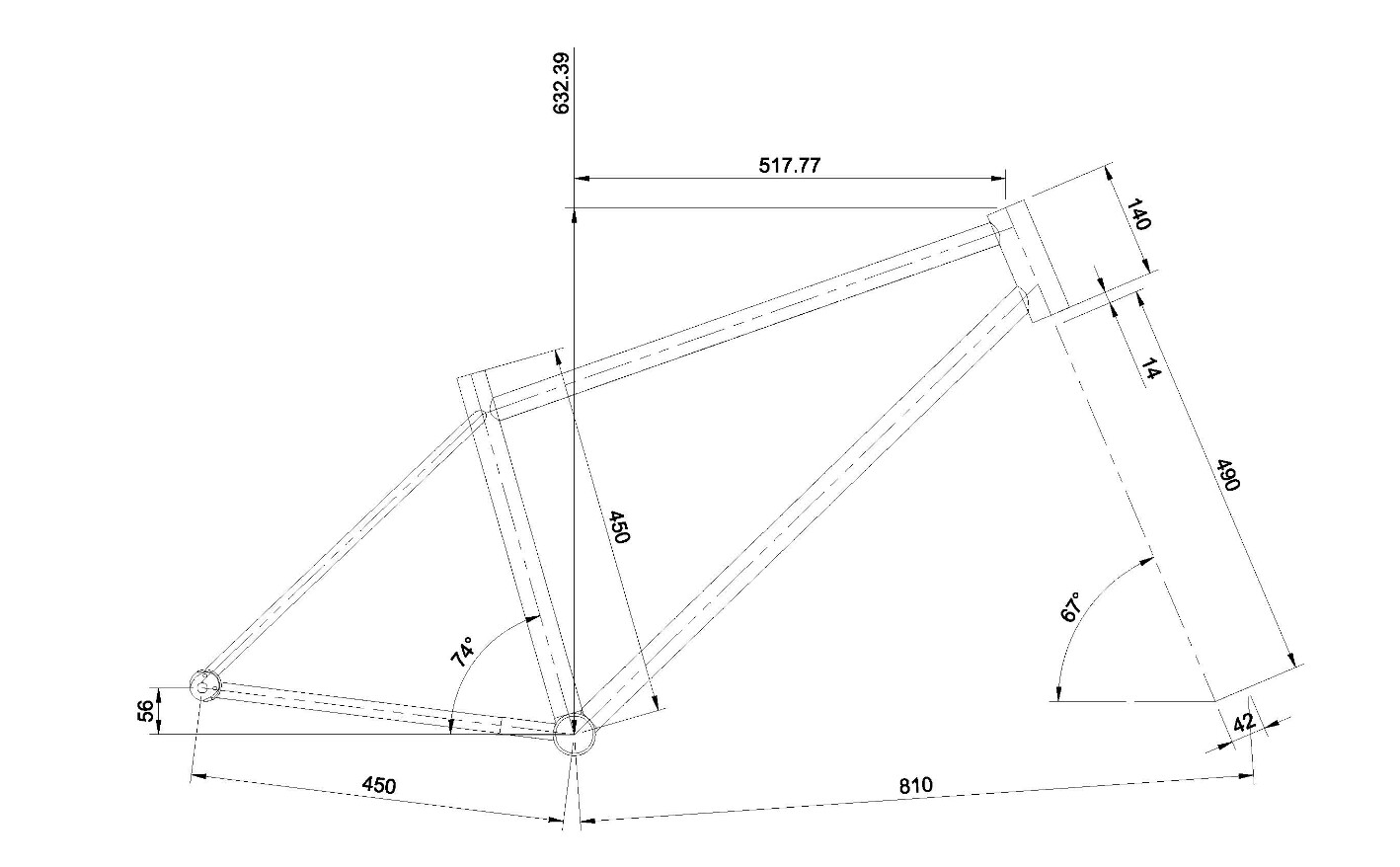
STA:
The STA generalizations I gave are for people in the 5’8-6’0 range. The taller your saddle height, the more impact a 1deg change in STA will have in your final position. Since you are out of the normal distribution, I would recommend feeling out different saddle setback positions on your bike
If I were to blindly guess based on my data points, a 73-73.5 STA with a zero offset dropper and rigid fork will get you closer to where you want.
Bar Height:
The bar height to me looks good for offroad performance and comfort. However, you may consider lowering the bars a bit for aerodynamics. This can easily be accomplished by swapping to a 10-20mm rise bar (which are readily available).
BB drop:
What is the nominal tire size you plan on using? If it is closer to 2.4, I would consider dropping the BB to 60mm. For your height, you want to lower the CG as much as possible without getting pedal strikes.
Weight ratio:
Right now you have a ~1.88 weight ratio (front center/rear center). From my perspective, it is too much rear bias for the design intent. You will have to use more body english to keep the front wheel planted on climbs and gripping in flat turns.
HTA:
I don’t think a slack HTA pairs well with rigid forks. It’s just going to write checks your wrists can’t cash. Again, a lot of personal preference and subjectivity here, so instead of giving a blind recommendation, I recommend exploring the impact of the HTA on the front center and the weight ratio
Stem Length:
In my view, the stem length tunes two parameters: the front center, and the steering input sensitivity:
- with a 50mm stem your front center and wheelbase are already longer than most downhill bikes.
- On a touring and endurance bike, you don’t really want sensitive steering if you don’t have to. It will be mentally and physically taxing
I suggest exploring the relationship between the stem length, your front center, and the weight ratio
With those suggestions, this is how I would iterate your next step:
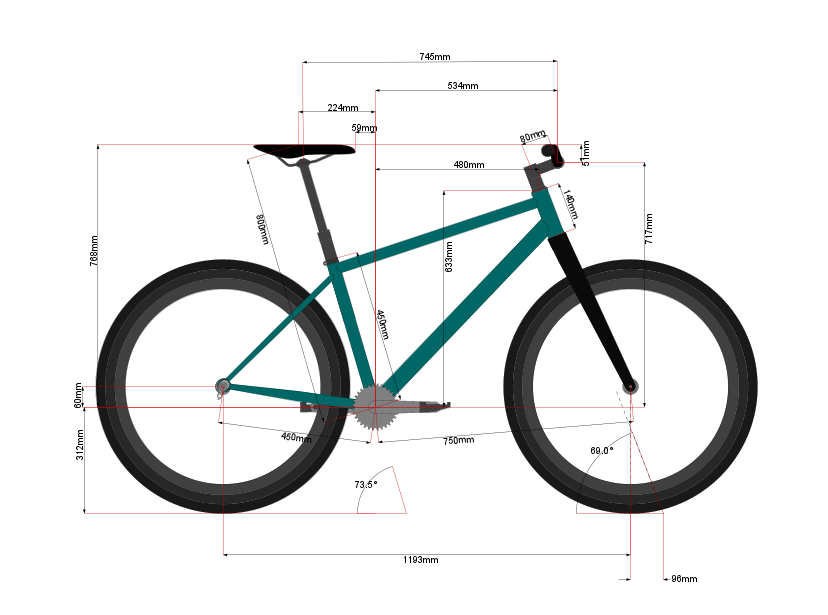
- STA is a tiny bit slacker
- HTA is a bit steeper to pull in front center
- Stem is longer (80mm) to better match the steeper steering geometry and pull in the front center
- Deeper BB drop to lower your CG
- Weight ratio is now 1.67, which IMO is balanced enough for this style of bike
- Depending on what touring means to you, I would even consider 460-470mm stays
All these changes are minor, but they all add up to one cohesive package which I believe works towards achieving the design intent.
Circling back, I would really double-check your seat height. For someone your height, I would expect something closer to 820-840mm. Everyone’s body and pedaling preferences are different, so its totally your call.
4 Likes
@Daniel_Y is using the same basic process that I use when designing a bike and IMO you will be much happier with what he’s proposing (except for gnarly mountain bike trails, where it will be horrible, but that’s not what you said you were planning to ride).
It’s not as weird and interesting, though. Lol.
-Walt
4 Likes
Daniel’s design is rock solid for its intent.
But I’m still rooting for you to go a little wild. Drink some of that PVD Koolaid and make the most aggro bikepacker out there.
You’ll likely make yourself more frames in the future. No harm in experimenting. You’ll only know how a super long front end feels if you ride it. Then make a frame based on Daniel’s suggestions for comparison. It’ll probably teach you more riding those two bikes than by discussing the differences between 20mm of stem length 
5 Likes
Love the thought process @Daniel_Y thanks for sharing. The geo you land on is pretty much an XL Surly Krampus (69/73, 470mm reach). A great all-round bike but definitively on the conservative side. I think where @wizman is getting to is more XL Kona Unit territory (68/75, 510mm reach). I’ve ridden both and I’d say the Krampus is playful whereas the Unit feels more planted. The geo of the Unit also means you can run a 130ish fork without turning the bike into a wheelie machine.
This! Weird and interesting is half the point of custom. I would stick with the 67deg HTA @wizman. With a 44mm HT you have the option to run an angleset that could get you back to 69 or down to 65 if you wanted to scratch that slack and rigid itch!
I think sliding dropouts would be a good thing to try difference chainstay lengths too! Would also allows the opportunity to try the bike SS. If you’re going to be under-biking trail with a rigid fork then may as well go all-in and ditch the the gears.
Oh and I would recommend starting with a grippy 29x2.8" or 3" front tyre to provide more front end traction and a little more cushion. With a long dropper and the seat slammed you might be surprised with the kind of stuff you can end up taking this bike down. Keen to see the build!
Or swept bars that start with a forward reach. On One Mary is a classic bar like that, or Ritchey Kyote is a current one. They are drop in replacements for most bars without sweep.
I like the SQLabs too, but would like them more if I didn’t have to replace my stem when putting them on the bike.
2 Likes
Apologies for hijacking this thread. Just thoughts to help wizman and others work through their own philosophy on building bikes.
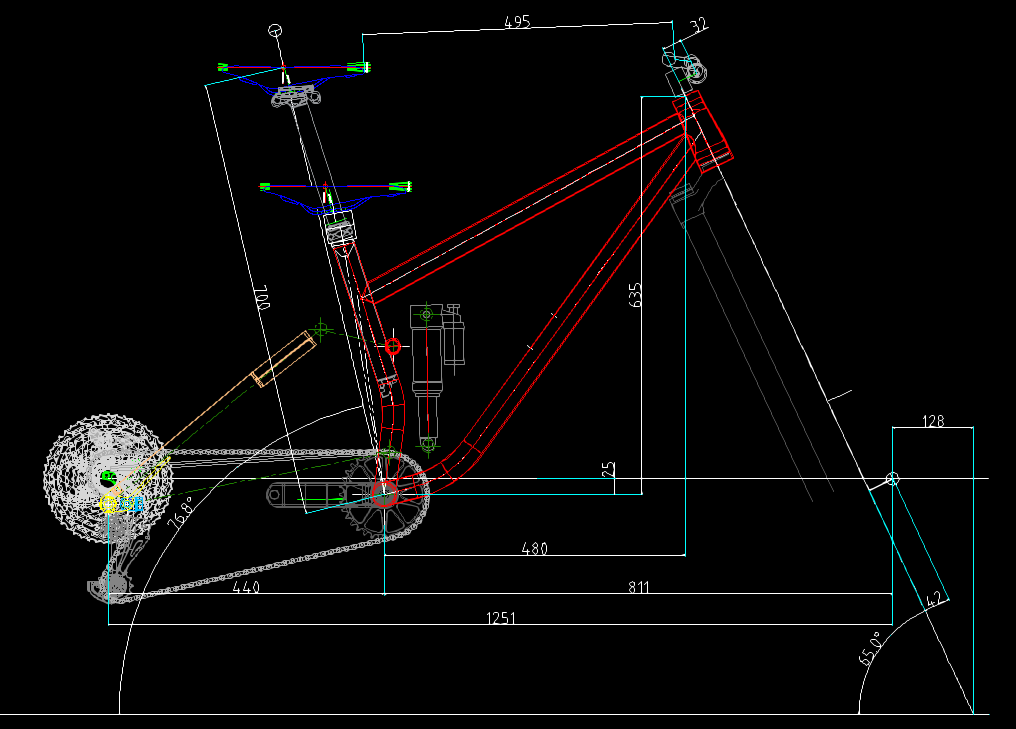
There are a few ways to go about designing a bike. It’s intended end use is going to dictate a lot of it. It’s not just grabbing a single number and that’s the end of it. As you said a shorter stem requires a look at the frame geomtery so that fit, weight balance and steering dynamics are balanced out. Sticking a short stem on a bike designed around a longer stem input usually is not the best setup. There are exceptions for that though. My bikes are designed around having my hands inline with the steering axis. So I use longer reach numbers and moderate head angles to give a bike that is very well mannered with great high speed stability and excellent slow speed climbing manners. You never wanting to be fighting the bike as that uses energy.
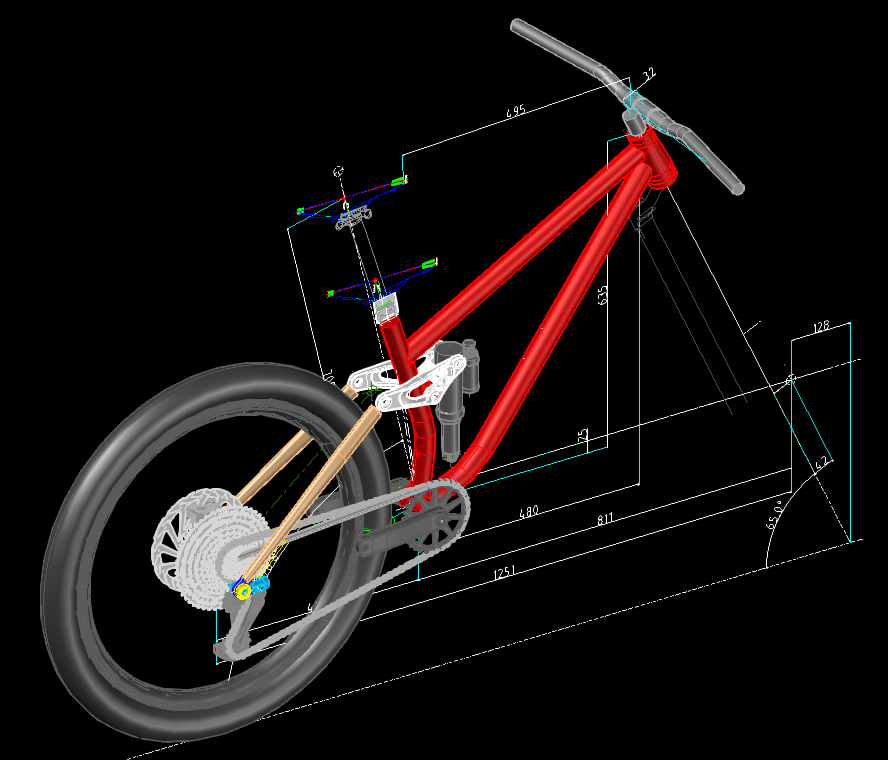
This is the current Jester Enduro machine. A mullet bike for the young bloke riding for me.
My own trail bike is 485 reach with a 66 degree head angle for a more of an all rounder as opposed to gavity orientated that the Jester is. I’ve raced everything from fast tech enduro to short course XC on my trail bike. Even did a local DH race on it and was on podium pace against the big bikes. Just annecdotal situations to show the bikes do work. 
1 Like
That is pretty funny  2023 touring bike is a 2017 29 plus bike
I think reach alone is not sufficient to compare size. The bike I drafted up (V2) has a 480mm reach, which makes it look smaller than the 510mm reach on the kona. But once you factor in the stack, the bikes are actually almost the exact same size.
Hypotenuse:
To compare geo charts, I usually look at the hypotenuse:
- Hypo = sqrt(stack^2 + reach^2)
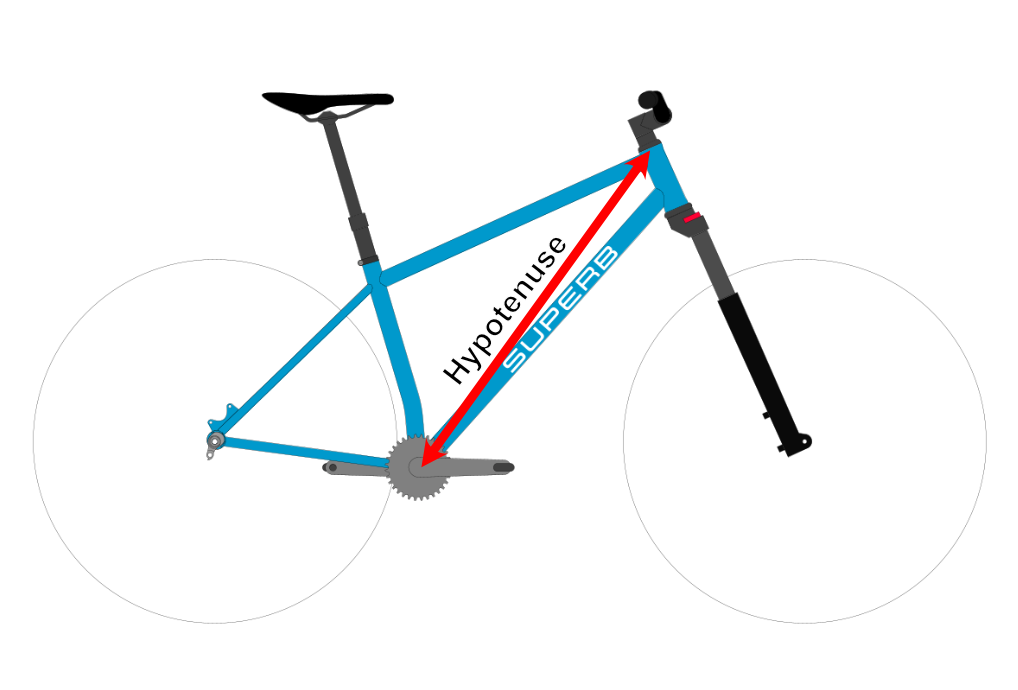
| Bike | Stack | Reach | Hypotenuse |
|---|---|---|---|
| Kona Unit X | 615 | 510 | 799.0 |
| Krampus | 621 | 470 | 778.8 |
| V2 | 633 | 480 | 794.4 |
The Unit (hypo = 799) and the V2 (hypo = 794) are very close in size once you factor in stack. To get the bars high enough on the Kona Unit, you would need 50mm of spacers, which IMO, is really ugly.
Saddle X:
If you factor in the Unit’s 75STA, the seat setback (Sx) will be a lot smaller, especially at 800mm seat height:
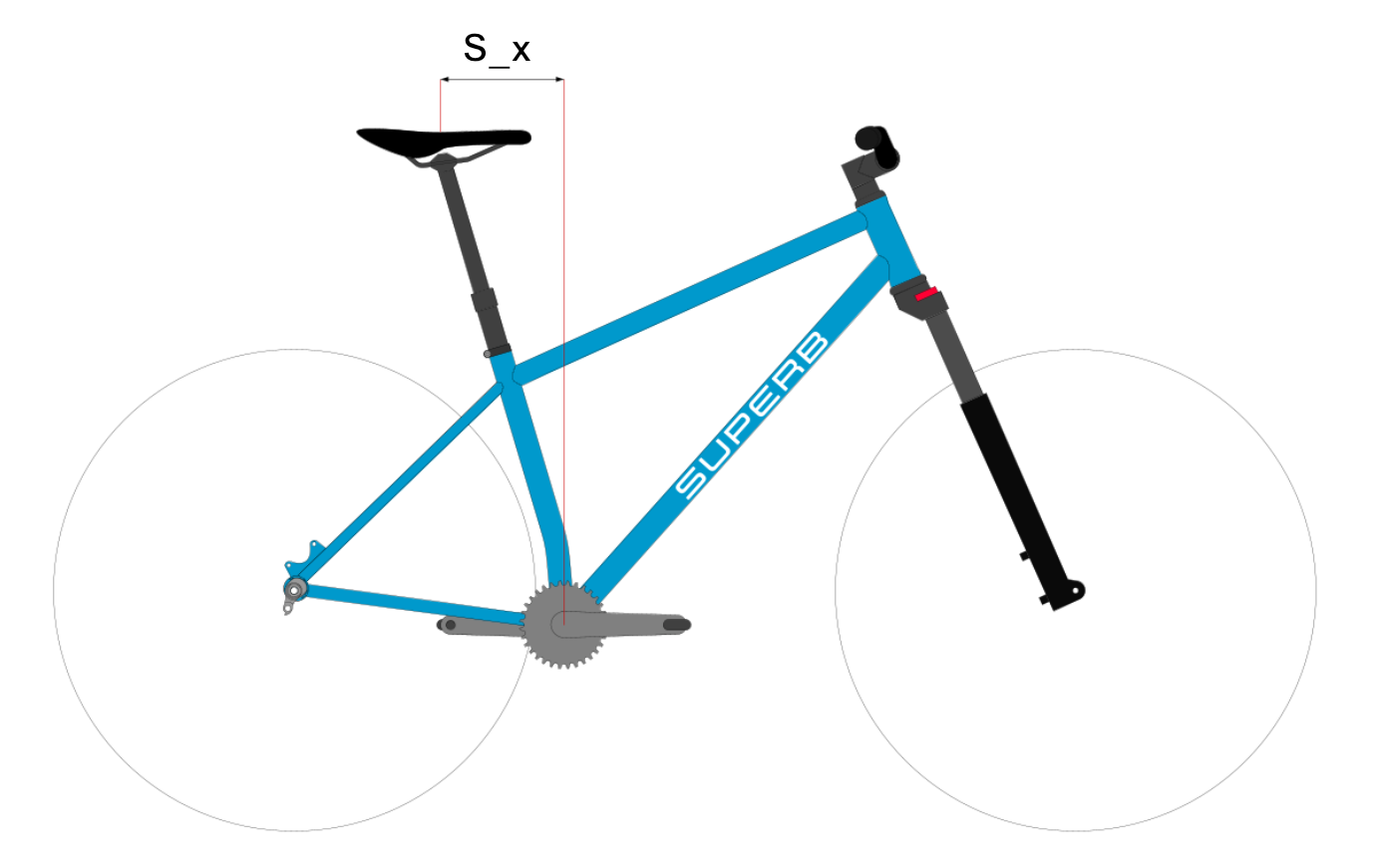
| Bike | STA | S_x |
|---|---|---|
| Kona Unit X | 75 | 207.1 |
| Krampus | 73 | 233.9 |
| V2 | 73.5 | 227.2 |
With the 75STA, you end up with 20mm less seated reach. From our experience, all of our taller riders (>6’3) hated steep seat tube angles. It cramped up their reach and dumped all their weight on their hands.
Conclusions:
Saddle X and Hypotenuse are the metrics I use to compare bikes. If you just compare reach, the Kona unit looks like the biggest bike. But once you factor in the spacer stack, bar height, and seat tube angle, stem, bar rise, the Kona unit becomes 40-50mm “smaller”.
As the others have said, once you have a good feel for your fit and weight distribution, go wild with the design. I try to provide objective models and frameworks to look at designs with numbers to back support the analysis (basically engineering. But that process inevitably leads to conservative designs.
1 Like
Haha, I know. The BFD has similar front end fit to the Krampus and I loved that feel of that bike for touring. The slacker HTA and fat tyres are great if you want to take rougher tracks. I feel like 3" tyres never got the love they deserved. Yes they can be slow but on a fully rigid bike with lot’s of gear they really make a difference. The touring market is tiny compared to MTB though so it’s easy to see why a smaller size (29x 2.6") won out.
I can see where ya getting but the hypotenuse doesn’t tell you enough about what style of fit you’re going to get (chill vs aggressive). But stack and reach are only average indicators of fit anyway and with the right stem/spacers combinations you can make most bikes fit comfortable enough. That being said, I’m also not fan of a massive spacer stack, especially not on a custom bike. For an off the shelf frame I would happily run riser bars if the fit calls for it. In the example above you could easily make the XL unit feel bigger with Sunrise bars at full ‘Chicago’.
I guess my point was more that if you’re gonna be conservative then there are enough of off the shelf options available. And an XL Krampus would probably do the job fine based on @wizman’s fit. But going for something more progressive like the Kona seems like the more interesting option to me. Stooge is another example of a brand that is pushing the boundaries of rigid geo but their limited sizing options means most bikes would be a bit undersized.
1 Like
Jones geo and 29 x 3s cash the cheques that your slack rigid fork writes 
2 Likes
I have a Stooge mk5, its a brilliant bike. I think it’s the only non self made bike I own now actually.
RE: Geometry stuff
there’s 2 ways I recon you can do this and it depends on how many frames you intend to build in the future.
Option number 1: You are only ever planing on building the one bike ands thats it. Take the conservative option, you know you will get a great product if somewhat unexciting in the geometry department.
Option number 2: You are going to build more frames after this one. Just go wild and build the slightly whacky option.
I really think that some things you just have to try to find out if you like them. For example if you haven’t ever tasted tofu I could spend hours trying to tell you what it tastes like, but you will never actually KNOW until you go ahead and eat it. I really feel like a lot of bike geo stuff is like that, I can tell you all about why I like my bikes to have XYZ geometry but unless you ride it you aren’t going to know if you like it or not.
The only caveat is that I would make sure the handlebar to seat distance is going to be comfortable, if the bike causes you back pain cause the seat is too far from the handlebars then thats going to be a bit of a bother.
6 Likes
This whole post is going to be a bit of a conversation with myself, with a few questions thrown into the mix.
First up regarding saddle height from the BB. My current saddle sits at 800mm from the BB. My Ass to Grass measurement (pubic bone height?) is ~ 900mm. My leg is never fully extended when I peddle. I have always felt like I have fairly short legs and a long torso for my height. Perhaps these numbers confirm that? i’d love to know.
This is probably the case but unsure how’d id test that on said bike
Secondly regarding reach. The reach from the center of my saddle to the ends of the jones bar on my bike is ~545mm. I have done long rides on this setup, but I have never felt particularly comfortable doing so with shoulder pain on long rides. Is this due to a lack of flexibility? is the reach too long? The original set up for this bike was like being on the rack
Not sure if i’m being an idiot but 810/450 is 1.8 taken directly from your first iteration. as is HTA and STA
What i’m wondering is why the changes between iteration 1 and 2 where made. It is it because of the rigid fork? or is it because of an
better understanding of the use case?
I thought it might be worth mentioning that a lot of the geometry has also been derived from bikes such as the Cotic solarisMAX and the Chromag surface Voyager
See a comparison between my geo and the cotic below
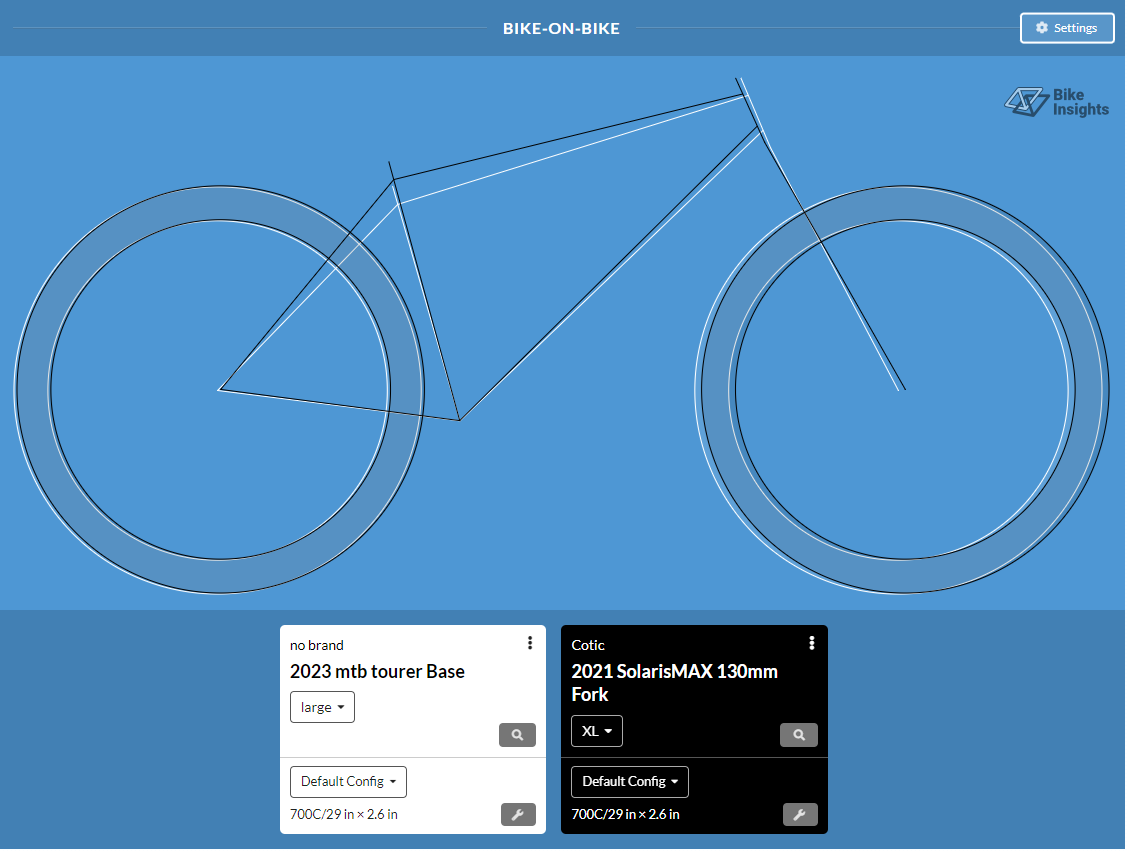
I mention this mainly because I saw a lot of comments that said this was quite out there geo and I’m wondering where that perspective has come from.
In closing i’d say that the bike I want is probably a lot different from the bike I need. In all honesty i’m not hitting up any gnarly mtb trails around town, and the majority of riding i do is on tarmac (albeit with a lot of potholes). I guess I was thinking about the rider i wanted to be rather than the one I am.
I like this take and will try and manifest this thinking regardless of what abomination I produce!
2 Likes
IMO, when a setup is really far away from nominal (in your case, you are very scrunched up), its very hard to isolate one problem and find a solution.
It’s very much like assembling a jigsaw puzzle. The closer you are to finishing the puzzle, the easier it is to put pieces in the right spot.
Sorry you are right, I don’t know where that extra 8 came from 
I think the difference in geometry suggestions in this thread results in differences in what “mountain biking” means to people. My original suggestion of RTR of 1.80 is my baseline for mountain bikes: a bike that has front suspension and is intended to be ridden on technical singletrack. The bike that you are designing is an offroad touring bike with a rigid fork. The seated position and handling geometry of a rigid touring bike and a mountain bike are different IMO.
For some people, the joy of mountain biking is the adrenaline hit of conquering some scary technical features. For others is about being outside pedaling all day to explore. What you like about biking you will determine what parameters you optimize for your bike.
One quick note: be careful when comparing published geometry of hardtails: the SolarisMAX geo is sagged, and the Voyager is unsagged,
1 Like
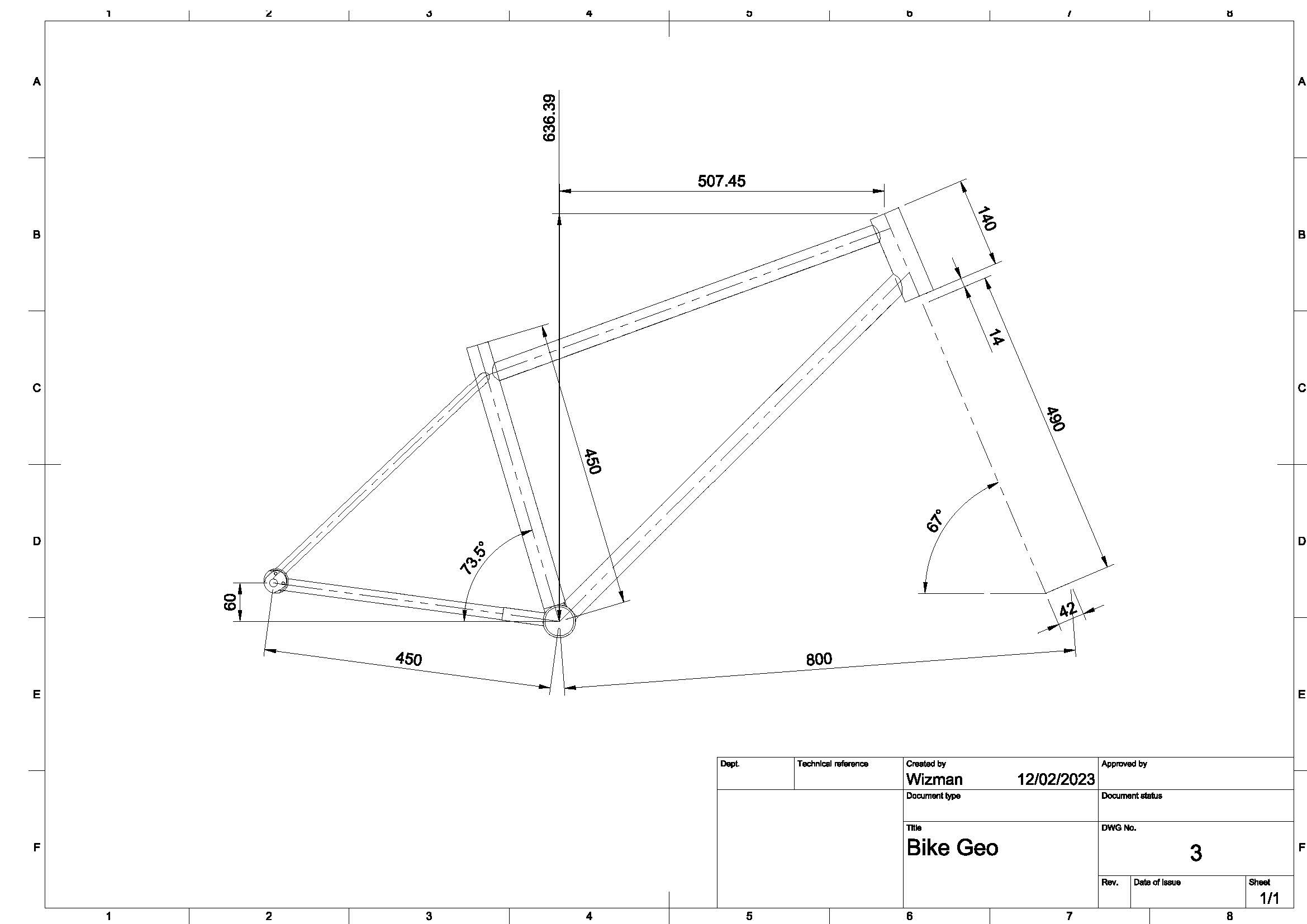
Alright this is it. The numbers don’t even mean anything to me anymore. I’ve slammed together Daniel’s suggestions with some of the original design in what I imagine is the worst of both worlds. With an angleset and some sliding dropouts i’m sure something functional can be made of it. Time to start cutting some Tubes!
9 Likes