Hi Chris, I’ve sent you a quote through the forum. Let me know if you’d rather have it emailed.
Steven
Hi Chris, I’ve sent you a quote through the forum. Let me know if you’d rather have it emailed.
Steven
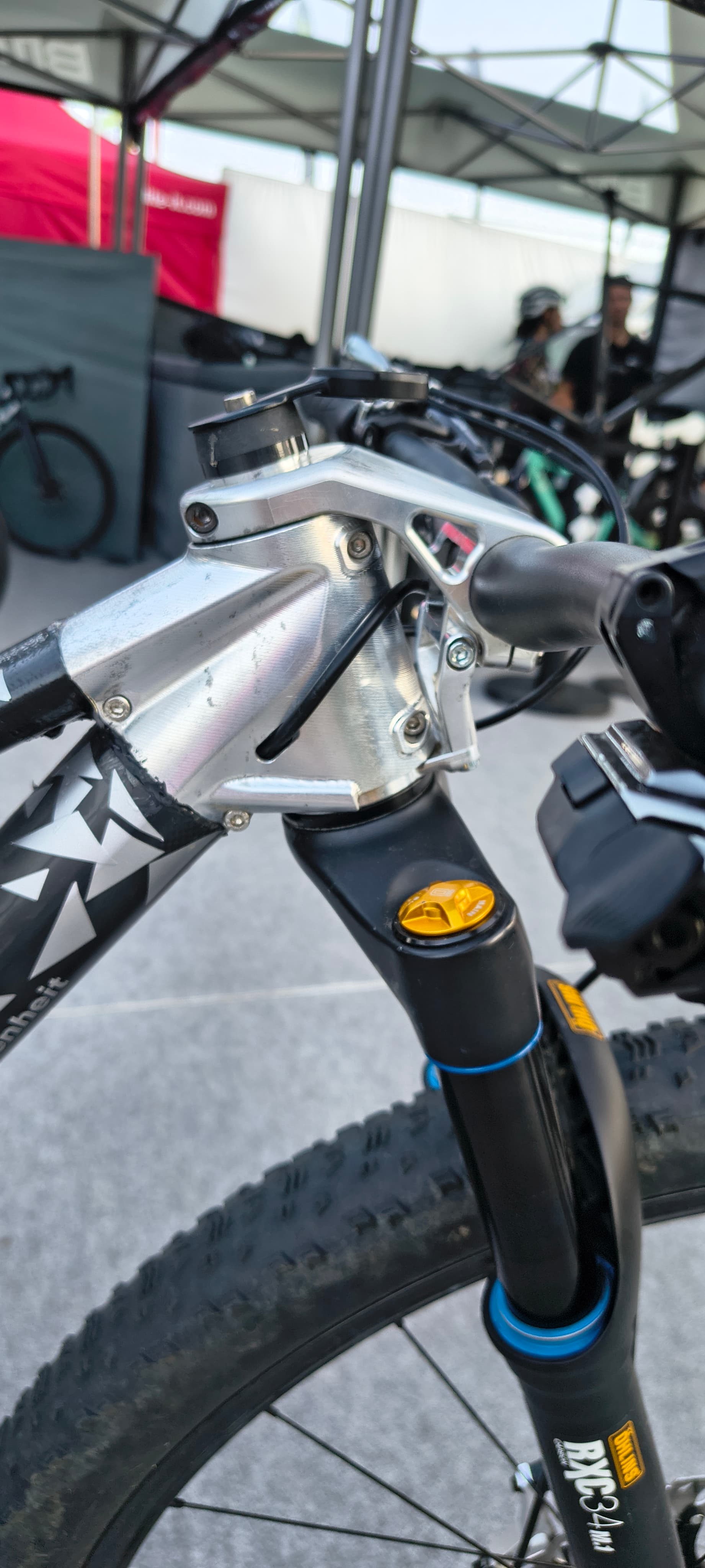
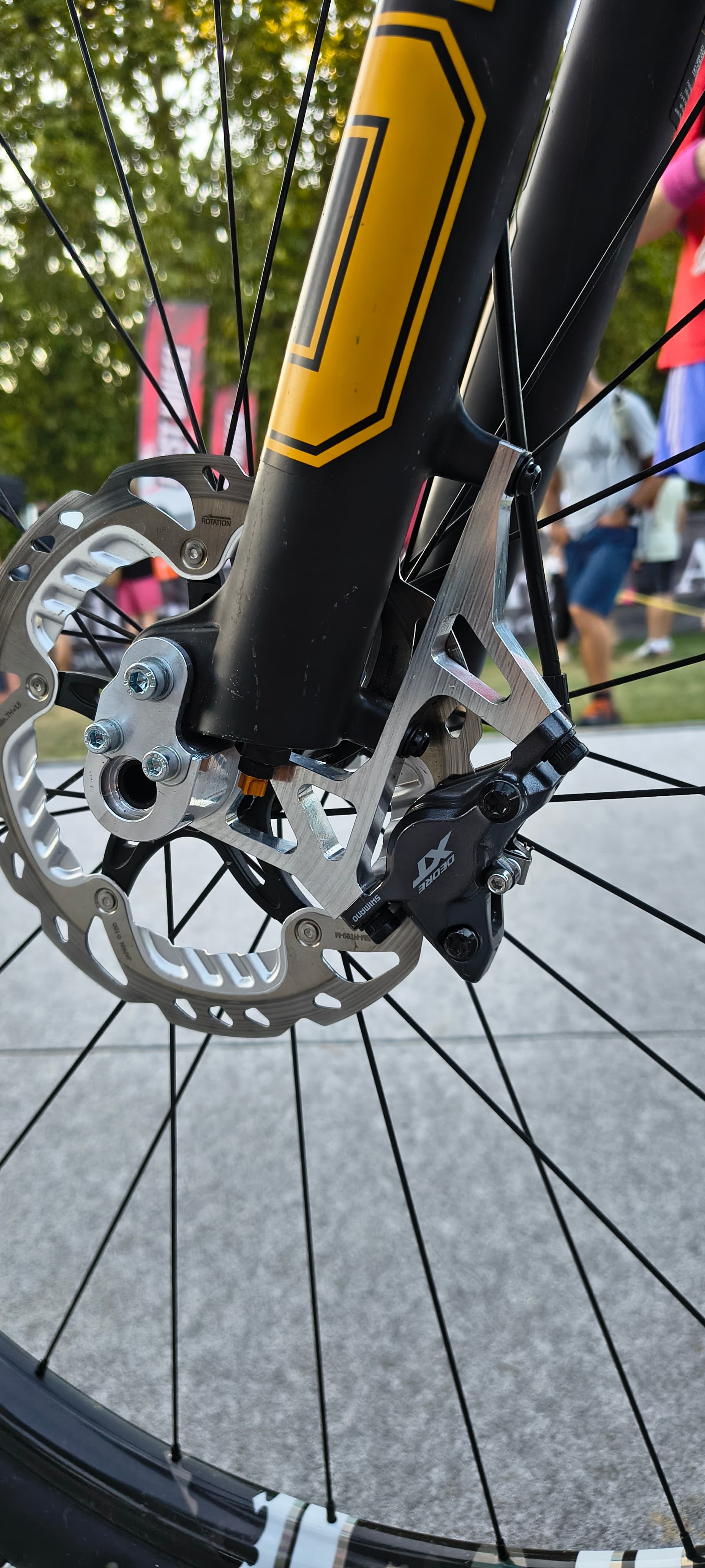
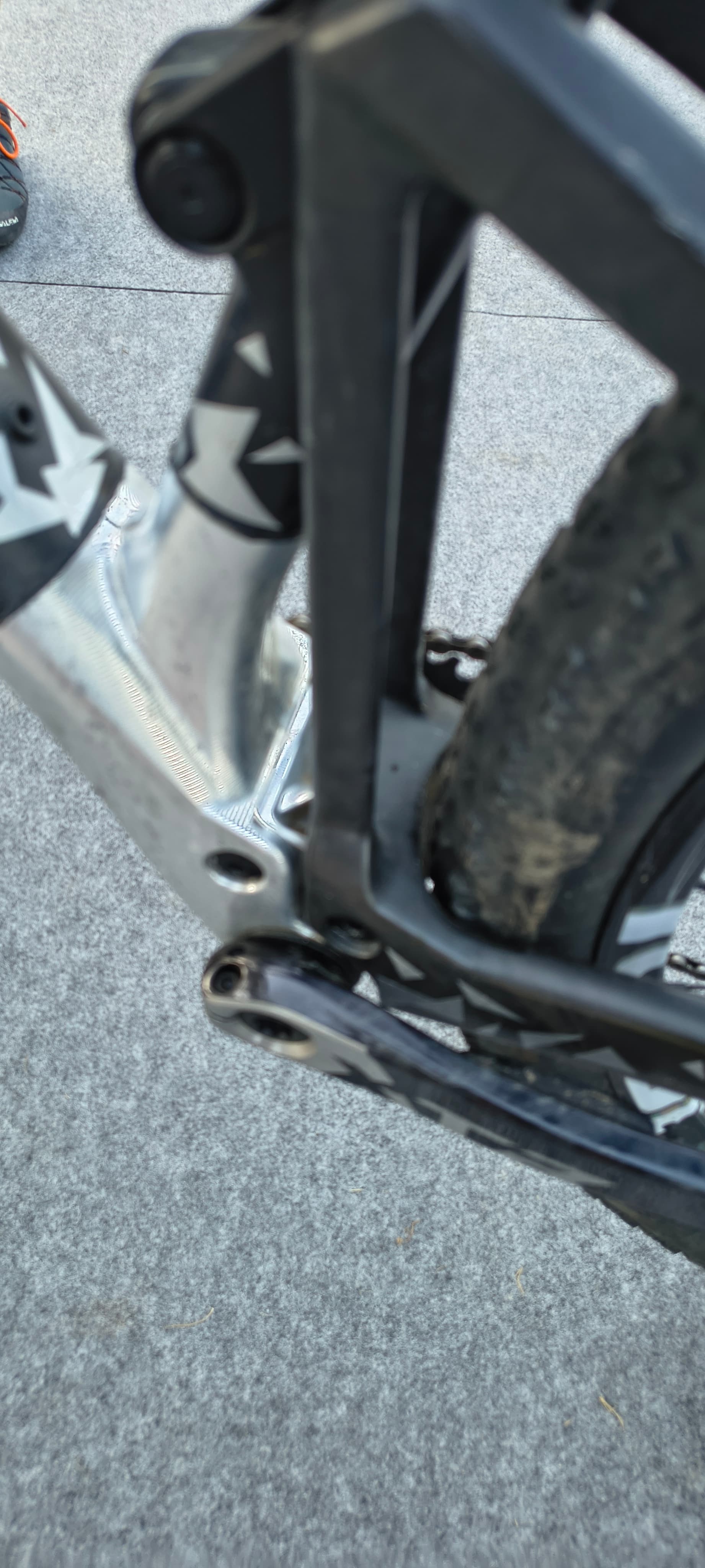
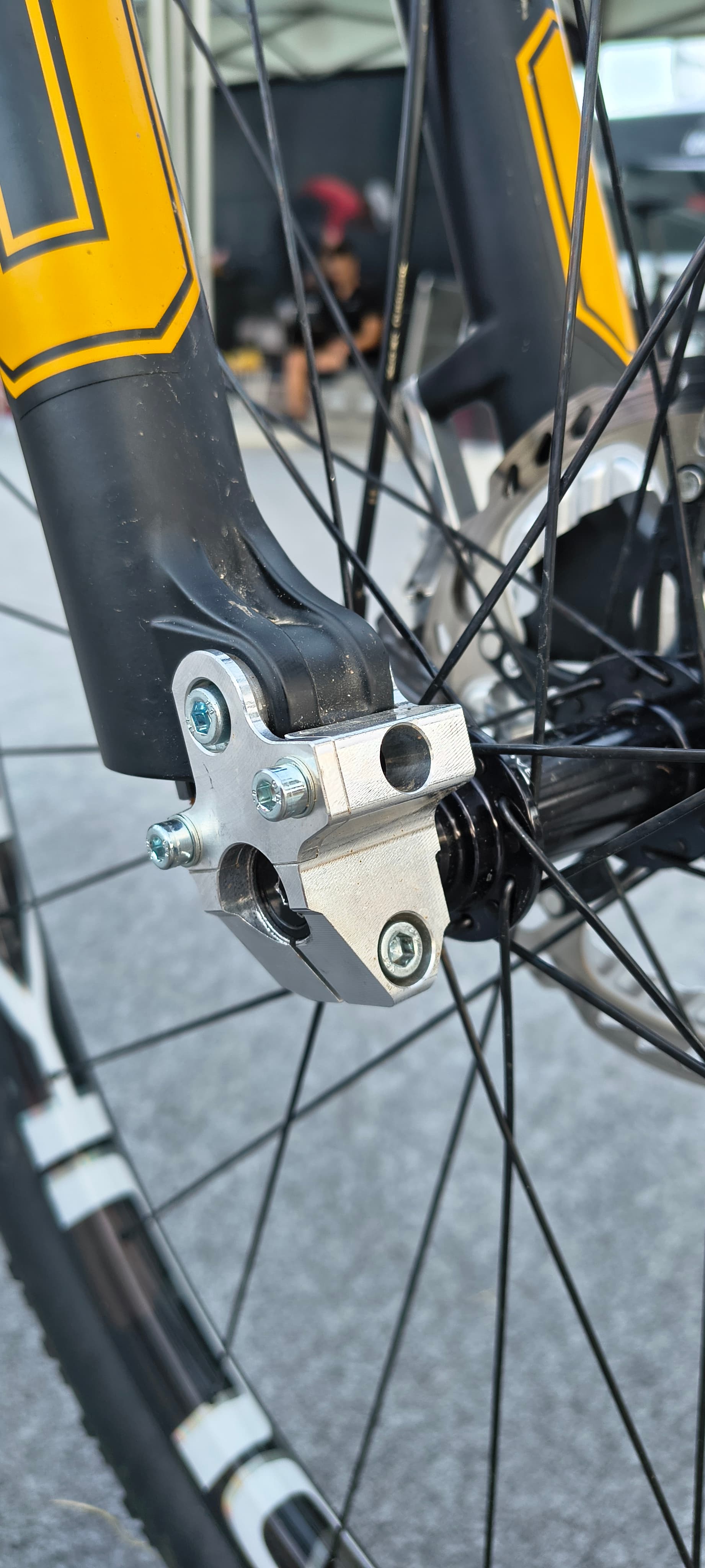
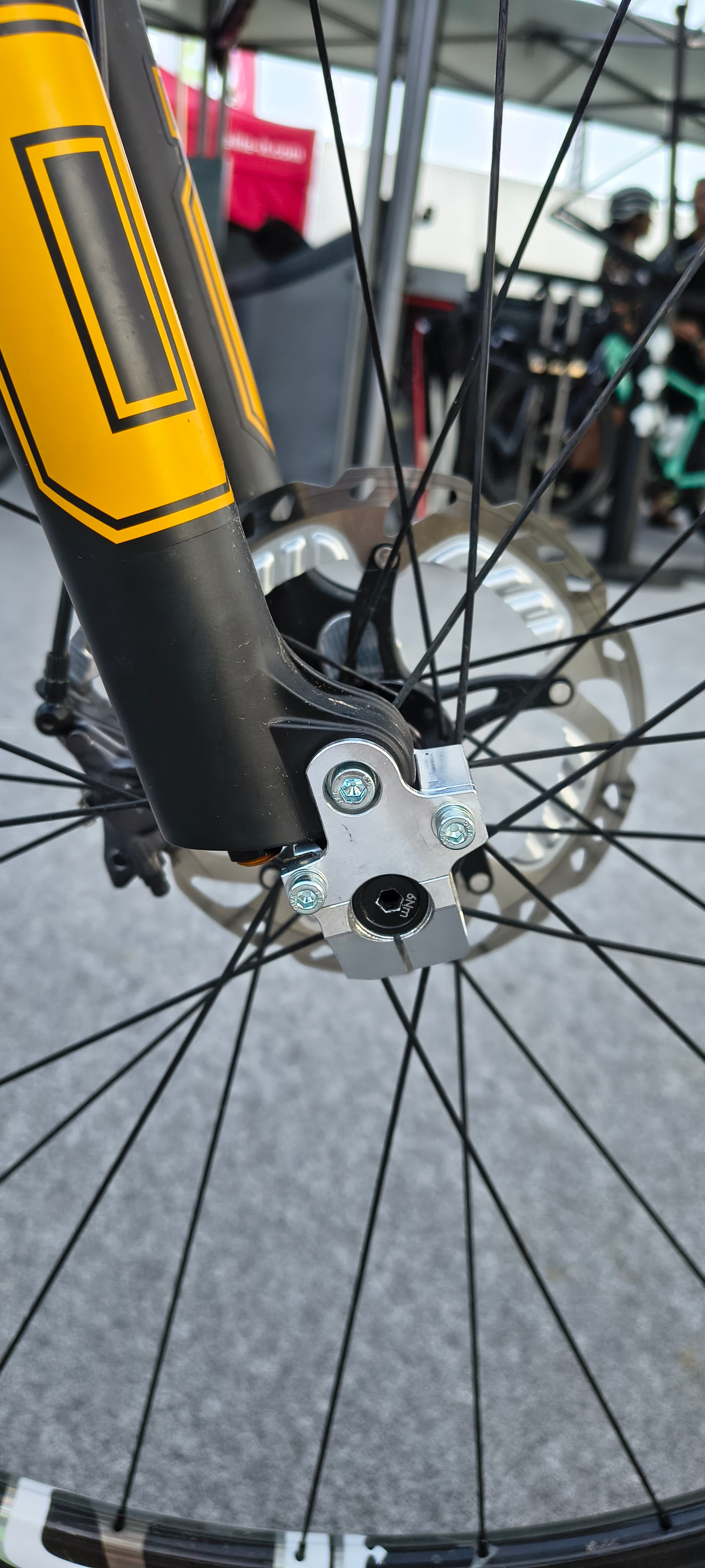
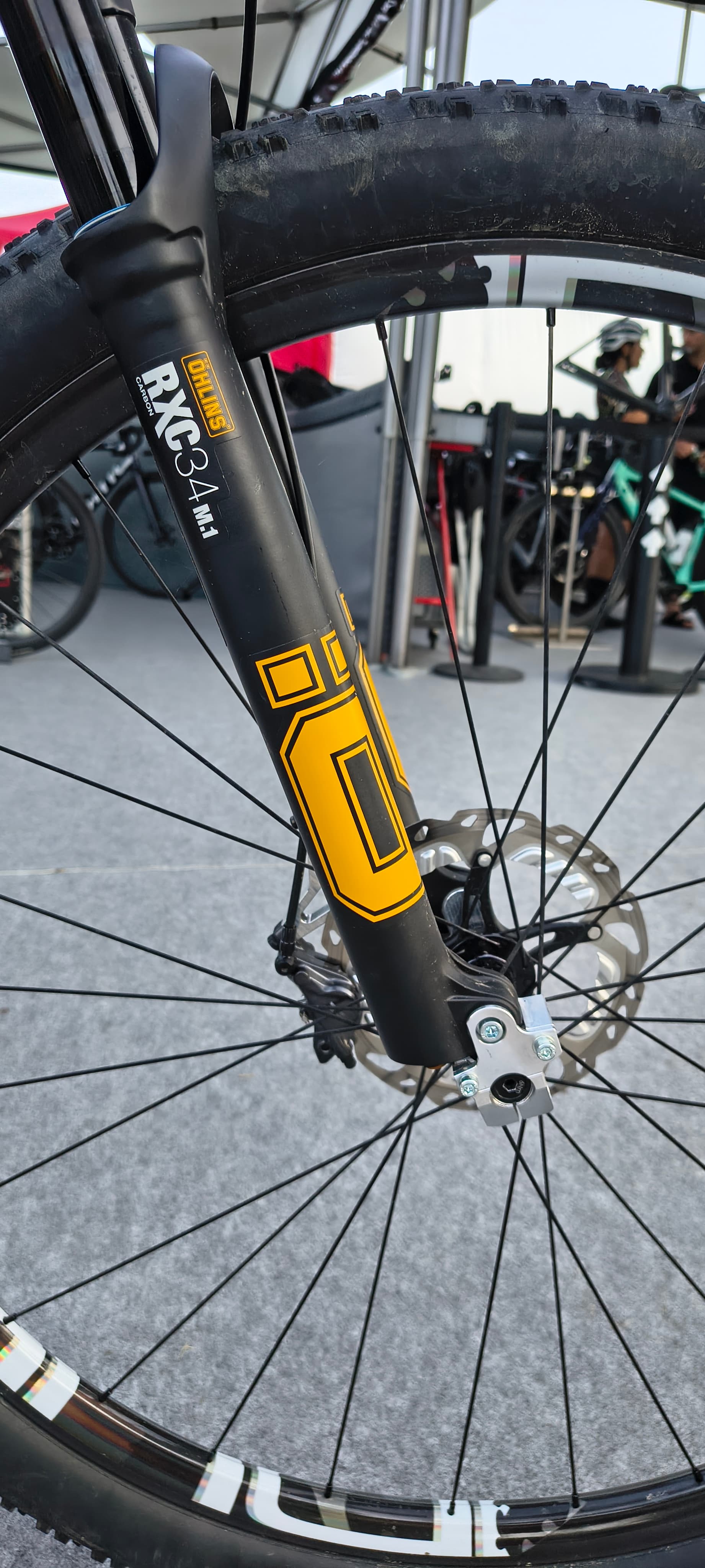
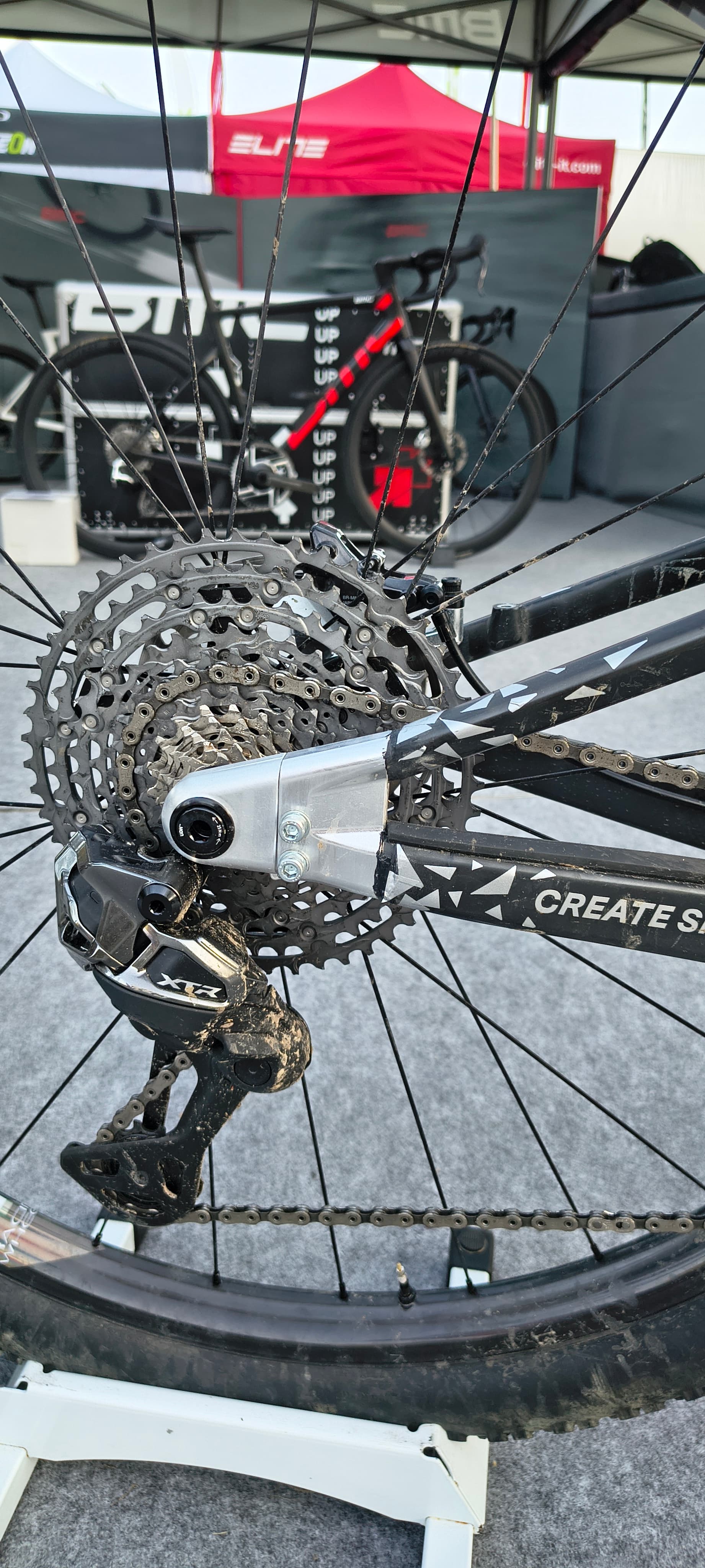
I had a great time at Sea Otter Girona. One of the fun things to look at was BMC’s prototype 32 mountain bike. It really showed all the places where they had to add or modify to fit those wheels in.
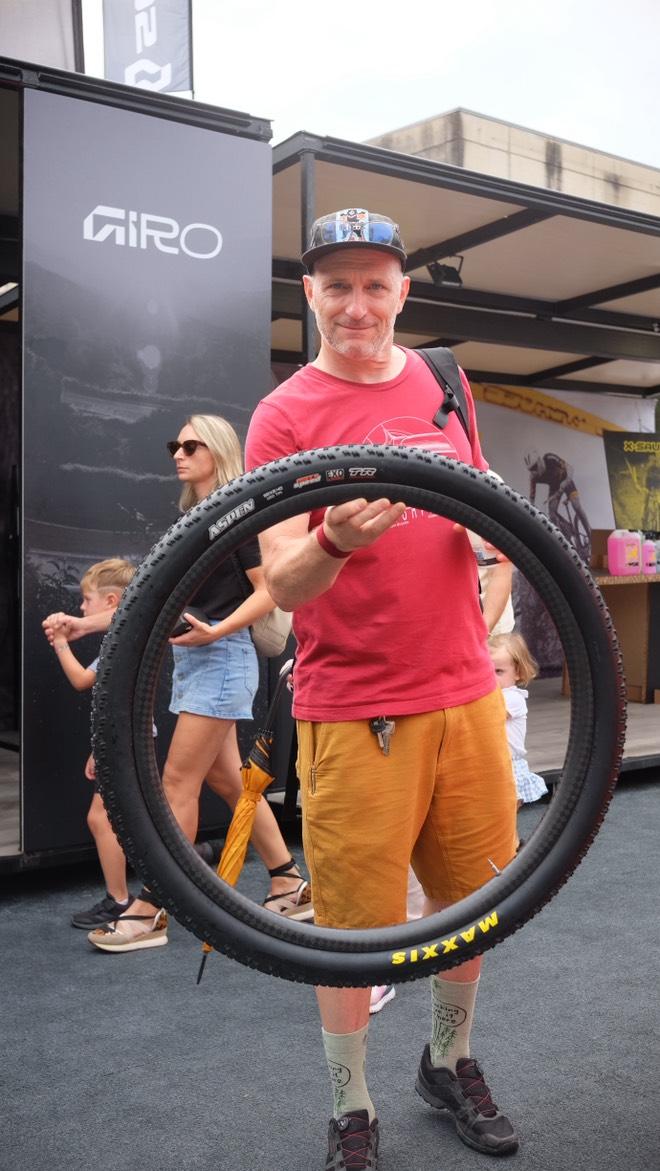
I also included a photo of me holding a tire in case you visual learners are trying yo scale that wheel size to a 6’0”/183cm dude.
@Daniel_Y I really enjoyed your video about your rigid prototype bike. And I was thinking a lot about why it has better grip? How is the geometry different than your normal rigid bikes? Do you think you ended up with more or less front weight distribution? Inquiring minds want numbers!
Hahn Rossman
I realized I didn’t have a full picture just details! Fortunatley here is a video:
Hahn Rossman
When we were playing around with the Curve Cycling ‘Titanosaur’ 36er prototype we also noted the significant extra grip. Even with the shitty rubber compound in the tyres available at the time.
Our conclusion was that at least part of the explanation is that the contact patch of the tyre, thanks to the larger diameter wheel, (all else being equal) will be bigger in the direction of travel but roughkly the same width. So a larger surface area will be in contact with the ground.
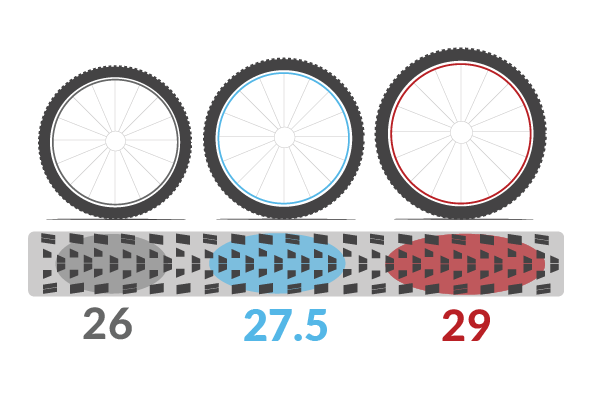
Same principle as when going from 26" to 27.5" to 29".
@JMY I get it with the contact patch changing shape. We noticed that when we were testing slick tires for what became the compass ( now rene herse) tires.
Do you feel like the grip is better climbing or accelerating versus cornering?
I thought @Daniel_Y was talking in that video more about cornering?
I think the flat spot on the tire should be roughly the same area, but the shape gets more oval the bigger the diameter is relative to width.
This is part of the reason wider tires have lower rolling resistance compared to narrower ones, you are distorting more of the casing with the narrower tire.
Hahn Rossman
Those bolt on fork extenders are so cool.
@alex what about the super negative drop stem with part of it captured by the lower head set cup!
Hahn
That stem is crazy too, but is for younger and more flexible riders than me. I’d be happy with the stack, having just bought riser bars for one of my bikes.
The fork extenders have a lot of hardware going on, I haven’t fully groked the necessary complexity. But it’s a cool way to get a functional bike onto the show floor.
The grip discussion is interesting. I have to say that I personally don’t notice a big difference between 27.5 and 29 on the kinds of riding that I do.
As far as I remember, both. But it’s been a while since I rode it now.
That may be right, but even a small increase in contact patch area will increase the breakaway force relative to the ground.
I reckon the difference in how the pressure is distributed within the contact patch matters as well. Since we’re talking about a wheel, the center part of the patch will have a ‘hotspot’ with higher pressure against the ground in the middle, which will decrease towards the edges of the contact patch.
The larger the diameter, at least the way I picture it, the pressure in the contact patch will have a more even distribution. Or rather, the pressure difference between the ‘hotspot’ and the edge will be smaller.
I disagree with that tirepatch graphic. It’s showing larger wheels as having longer contact patches with the same width, so the contact area is going up. The area of the contact patch should be the same assuming that the tire pressure, width and construction are the same.
The larger wheel size, assuming the same tire width and air pressure, should have a longer and skinnier contact patch.
On MTB tires specifically maybe the longer contact patch allows for more knobs to have useful contact and that increases traction?
Daniel’s latest video includes a beautiful looking 55 mile and lots of climbing ride on the 32er, and I heard him mostly talking about how well the 32” wheel rolls over stuff more than traction advantages. It didn’t look like the ride had major issues with traction though. It was a beautiful video and makes me want to get back out to the mountains soon.
Link to said video: https://www.youtube.com/watch?v=bc7QCwraGf0
Hahn: If you build a 32er please bring it to Seattle so I can test ride it.
Physics 101 teaches that friction is independent of surface area, depending only on the normal force and the coefficient of friction between the two materials. While we know that’s oversimplified and sometimes a bit wrong, it’s still good to keep it in mind — it’s not completely bogus. The classic example is dragging a brick, which has faces with 3 different amounts of surface area, but they all take the same amount of force to drag them, on most surfaces.
Knobby tires actually dig in on soft ground, so that’s probably one of the places where the physics 101 description is oversimplified. But I don’t think a simple statement like more contact area means more grip is the whole story either. Like if you could double the contact area, all else equal, I’m pretty sure you wouldn’t have twice the grip. And it’s going to be affected quite a bit by the surface — hardpack vs soft dirt, wet vs dry etc.
Anyone know of any actual data? Tire companies probably have done some testing but their data will be proprietary, or if they release anything it’ll be filtered through the marketing department
With a larger tyre volume (not just width), tyre presure can, to a degree, be reduced. As such, if running a 2.4" wide tyre, the pressure can be lower when running a 32" wheel as compared to a 29" wheel. Thus it’s entirely possible that the contact patch does indeed grow.
Yes, I believe this to be the case.
Indeed it does.
While that may apply when dragging a brick, rubber-to-road/trail will have some other considerations to take into account.
Because I’m lazy, I’ll let someone else explain. This is what I found on Quora regarding the width and grip of car tyres (partial quote for brevity, link to full quote here.)
With a narrow tire and small surface area there is plenty of friction. The rubber just isn’t strong enough to hold onto its surface molecules, so it leave a skid mark on the road.
One engineering solution is to make the rubber stronger. But that gives it less grip and the tire slips more easily even if it doesn’t leave skid marks. Not optimal.
The higher-performance engineering solution is to increase the surface area. With lower lateral sheer forces on the rubber per unit area, the rubber holds together and can take a greater overall force before skidding.
And on dirt, as you mention, the actual surface conditions will affect the ultimate grip too. Here it’s not only the rubber that will be weaker than the breakaway friction - depending on the trail surface, the dirt will also give way at some point.
[Edit: I recommend reading the other replies in that thread I linked to as well. Especially the one from materials engineer Louis Vaught (reply #2).]
With knobby tyres off road, more contact area means more knobs sticking into the loose surface, so you probably do get more grip because of that (yes obviously this is not actual data  , but the situation seems simpler than with a slick tyre on a smooth road, or even a smooth wet road where it gets even more complicated).
But the contact area ought really to only depend on the pressure. A huge diameter wheel just makes it a different shape– longer and thinner but with the same area.
I actually kind of like small wheels having read Moulton’s book and being a fan of his cars. Tempted to make something with 20” to buck the trend
One advantage they do have, pointed out by Jim Langley in a fairly recent video, is that when drafting you can get right up close to the guy in front and get more of a pull. I think we could see them in the pro peloton soon for this reason.
It’s a very interesting discussion about the 32” wheels.
I’m interested if we will see 32” bikes at the bespoked show on Germany in two weeks?
Will we see more tires then the MAXXIS Aspen in 32”?
What do you think? Are there participants of bespoked?
BR Tim
I’d love to build a mullet xc-ish hardtail using 32”!
This makes me want one even more.
https://www.mtbr.com/threads/moar.1241764/page-3?post_id=16560787#post-16560787
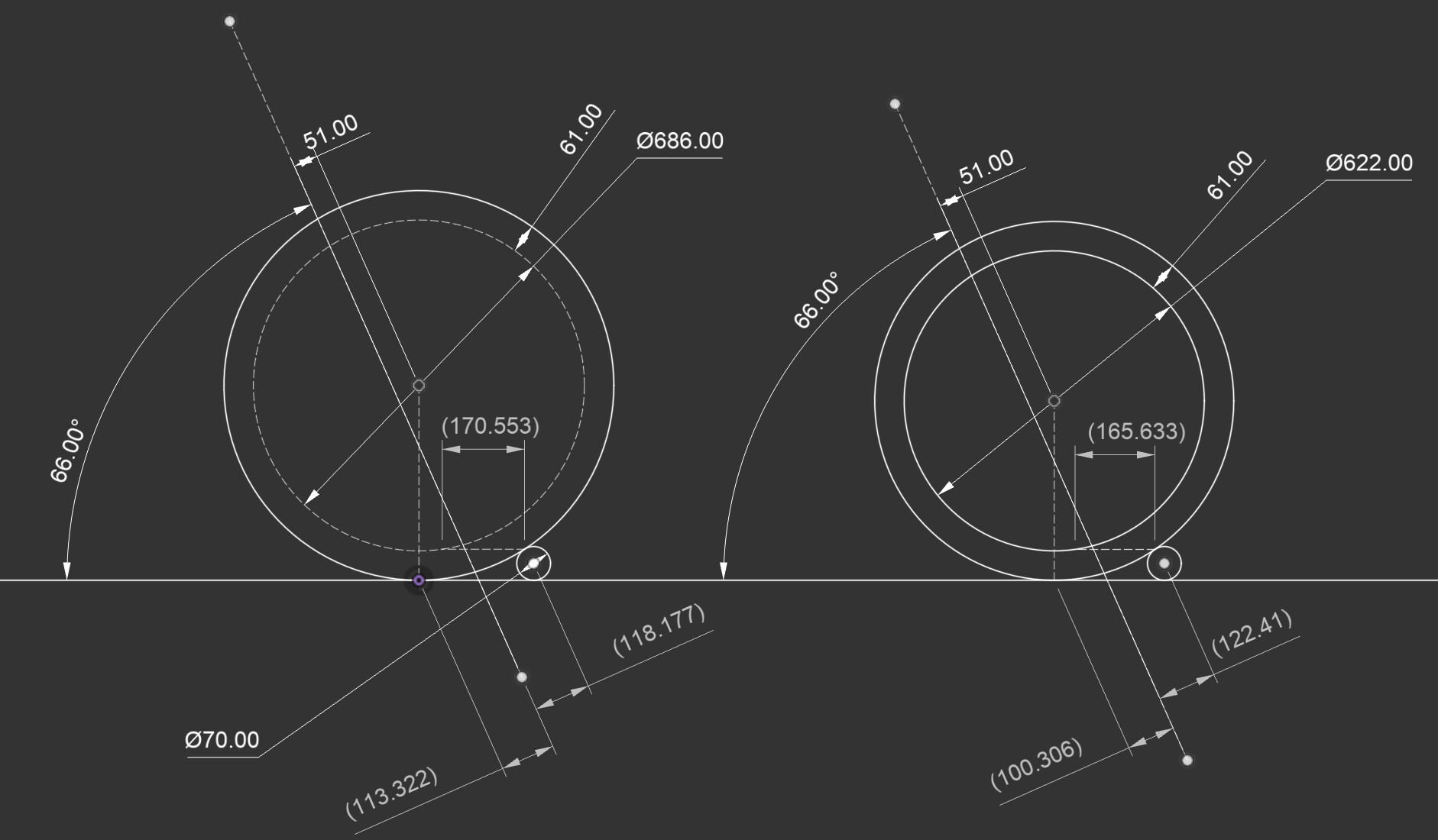
I was drawn into a timely conversation about 32”’s this week and I found myself having a knee-jerk reaction about the "shallower” approach angle of the front tyre creating a situation where its far easier to go further negative trail (say than a 29” front wheel) , and thus bigger-wheel bikes needing to be notably slacker, (or higher trail I suppose but alas (ominous/obvious foreshadowing)) to not get sketchy AF in the rough stuff…
when I had a look at factions 32’“ prototype in the article mentioned I was like “HELL NO thats not a 66’ HTA as claimed, thats like 63!” (being not unaccustomed to manufacturers outright lying about geometry) but then I drew it out and the photo is fairly skewed, it draws out at ~64 as pictured, but the wheels are notably different sizes in the photo ( though the rear appears larger), and its not perfectly square on etc, etc, so plausibly, it might be 66 as pictured, though I am still a little skeptical of that…
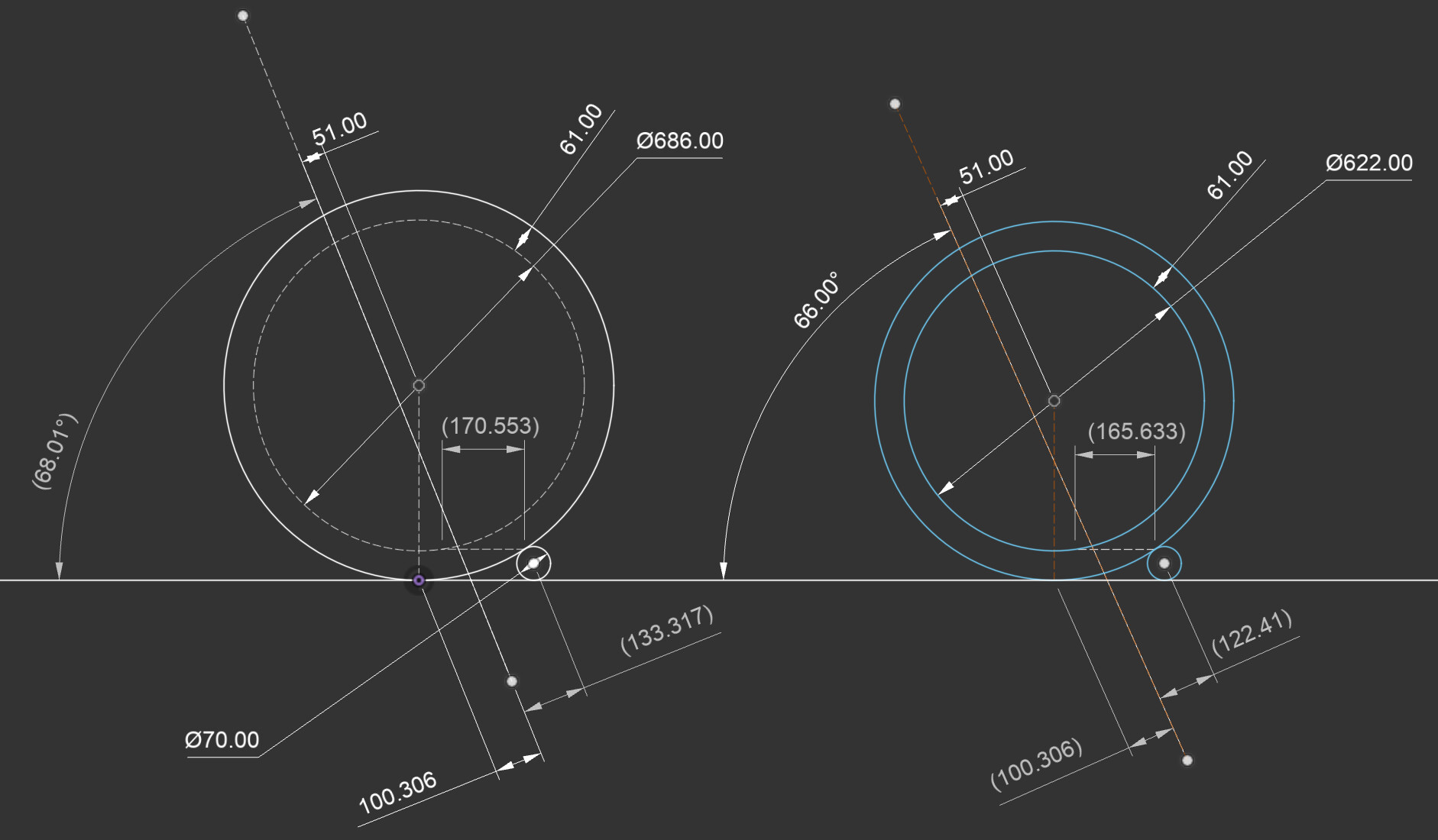
Anyway, in the end I made some (not crazy imo) assumptions and drew out a comparison, and in doing so, I kinda proved myself wrong.
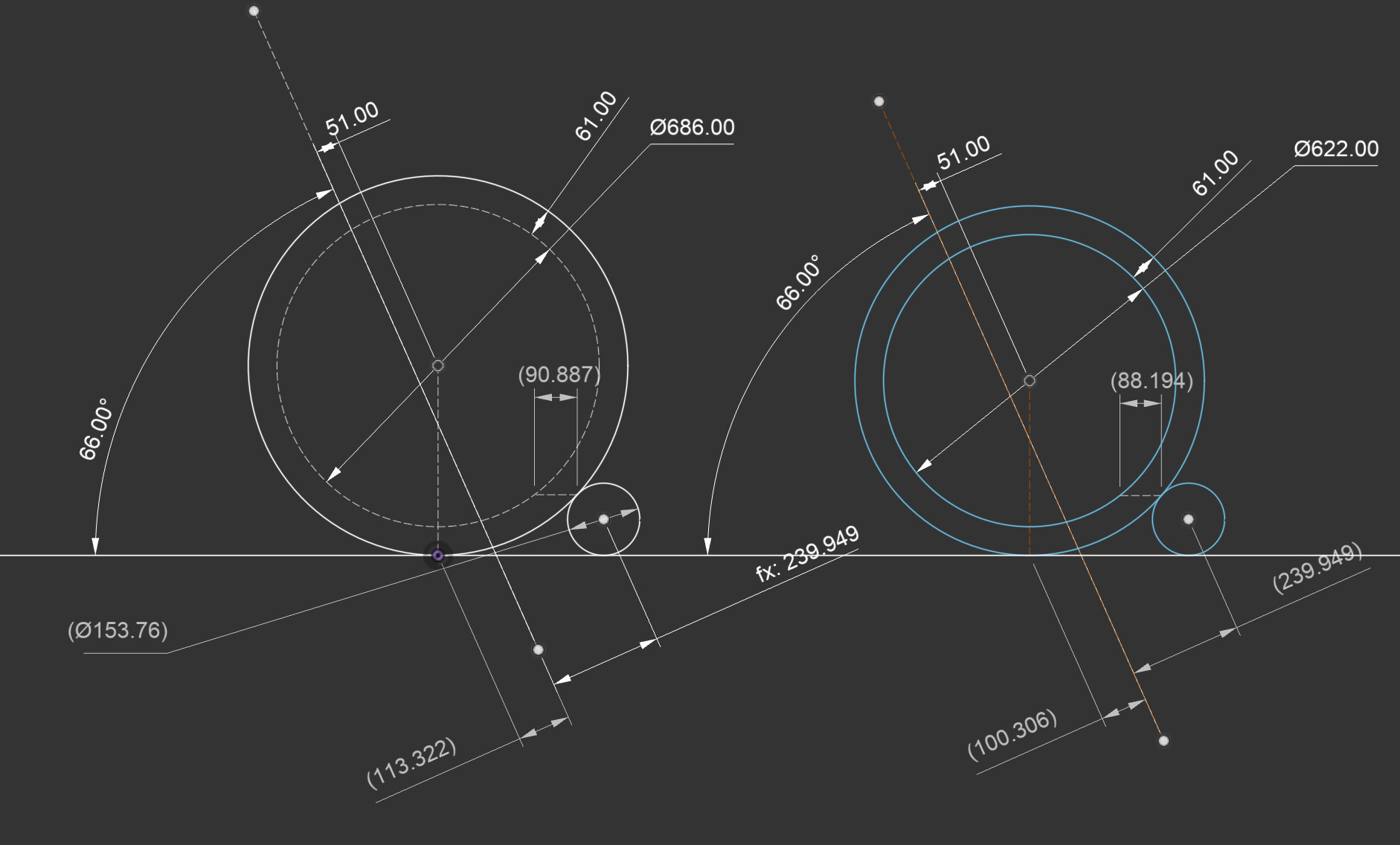
(with a million caveats) at the moment of contact, hitting a round bump 70mm tall, my very-simplified 32” wheeled front-end has notably less “induced” negative trail than a 29” wheeled bike ( because,(duh) at the same HTA the bigger wheel bike has way more trail to begin with), not to mention there’s more distance (time) before the tyre ‘bottoms out’.… and the attack angle is going to be lower…
obviously if we standardise for mechanical trail (from here its about ~2’ HTA) , the opposite becomes true, and my knee-jerk-thought of (“its gunna need to be much slacker”) was kindof aimed in the right direction of “it’ll need more trail” though it was actually way off {it already HAS more trail}.
while I believe metrics are not, and do not make, bikes, I do think they’re the best hope I (and maybe others) have of quantifying, and understanding how bikes do what they do, especially if I/we want to talk to other people about them…
It looks like, for notably larger bumps, the difference does become more pronounced, but this is a simple model, and I believe, the bigger the bump, the more thats going on (suspension, flex, body language etc), I like to think if people are riding into 6” tall hits completely blind, unloaded and rigidly posed, there is a bit more to think about, and thats roughly where this model shows the inflection point (see-153.76) to be.
might be a meaningless or obvious datapoint, especially for people with a better intuitive grasp on scaling trail for wheel-size, but it is one that challenged my intuition, so thought id share.
if YOU were going to build a 32” trail bike, can you tell me how would you decide on a head tube angle/trail measurement? and if you can, provide some context, and tell me what that hta might be?
im going same trail and head angle as my 29+. 20mm more f-c (820mm). 68 head, 52mm offset. will report back…
It’s an interesting thought.
Just purely from feels, not from data. I suspect that any momentary contact of the tyre in front of the inflection point will also ONLY induce a momentary impulse on the front wheel/steering assembly. Meaning your front wheel pings off line - not that it causes anything worse than that.
The changing contact patch causing steering to flip - “jackknifing” comes from a feedback loop of the trail going negative and then causing the trail to go further negative forcing the handlebars backwards - it needs to be a sustained contact in front of the inflection point for this to happen. It’s likely to only happen during low radius corners at fast speeds.