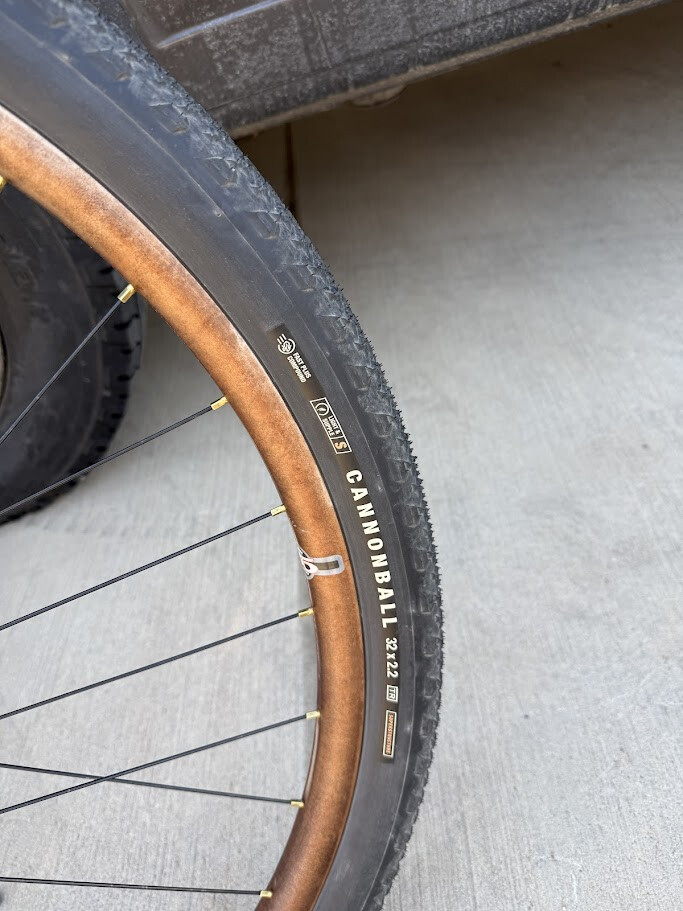
More praise for 32”. I really want to build a gravel bike- talked to people at Terravail while at Mid South and it sounds like gravel tires are coming around Sea Otter. They had a not-so-hidden employee bike hanging out next to the tent sporting a pair:
Anyone playing with a gravel bike? My main hangup is none of the carbon forks that would fit a 32” tire make much sense for a gravel bike, and I’m not set up to make my own forks.
See if somene on here will make a fork for you. Would be a nice colab.
Where is everyone headed with the front end geo? Are you going a little different angles and offset to approximate 29 trail numbers or just going with your normal numbers and having a longer trail?
I’m really hoping to commission a gravel bike from Corvid Cycles, but I’m waiting on tires actually existing for it. I want to stick with standard gravel cranksets, so squeezing a 2.4” tire in seems impossible.
This is the million dollar question, isn’t it. It might make sense to go with a fork that has adjustable dropouts in the hopes that one of them will feel right. I need to spend a lot more time researching this before I commit to a frame design. Maybe Sea Otter will include the announcement of some gravel forks and that will give us clues about what offset the industry thinks makes sense.
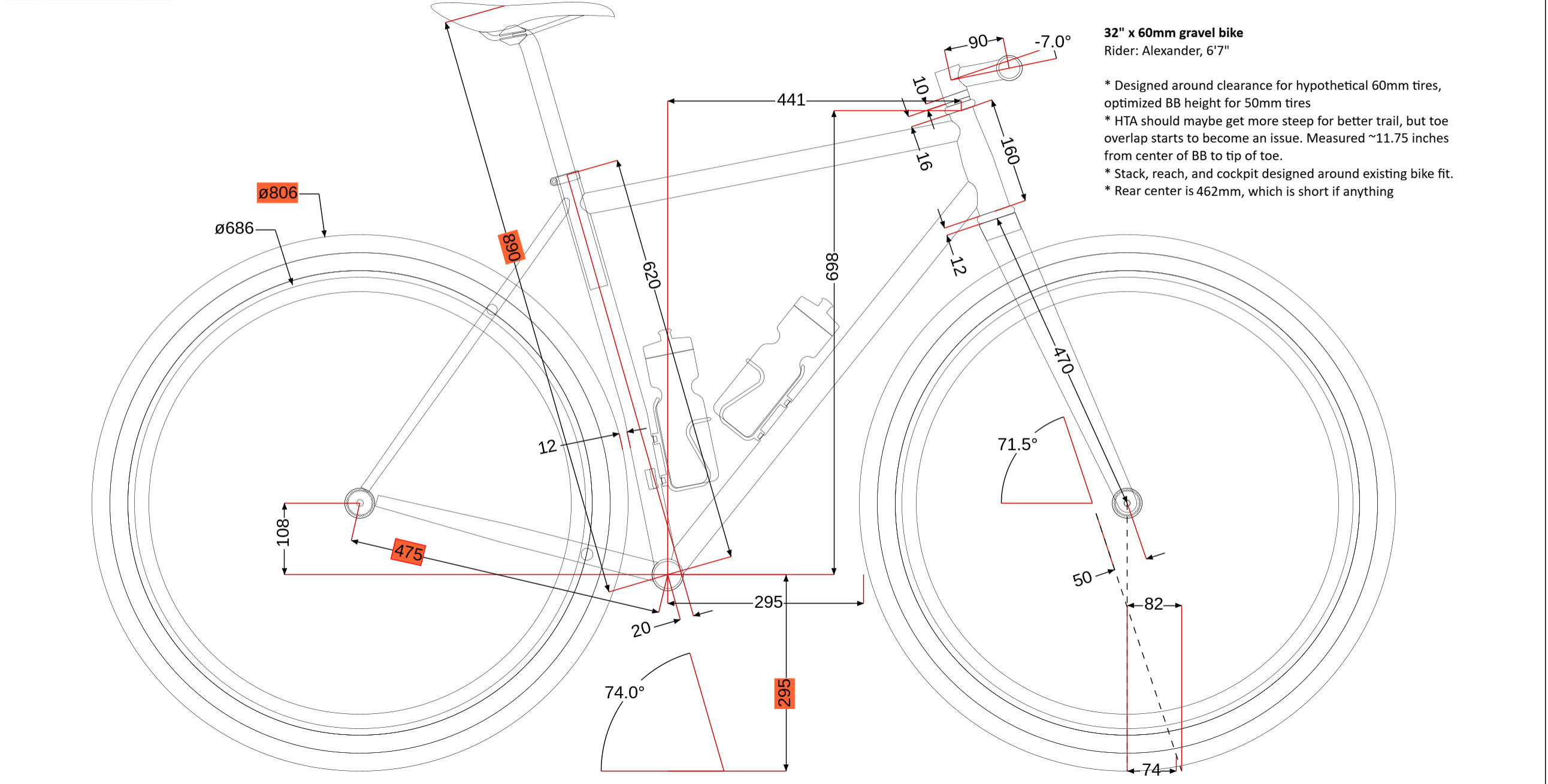
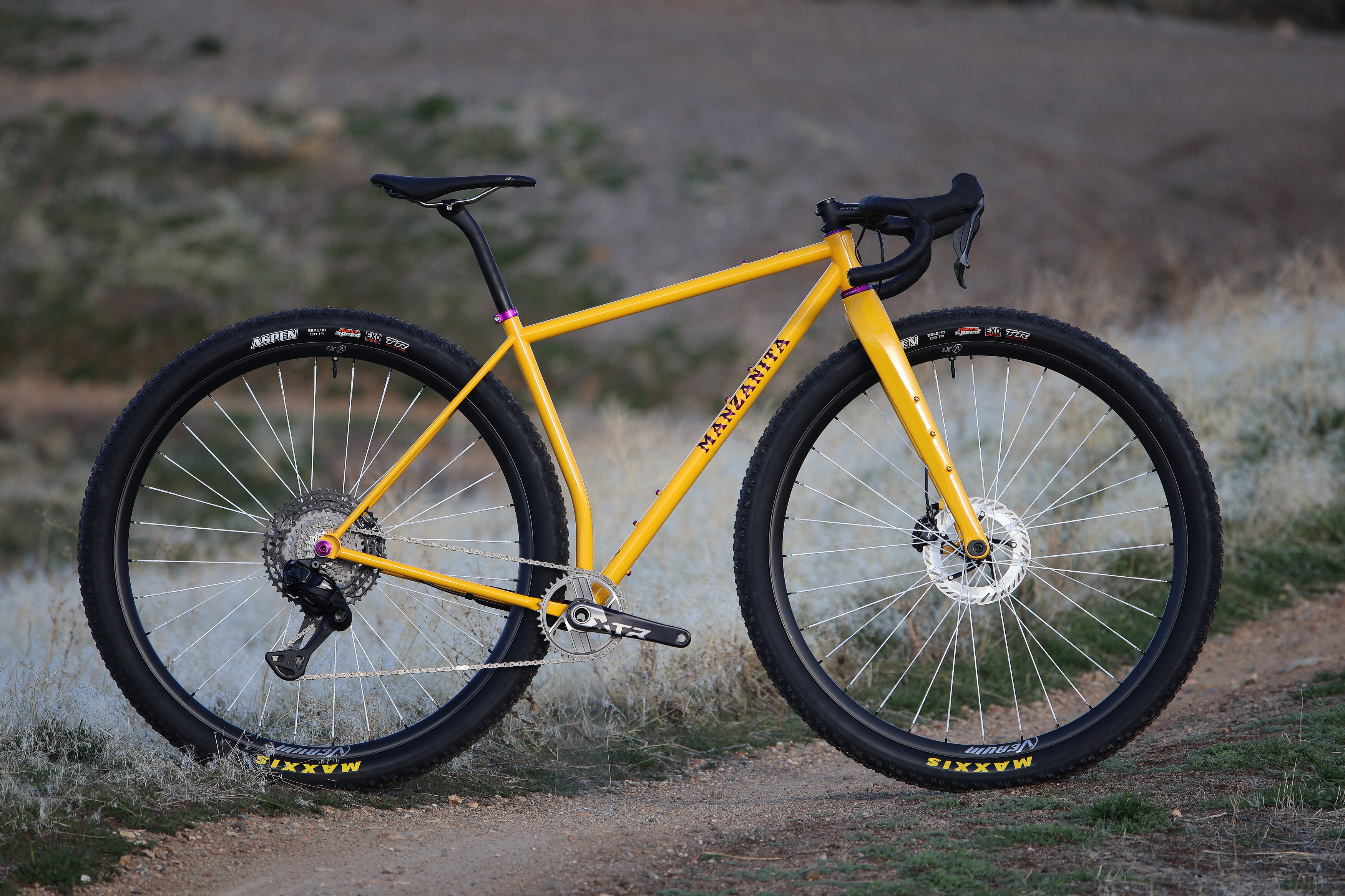
Here’s the 32er I made recently. It’s not my bike, so I was only able to take it on a 1-hour ride with a mix of pavement and fairly smooth gravel.
I used the Columbus Futura Adventure fork with 470mm AtC and 50mm offset. It’s currently the shortest fork on the market that clears a 32x2.4. Mechanical trail with a 71º HTA is 82mm.
Before riding the bike, I was concerned that the trail would be too high. After all, most of us are used to riding drop bar bikes with a trail figure within a small range. Outside that range and we assume the worst. If I were to make a fork I’d shoot for 65mm offset to bring trail down into the high 60s.
But after riding the bike I have no issue with the high trail number. The bike was set up with a 46cm-wide Ritchey handlebar. Maybe the extra width counteracts the higher trail. I didn’t test with narrower bars. I’m running 35cm-wide bars on my personal gravel bike for the aero gains and handling on slow speed stuff is weird. But once up to speed it doesn’t matter for me.
My overall impression of riding this bike is positive. Very positive. It does feel like it keeps momentum better when going over rougher sections. The bike just wants to cruise. Cornering on flat and loose dirt was great. I’m assuming most of that extra traction is coming from the 2.4” tire at 18psi.
I think a bike like this would be excellent for bikepacking. I could see something like this win the Tour Divide or other ultra distance off-road races.
But I’m not personally scrambling to make one for myself at 5’9” (1.75m). IMO the frame design is a bit compromised for someone my height. I think I’d rather have a bike with boost spacing for 29x2.4 wheels if I wanted a similar feel.
im on 68 head angle and 52mm offset on my 32/29 mullet xc mtb and like it a lot. my flop/mech trail feel spot on…im hoping we see some decent offsets generally.
edit: missed the detail in the question: yep increased the offset to match the 29(+) flop/trail set up and forgot the pneumatic trail would be reduced but overall happy I trusted the numbers…
Beautiful build! You make some incredibly polished bikes.
If you were building another and weren’t worried about toe overlap, what HTA would you use? Looks like something like 73 would bring the trail down into the 60s, but that might introduce all sorts of new problems.
I’m 6’7” and trying to nail down my ideal geo if a 32” gravel tire comes out. This is where I’m at currently:
I personally wouldn’t want to use a 73º HTA and 90mm stem for off-road riding since the dirt roads in my area can be steep and loose. I’d rather place the front wheel further forward to reduce the risk of going over the bars.
But if you ride tamer terrain then maybe that setup would work great for you.
I think what you have in the drawing looks pretty good.
You may want to increase the chainstay length maybe 5mm. The Aspens tend to be oversized. I used a diameter of 808mm for my reference without having a wheel on hand and the tire came a little closer than expected to the back of the seat tube.
Thanks for the design notes guys. I have been asked to do a Demon XC 32, so flex stay platform with 530 reach. Yeah, very tall gentleman. Originally designed an Oisin (trail) for him and I felt like a little kid getting on dads bike even at 5’10”
I’m not convinced you get that much improvement but the spoke geometery should be better for super duper boost. I guess that’s a balance between what you think is better in that spoke geo or having hubs that are more mainstream sizing. I guess if enough 32 builders use super boost it will be come more popular.
On a similar topic, I’ve always been dubious about the real-life benefit of offset rims as I’ve not seen a higher prevalence of failures using one kind or the other.
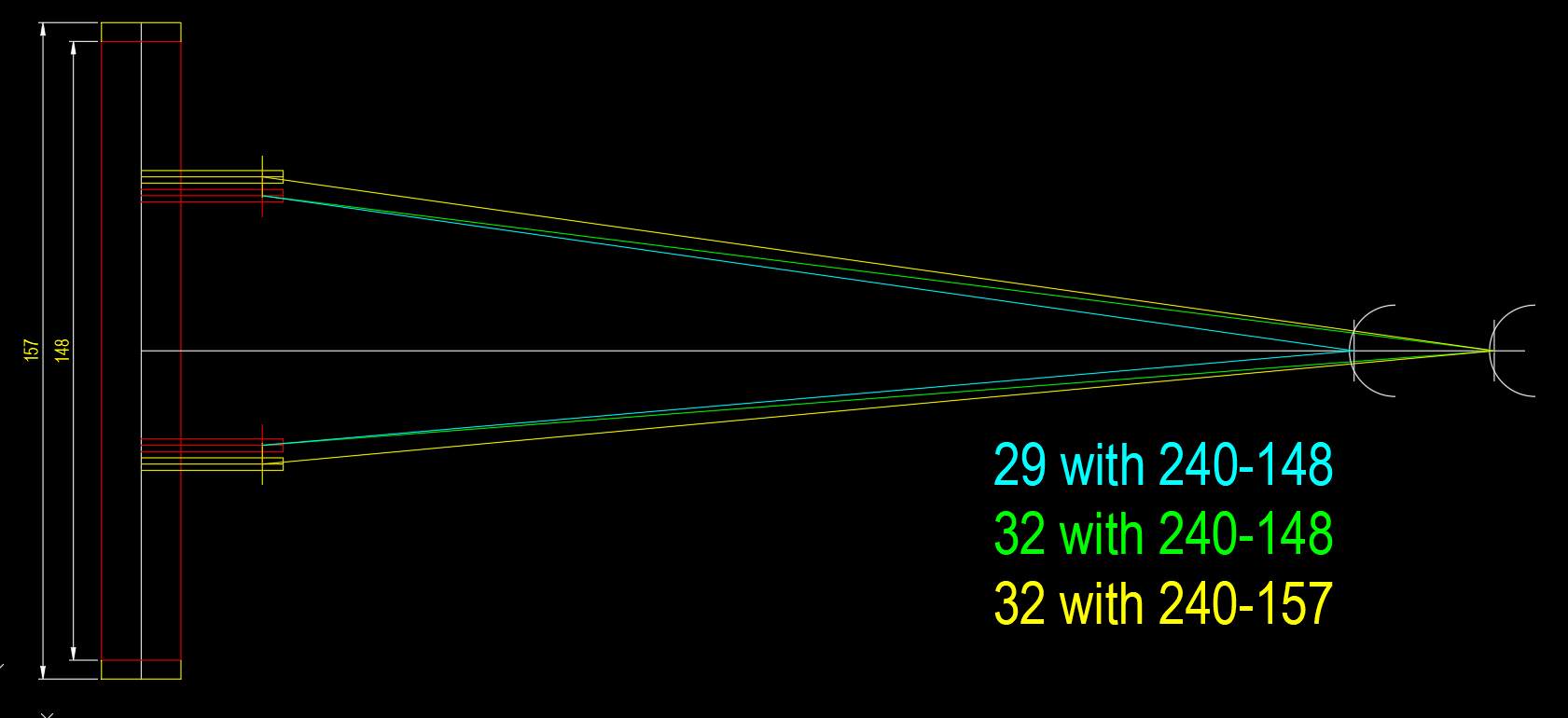
On paper it certainly looks better though. According to The Spoke Length Project (my go-to calculator), you get a 13% improvement in right/left tension ratio with only a 3mm offset. This is based on a 29" rim and a DT Swiss straightpull boost hub.
ive been dwelling on how to deal with suspension forks in the 120mm bracket and 32” front wheels and adding in another layer of problem. I like a relatively long f-c and a head angle of 68 and flop under 40mm and a bar sweep of ~20*. what that all means is the bars will need to leave the steerer probably right where the upper headsdet is. hmmm.
decided to mock up a set up yesterday to see how that could work. I can’t help but feel there’s going to be efforts to reimagine this area if 32” takes off significantly. large -ve angle stems are ok, but you are going to have to have 45+mm of stem and that has a knock on effect on the rest of the steering geo. fine if you are DH orientated, because slacker head angles make sense.
Anyway, this is where I got to. I am actually thinking a 32mm stem mounted backwards, holding a cut down handle bar and 2 syntace clamps on either side pointing a bit more forward and down might work better, but the loading of the syntace clamps is an unknown….will keep tinkering….
I’m dubious on them too! I’m no engineer but I’m assuming some of the best in the business work at DT Swiss and they’ve never offered an offset option. So any performance benefits must be marginal at best or offset by some clear negatives.
I’m a big proponent of reducing bracing angle of spokes and getting closer to even spoke tension for tall/strong/heavy riders. I have always broken lots of spokes on 135 cassette hubs, but not 135 singlespeed. I have been using 157x12 hubs for 4 years and am happy with them for strength on a 29” mtb. It took me 3 years to break a spoke. I would probably use 197x12 if I were to build a hard riding bike with 32”s, but I am 280 lbs.
Illustration to aid visual….(I took the center of the flange hole for the average bewteen two spoke centre lines ie. a spoke being either side of the flange)
I wonder where most of the load is handled by the spokes or if it is transferred equally alloing the full length of the spoke. There is obviously a bigger gap between avg. spoke centre lines. The spoke crossing definitely has an affect on wheel builds, how much is debateable without hard lab testing with measurement. Do we only look at the outer half of the spoke (I know we don’t but just exploring the idea). Does having an assymetrical butting, ie. thicker base but to just past the crossing mean that a 148 hub would almost have the same affect as a traditinal light weight butted spoke. The PB article with number from Neuman suggest this might work.
I think the advantage with 157 is mostly gained in the DS spokes and if you were chasing every last marginal gain then you’d go 157 with assym. rims.
Then there is the whole spoke tension debate. WCDH teams running really low tension to offset the super stiff rims they’ve been given. Most of us don’t ride that hard but then we do stupid shit that subjects equipment to weird forces.
I wonder if it would be worth it to hit up any of the steel or titanium handlebar makers (doom, WZRD, Oddity, Moné) to make a custom bar that has the rise(drop) and back sweep that would better suit the tall 32" forks? I’ve been toying with this idea as well, just haven’t had enough time riding the 32" bike to know exactly where I want my hands to be.
Now that more brands are jumping in on 32” wheel stuff and some of the regular distributors are starting to stock it, I’d like to offload some of the rims and tyres I’ve got in stock and generate some cash. I no longer have to hold loads of stock to satisfy my upcoming builds. I have Aluminium rims (made by Ryde) that I can sell for £50 (were £70), I think I’m now out of carbon rims, but I’m checking that later, and I still have some tyres (Apens and Vee T-Monsters). All in the shop on the website. If anyone wants bigger quantities, let me know, and we can do a deal.
 and handling on slow speed stuff is weird. But once up to speed it doesn’t matter for me.