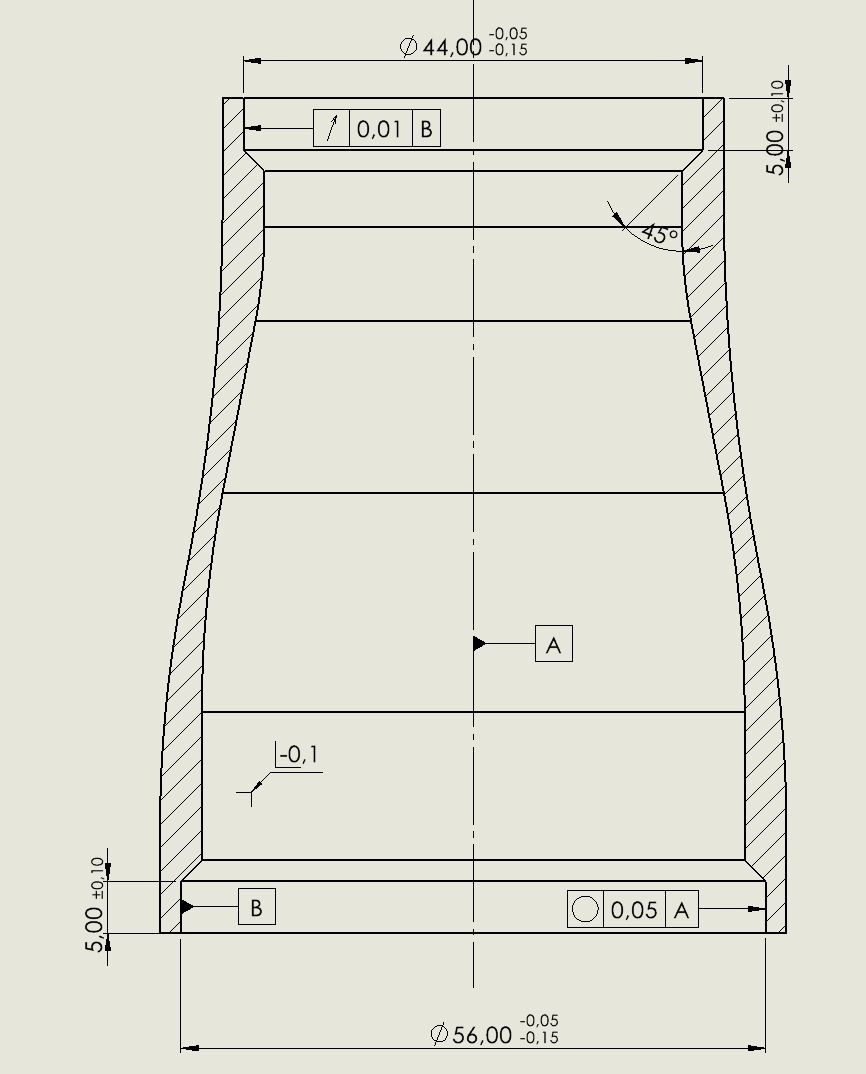
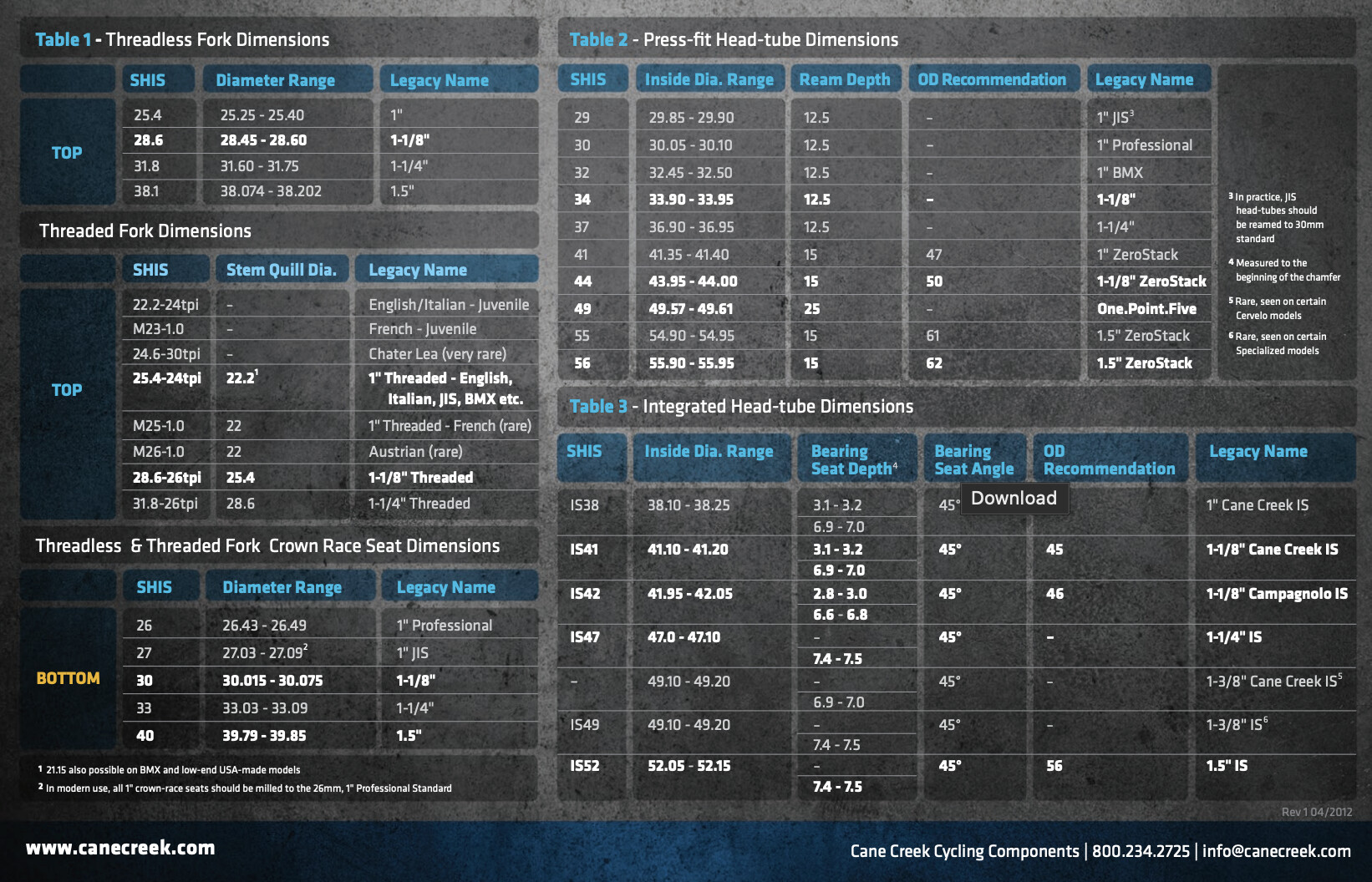
Let’s say I was very fancy and were to CNC the headtube of my frame at a friend’s CNC shop who has no clue about bikes… What would be the tolerances for an IS Headset bearing to be fitted in there? A quick search on the interwebs brought lots of SHIS info but nothing about the tolerances themselves…
Looking for dimension tolerances and ideally also shape (roundness) and runout numbers!
Pic only to illustrate what I mean…
Will it be a welded frame? For welded bikes generally you will want the headtube bearing interface to be undersized and bring to spec post welding. OG US made Cannondale headtube were darn near solid when being welded.
Yah, I don’t think you’ll find those numbers anywhere…
FSA used to upload PDF’s with their specs for headsets. Don’t recall ever seeing roundness or runout numbers on any of them.
Maybe if you reach out to a headset manufacturer, they can give you an ideal number for their specific bearings. I’d suggest hitting up Enduro - in my experience, they’ve been forthcoming with data.
Hope also publishes a technical guide with a chart.
As bearing fits go, headsets are a walk in the park. I wouldn’t worry about roundness or runout of a boring operation on competently operated machine tools at those tolerances.
Brompton always ran hilariously wide headset tolerances without issue - to the point that the headtubes stopped being reamed as the “tolerances” were still being met.
I’m pretty sure it was 200 microns on the diameter, despite 50 microns being industry standard. No cylindricities or circularities were ever called out as I’m not sure they would ever have been measured. The supplier started cutting the headtubes on a bar-fed lathe overnight with a single point cutter.
Thanks for all your comments and insights, very helpful!
I have to admit, my thread opener post was misleading and I wasn’t being honest about my actual intentions…
Actually, I’m trying to help a friend designing an easy-to-use Go/NoGo-Gauge for headtubes of cheap-ish aluminium mass production frames. There is little to no possibility to influence production processes.
On the assembly line, the headsets will be installed no matter what the interface looks like. With a hammer, if need be. This leads to premature wear or even the headsets binding up so badly that the bike is not really rideable. Goal is to catch the worst ones before they reach assembly. The further down the line you catch the error, the more expensive obviously.
First idea would be to make something like a plug gauge for bore diameter and depth, that would catch badly distorted (→roundness) headtubes as well as wrong dimensions in diameter and length. Concentricity/runout/angular deviation might be a bit trickier because it would have to account for headtubes of varying length.
Anyway, now you know And thank you all very much for your help!
You don’t need to ream Reynolds headtubes. They’re supplied the exact size (I don’t know to what tolerance). But you just press the headset in and its fine. Roundness is not as important as it is for a seat-tube. They do supply those a bit undersized on the ID so you ream them out.

 And thank you all very much for your help!