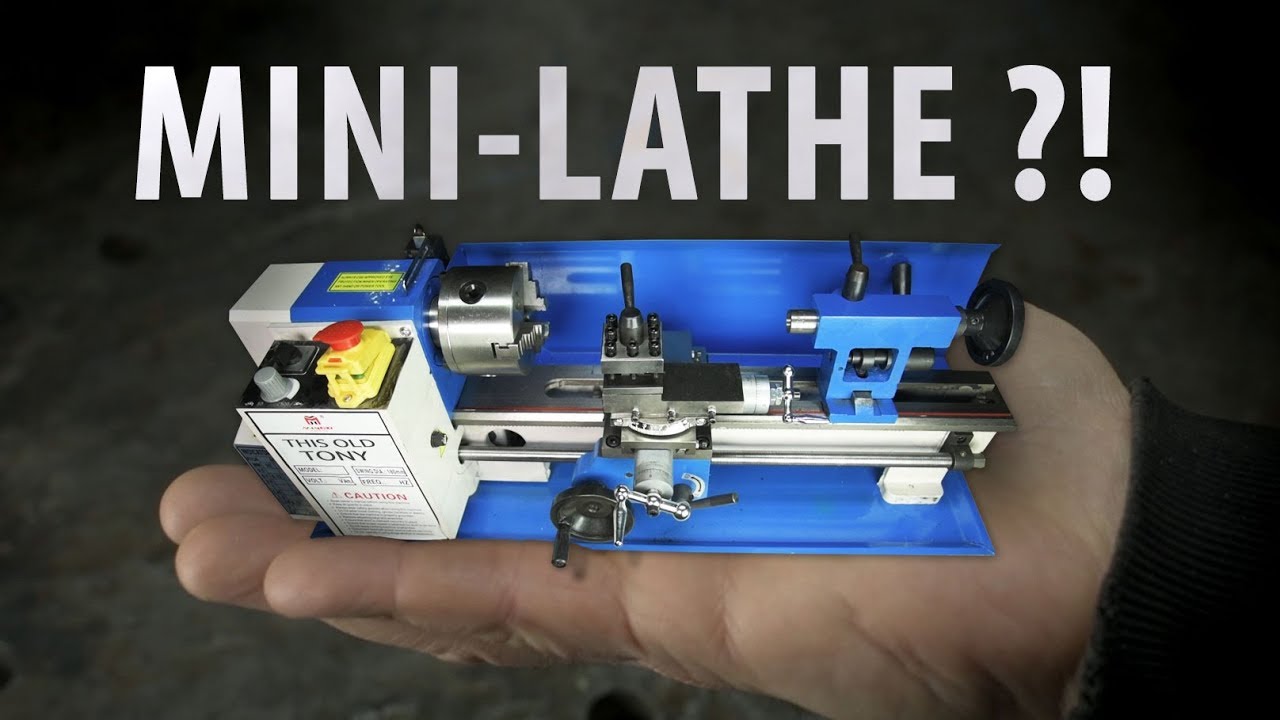
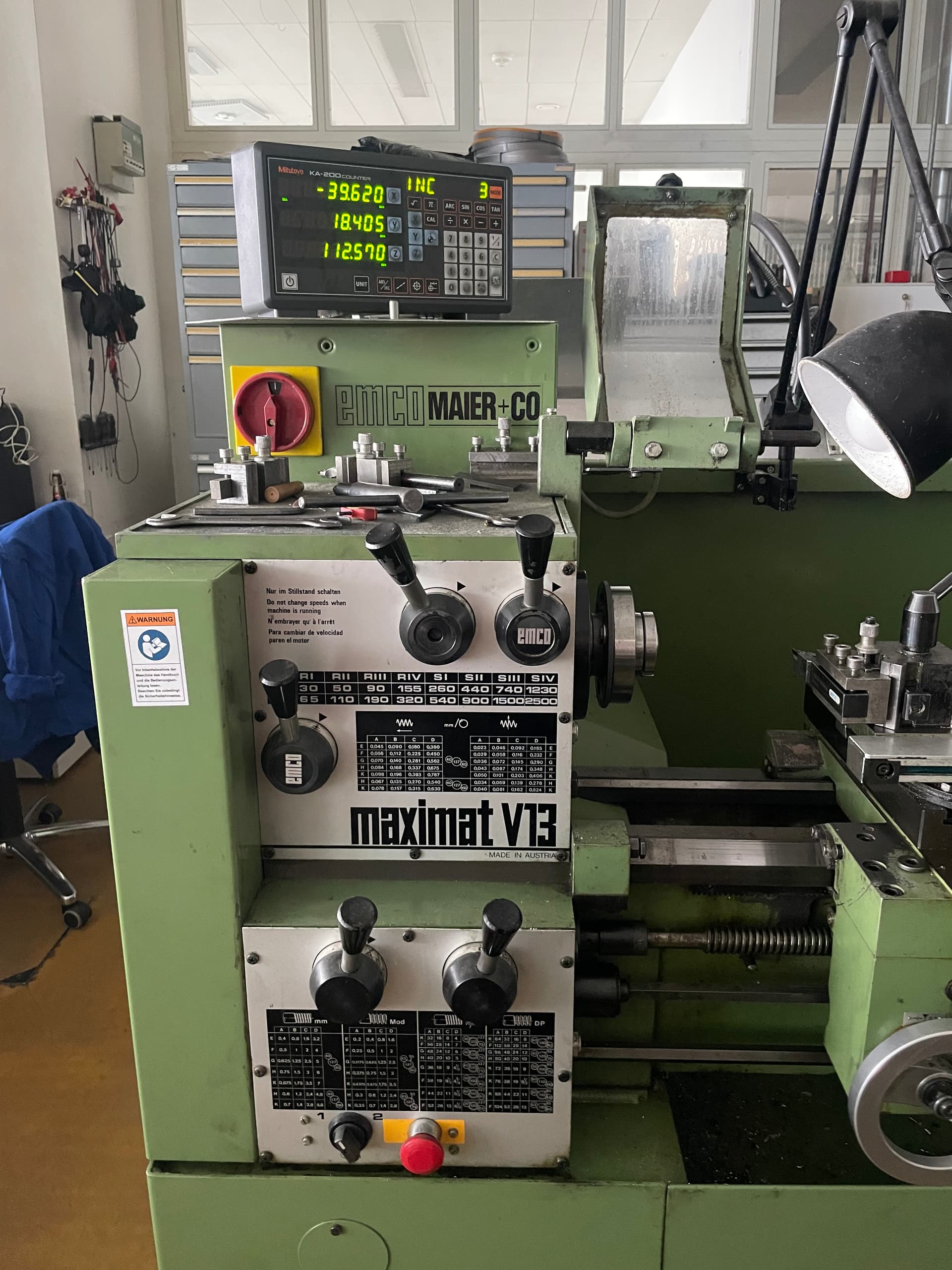
I’ve built a few frames but struggling with sourcing some of the small parts for the build. I’m looking to add a little bit of machining capabilities to my shop. I’m thinking of starting with a small lathe. Would be used to add CS and SS pivot ends and main linkage pivots.
Mine is obviously quite limited but I can make seat-post binders, crown race seats (I don’t put the whole fork in the lathe though), small threaded inserts here and there for fender mounts etc., and aluminium parts for my jig (cones and things).
I had to put in a bit of work tightening everything up and adjusting everything, and the cutting tools that came with it were pretty crap. But it does the job, and is a lot of fun.
I have the same lathe and use it for exactly what you describe. I often wish I had a bigger machine but honestly the little lathe does all I need it to.
I’ve wasted so much money trying to buy tubing that exactly fits for bearings and bolts and such. Would be really nice to have the ability to turn small items. Slowly trying to add equipment. Such a fun rabbit hole of a hobby!
It is really nice to have at least a 1-1/8 hole through spindle. Maybe you can find a used one? I’m on my third lathe (an Emco Compact 10 that isn’t much bigger than that Grizzly) and it’s the first one that can fit a full steerer through the spindle. It’s a game changer for facing crown races. Mine is actually a weird headstock that is 25mm on the left and 38mm on the right, but the spindle is about 300mm long (and the chuck is another 75-100mm thick) so steerers fit inside
I think the lathe in that video is an even smaller 7x Chinese lathe (usually made by Sieg). That was my first lathe and I wouldn’t recommend one unless you are really space limited. They are very small and light and really aren’t rigid enough for steel. The 8x lathes aren’t much bigger but are twice as heavy or more, most of which improves the rigidity.
Most of these designs are cost optimized clones of 70s and 80s Emco designs — like the 8x16 is based on the Emco Compact 8. It’s worth finding one of the originals if you can.
Agree with Alex 100%. The Emco he mentions is a great one and very similar to the Jet 1024 or lots of others. I have a 1024 Jet from early 80s and I think it’s perfect size for home frame maker.
Oh yeah, @bulgie has that 10x24 Jet or similar generation lathe and it’s really nice with a big headstock that fits 5C collets. It’s a little more stout looking than my Emco, and I think it has a gearbox which is always really nice.
My Emco didn’t have the gearbox (the similar but improved Emco Super 11 does), but I added an electronic leadscrew which emulates one. That’s a fun project for a hobbyist who likes automation and a distraction for someone trying to make money at building bikes.
Actually 12x24, Enco (not Emco!). 35 mm spindle bore, such a great hobbyist lathe. ‘82 vintage, loads better than a mini lathe and not much more expensive usually.
To be brutally honest, any machine you buy is always going to be too small at some point
I would always prefer buying an old machine in good shape to a new one of questionable quality, but that’s just me… Also, you need to have a bit of confidence in assessing the old machine’s wear status. Many old machines have been ridden to death… I would at least take a test cut and measure its conicity with a micrometer close to the chuck (that’s where most of the wear will be)
Some features I wouldn’ want to live without on a lathe:
Auto- cross and longitudinal feed
leadscrew
DRO (can easily be retrofitted for ~200€)
Spindle bore >36mm, maybe even 50mm (to fit 44mm head tubes)
Steadyrest is a bonus
>800mm distance between centers to fit most main tubes if necessary
some kind of quick exchange toolpost is nice
When buying used, often it is possible to acquire a ton of add ons and tools with the machine that would have to be bought seperately with a new machine. Keep that in mind when comparing prices. Machine tooling and fixturing is expensive!
Then again, I’m a bit of a machining nerd, so my advice might sound a bit extreme to some of you
Does that refer to my “Enco not Emco” comment? How well I know, I used a cute little Emco (with milling attachment) from '79 to’ 84, and when I retired I looked for a while for a larger Emco I could afford with no luck, settled for my current Enco that’s near perfect for me. Hobbyist owned, low miles, came with a lot of tooling, couldn’t pass it up even though I’m half Austrian.
My only addition to the converstion is get the biggest bore you can afford. I have a 38mm bore. If I had room I’d get a 52 but that is a very big machine and getting expensive. I made the first dually mtbs on a little 26 bore machine and that was painfull as I was having to use steady rests on everything and take light cuts which meant slow progress.
If you would like to run index tooling with carbide inserts (makes operating a lathe much easier for a newbie), you need a lathe capable of running higher RPMs. Have a look at some of the feed and speed online calculators. I like the little machine shop calculator. You will notice the RPMs for running carbide index tooling is much higher than HSS.
Don’t get me wrong, you can do fine with HSS but the learning curve is much steeper when you have to grind your own tools.
I don’t think a 13x40 or 14x40 takes up much more room than a bench top lathe (if you get rid of the bench).
Increased rigidity, increased capacity and increased horsepower are all helpful at times, and I bet you can find a decent used Jet or equivalent 13x40 for the price of the new bench grizzly.
I have an older liang dei 13x40 center lathe; mt5 spindle, ~3hp single phase motor. I would say ots almost ideal for my needs; bikes for sure but also lets me make a lot of the tooling i want, just how i want it, which saves me an enormous amount of money.
That being said, i had one of those little bench lathes, a sieg c3 iirc. And i crashed it alot while learning, making parts as big and complex as custom angleset headset cups, i was constantly wanting a bigger machine, but im glad i got that learning done in a low consequence environment.
A lā bigger spindle bore; even at the roughly 40mm bore (at the front of a mt5) one can be left wanting.
A 52mm bore would let you flip an IS head tube in an unmodified chuck, But modifying a chuck doesn’t bother me much, given im A gentle treader with tool load these days.
Just want to say thank you to everyone who gave advice. All of the bench top lathes were 25mm. Anything new with a large bore is out of budget. I’ll take a look on the used market around me when I get back home.
for now I’m going to enjoy my trip to Europe. Been in London a few days and Heading to Finale for a week of biking!
Ride all the trails, eat all the food!
My favorites are “Ingenere”-Trail from the Base Nato side, Isallo Xtasy on the other side of the area, And also most combos from the top towards Pietra (Oltrefinale, Hiroshima, Revenant…) Hit me up if you like more advice! I’ve been there countless times…
Getting something you can afford is better than not having one. Figuring out work arounds to do bigger stuff is a great learning that will pay dividends. Then when you can afford teh bigger one you will appreciate it a whole lot more. Enjoy the trip.