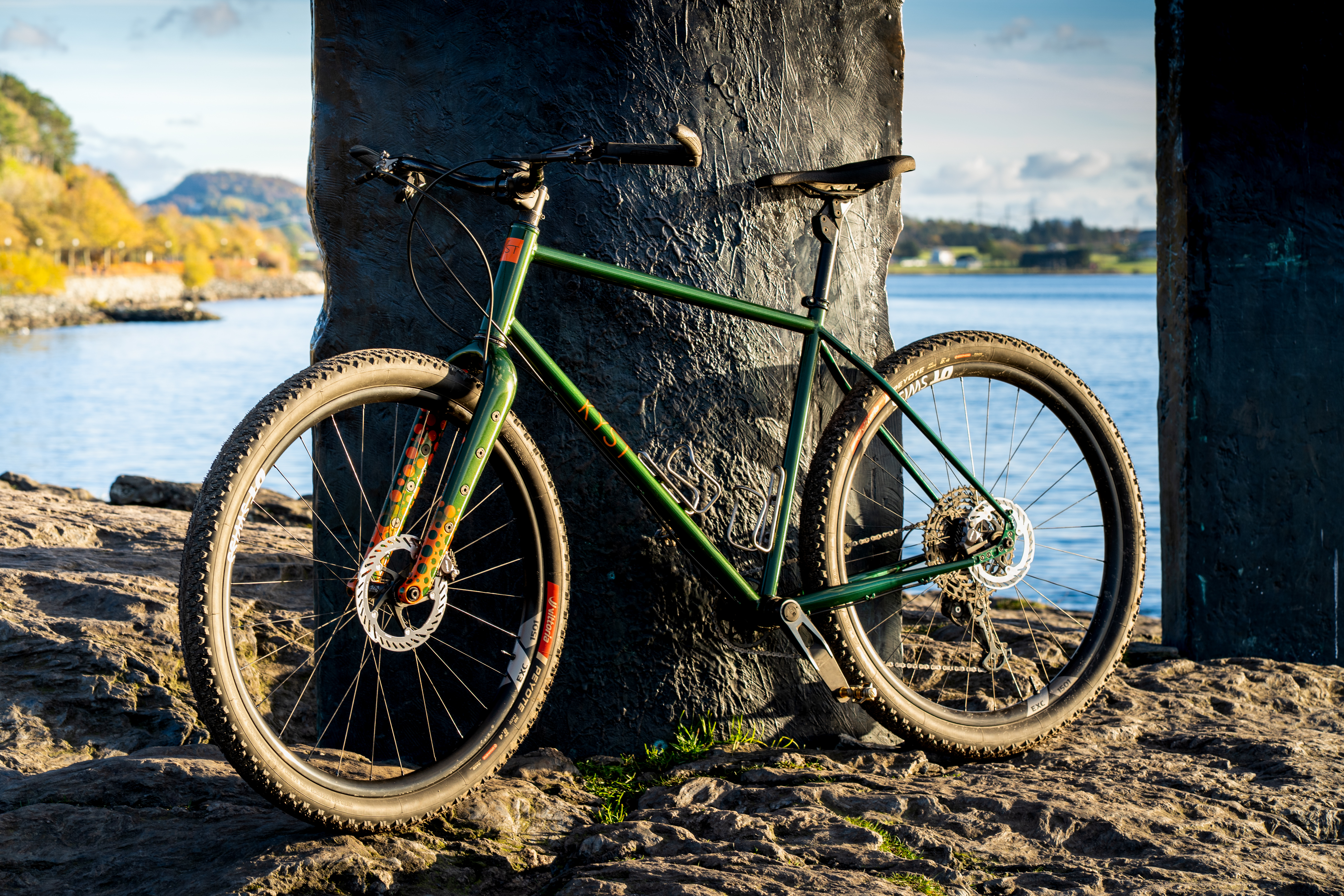
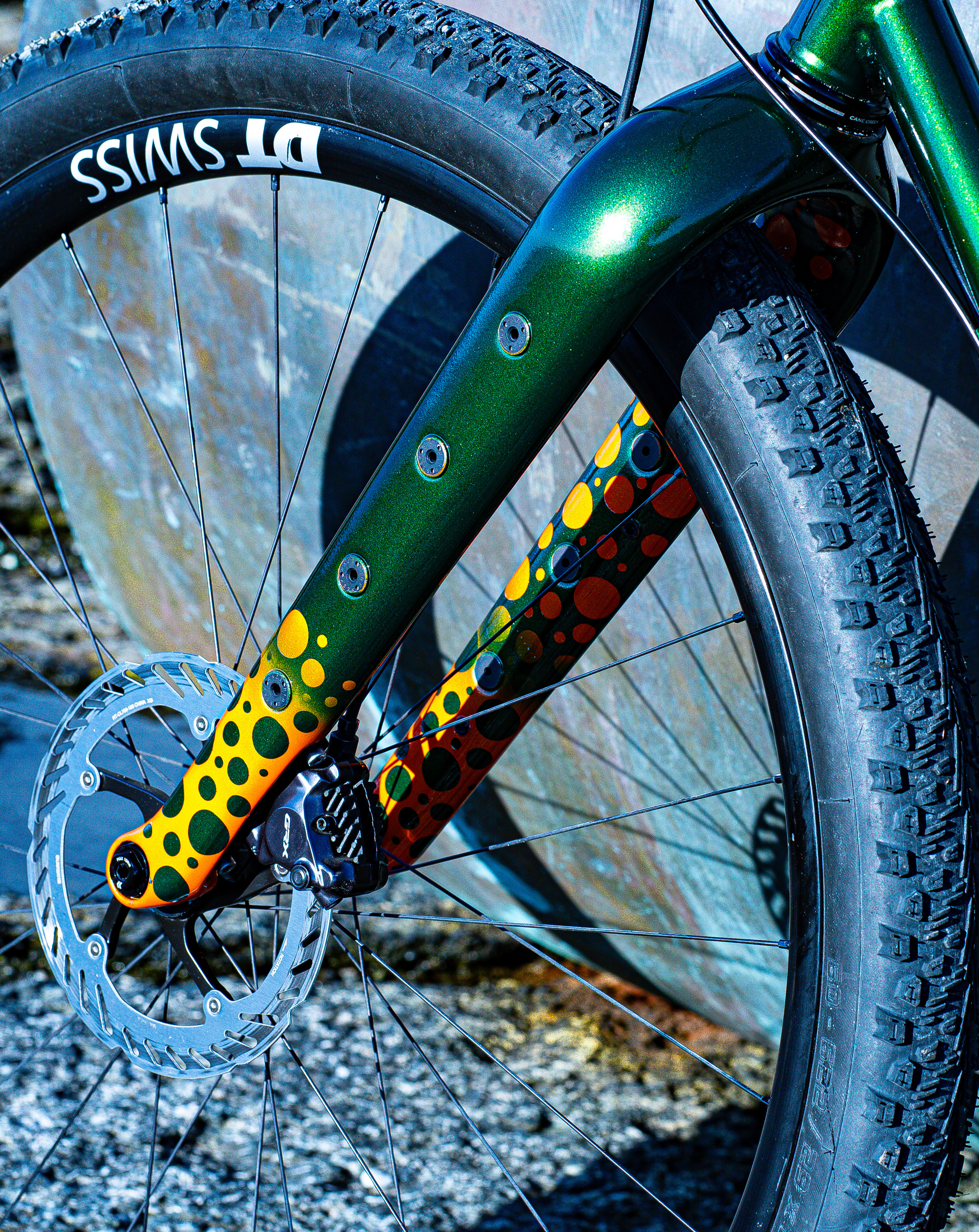
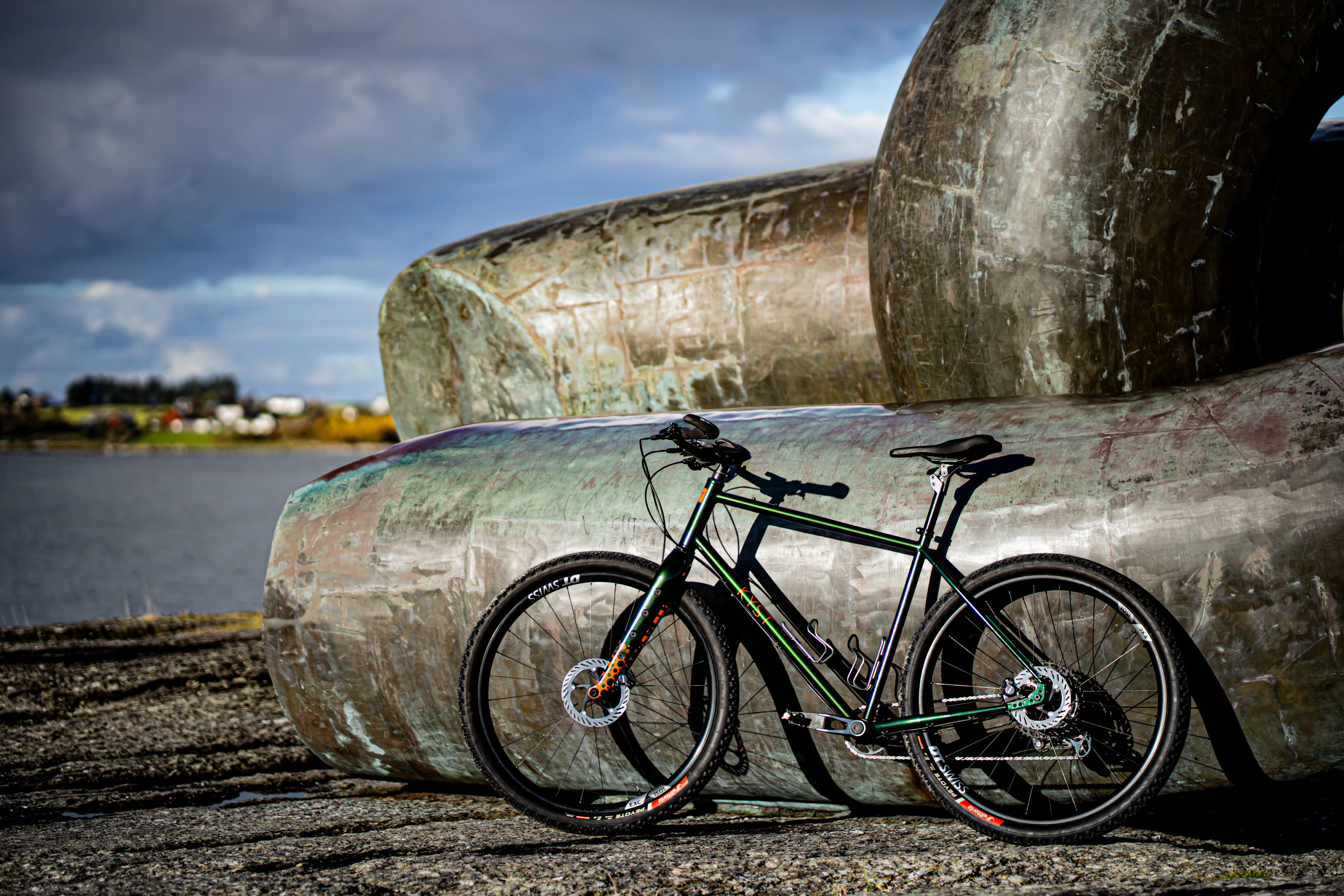
Finished up a bikepacking/touring bike a few days ago. While I’m generally pretty happy with the paintwork, there are a few mistakes I’d like to correct and some areas I’m struggling to get right. Here’s the finished bike, issues below.
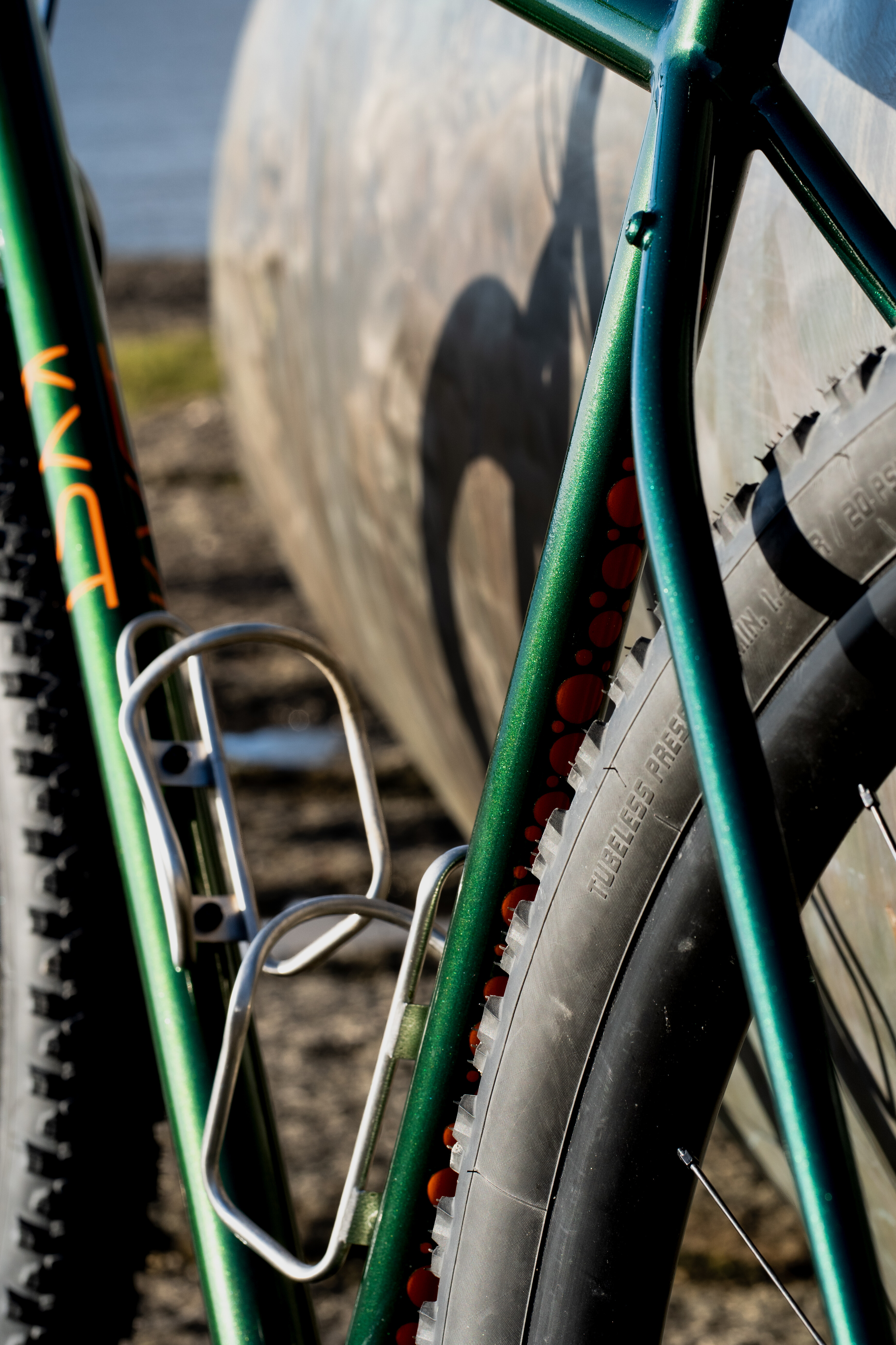
The main issue is getting a clean and stable transition between painted and unpainted areas, particularly around masked sections where there’s accumulation of primer, colour and clear coat against one masking boundary and exposed carbon on the fork. I’m using an automotive paint system on top of 2k primer and 2k clear.
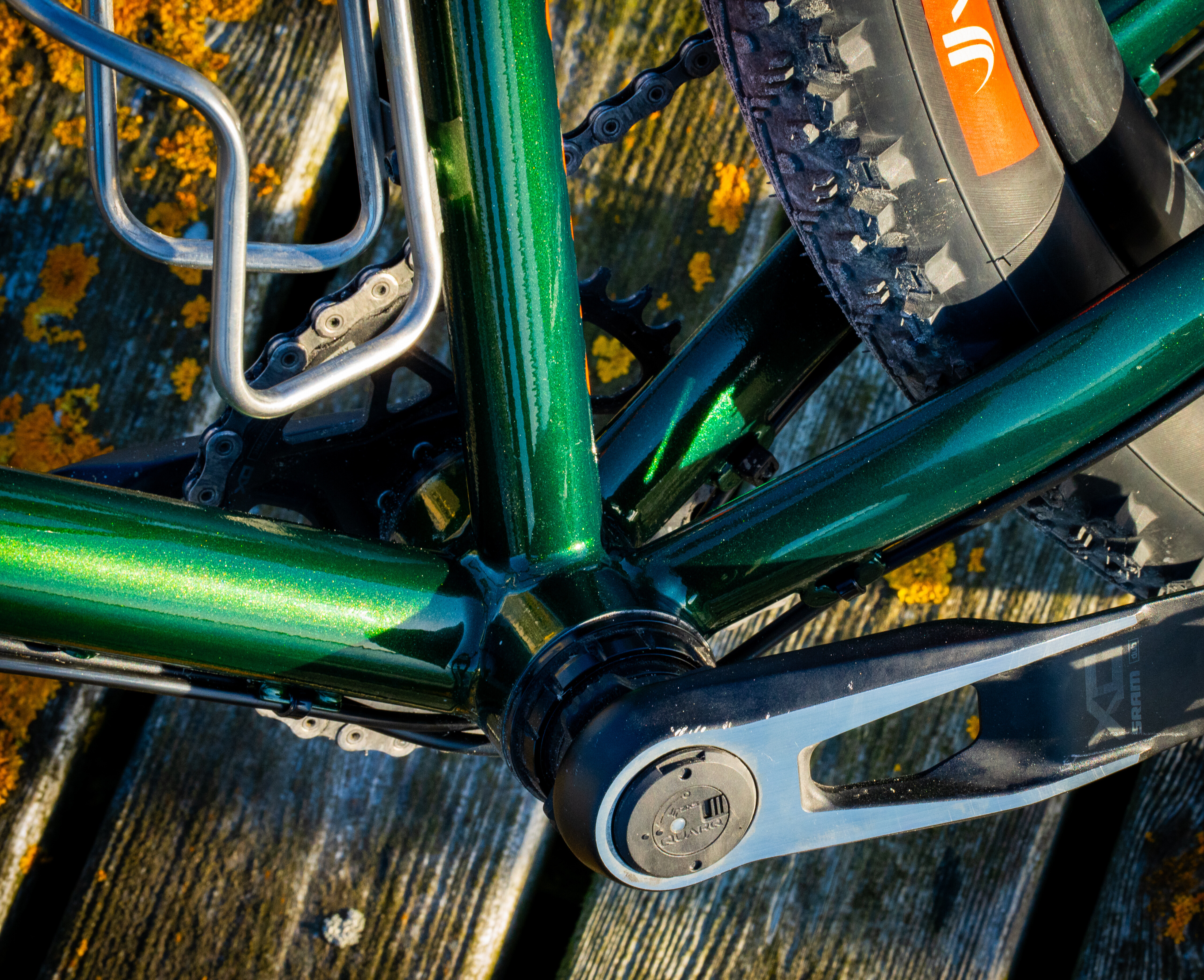
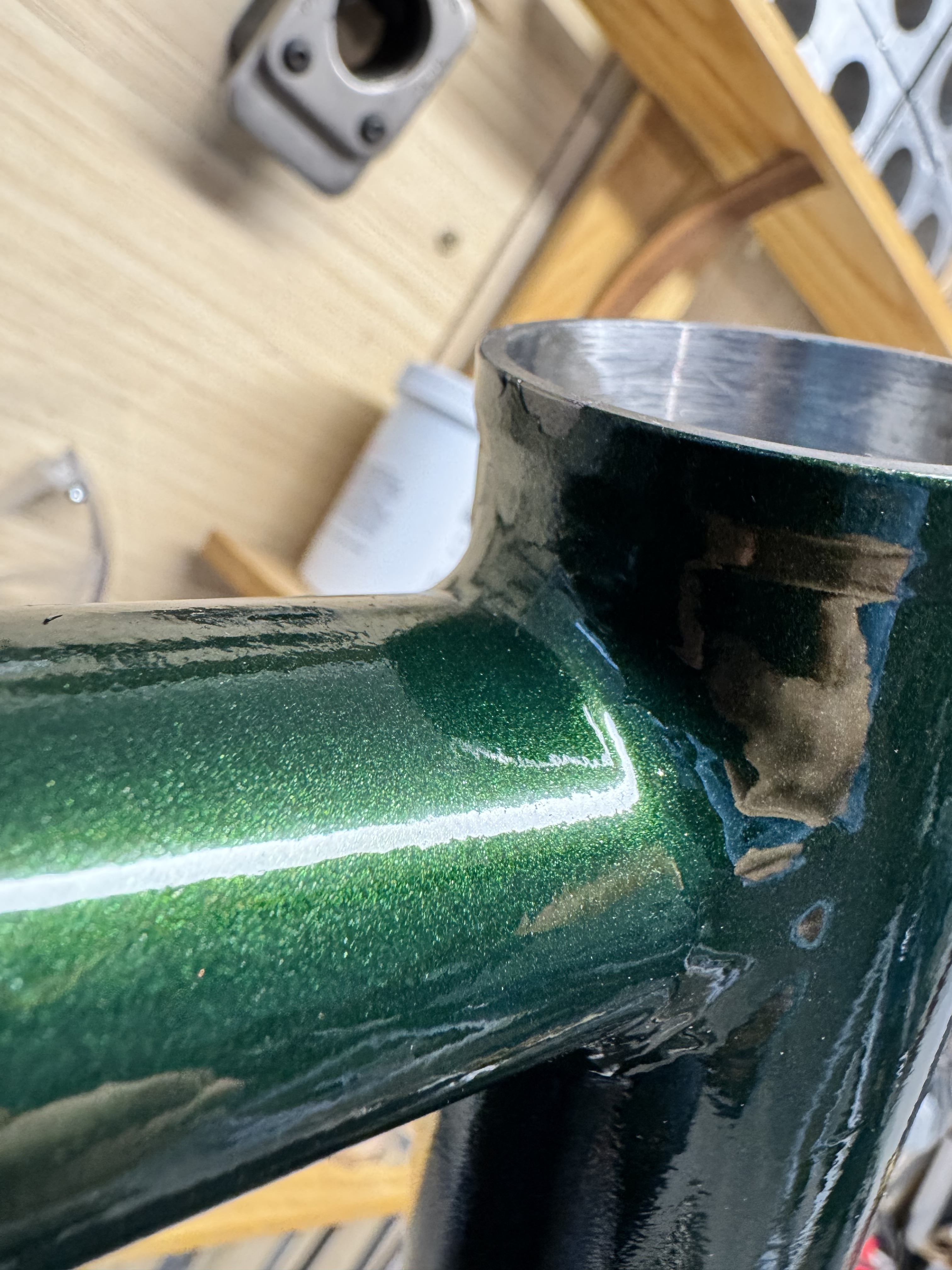
Also occational issues on the BB and head tube faces: I’ve been painting the whole area and then very lightly re-facing them afterwards. This seems a bit hit and miss, as occasionally a small flake of paint will lift off at the edge, leaving a less-than-perfect finish.
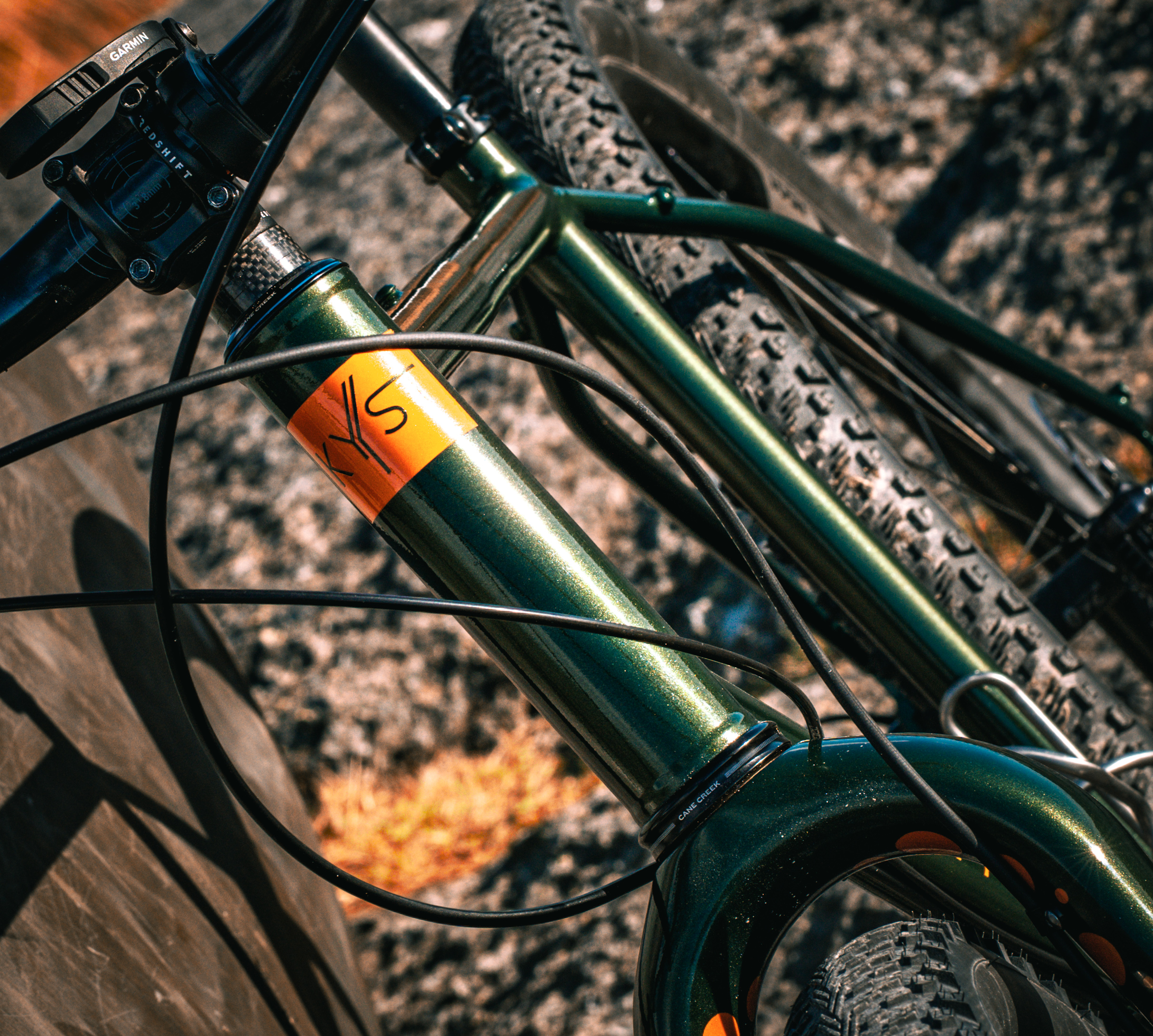
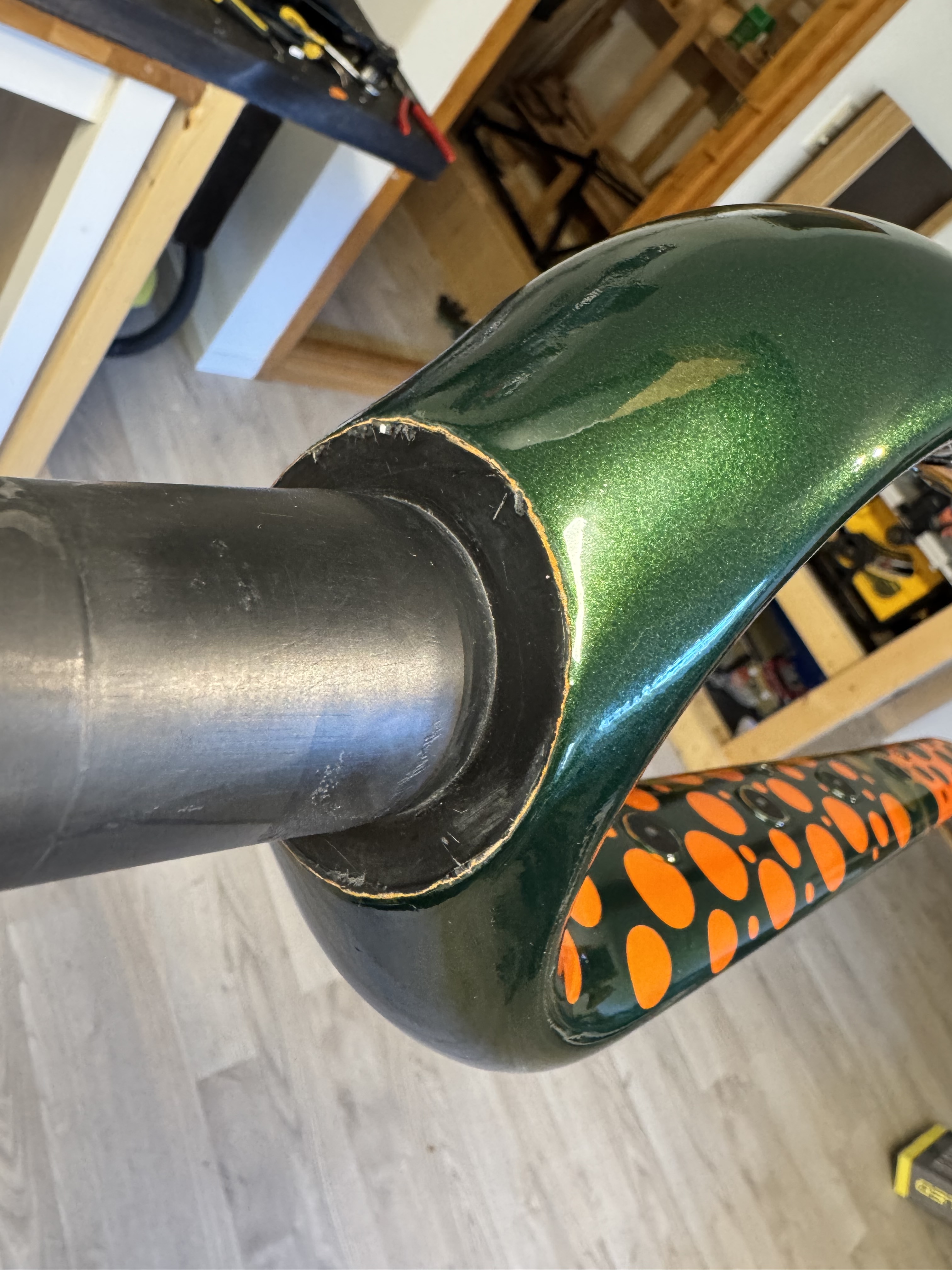
The other issue is around the fork crown, where the paint transitions to the exposed carbon near the crown race (see image). On previous builds this hasn’t really been an issue, as the forks had smaller-diameter crowns and the transition was hidden beneath the EC headset.
I might be not getting total clear coat coverage or too thin on the primer (image below), that’s allowing the paint to lift where it meets an edge? Note sure…the joy of learning to paint from the interweb!
I’d be interested to hear how other builders/painters approach these areas. Are there particular masking, painting or finishing techniques that help achieve a clean edge without paint lifting or leaving an obvious masking line?
Any advice or trips would be much appreciated. Or just to summarise, what’s the best approach to masked edges and transitions?
In my experience chipping has a lot to do with improper/incomplete prep and less-than-great materials.
Don’t skimp on primer. I prefer catalyzing primer. It’s more of a PITA but also more durable when applied to a properly prepared substrate.
Proper prep to bare metal and between coats is extremely important. This includes scuffing surfaces with the right grit and cleaning them off with “virgin” spirits like SEM Solve. If you use products like acetone, alcohol or water-based products make sure to clean those residues off with Solve.
Post primer, make sure you’re properly prepping that surface with a prep pad and then properly cleaning . . . again. This is especially true if you’re outside of the recoat window. Read the TDS.
You can spray some adhesion promoter on areas that are close to BB/HT surfaces. I usually buy the generic stuff from the local automotive paint store.
Pay attention to recoat times! If you miss that window, especially between primer and base and then base and clear you need to make sure you’re allowing enough time for the materials to off-gas. (It really sucks to find a bubble in your clear because you’re an idiot.)
Post clear coat. Wait before you do anything else. Especially if you don’t have an IR curing chamber. My rule was waiting at least 5 days if the temps were above 75*F. Once you’re done waiting you can face/chase/ream. You need everything to cure.
There’s a window of awesomeness for cutting/buffing. If you don’t wait long enough the clear is too soft to get a nice high polish. If you wait too long you’re fighting a fully cured clear and will struggle. This is especially important if you’re using a product that’s extra durable. (Tamco’s High Impact clear is a HUGE PITA if you wait too long).
Thick paint isn’t your friend. Same with thick clear. You’ll get a feeling for what’s correct after a while. Try practicing on things that snap together (e.g. discarded housing for electronics). If the paint is too thick you won’t be able to assemble things.
For areas that need to get faced. Break the edge with sandpaper or an emory board before you face them. It’s an added bit of security. For areas that are masked off, you need to figure out how early you can pull off the mask. That’s really condition dependent. If it’s hot and dry you can pull the mask earlier.
I’ve been using acetone to clean the frame after I’ve sanded it down, I thought it would be better than the automotive solvent cleaner
As for application, I’ve been doing wet on wet all the way through. I’m using spray cans at the moment, but have been laying the clear on pretty thick through multiple coats. Was under the impression more the better?
Process currently is:
Sand the frame down to remove all rust from soaking the flux off
Clean with Isopropanol
Scuff the frame with a grey automotive scuff pad
Clean with acetone
Mask as required, leaving faced areas un-masked
Apply 2-3 coats of 2K epoxy primer: take a 10 to15 minute flash time between coats.
Wait 50 minutes
Spray 2-3 cross coats of colour for decals and drying time of 5 minutes between coats.
30-45 mins and apply decals
Spray 2-3 cross coats of final colour and drying time of 5 minutes between coats.
Apply 2k clear 15 mins later: mist coat, then thicker coats. Basically use 2 cans on a frame and fork.
The automotive paint I’ve been using can still be recoated within 24hours without sanding according to the local paint shop. Maybe I should try letting to epoxy primer cure over night and sand to see if there’s better adhesion?
That’s a good tip on the time window for re-facing, I’ve been doing it after 2 days in a heated room (30 degree C). Maybe a few more days would be better.