I will probably need to weld a pretty thick sleeve (OD 34,95, ID 28,6mm - so it’s about 3mm wall thickness) to a tube with about 1,6mm thick wall. I will be doing it on a welding positioner, welding this way is pretty fast.
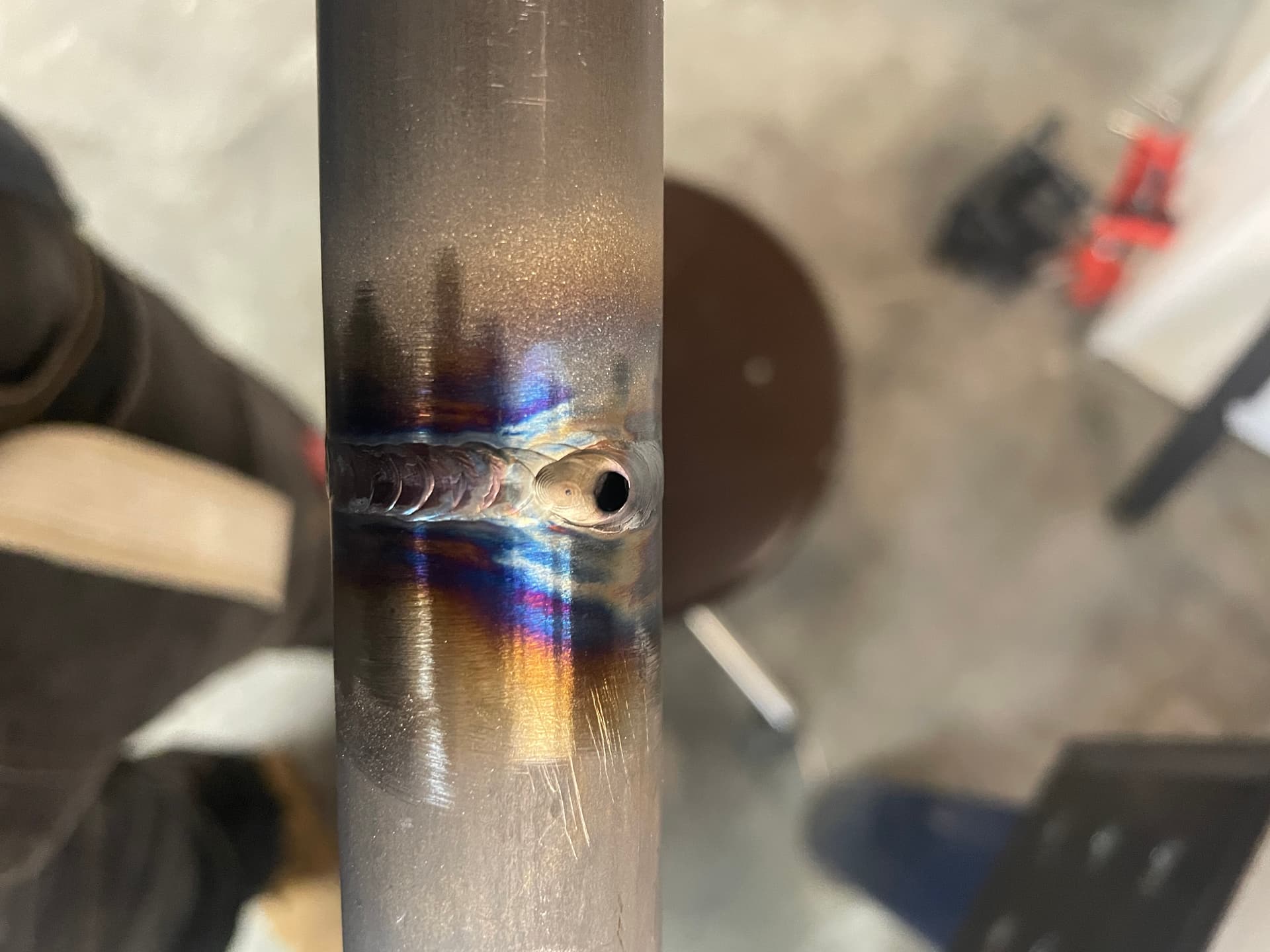
I am looking for a solution to a problem I came across while welding steerer extensions - with a bit too thick insert that was inside two tubes I was joining. The insert had a pretty tight fit, had to be hammered in. I’ve welded about 50 of them and in almost every case with too little amperage at the last moment I got a hole in the weld - because of releasing gas pressure building somehow below the puddle (I could probably not melt the sleeve inside) - even though the fit was very tight.
So - this time I can’t have the sleeve thiner to easily melt through. Do I need some vent channels / holes on the inside? Any ideals folks?
What does the fitup look like before welding? Are the two tubes butted right up against each other, or is there a gap? Is there a chamfer or vee on the edges?
I don’t have a photo from this previous experience. External tubes were touching each other with a small vee / on both sides, no gap. The new sleeve is about to be designed, that’s why I’m asking.
Both of these ideas - small hole and stopping I had in mind. But - not sure if a hole is a good idea as it might be a stress riser and I wanted to do it in one go to reduce destortion.
I think stevenshand might be getting at, is playing with the gap between tubes and bevel, you might be able to tie all three together with a single pass. Which should sidestep the trapped gas problem
On pretty much every bike I build, I weld a seattube sleeve. I’ve never seen what you’re experiencing. I chamfer both of the edges and leave a gap a bit less than the diameter of my weld rod. I use 4 tacks without filler (2 180º apart, then at 90º). I then weld 1/4 at a time, alternating sides so I’m not just welding continuously all the way around. I don’t backpurge this part, but I do have a big old heatsink in there.
I also had 4 tacks, but I’ve welded it one go. I was wondering about a gap (I gad only a v-groove that barely touched the inside sleeve), need to run some tests. The last time - I could not have a wider gap, as I had all the tubes hammered in and tacked when problems occured and could not get them out.
I usually braze steerer extensions, with a 1”x0.095 sleeve, and i turn a very rough tread on it to have the bronze flow better, i wonder if something similar would help the gas escape
These sleeves aren’t really needed. I’ve been running a 3d printed PETG shim in my current frame for 2 full seasons. Instead of welding in the reduction sleeve in a 34.9mm 0.9mm straightgauge seattube I just printed the shim for my 30.9 post. For the first year it never moved, it’s slipped a couple times late in the 2nd year, maybe needs a new print due to compression creep or some carbon anti-slip paste or likely just pull it and clean the post.
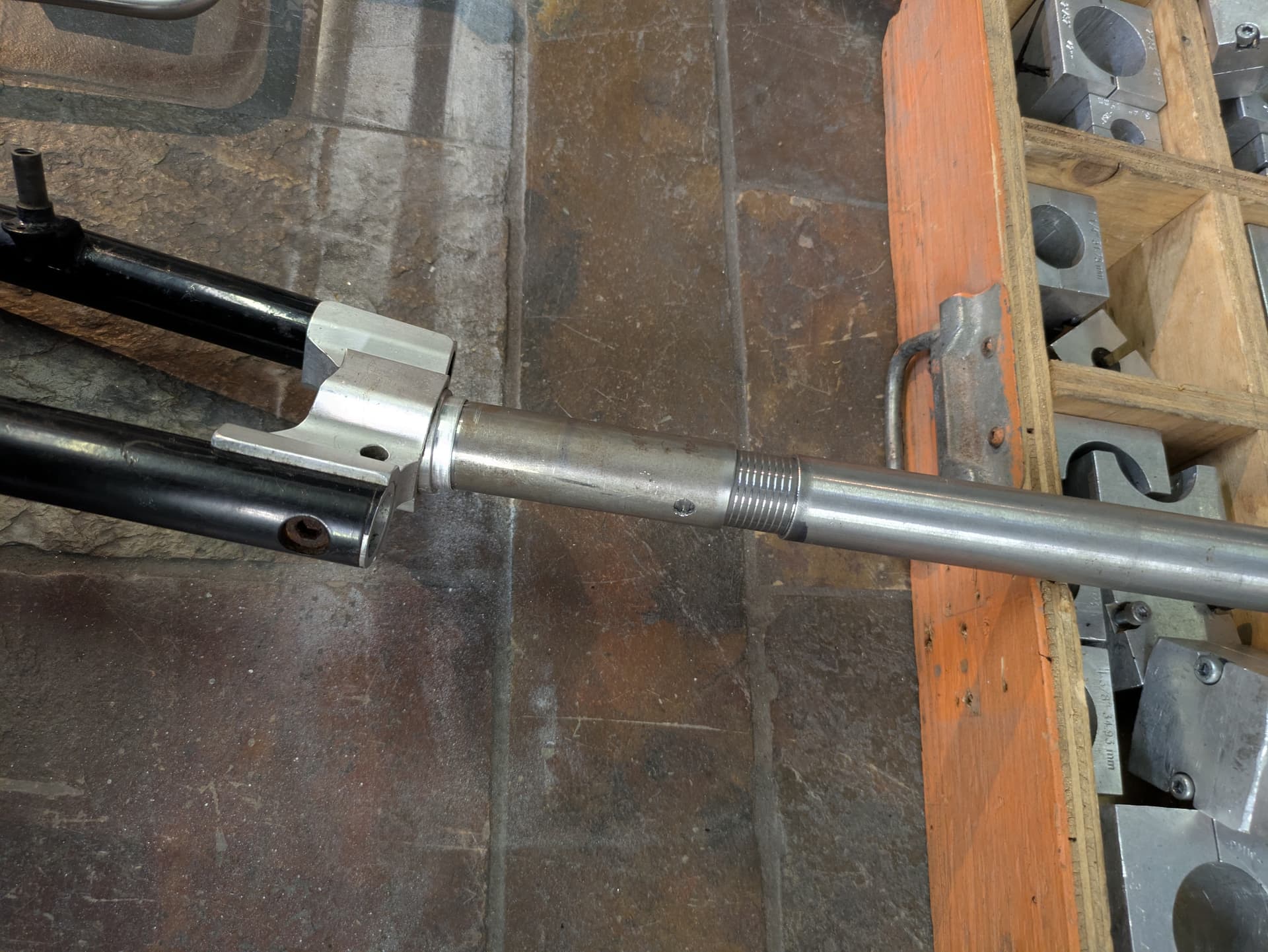
 The thing is I just need to manufacture it.