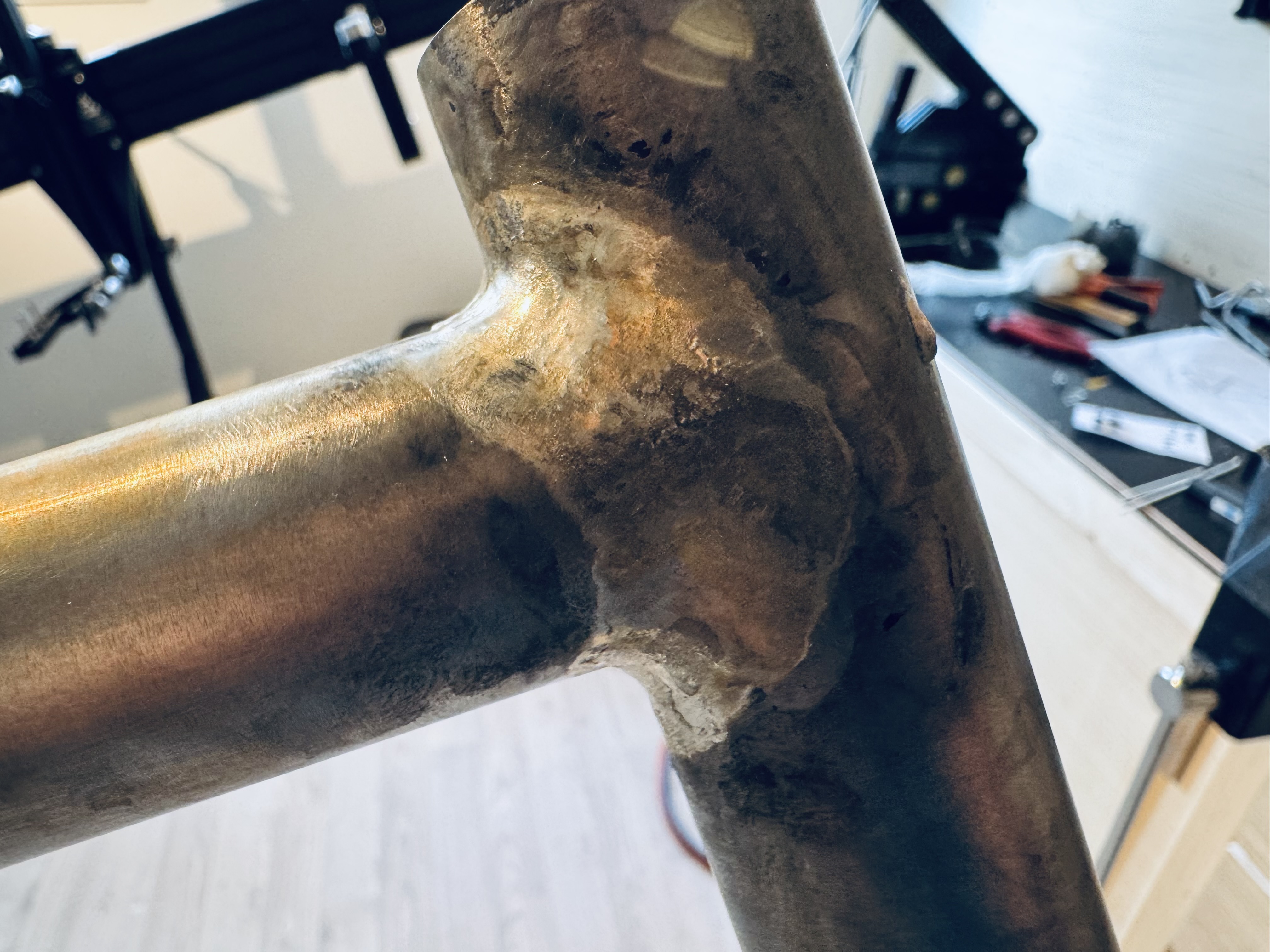
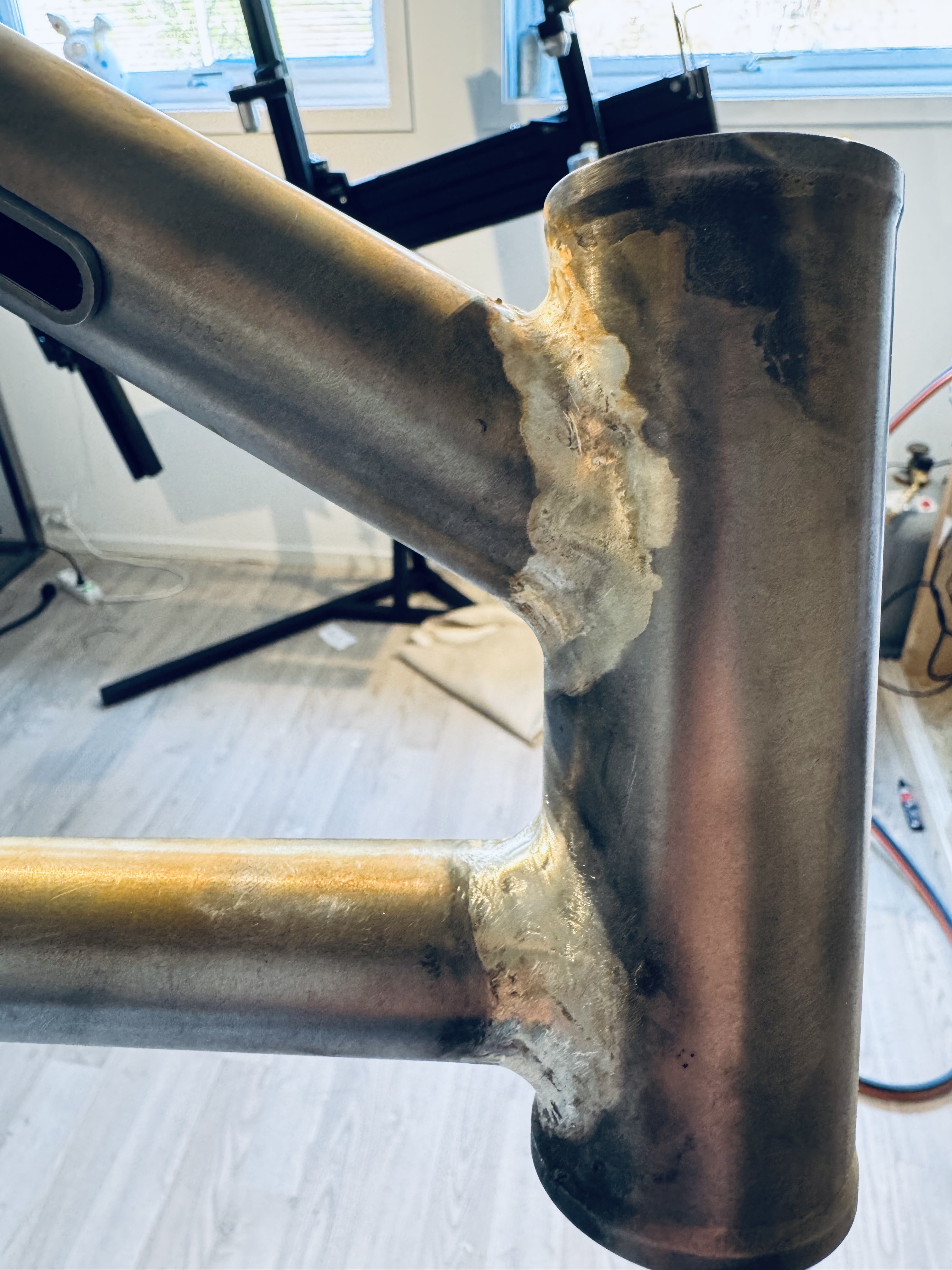
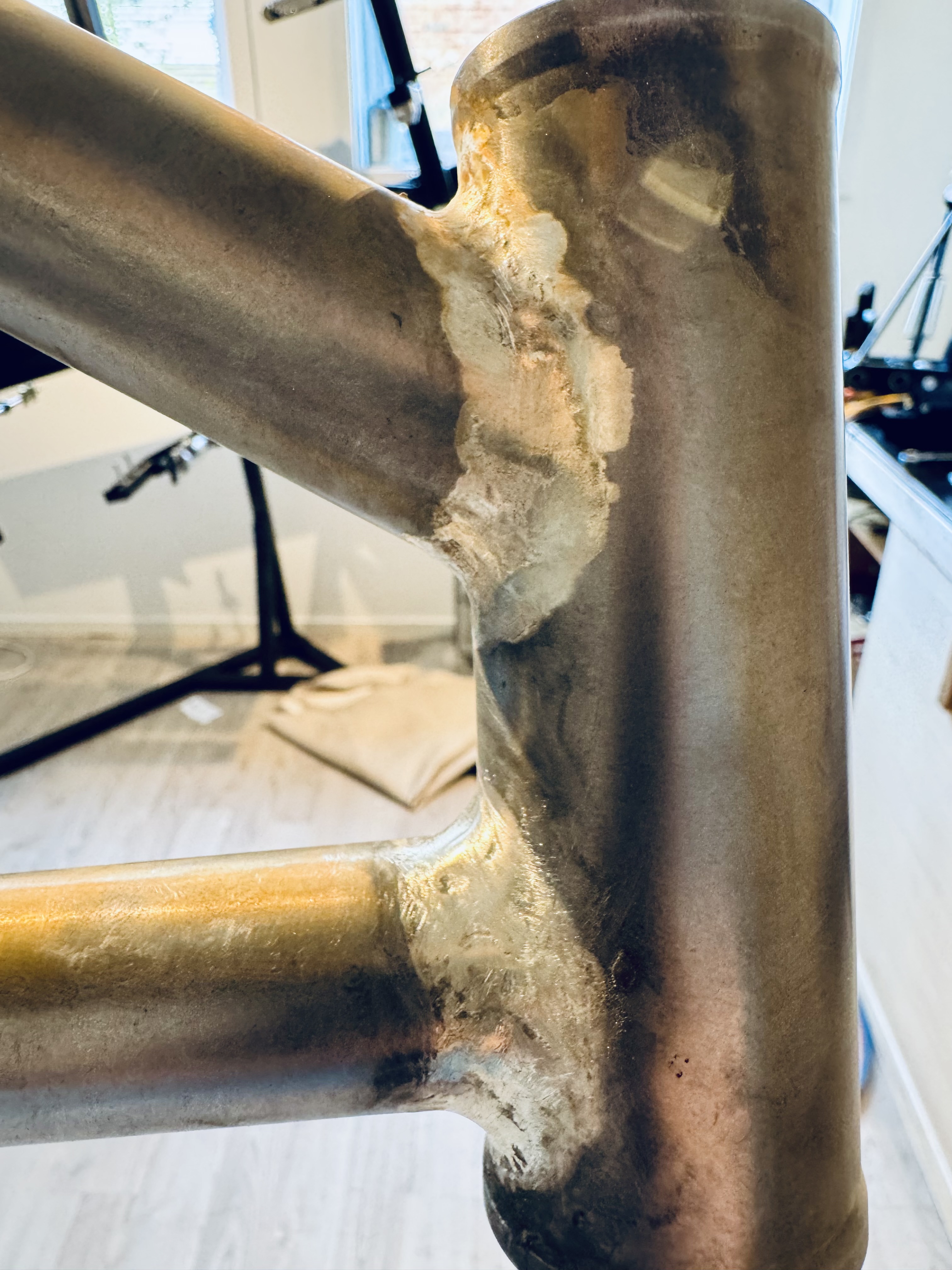
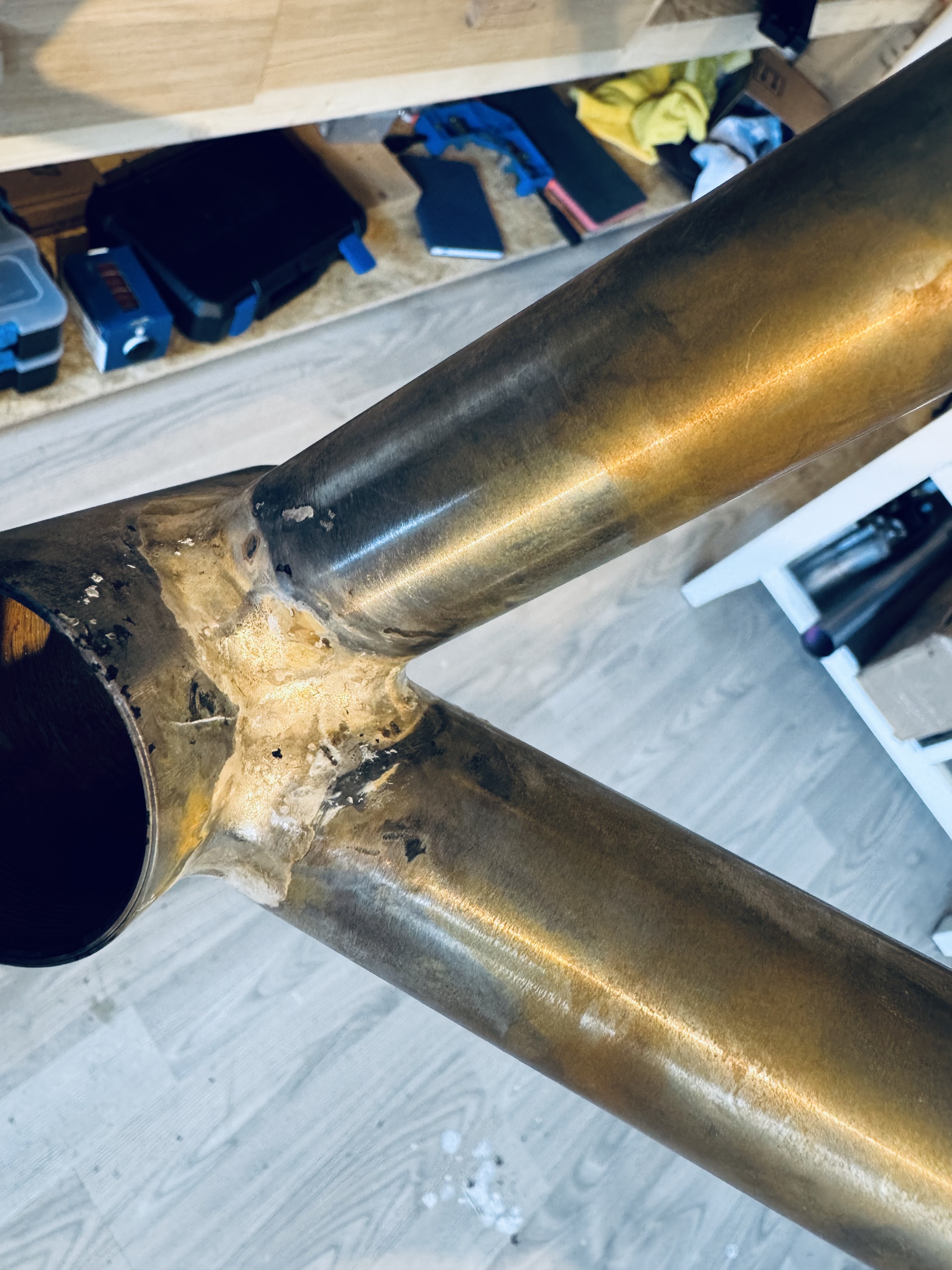
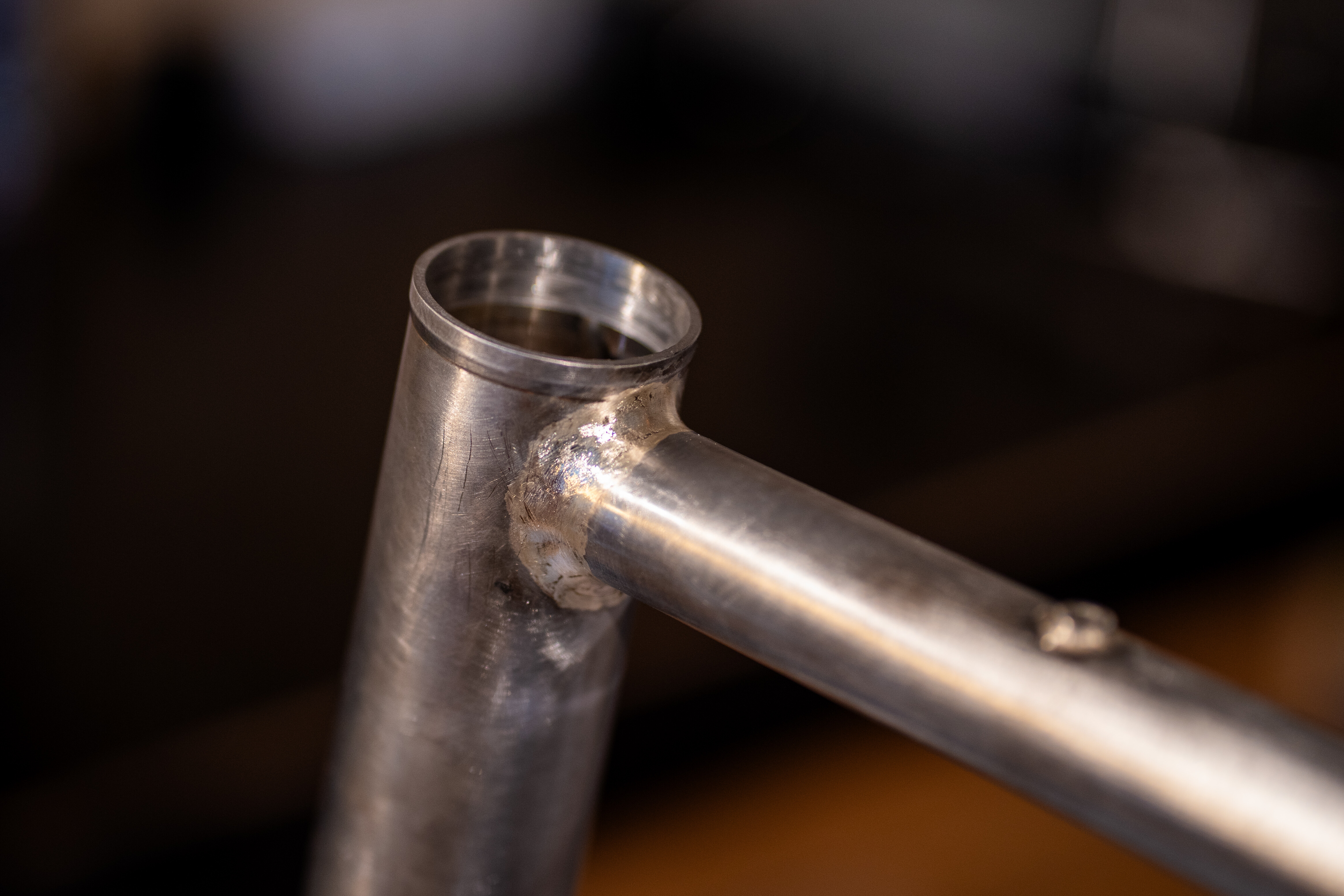
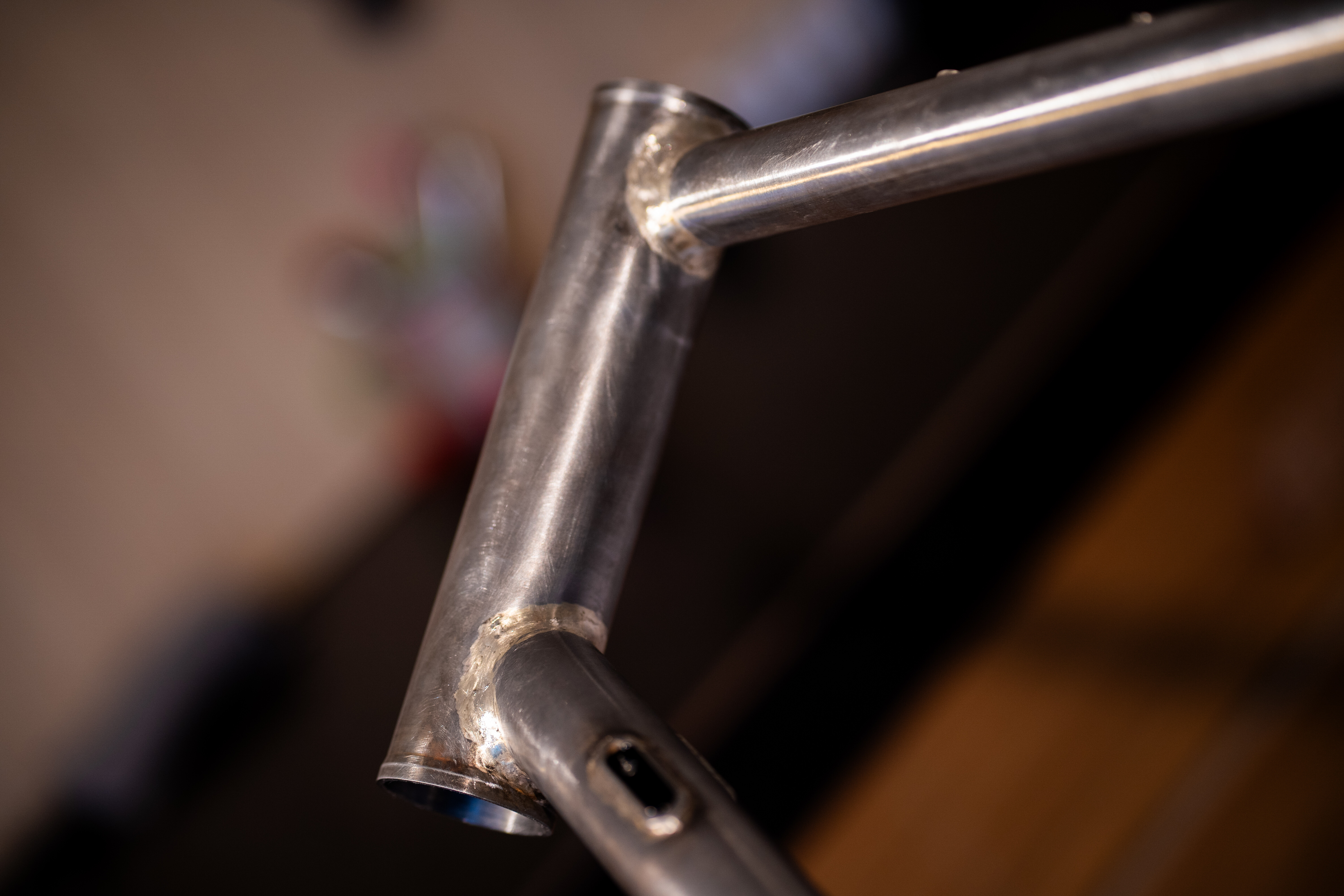
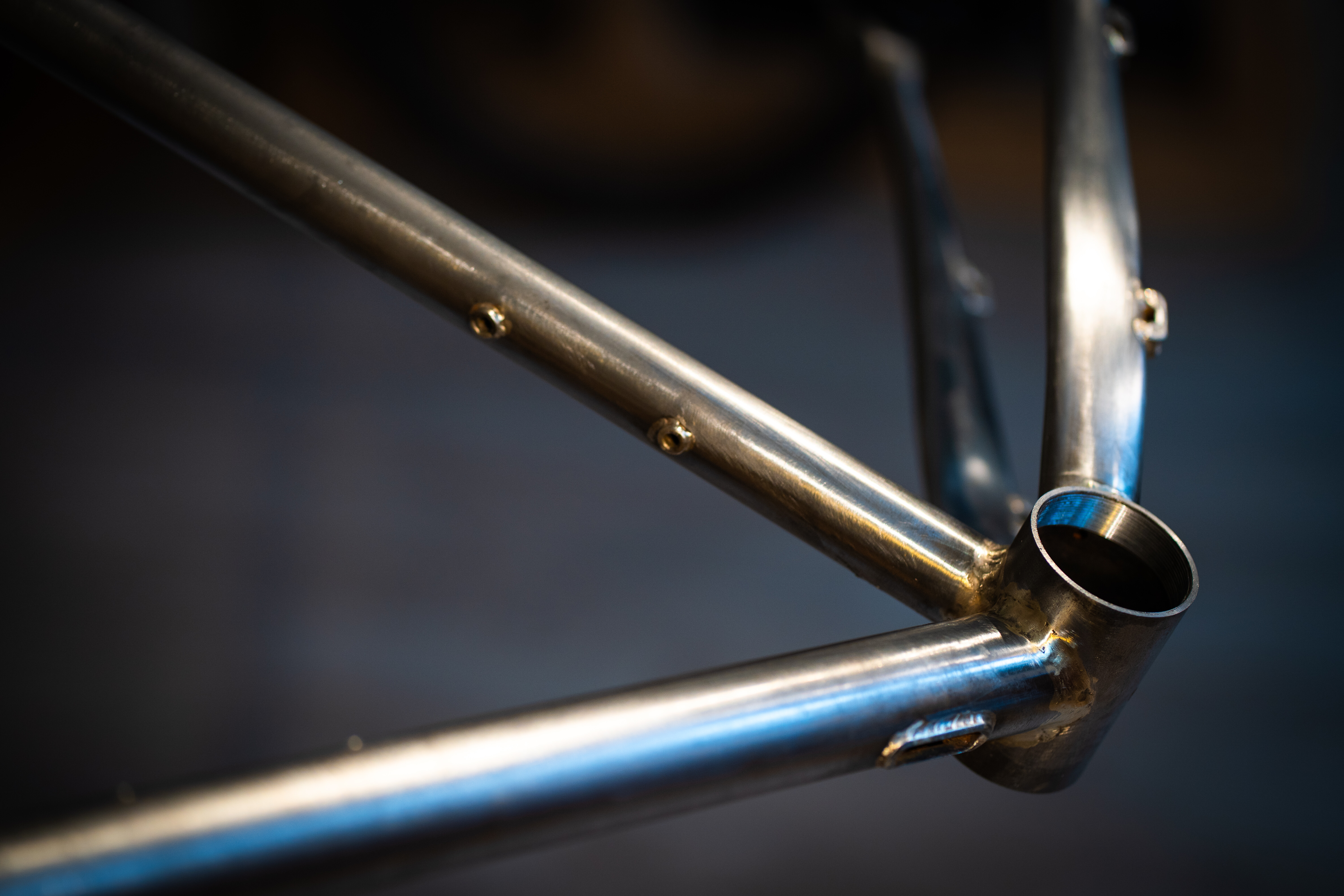
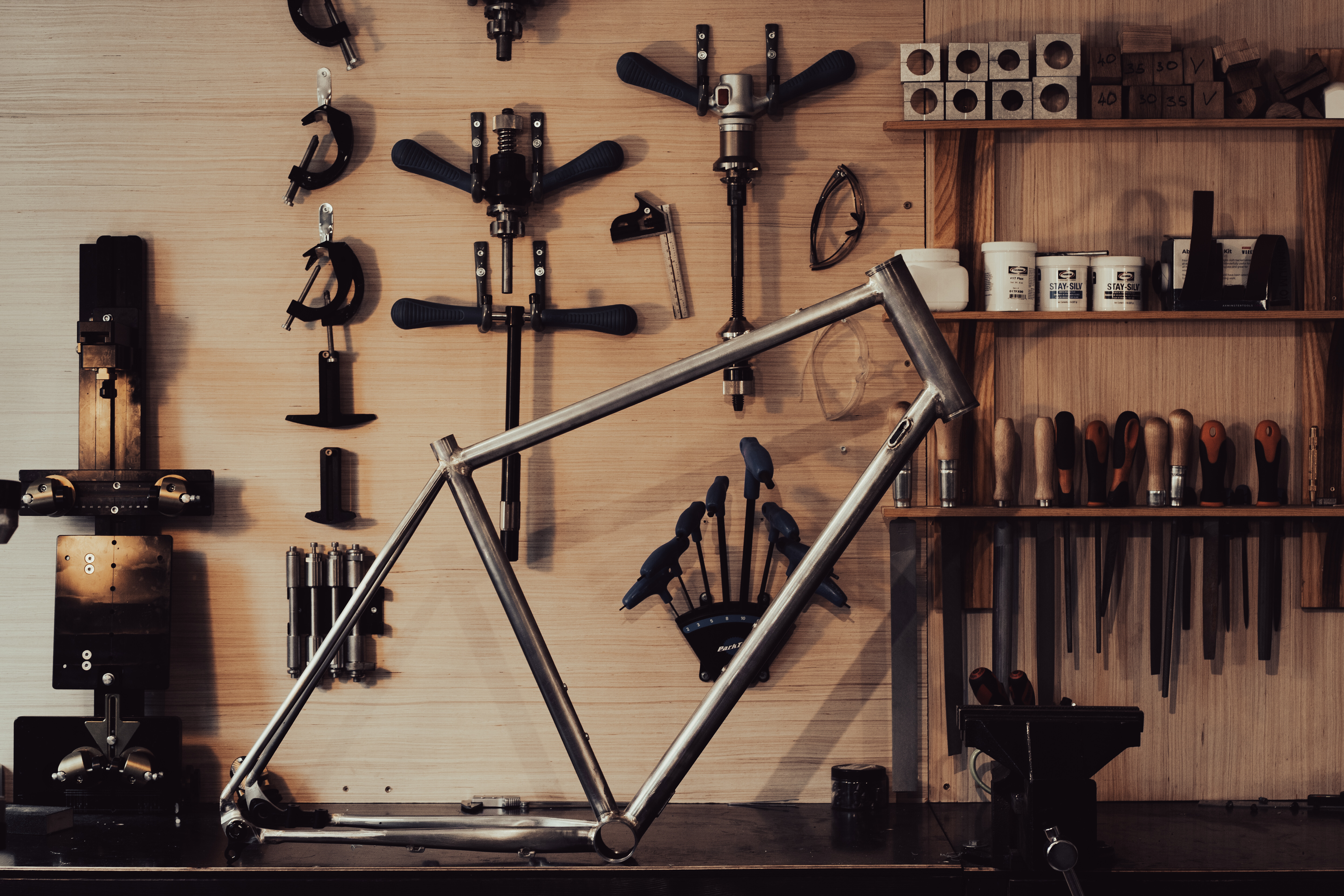
Would appreciate getting some feedback on my brazes. Most are unfilled, a couple have side have been filled and a little sanding.
General feedback is greatly appreciated, but specifics on creating a smoother finish would be great, plan to build a raw stainless frame in the future and would like to improve between now and then.
I need to get better at laying down the silver smoother in the first instance, are people doing a ‘smoothing’ pass after the structural elements of the joint are complete?
And regarding the very thin layer thats effectively wetting the outer edges of the joint: is this just sanded away or are more experienced builders just not getting this?
Can you tell us what grade/% of silver filler you used? I ask because the most common silver filler is 56% and won’t fillet up much at all (and it loses strength dramatically as the fit-up gap grows more than .008”, which is the vast majority of a fillet). There are some silver fillers that have a lower % of silver (saves $) and will glob up nicer but has a lower starting strength than 56% (with that filler’s proper gap) and still costs more than a low fuming bronze (what most call “brass). So which filler alloy is in play here?
Heat control is everything once the set up is good and the brazing has started. I see a tad too much heat at the edges of the fillets (burned flux). getting a smooth and gradual fillet to tube transition can be tricky with just a flame but is what experienced builders try for, and do often attain. Others (like me) get close and file/sand away the rest. I have far less experience with the lower % of silver rods (or 50N for that matter too) than 56%. 56% tend to run and flow like water and has a narrow window of fully liquid and fully solid. The lower % of silver rods tend to have a wider temp window of transition, which will be easier to control how the filler globs up or flows away. Bronze (I use GasFlux CO4) has a much wider window of temp and thus can be controlled more easily between building up filler and flowing it. Generally for the inexperienced slowing down the reaction rate/speed of the brazing is a good thing. As the builder gains experience they learn what to look for before it becomes a “Oh My!” moment and how better to control the heat WRT where they are placing the filler.
There are different ways to join a fillet joint. Early on I was focused on ending up with an internal fillet (actually more of a meniscus) by doing a first flowing (some call it “wetting out”) pass, then a build up the outside fillet pass and then a smooth the fillet build up “pass”. That’s a lot of heat for a long while. With help from my mentor (Doug Fattic) I am learning to do the flow and fillet in one pass and also lessen the smoothing out pass by doing that periodically as I build up the fillet. With practice This will take less time, less fuel and reduce the total energy the tubes see as I get more practice.
And that’s the real key IMO. Getting good at whatever method you choose. Which for most means a lot of practice before starting an actual frame. If this work is done with 56% silvers I complement you for getting the amount of fillet you have but question the joint’s actual strength. Andy.
Sorry, forgot that bit! Its 34% silver and flux with melting range of 550-800 degrees C. Definitely got it a bit too hot here and there on the bb area especially.
With regards to the strength of the alloy (not my joint) its definitely for structural joints and it has the same alloy composition as several european frame builders use. With regards to structure, i can’t break my joint without the tubes break first.
Only use 56% on bosses etc.