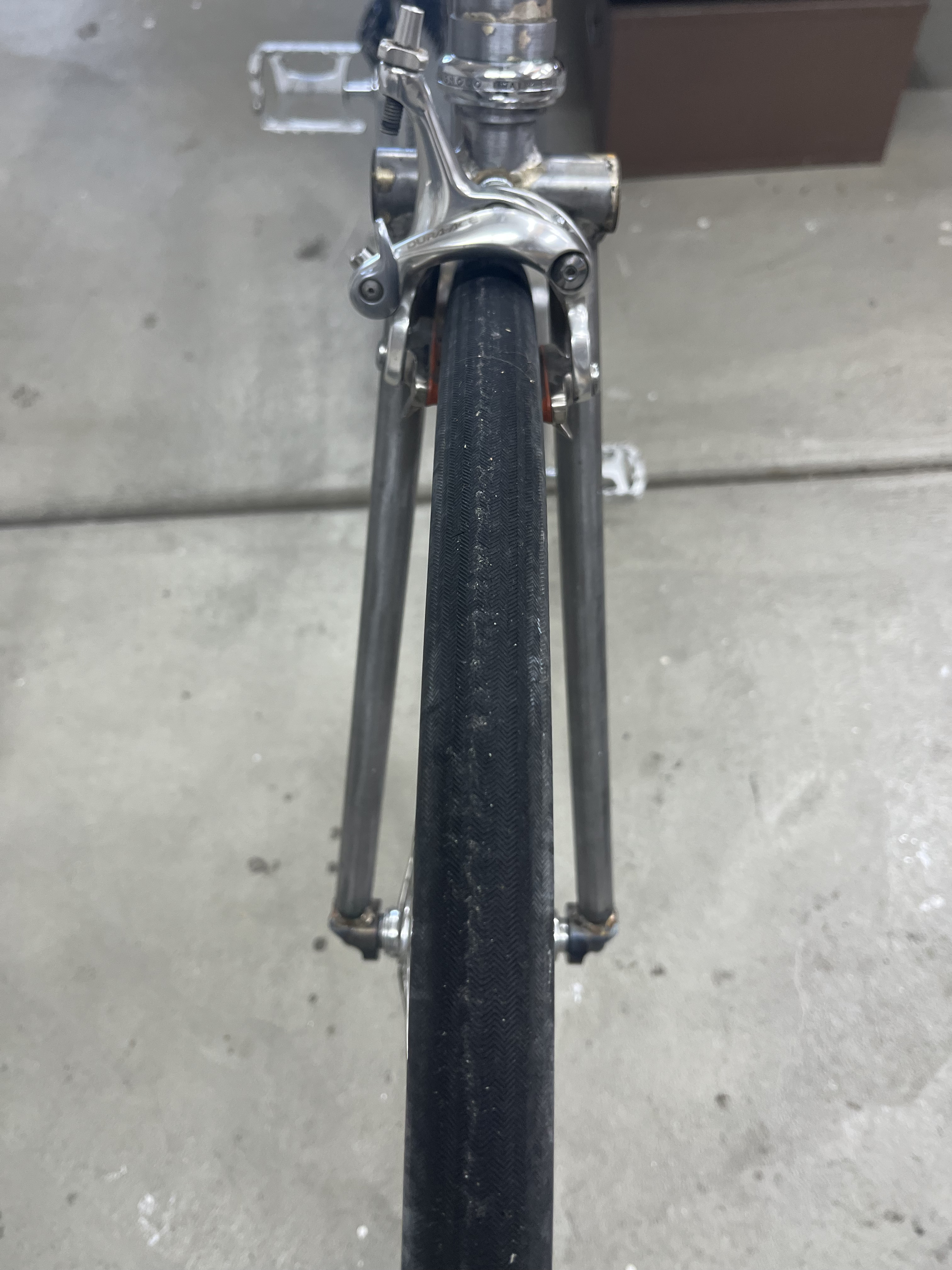
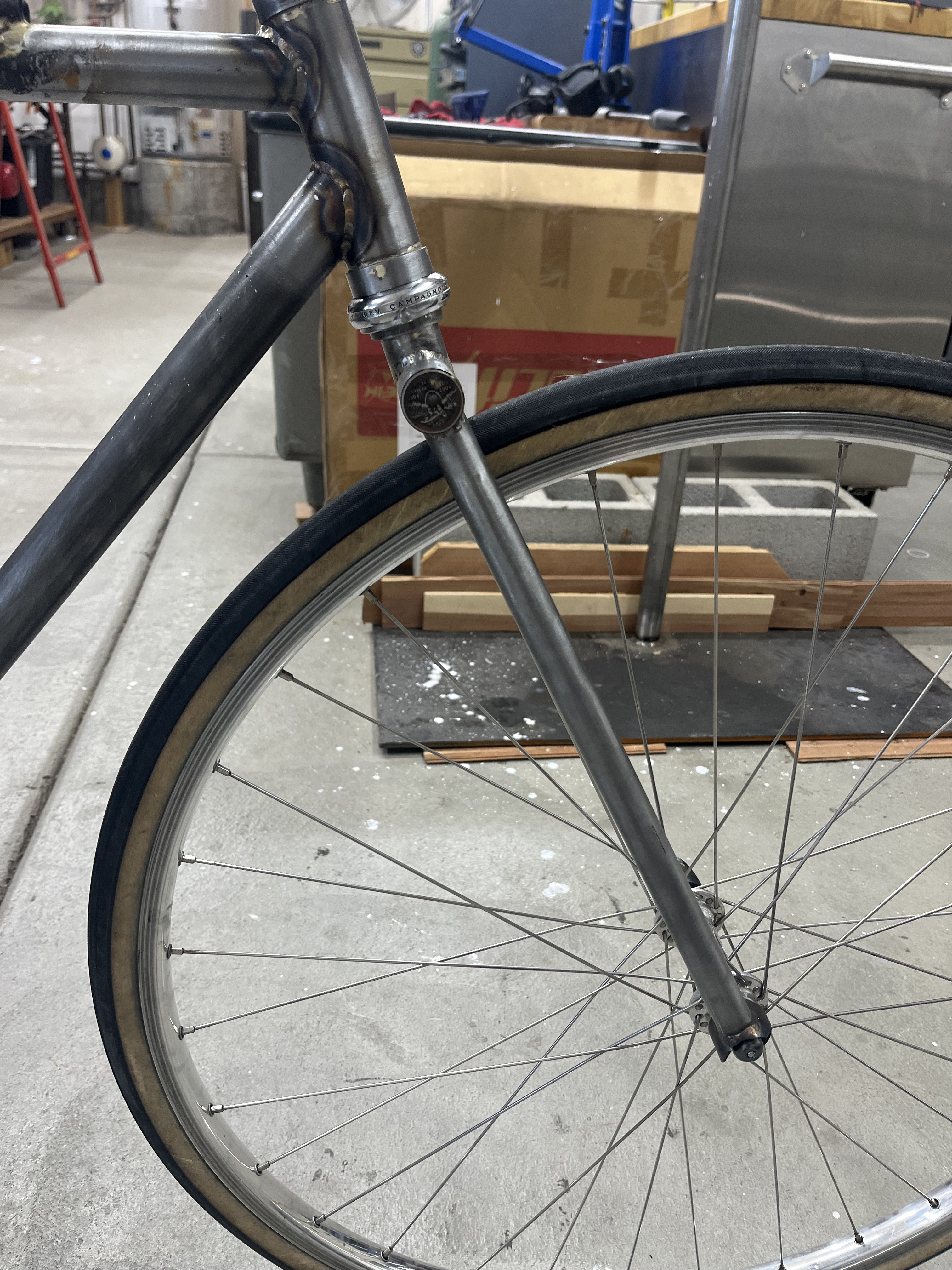
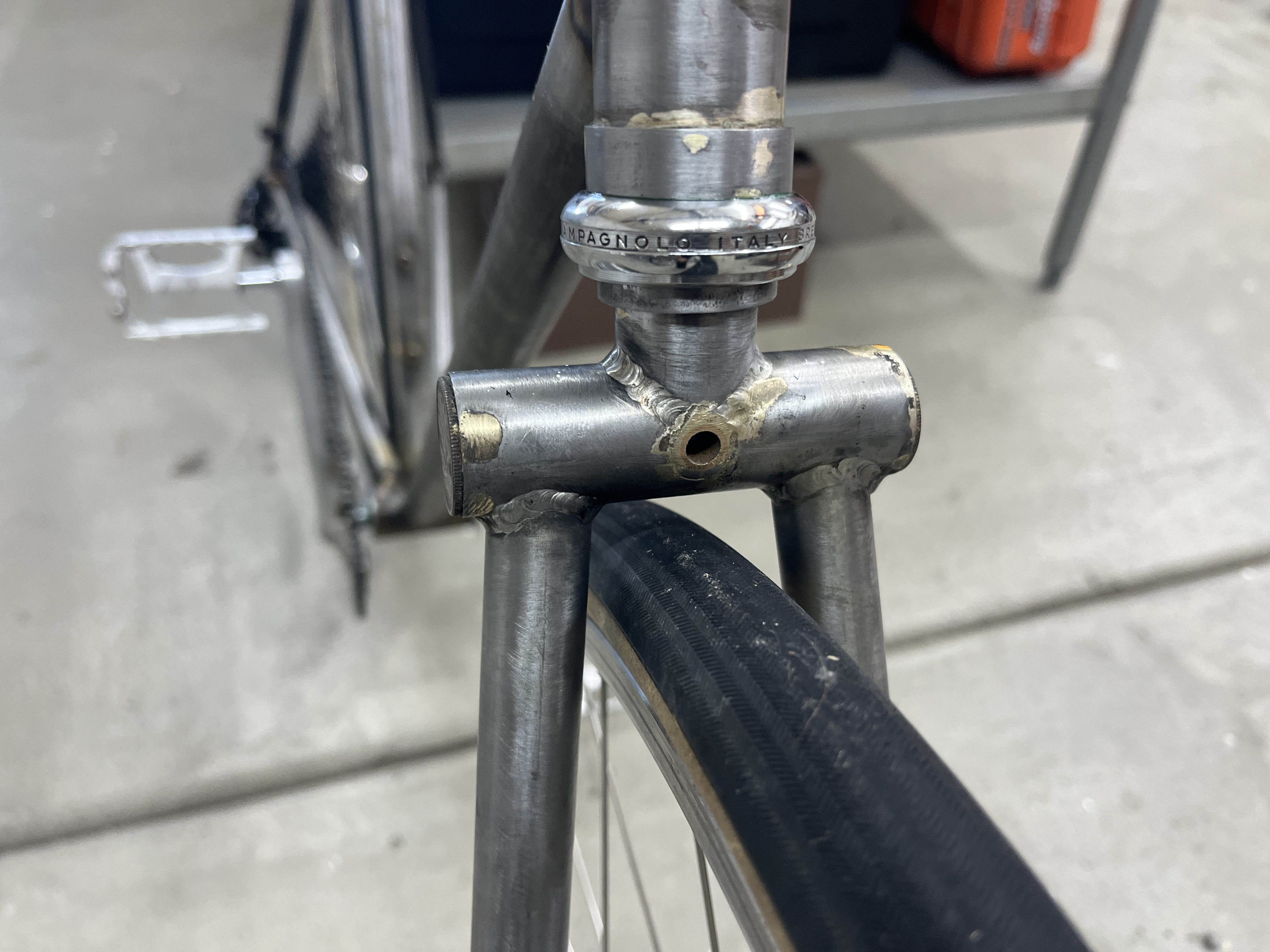
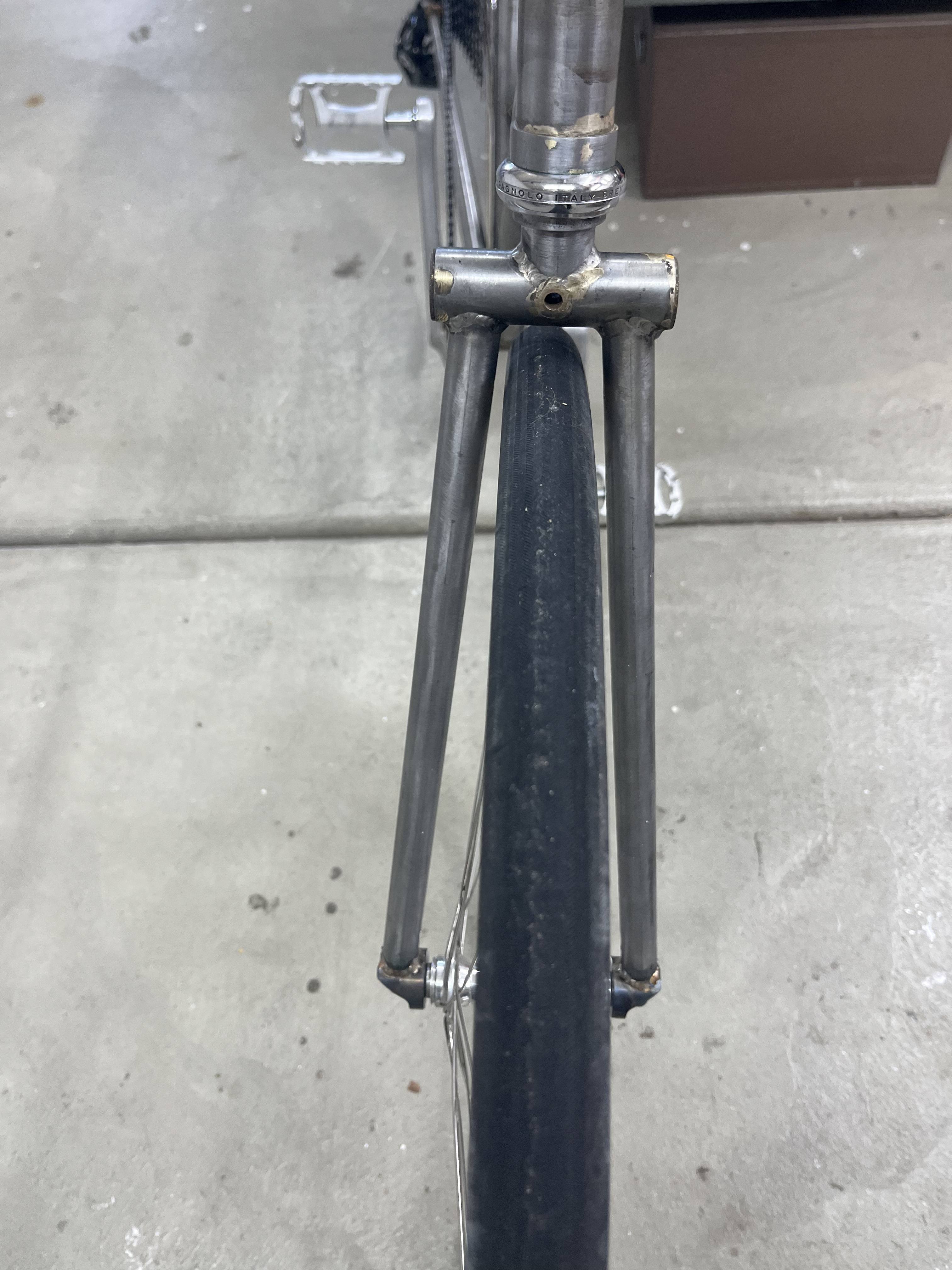
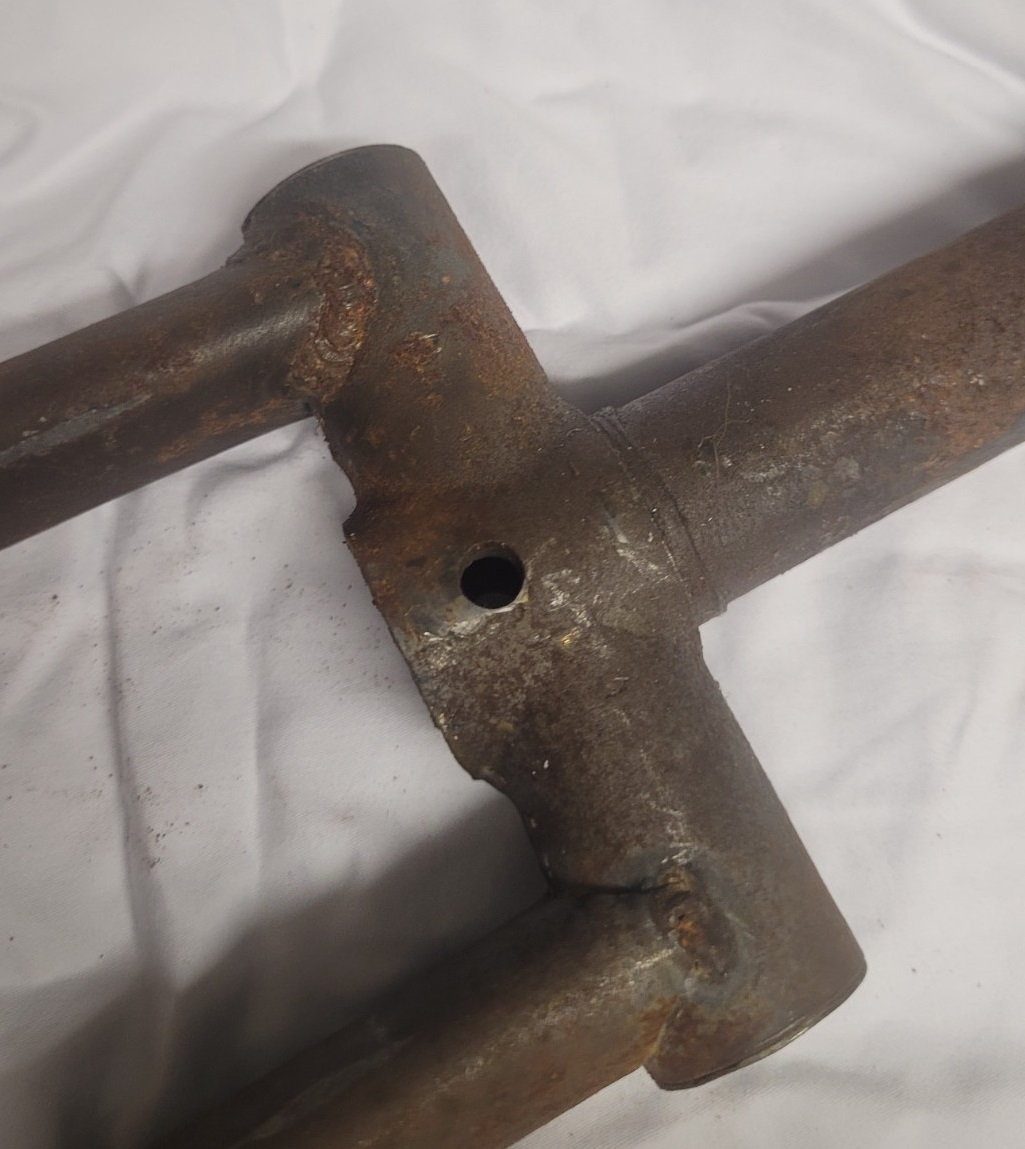
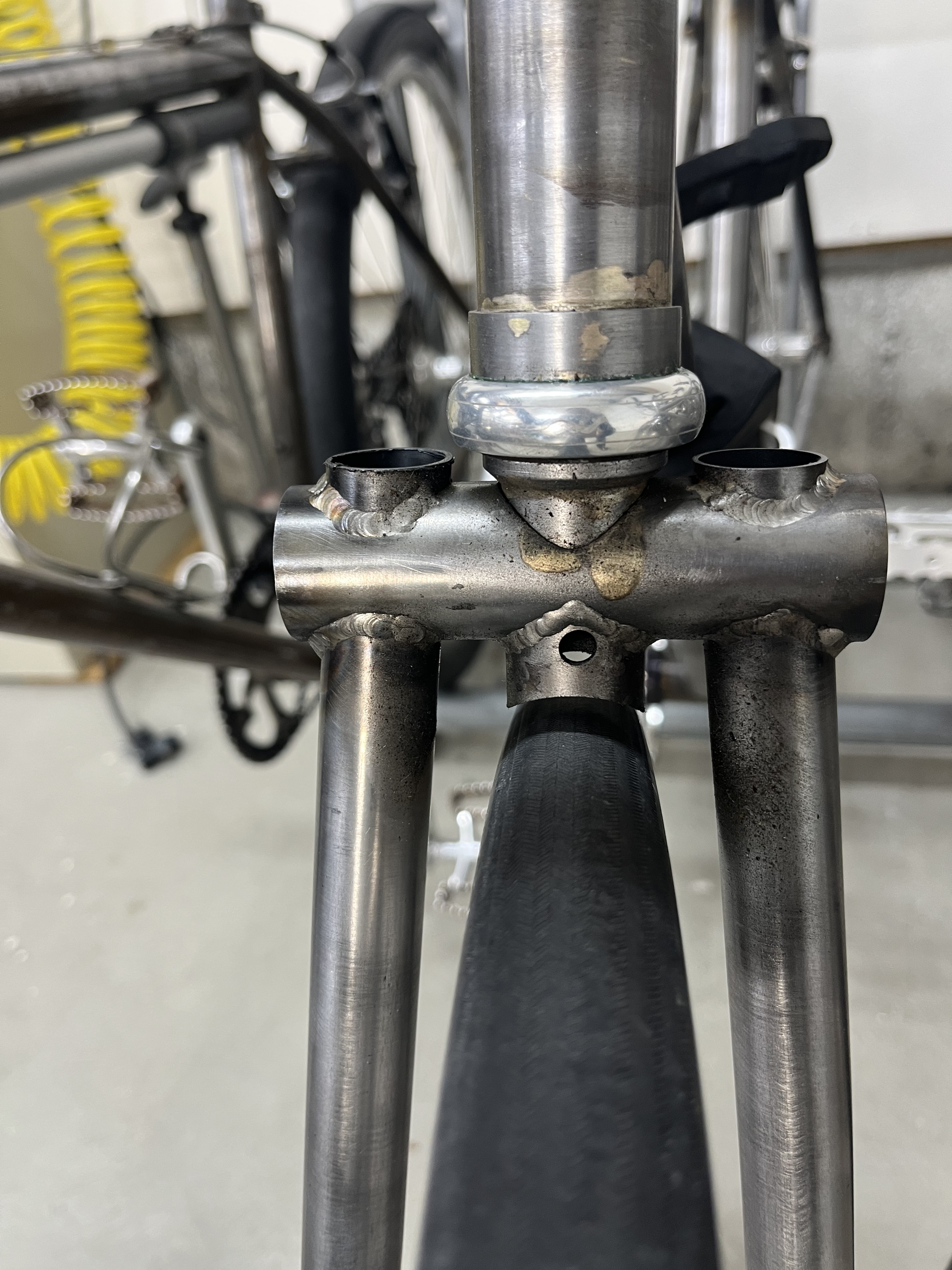
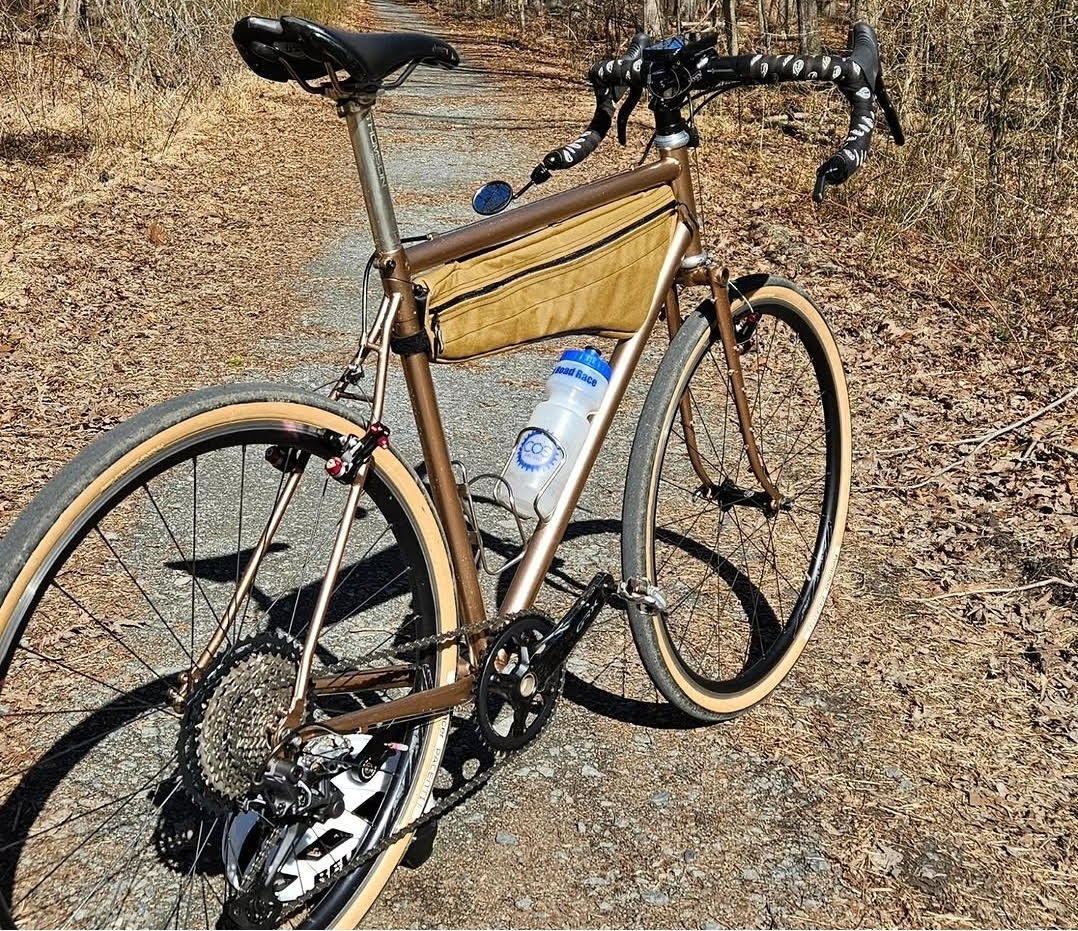
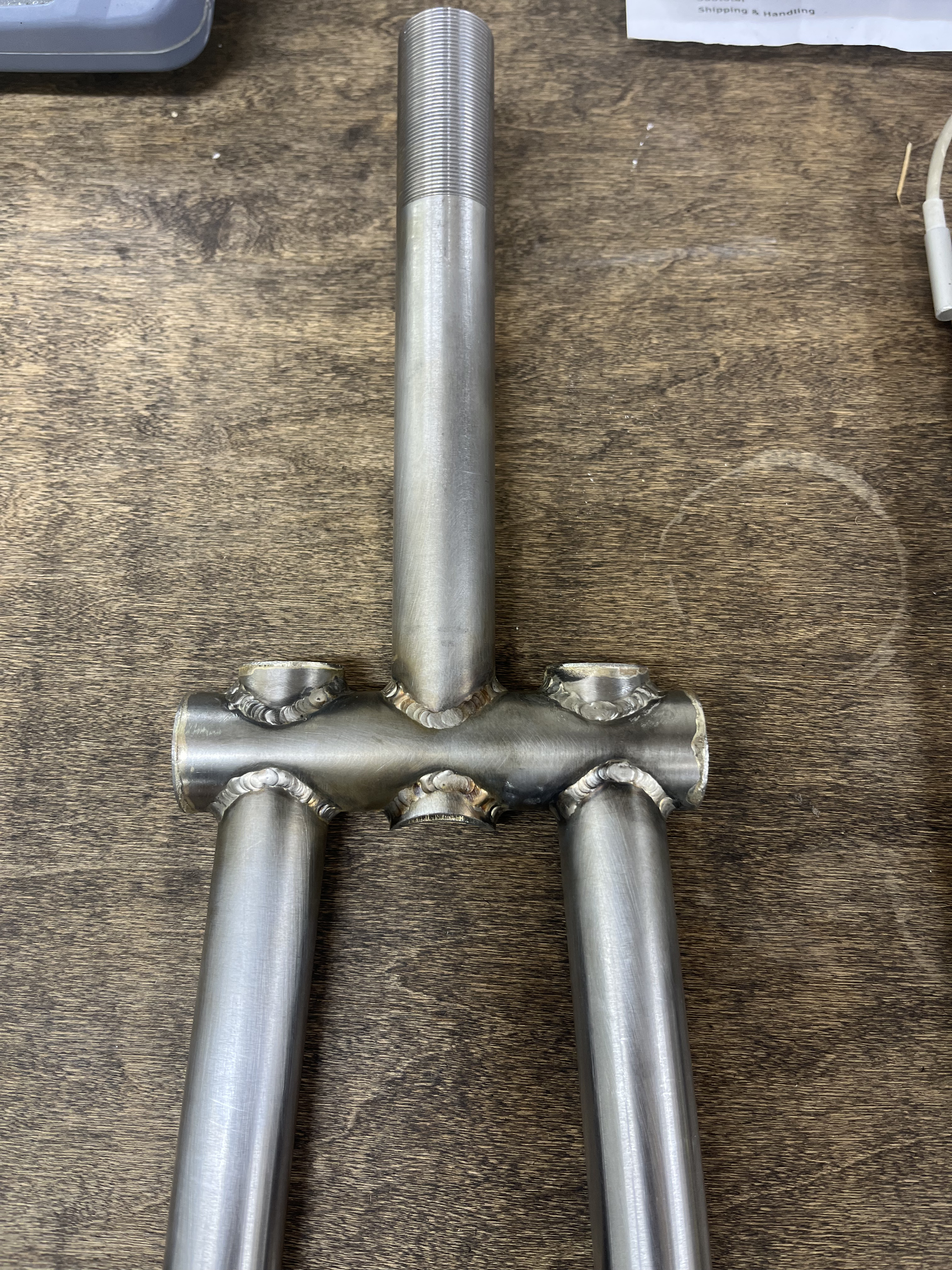
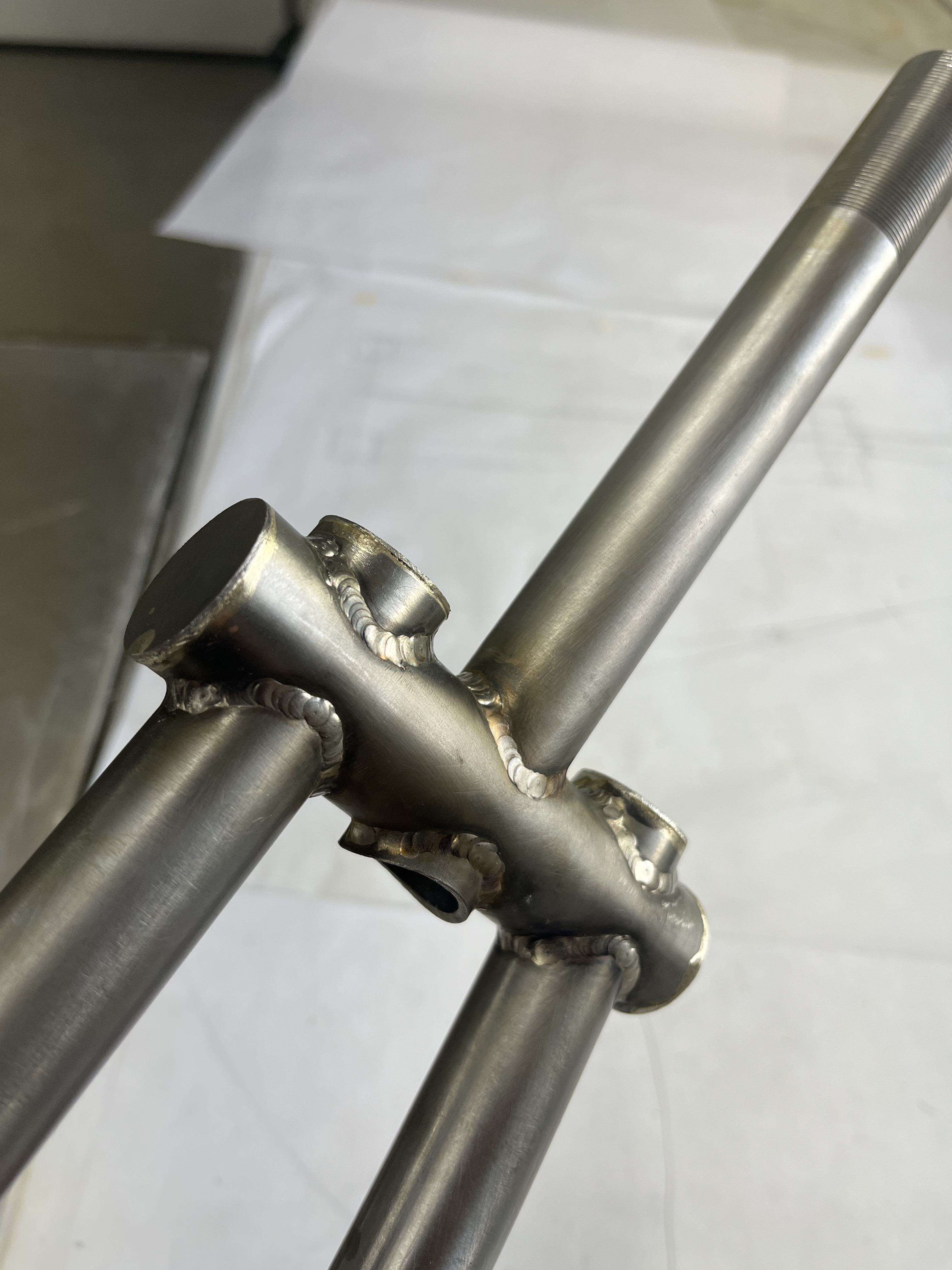
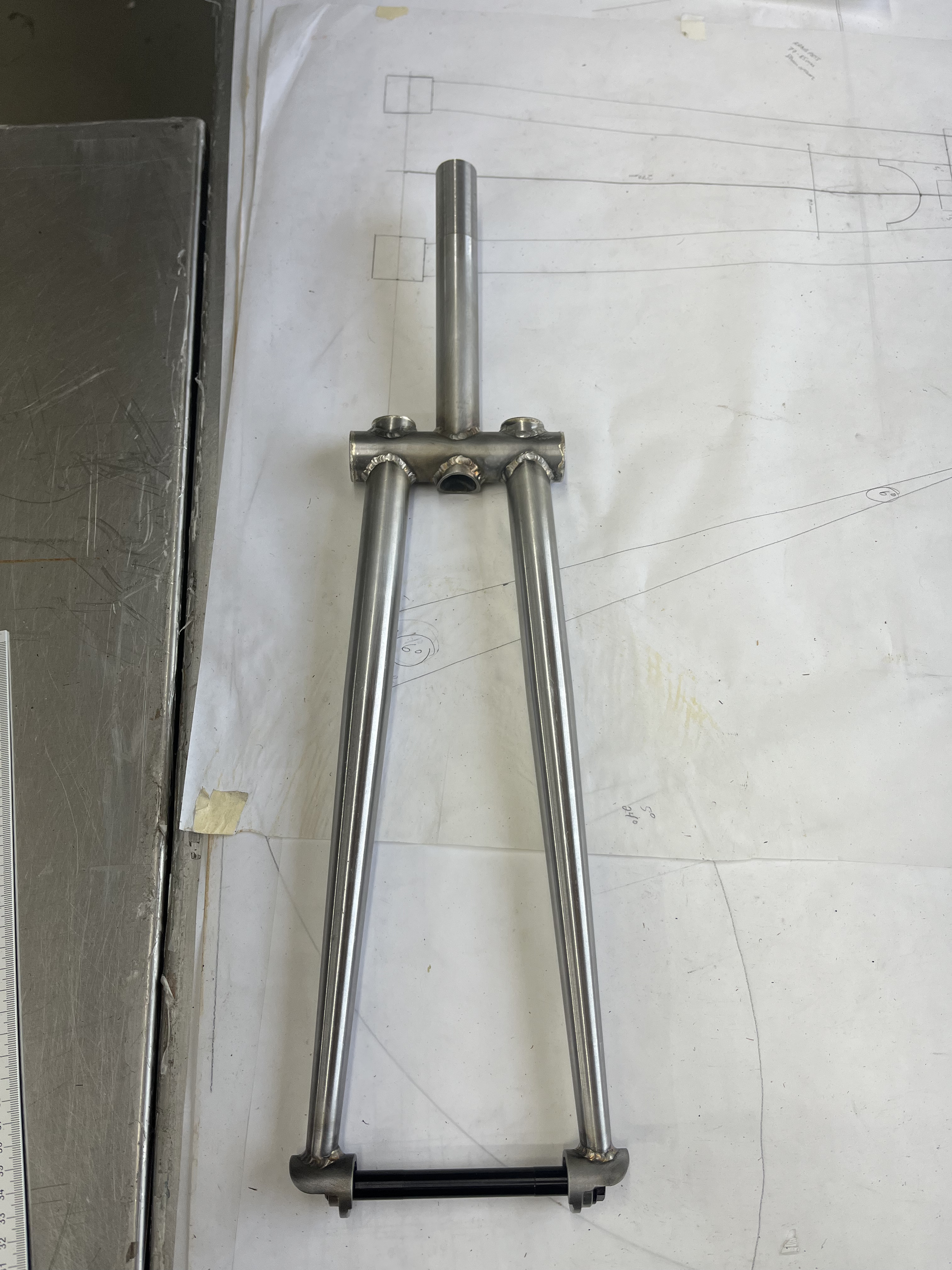
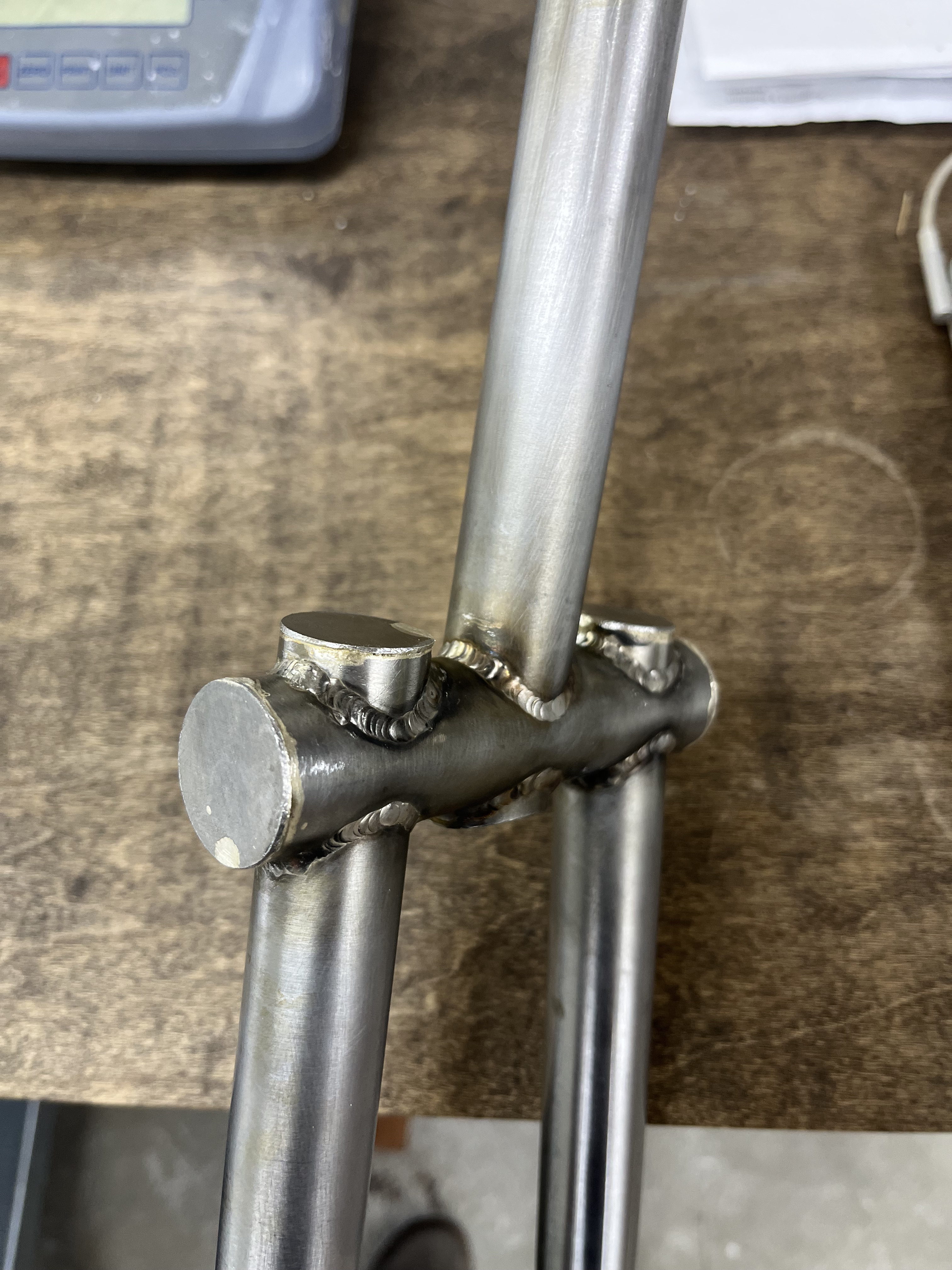
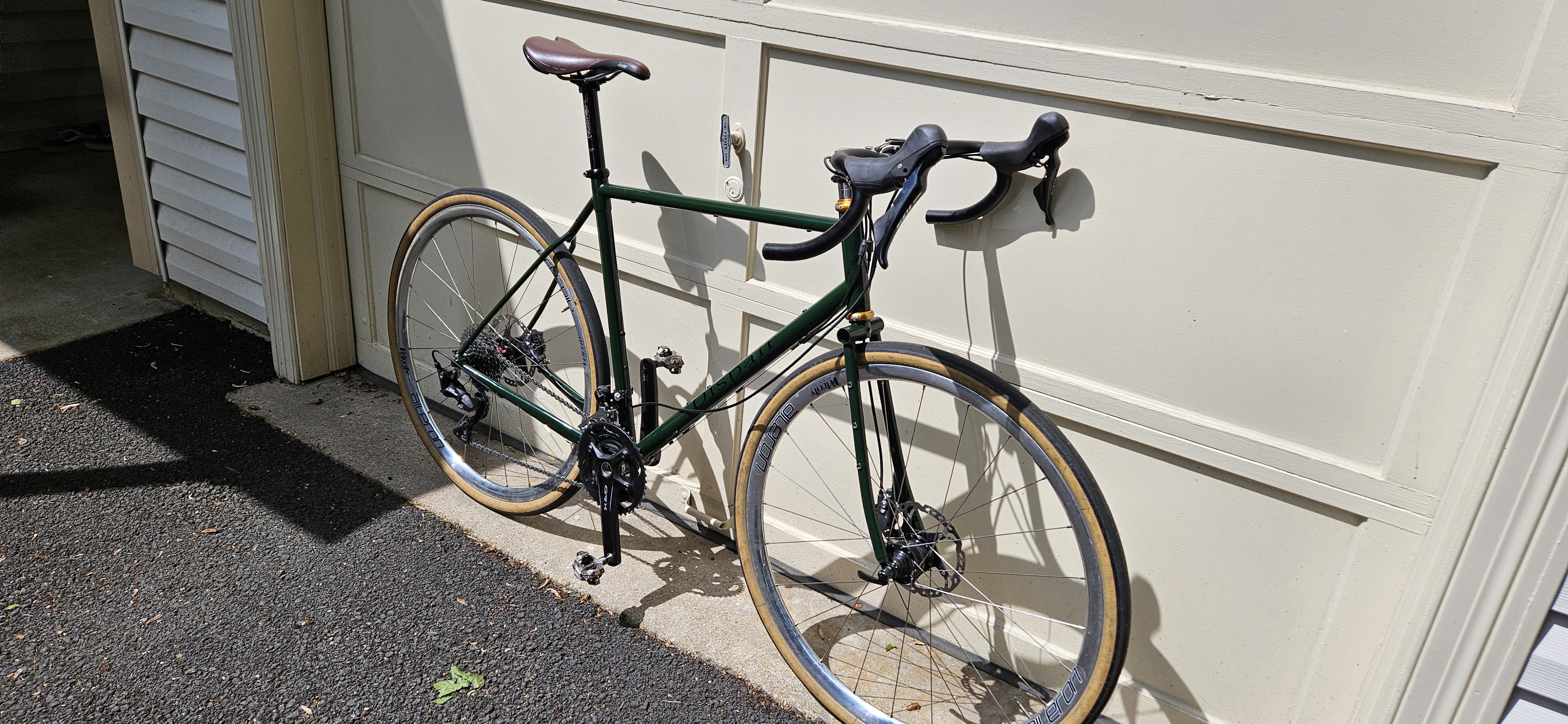
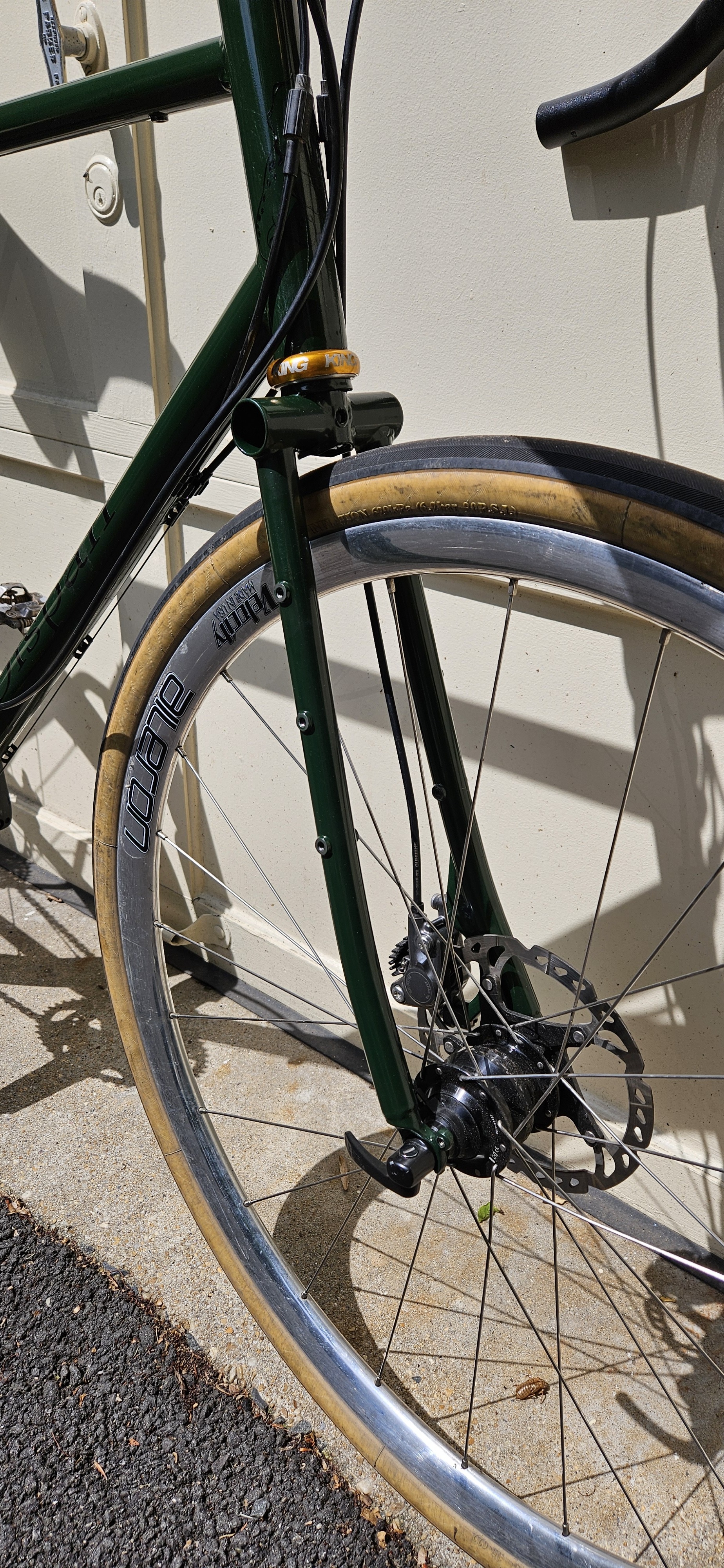
I recently built my first fork, and I had an idea I wanted to try. See pics. I’ve never seen a fork like this before, so I assume there must be structural reasons. Clearly this wouldn’t be a good design for 28.6 steerer or larger, but this is a 1” threaded steerer, so there’s no star nut, and I live in an arid climate, so I’m not worried about moisture getting locked in steerer tube.
My question is this: is this design structurally inferior to typical segmented fork design?
In my mind, this seems just as capable of handling load and torque as traditional segmented fork, and I’ve ridden the bike and it feels solid, but I’m no engineer. Thanks. (Ignore the ugly welds and brazing.)
No engineer here but the same basic design has been used on many thousands of bikes before. Many English (Raleigh comes to mind) moderate cost bike had a specific stamping for the crown that was folded into a 3D structure, much like a tube but with specific shaping. How thick a wall does this crown have? I might have through holed for the steerer, only one crown “wall” (a butt weld) concerns me. The other aspect that has nothing to do with the crown design is the large A-C length as indicated by the steerer above the crown and below the race. But I’m a small rider who usually has issues with too high a handlebar. Andy
I dont think a single sidewall on 1.2 tubing is gonna be enough to support a rider, the tube might just deform and twist, especially with what looks like a lot of rake. I tried 1mm 1” tubing for the crossbar of my cargo fork and just pushing the platform down by hand to fit the front supports deformed the tube. Granted this is thicker and a wider area but there’s also a lot more stress. I think the same design but with the miters cut in the crown and caps on the blades is way stronger because the stress is on a different axis relative to the tube
What Andrew said. The basic design has been around for ages (since the 70’s that I know of and probably earlier).
I’d be most worried about the straight steerer tube extension above the cross tube and making sure all of those welds are VERY solid. It all depends on the load - I wouldn’t ride it but Andrew might. I weigh 2x what Andrew weighs so…
The Raleigh fork mentioned was a cast (or bulge formed?) tubular crown, so perhaps a lot thicker than a welded tubular structure, and with fewer joints.
Presumably at some point their crown had been made of separate tubes, but a new unit was produced to reproduce the classic Raleigh appearance, but be stronger, and quicker to build with.
Also, the blades used by Raleigh are always flat oval, so have more wrap around the crown tube than small round tubes would, right round to the neutral axis. This increases stiffness and reduces stresses on the joint.
Compared to the fork which you showed, I would definitely use a full length steerer pierced through the crown tube to avoid that vulnerable horizontal crown-to-steerer joint. And also raise the crown tube to the level of the headset race (to lose the extension above the crown tube) and extend the steerer down to give somewhere for the fender/brake hole to go that suits.
Here is my second attempt. Better than the first, but still made mistakes. First mistake is that I brazed crown seat before welding up tube node, which meant I couldn’t complete final weld for fear of undermining the braze with hot temps.
Couldn’t complete my welds around blades for lack of room. Order of operations matters.
I also made a stupid silly mistake when drilling brake post hole, so it’s off center. Attempt number three forthcoming. I think I’ll get it right this time.
In the final attempt I will cap the open tubes with 16 ga chromoly and braze some bottle bosses therein.
Great thread. I’ve also wondered about doing your original design– it just seems more obvious and simpler than segmented. But I yielded to convention and have always made segmented ones.
But I do think that original design would be fine. I use a bit of 1” steerer for the segmented fork “crown”, which is overkill, but it’s such a short tube the weight is not an issue.
That’s what I did on round 2, and will do so on the next: piece of steerer tube cut for the tubular crown. Been riding on it. Feels solid. If anything, maybe a bit too solid. Less compliant than previous 80s road fork had on bike. But this fork is also straight blade, so there’s that.
What’s the diameter of the blades? I’ve done a similar design on 2 of my forks, one went through and one terminated at the bottom of the cross bar. The second has thousands of miles on it.
I’m debating my next fork using straight 4130 like you did. I weighed a set of 0.75x 0.049 (19x1.25mm) and it was slightly lighter than the bike fab supply disc fork blades. I’m a decently lighter rider, so I’m thinking of giving them a go. I don’t want to skimp on safety, but I also think forks generally are overbuilt for a rider like me.
Going up an 1/8” in diameter will significantly increase the strength of blades. I ran figures in Chat and it calculated braking forces for my weight against chromoly fatigue and failure figures and it recommended the 7/8” tubing.
Here is the latest fork. Super rigid and solid. No concerns about integrity of this one.
One question. I’m confident the steerer tube is perpendicular to axle, as I welded up in an Anvil jig. But in trying to keep everything square, I overlooked that drive-side blade meets the dropout about .75mm wider than does the right blade.
Dropouts are still 100mm wide, but will the slight difference in blade position on dropout affect handling?
You can kinda see this with the naked eye (hard to see in photo). The fork looks a little tweaked. Probably won’t notice this with a wheel in it, but… I’m more concerned with whether this could affect handling. My belief is that it won’t, but not sure.
Not quite done yet, but similar. 3/4” x 0.049” blades. Math says they’re slightly weaker than a standard disc fork blade, and they are slightly lighter. Empirically, they took a similar amount of effort to bend, which was significant. I need to add the braze on bosses, crown race, and disc mount. Going to turn aluminum plugs to fit in the crown to make it easy to route dynamo wires and store something?