I’m practicing miters on random scrap pieces of 4130 tubes I got from aircraft spruce. The things I’m struggling with are
Having the right size/profile files.
Miters being symetrical on both sides.
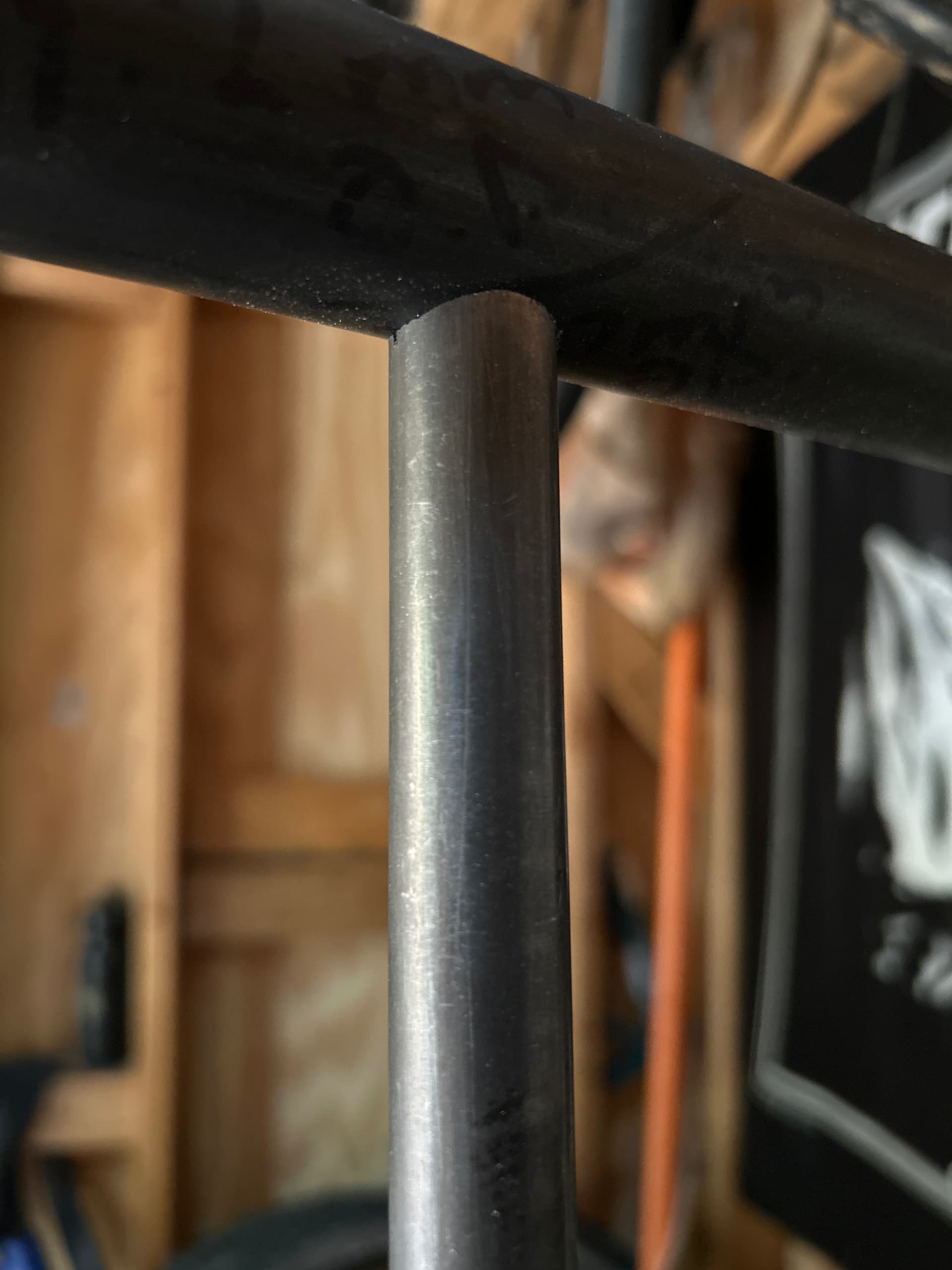
Miters being the right profile and shape
I think part of this is becuase the tubes are 3/4mm thick in some cases and difficult to take material off easily and when I move to bike specific tubing maybe that won’t be so much of an issue.
I’ve breifly experimented with TubeMiter.exe but the file that was output didn’t match the size tube being used. I think either my caliper tool is innacurate, converting to PDF changes the template shape or a combination of both.
I would also love a suggestion on a new caliper tool!
When you go to print the paper template, make sure you have the right “pixels per inch”. It can usually be configured somewhere depending on what program you’re using. Experiment with that. If all else fails, print it out, measure it, and thus work out what to scale it to.
As for files and things I just use a 120-grit flap disk on an angle grinder. I know this is a bit redneck but it works for me. Then you also don’t need tube blocks because you can just hold it with the other hand (but a good idea to rest it on the table, or in the nearly-closed jaws of a vice, so you can roll it around a bit).
Just use the middle size file, half round in 2nd cut, I find works for most needs. Can use first cut if you have a heap of material to remove.
That just takes practice. It easy to take material off the far side ear and harder off the near side ear.
Try downloading RattleCAD and using the mitre templates out of that. They are really good.
Just spend money on a decent set of digital calipers.
Get some thinner wall tubing 0.9m wall would be great to practice on.
Be patient and be pedantic and get good at doing mitres. Being accurate here will save you so many hassles down the track. It is teh foundation skill for being a competent frame builder. My mitres are really good but I still learn more about doing them every time even after doing this for 10 years.
Thanks Devlin! I just watched a cobra frame building video where Joe talks about how to get close to the ears without filing off the sides.
I think my two files are either too big or way too small so a middle sized one would be good. Half round in 2nd cut is what I’ll look for as well as digital calipers
You will get better with practice, just keep getting repetitions under your belt.
Even with perfect miter templates you’ll need to finish them by eye.
Don’t rely solely on the radius of the file, it rarely matches perfect. Use the biggest file that is smaller than your miter and sweep the entire “U”. The file should move side to side in coordination with moving front to back.
Experiment with how the file angle changes the cut.
Learn to read the wobble during test fitting. When first starting it took me probably 20-30 fit checks to walk the miter in. It’s closer to 5 now, I’m more confident taking off more material to correct the wobble.
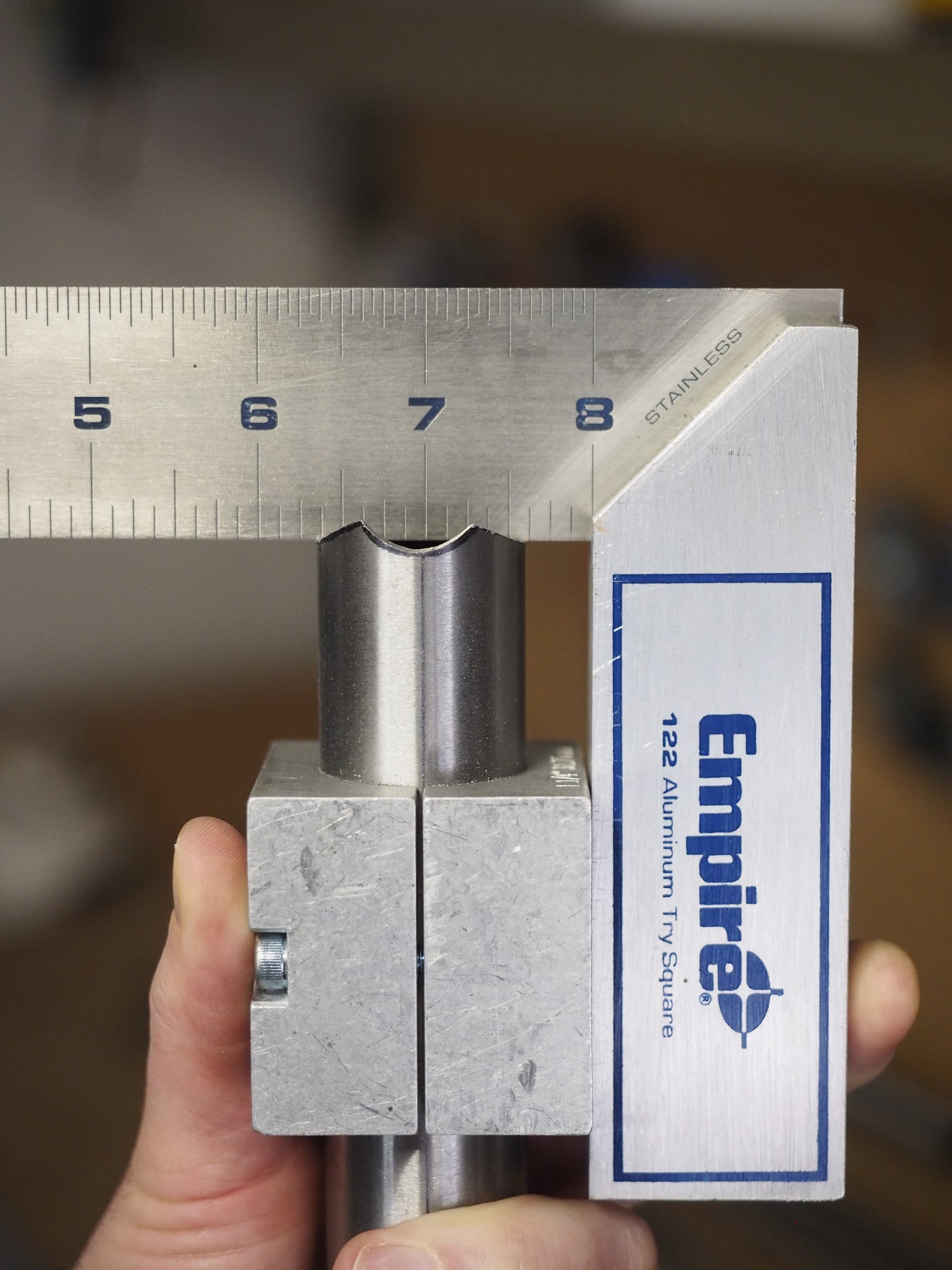
For joints like ST to BB, you can use a square on the valleys and ears to check symmetry.
They say everyone wants to be a woodworker until they realize that 90% of woodworking is sanding. Framebuilding is the same, 90% is filing (miters, prep, clean up etc). That just means you need to get good at it - as Devlin says - to be a competent frame maker.
With TIG there’s no cleanup (Except before you weld but that’s very quick). But still the vast majority of the time is measuring, fit-up, and small adjustments.
 (Except before you weld but that’s very quick). But still the vast majority of the time is measuring, fit-up, and small adjustments.