I recently had a 90s steel Yeti in for some repairs and alterations.
A previous owner had converted it for different derailleur cable routing by fitting two rivnuts, one near the BB for a cable roller, and another up top of the ST (presumably a cable stop of some sort).
So, I was left with two 7.3mmØ rivnut holes to be filled. The inside of the lower one was inaccessible, and the top one needed to be thin enough to allow a seatpost to fit.
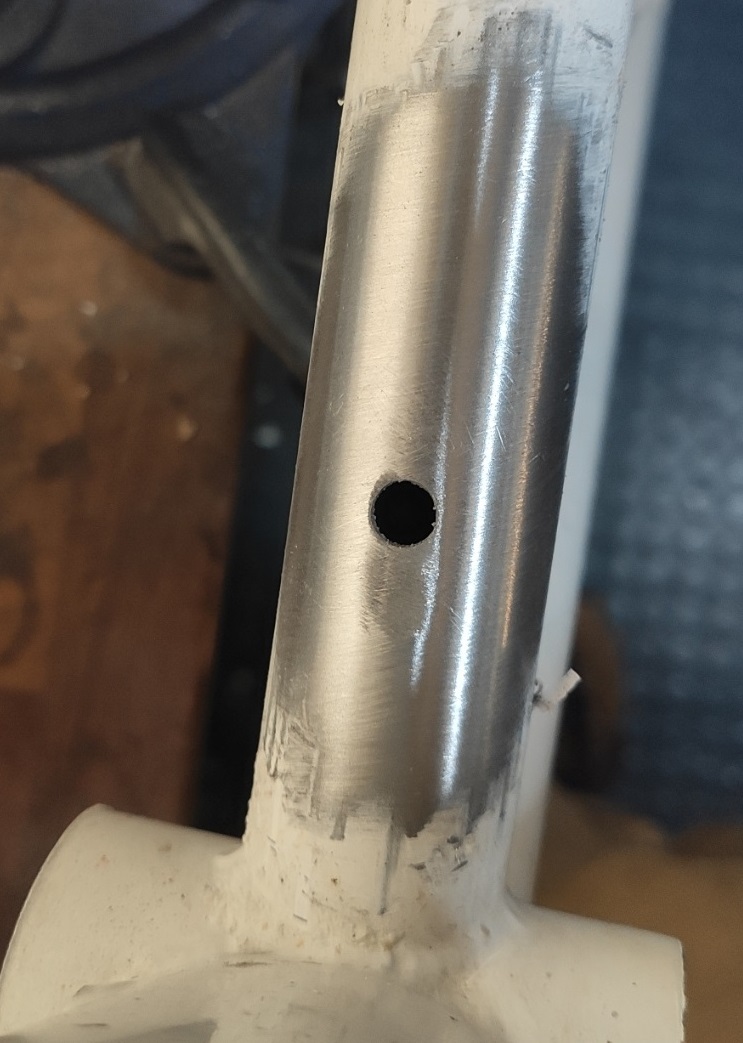
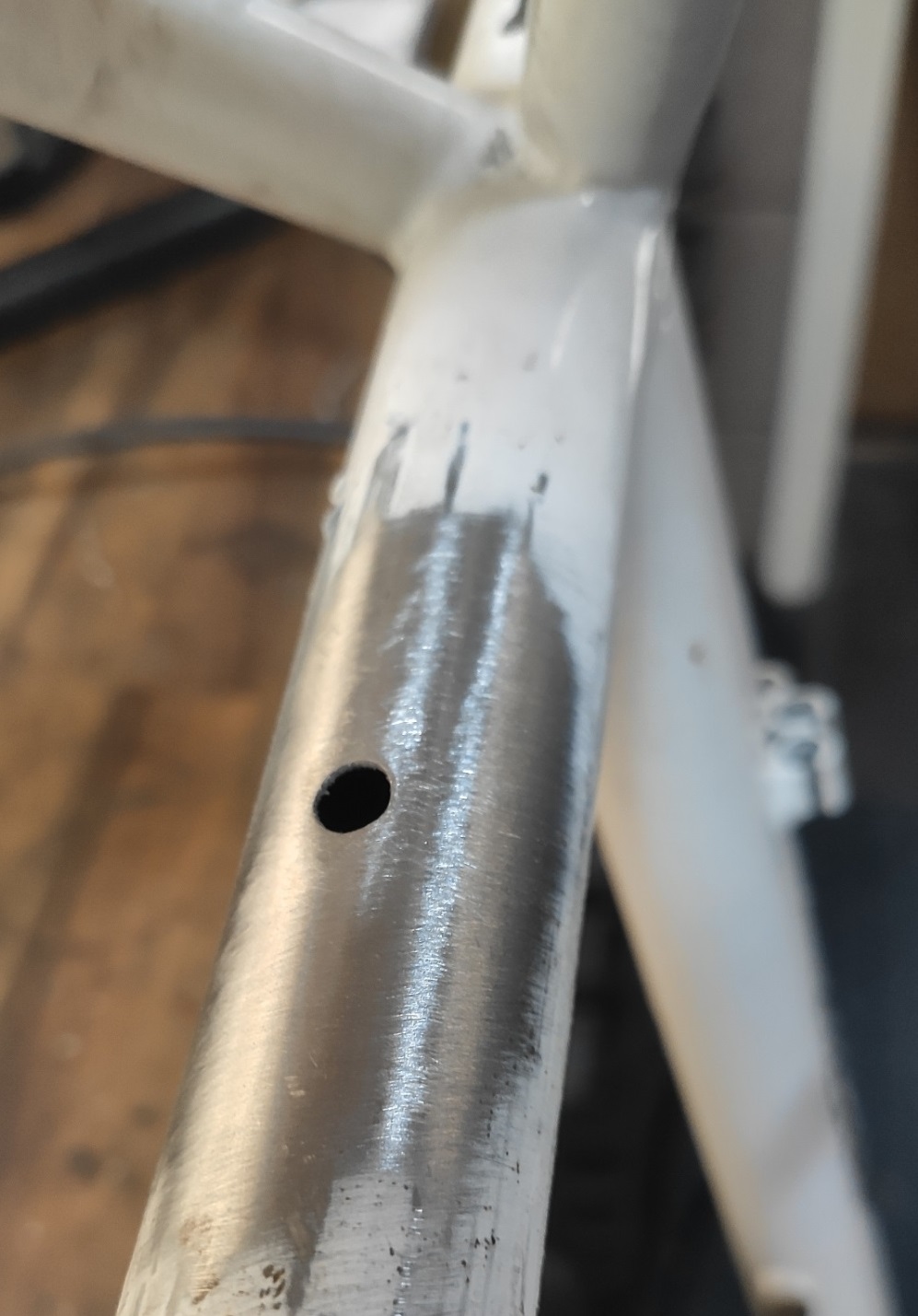
The lower one first:
Slotted the hole to around 15mm long. Cleaned up inside as much as possible. Made up a rectangular internal plate (approx 12x20mm) from a smaller OD tube. TIGged a welding rod onto it as a handle, slightly offset towards one end. Could be brazed on, but would need to be high temp alloy, since you don’t want it falling off during the later brazing.
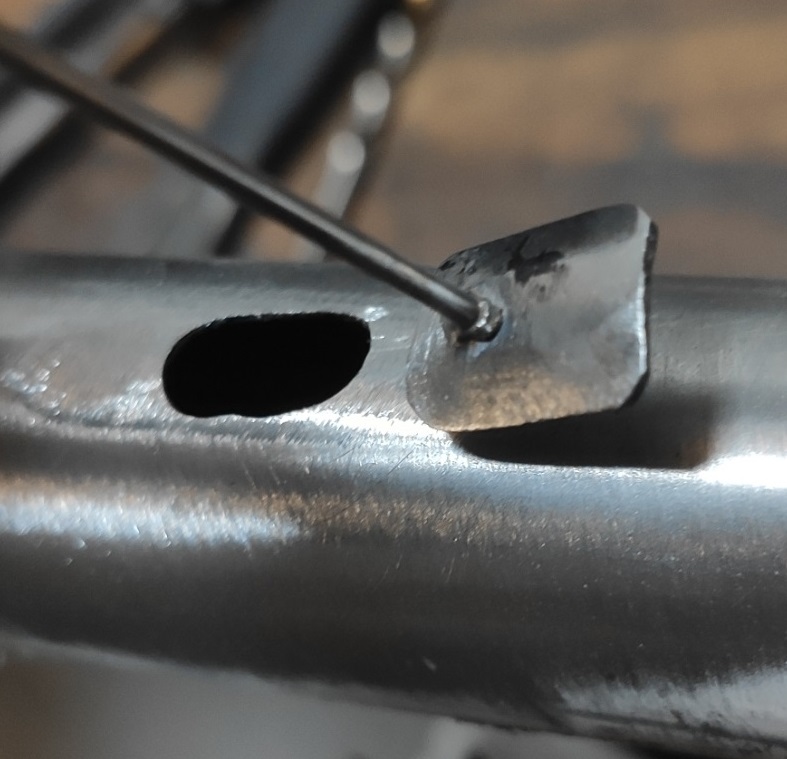
Fed it through the hole and into position.
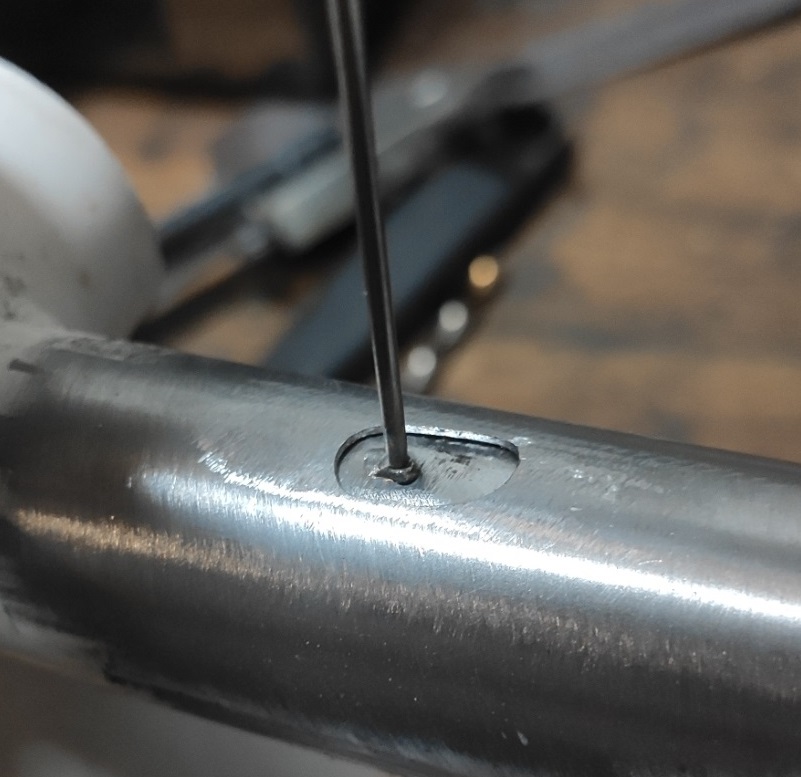
TIGged the patch in place and filled with silver.
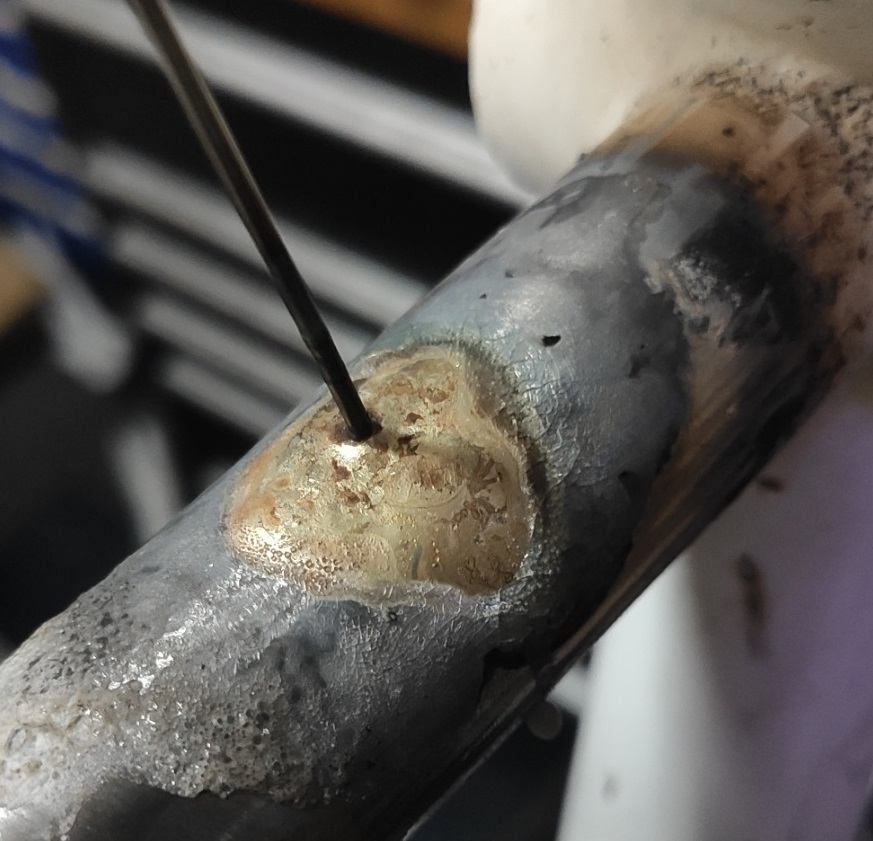
Snipped off the rod and filed back to surface.

The upper hole needed to be flush internally to clear a full length seatpost, so a different approach was needed.
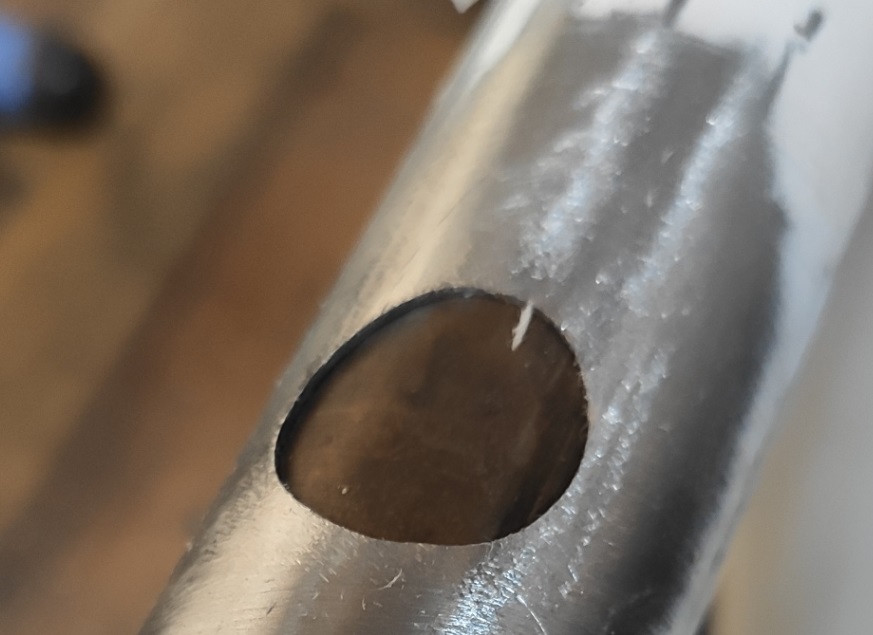
I used a 19mmØ holesaw in my mill to increase the size of the hole.
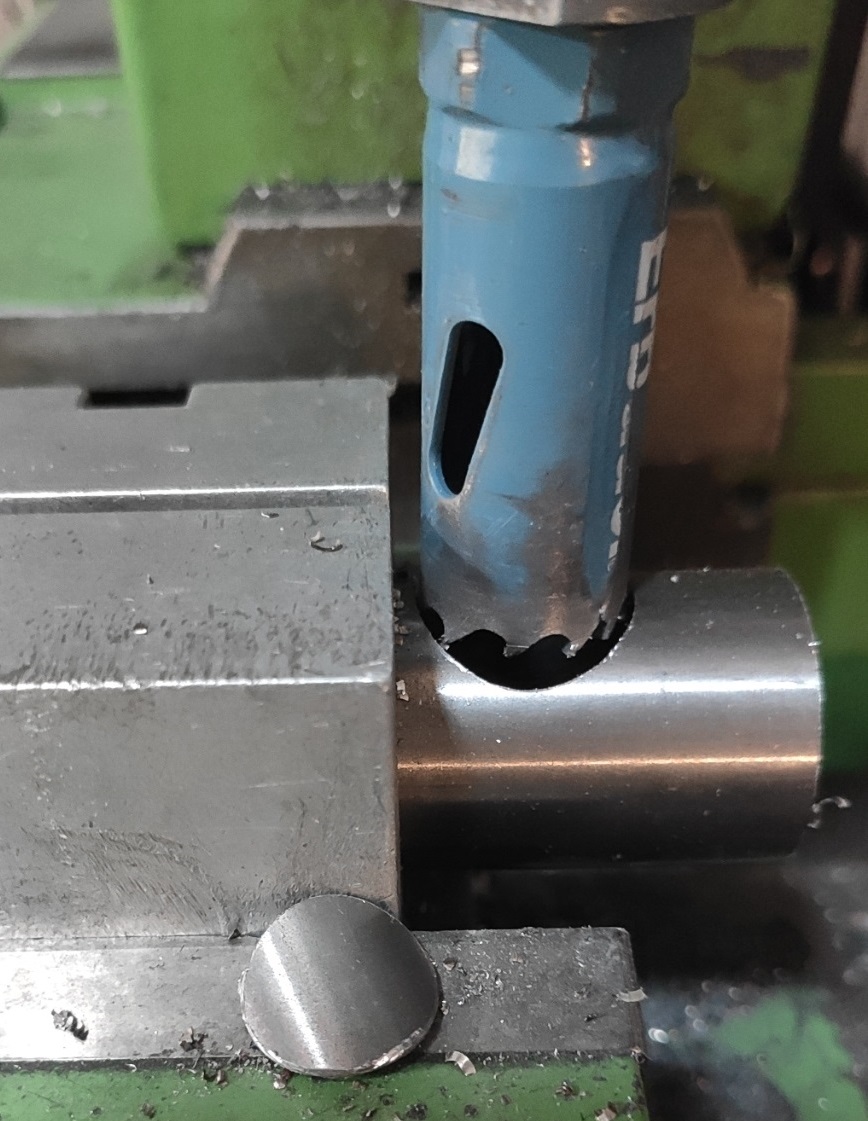
Then used a bigger holesaw to cut a curved disc from a matching diameter+wall thickness tube.
Fitted an expanding heatsink (or could be a seatpost), and sat the patch in the hole.
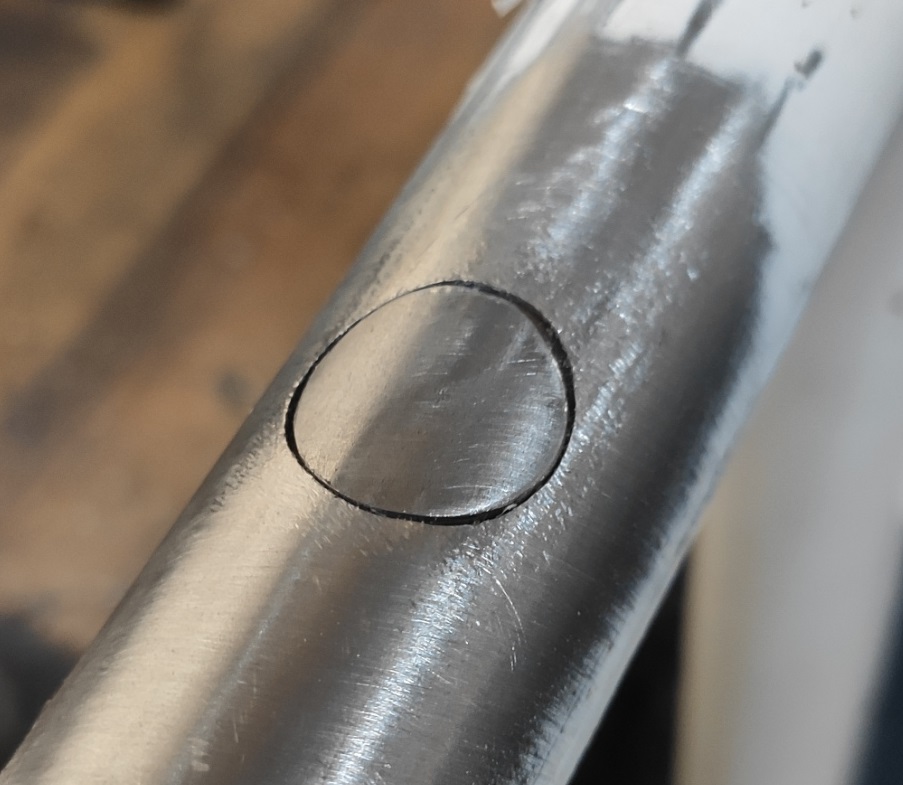
Tacked the patch into place with TIG, removed the heatsink and silver soldered the joint.
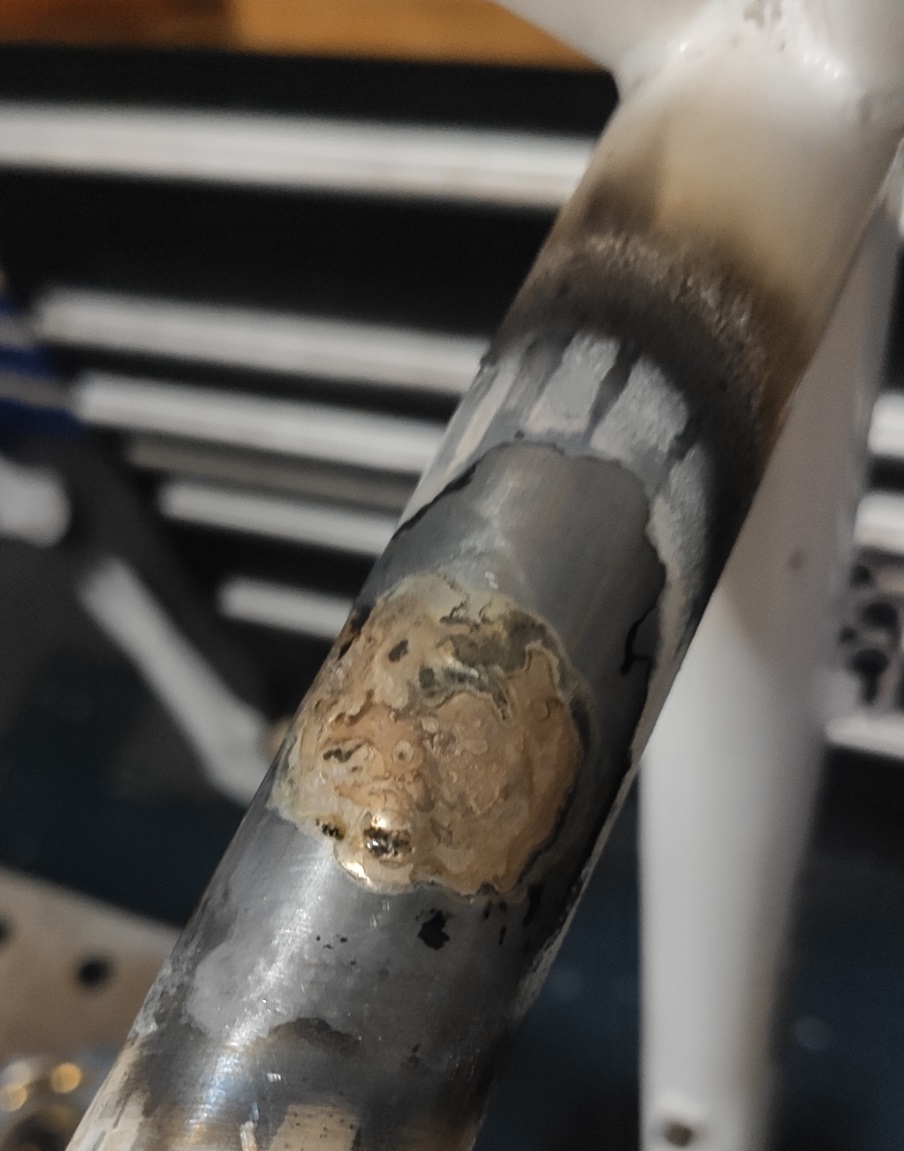
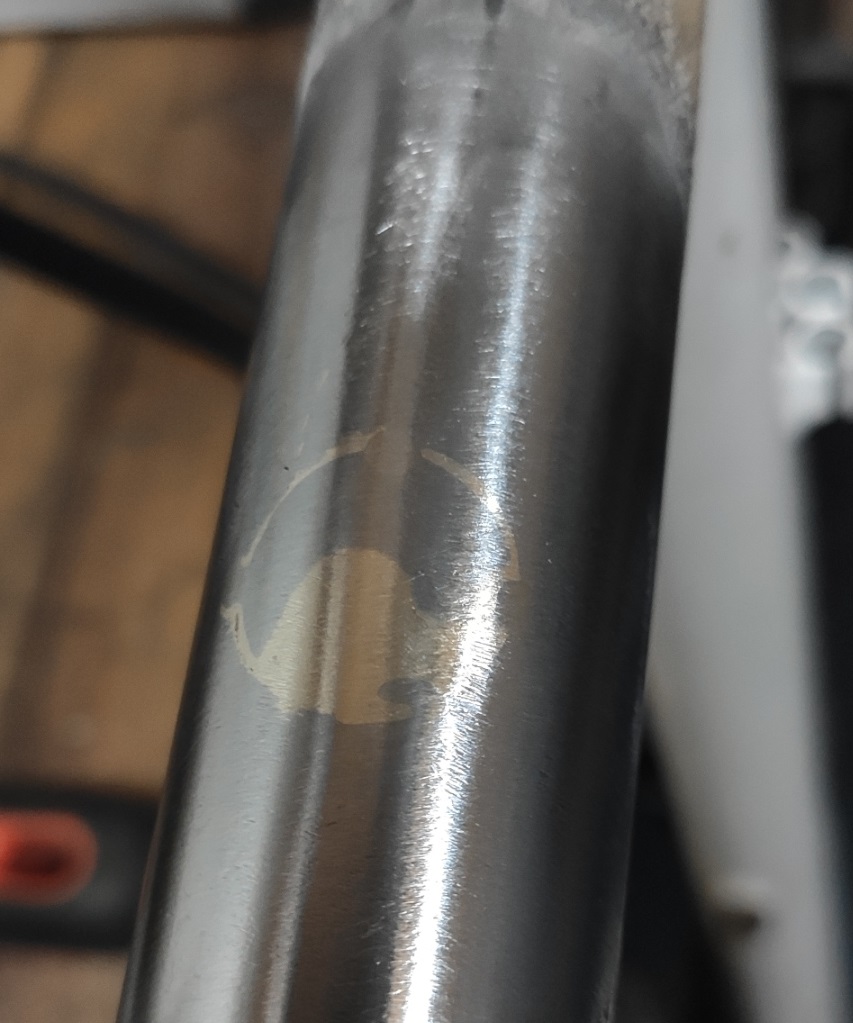
Filed it all back flush and reamed out the seat tube.
All the best,
Dan Chambers