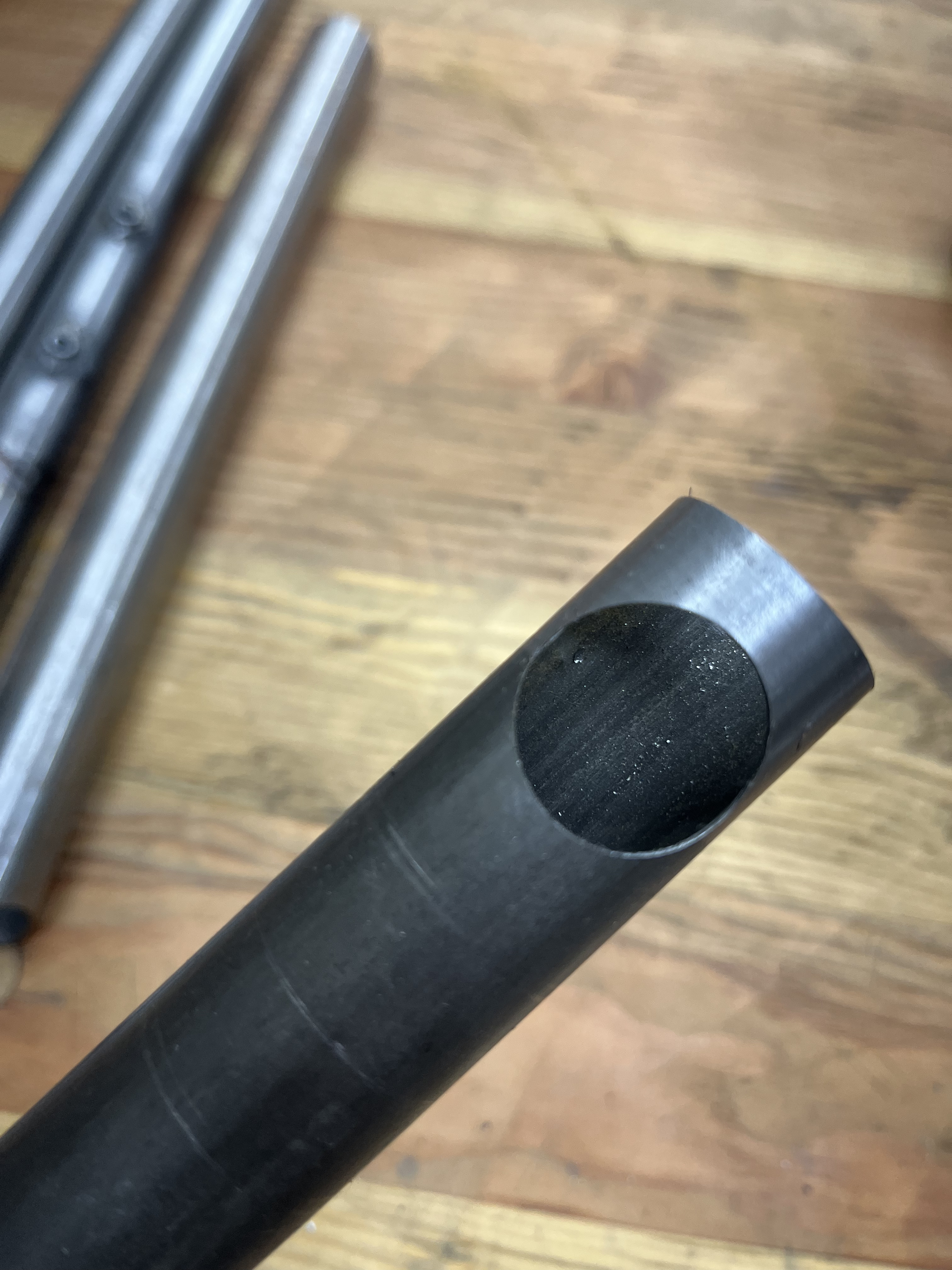
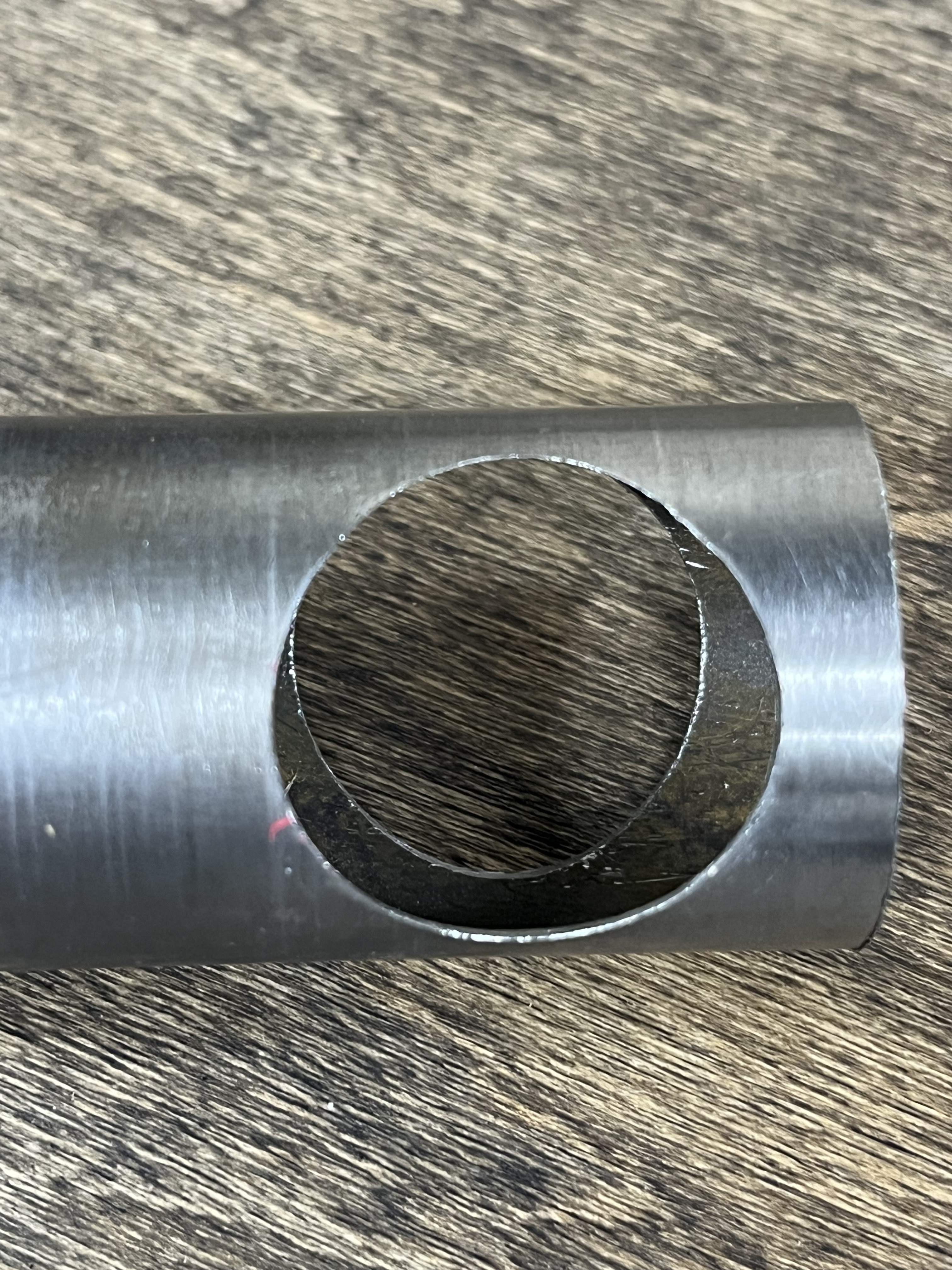
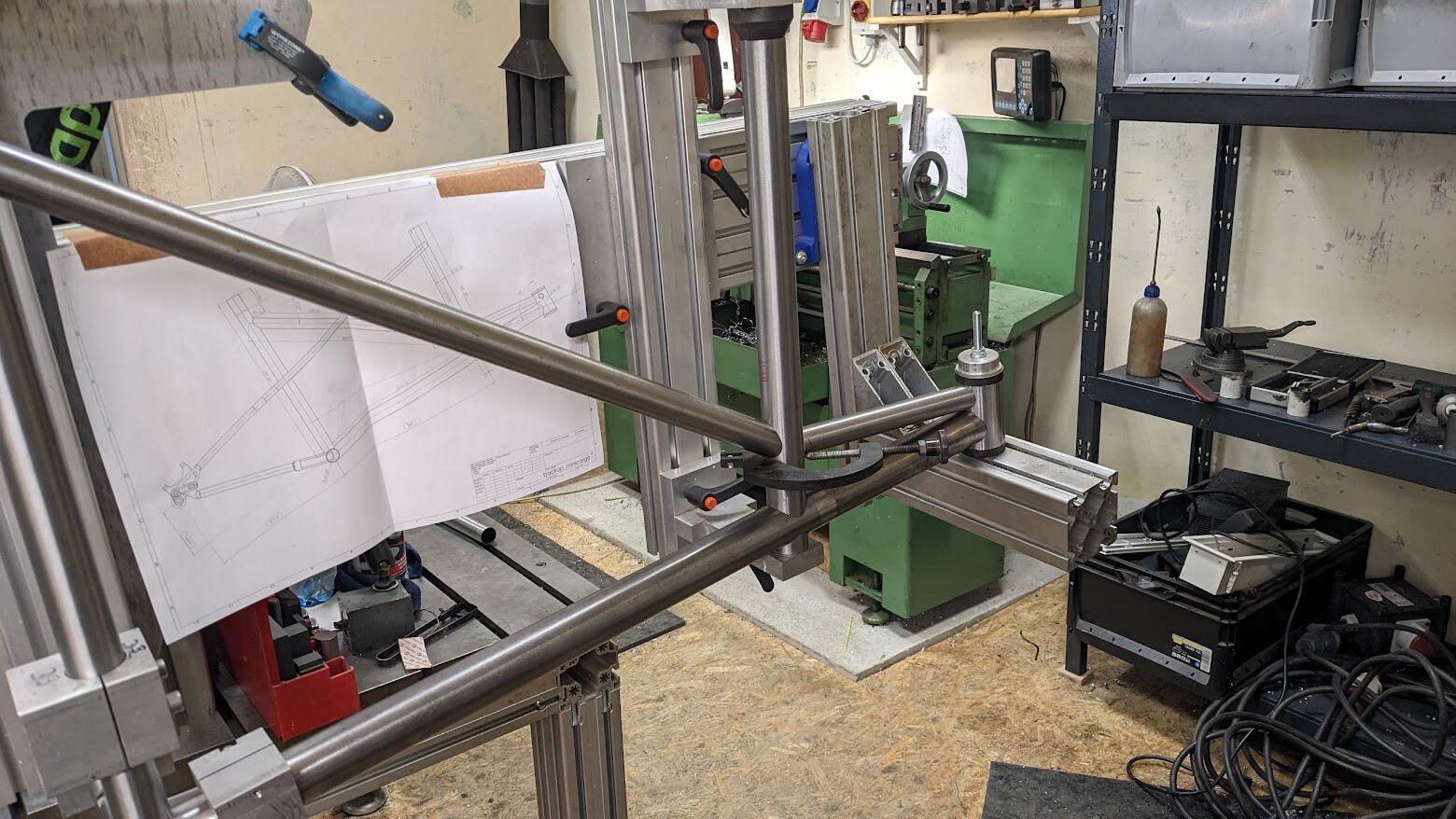
I’m working on a project that requires running tubes THROUGH other tubes, rather than mitering. Hole saws are great for miters, but when it comes to drilling holes… not so much.
Holes are oversized by about 1mm, which means welding is tougher. And alignment becomes trickier.
I’d like to cut holes that give a precise fit through tube. Anybody have experience with this?
I’m looking at the ATI hole saws, which look as though they’d produce a cleaner hole, but also considering end mills. Any recommendations of end mills if I pursue that route? They’re pricey, so don’t want to buy something not up to the task.
I used hole saws to do it. My setup was kind of janky, but it totally worked.
I did a lot of test cuts. I’d drill a test hole, then measure it. The first cuts were oversize.
Then with the holesaw in my mill, I used my dyna-file to shave a bit off the diameter.
Then I’d do another test hole, and repeat until I got just the size I wanted.
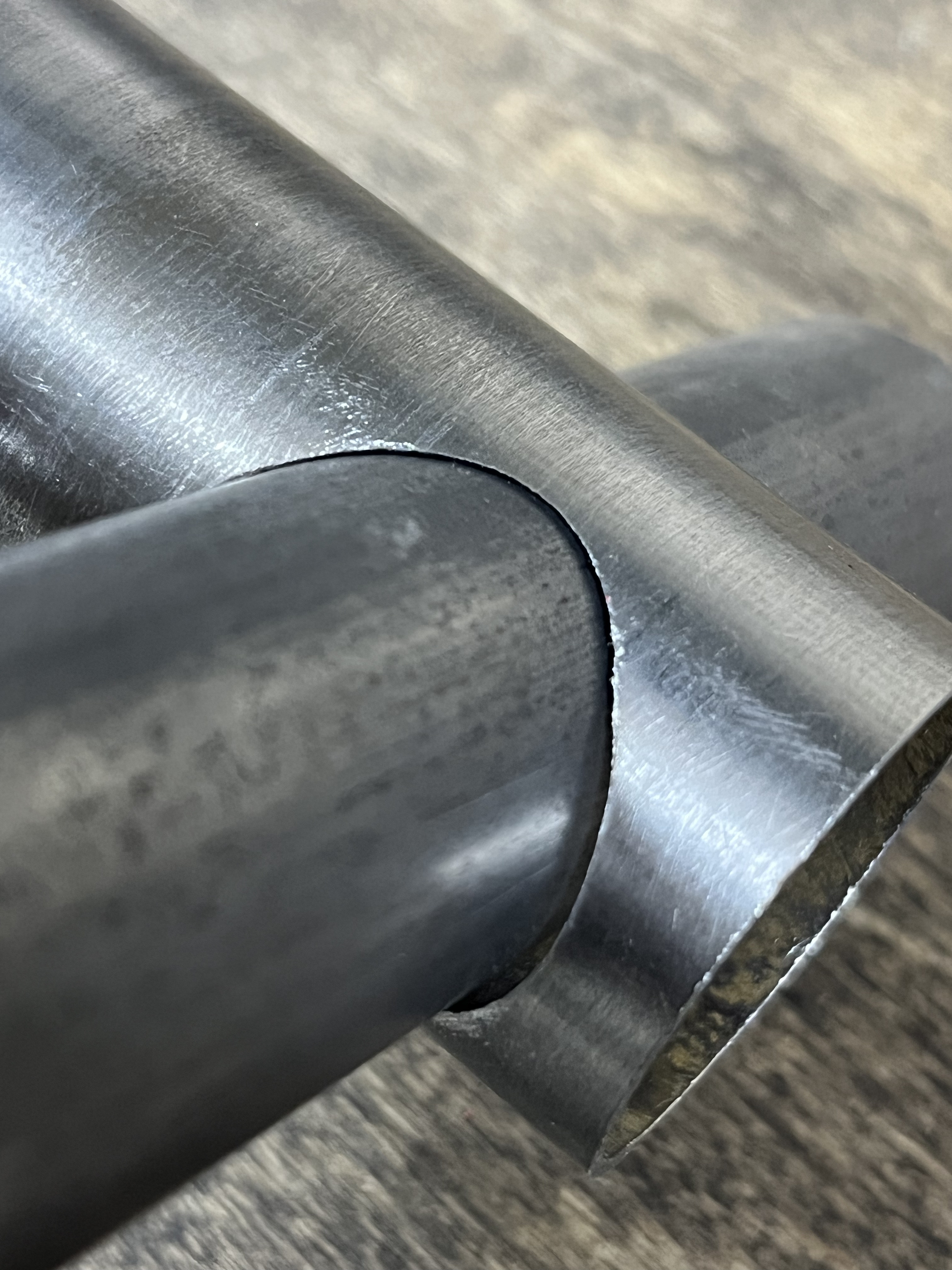
I’m the end, my fit was nice and tight.
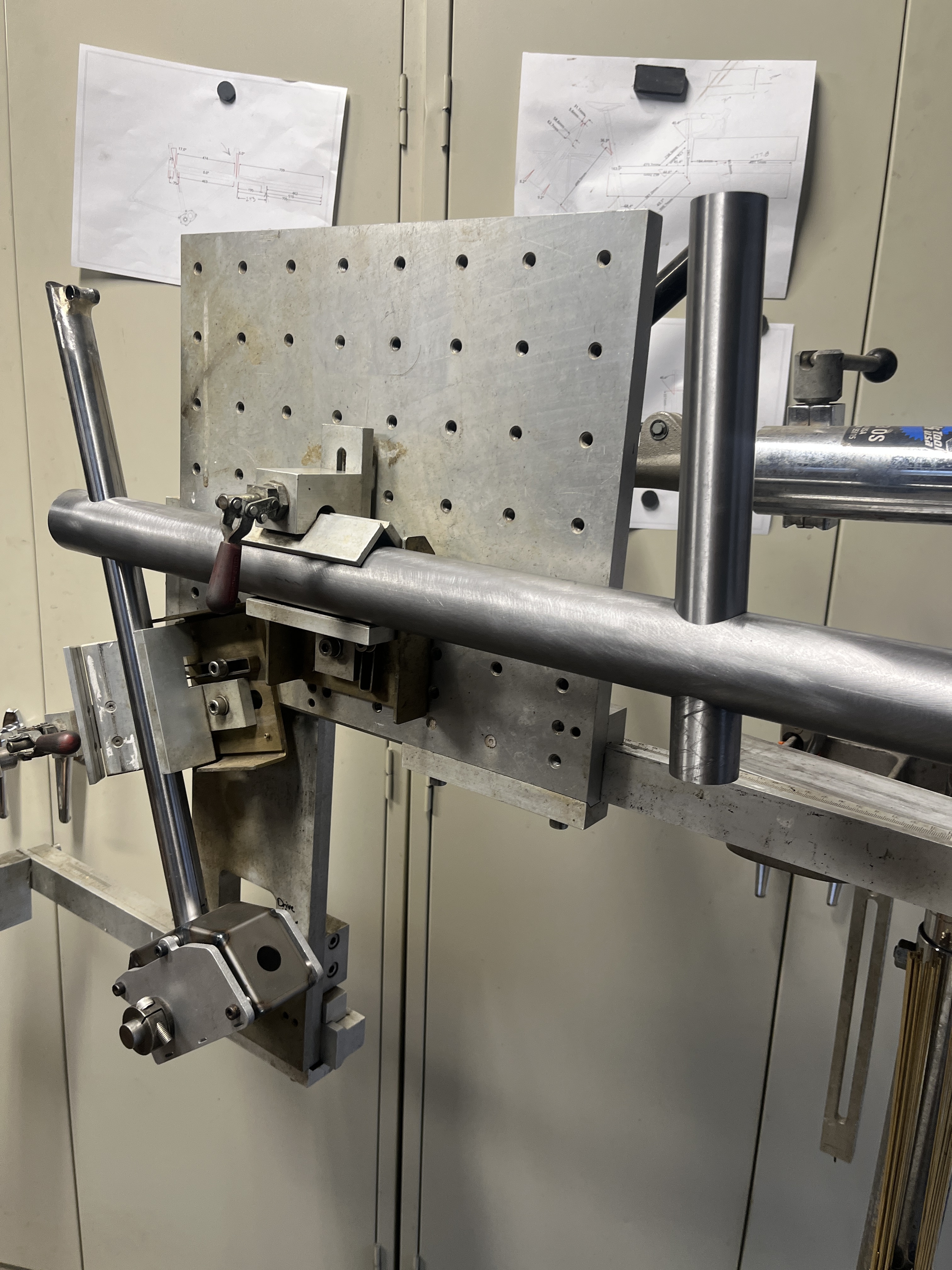
Check it out! The tubes I passed through the holes are tight enough to stay in place before they get clamped in the frame jig!
Just drill a hole that’s a bit too small and chowder it out with a Dremel or similar. Or a file if you’re less lazy. I actually tend to do this even for bottle cage holes because it gives me a chance to move them back to the centre-line if they’re a little off (I don’t have a drill press, doing everything by hand).
I’ve used annular hole saws for a few projects, they’re really sharp and have much less runout than a hole saw. You have to take your time and have a good rigid mitering setup, but the results are 10/10
Put the hole saw in the lathe and machine the arbor. Then you have virtually no run out on you hole saw. Yes, you do end up have to replace the arbor but at least you get accurate holes.
Thanks for all the ideas and info. Don’t have a lathe, so won’t be turning arbors, but I do have a cheap but fairly rigid mill, so gonna try the annular bits.
Annular cutters have a good sharp finish. The downside is that they have a low tooth count, so tendency to catch on thin-wall tubing is more than high tooth holesaws.
If time isn’t an issue, I’d saw choose a hole saw a little smaller than your desired end size, then use an end mill to finish pass through the hole at your finish size.
I had a similar task the other day… Ended up using an undersized holesaw which I ovalized slightly in a vise to increase the diameter until it produced a very snug fit. Careful though, hole saws have a weld seam which is quite brittle so they tend to crack when ovalizing.
I use some ATI cutters and they produce very nice holes/miters. The problem is they aren’t as deep as a hole saw. For doing what you’re doing, with a mill you could punch through one side, then back out, remove the circle and then punch through the other side. My experience with annular cutters is they have few teeth and will snag thin walled tube if the speed is too low and will burn if it’s too high.
For those with a lathe, here are some tricks to help with hole saws:
Chuck the hole saw in a 3 jaw with the teeth facing into the chuck and face off the back so it’s true and there isn’t paint in there.
Put the hole saw on its arbor and chuck it up and indicate it near the teeth to find the high/low spots and you can correct these by squeezing in vice gently.
Twirl the OD at the teeth of the cutter against a belt sander to trim back the snaggley teeth poking out.
I’ve done a number of holes with pretty basic hole saws (Starrett brand in UK, or Erbauer) through tubes of various sizes. Where the hole is a little bigger than desired I’ve used a bench grinder to thin the teeth. Do test cuts to check as you go. Worked well for me - hole is perfectly round enough.
I’ve had good experience with ATI cutters. They’ll still have a small amount of runout, but not nearly that of a standard hole saw. As others have noted, you’ll need to punch through the first side, then back it out, clear the blank, and proceed to the far side. ATI gives really nice surface finish to the cut, IMO. I’ve tried annular cutters in a Bridgeport, and they tend to catch and snag on thin tubing, though maybe with enough feed/speed experiments you could find a workable solution. Make sure your tube is really rigidly held - perhaps a tubing block on each side of the hole, both blocks held in the machine vise. End mills can work for a through hole (not a miter; the mill will snag the entry side), but you’ll want a similarly rigid setup. Also, not all end mills are center-cutting, so you might have to drill a smaller size through first. End mills are really not intended for anything other than a rigid machine tool, but sometimes one can get away with using it as a drill, since there are no side loads. Bottom line: I’d go with ATI.
Thanks, Alex. I recently took fine-toothed hole saws to belt sander, taking off just a hair. That seems to have worked. No additional expense, and round holes with tighter tolerance. Still plan to try the ATI saws tho.
The first thing I do with holesaws is to mount them backwards on the lathe and face the bottom of them. This fixes almost all of the runout issues I’ve come across. I then mount it to the arbor and mount the arbor in a collet chuck on the lathe, and remove the high spots you get at the weld seam and trim off any errant teeth that are sticking out.