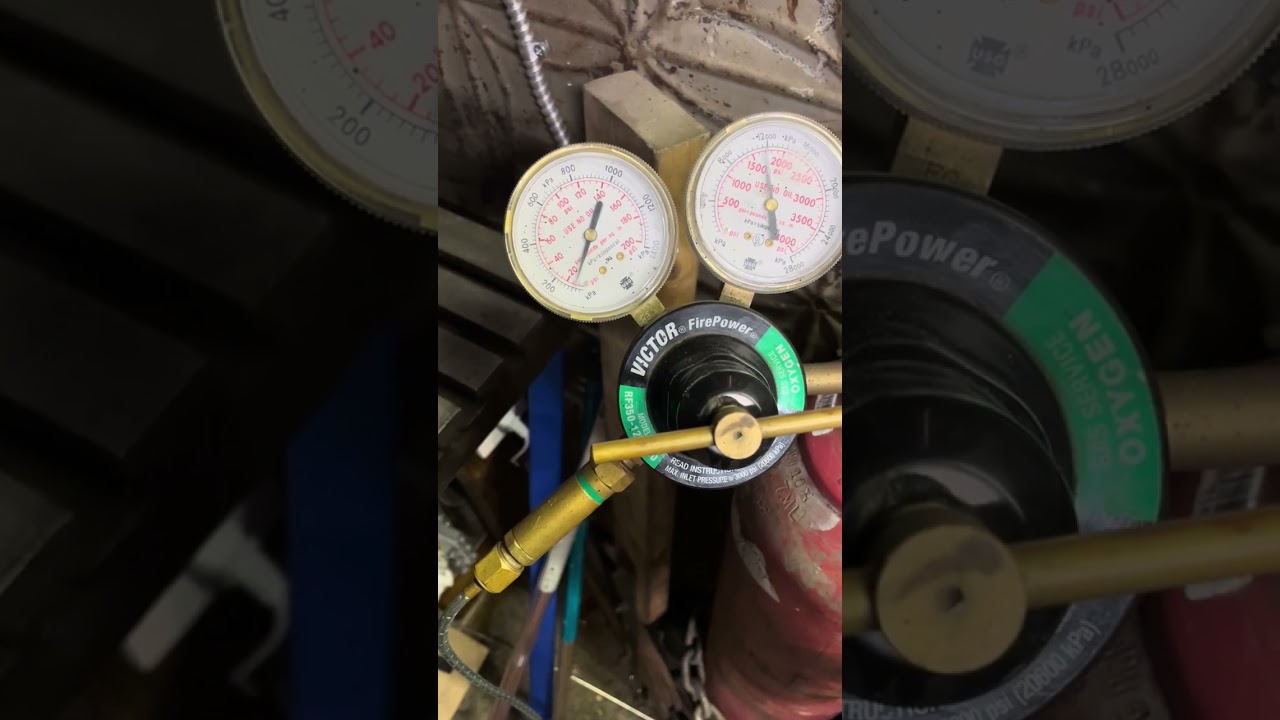
I’m hoping someone could help me figure out what’s the issue with my oxygen regulator, or even if the regulator is the problem:
I can’t say this issue appeared exactly when we replaced the tank, but if not it was shortly after. At first we replaced the regulator, so this one is brand new, and it seemed to be okay for a while but then started doing this again. Now it’s on and off, last week it only did this at first but stabilized quickly and I could braze without issue, today it wouldn’t stabilize at all. With the oxygen valve completely open on the torch, it would mostly do this until I adjusted the PSI to 20, then it would stabilize. At some point it got stable at around 12psi, but it started doing it again when trying to get a neutral flame.
My shopmate called our supplier, but they didn’t seem to think the tank could be the issue in any ways. Could it be something else, like the flashbacks or the torch valve?
Try it without the O2 flashback. Do you also have one at the torch end, or a reverse flow check valves ? It might be any one of them. Try it with just the hose to the torch.
Likely the valve seal has slipped or is worn. You can get them replaced/regulators serviced typically at any industrial supplier for ~$50-$80 depending on the parts needed. I now have two sets of regulators around so when one needs service I put the other one on and keep that in service, and when the repaired one comes back it lives in the tool cab til the next swap.
I find if tanks have been slightly overfilled and you bang the regulator on with a full tank pressure it can unseat the seal very easily. It’s basically just a spring and a diaphragm and they are very sensitive to immediate pressure dump. This is why you should always back your regulator all the way off after tank closing/line purging, repeated tank opening at full pressure is bad for the seal.
I will add that if this ever happens with your acetylene regulator stop using it IMMEDIATELY.
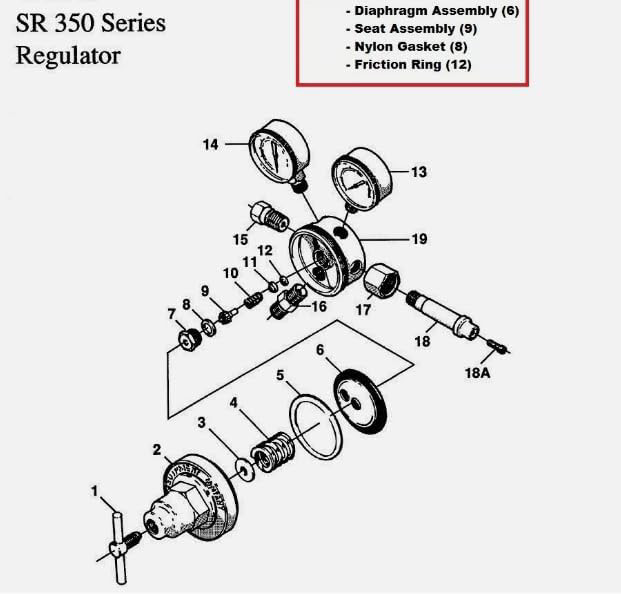
So when the issue first appeared, we simply replaced the regulator with an identical one. The issue reappeared after some time, so my shopmate opened the old regulator and replaced seat assembly and diaphragm assembly (#6 and #9 in the illustration below) using the ones from the new regulator. Was good for a time then started doing it again. We’re only amateurs so we don’t braze a lot, would it be possible that through all this the tank is still somewhat overfilled and keeps unseating the seal? We always back the regulator and purge the line after using it.
The rule for using acetylene is that the rate of discharge must not exceed 1/7th of the tank’s volume per hour. Acetylene is stored dissolved in acetone in a porous filler because it is unstable under pressure. If you exceed this rate, acetone can come out of the tank, maybe ruin your regulator and hose, and potentially release a lot of acetylene, as 1 liter of acetone can store something like 25 liters of acetylene gas under pressure.
So you’ve had exactly the same problem with two different regulators? Take the tank, regulator, hoses, etc to your supplier and let them help you diagnose this. And as others have said, if it’s not working correctly, don’t use it!
Before you cart all that crap back to the welding store, did you remove any of the check valves or flashbacks ?
That regulator misbehavior is textbook sticky check valve problem. It doesn’t want to open until the pressure builds up, then it finally “lets go” and then starts the whole cycle over again.
You can change the seat and diaphragm all you want and that’s probably not the issue. That just feels good to be “trying something”. We’ve all been there.
The bottle is not overfilled, you’re under 2000 psi in the video so that’s fine.
If you’re opening up and servicing oxygen regulators be VERY CAREFUL that no organic material or hydrocarbon contamination (oil, grease) gets in anywhere on the high pressure side. This can actually combust when it comes in contact with oxygen at 2000 psi.
If the problem is not in the regulator, look at the flow check valves like others said, or maybe the hoses. You could have a tear in the rubber liner that’s acting like a valve.
Thanks everyone for your input, for now the problem “magically” disappeared again.
My shopmate did the test without the check valves some time ago and it didn’t fix the issue.
Odd question maybe, but could the cold have something to do with it? Our garage isn’t really insulated and it’s been consistently very cold over here, wondering if this could act on the seals or something?
I’ve used my oxygen and acetylene when my garage was well below freezing and never had that problem. Are you opening the valve on the acetylene bottle all the way? Unlike other gasses, you shouldn’t do that with acetylene.