Which coat is pulling up/coming off? The clear off the color, or the color off the primer/bare tube (not said, was primer was first applied)?
I have used a 2 part rattle can clear to go over Rustoleum colors before with that not being the issue, don’t remember the brand. I did use Rustoleum primer first and sanded between the different layers.
Generally paints will have a window of recoating being fine, after which it’s usually suggested to dull/sand the surface before the next layer. I’ve even done this with a powder coated color as the base. But my rattle can jobs have been temporary ones, till I got a more controllable/auto type set up, so their possible short life wasn’t an issue for me. Andy
I agree with the previous comment that if you want something that’s going to actually hold up with a great finish long term, the only real solution at this point is to strip everything off and start over with a hardened Urethane type finish (either rattle can or from a spray gun). But let me add a slightly different point of view to the discussion-
Why not embrace the chipping paint and just enjoy it? A well worn bike is a beautiful thing in its’ own right. It’s a lot of work to get any bike fully cleaned up and painted like you’ve already done- does it NEED to be the most durable possible? The Rust-Oleum 2X job you did was certainly already labor intensive, but I can tell you that doing it with the full suite of automotive finishes to get it to the best/most durable finish will be an order of magnitude more work (and more expensive).
Like they say, horses for courses. If you love the bike and would find the work rewarding, I say go for it- just don’t want you to feel like you HAVE to do anything. Touching up a bike with primer/some paint if it chips to bare metal and just riding the stink out of it is just as good an answer if it makes you happy.
Depends how much chipping… For my first builds I used spray.bike with the spray.bike 1k clear. OK on anything with fenders, but big chunks of paint were coming off if you went out in the winter without them. Repainted with 2K clear and it’s good enough. You will get the odd chip from going on trains etc. etc. and I agree that’s fine. Gotta just ride the bike!
Hi all, I’m experimenting with an effect I really like but am struggling to come up with a way where it actually comes out looking really nice.
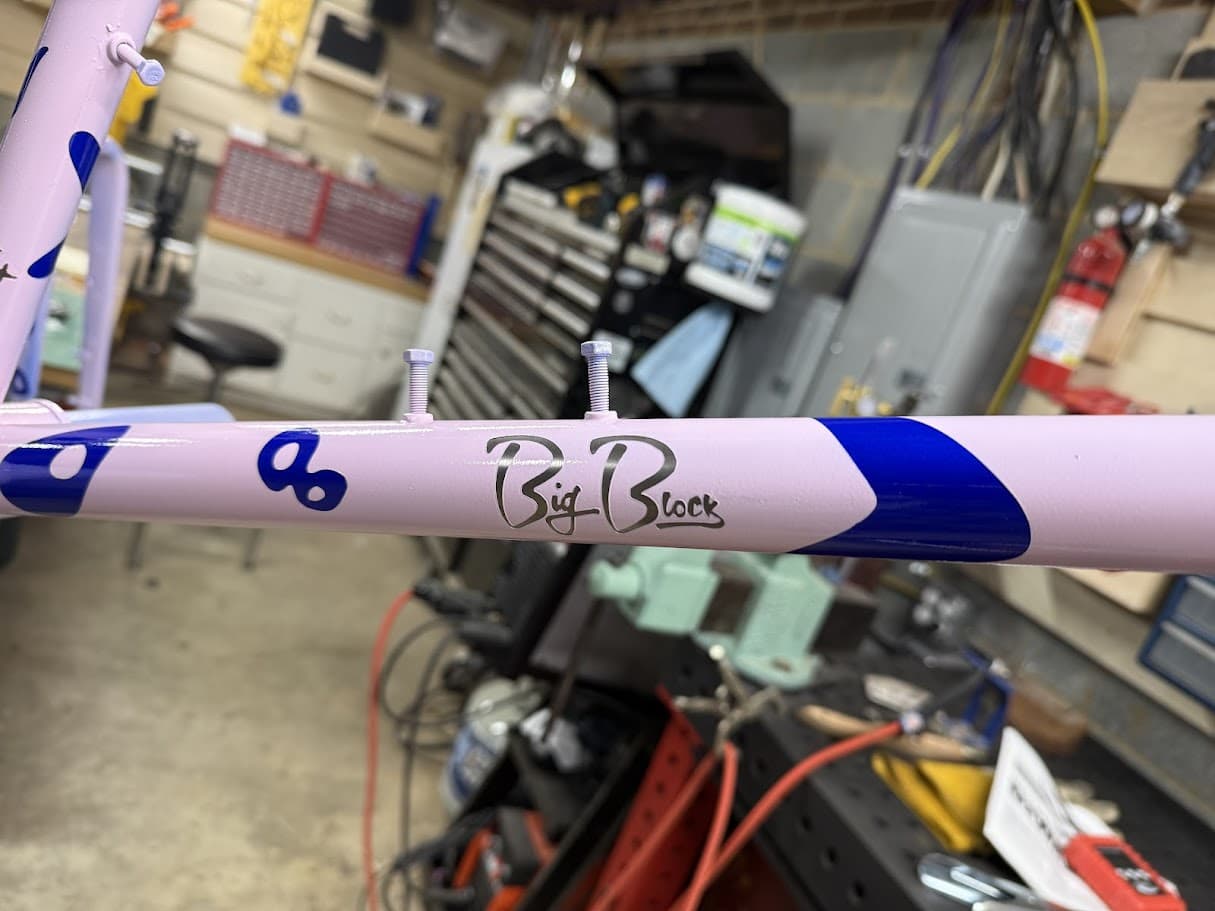
I work with steel and bought a brush plating kit to apply nickel/chrome to my tubes so I can hopefully mask it off, do all my paint work, then peel the decal to reveal the chrome effect underneath. It works great for larger areas but for intricate stuff (like my logo here) I have had zero success getting the mask to peel off cleanly. This makes total sense, as I’m applying the mask to bare metal and has to mask through primer and all the other paint coats and by the time i’m peeling it off those have had plenty of time to cure. Nonetheless, I’d love to come up with a repeatable way to pull off the effect as I really dig how it looks and the idea of showing the actual metal as a way to distinguish it from a carbon bike.
I’ve looked into just doing a chrome paint on this decal which I know would work but doesn’t carry the same design ethos I like so much.
Anyone done something similar with any success and have tips?With this one, I went around the whole design with an exacto blade to cut the paint away then peel, and it works but it’s high risk and insanely tedious, not to mention not perfect.
Yes. I made the head tube parts to fit 2 different head tube lengths 100 and 155 so hopefully one of those or a mix and match will work for you. I know no one loves SAE sizes but for the sake of cheapness everything fits 1/4-20 socket head bolts and square nuts. All the holes are teardroped so you can print hot and get good layer adhesion. There are no unsupported bridges so no supports are needed. The inside part of the wedge prints on the wedge face so that the layers don’t lock against the upper part. Good luck!
You could also just print the nut side twice and then use a piece of all-thread to make it any length you want. That would probably save some guesswork.
I just got a bike back from a new-to-me painter and it looks like they went a little overboard on the masking and on post-paint facing. Probably my fault for not specifying exactly what to mask and face.
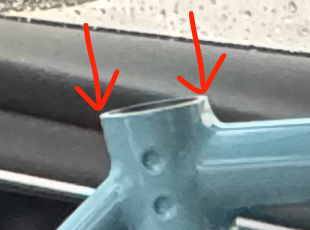
For now I’ve got pretty bad pictures, but the painter masked the outside interior faces of my syntace dropouts (the locations where the axle head and nut interface with the frame), and the undersides of the flat mount bosses. They also faced the top of the seat tube. All are pictured, all were left as raw steel.
I am slightly worried about corrosion. This bike will live in a decently damp environment, so I want to be sure I am protecting it from rust. What would y’all recommend I do? My thoughts/options are:
Don’t do anything, it will be fine
Just wipe the areas with fluid film and leave them be, let the oil handle corrosion resistance
Get some automotive touch up paint with a brush and carefully apply it. The areas that need paint are not prominent, so I can deal with the touch up paint color not matching
Mask everything else off and get some kind of spray automotive primer in a can. The dropout faces and flat mount bosses were media blasted, so this should adhere well
I’m on a bit of a time crunch (of course), so unfortunately sending it back to the painter isn’t really an option. What should I do?
A bit late to the party but the ridges around the masking require sanding . I have recently heard about masking tape that is beveled so that ridge is decreased to begin with but it would still require sanding before and between clear coats to end up with a nice smooth surface. For this, to avoid scratching the nickel coating, I would do a first coat only on the masked areas and then sand to get the majority flat then add another coat of clear to the whole frame and sand and coat and sand. You may need 3 coats of clear to get it all flat. Unless you use 2k clear, you’ll likely need to wait a while between coats and sanding. At this point, i’m probably a bit out over my skis since I don’t do much painting but that’s how I understand the solution to your problem.
Clever idea!
I’d do the touch up paint and ride. Of course, that damp environment will want the rest of the bike being maintained accordingly and doing a wipe down at those times on the touch up paint is a good idea too, belt and suspenders. Andy.
Any paint tends to come off the dropouts in use. It doesn’t really matter because the metal is so thick there. Caliper mounts are supposed to be perfectly flat so they probably did the right thing there (and they’re also thick metal). Facing the top of the seat-tube was unusual but it looks like you don’t have brazed-on clamp and will be using one of those machined ones that sits over the top of the tube. Their thinking may be that that should be sitting on a flat surface (which is true, although not critical). But in that case you might as well just grease the top of it and then put the clamp on. It shouldn’t rust in there because the clamp will keep the grease in. In any case you never want aluminium touching bare steel.