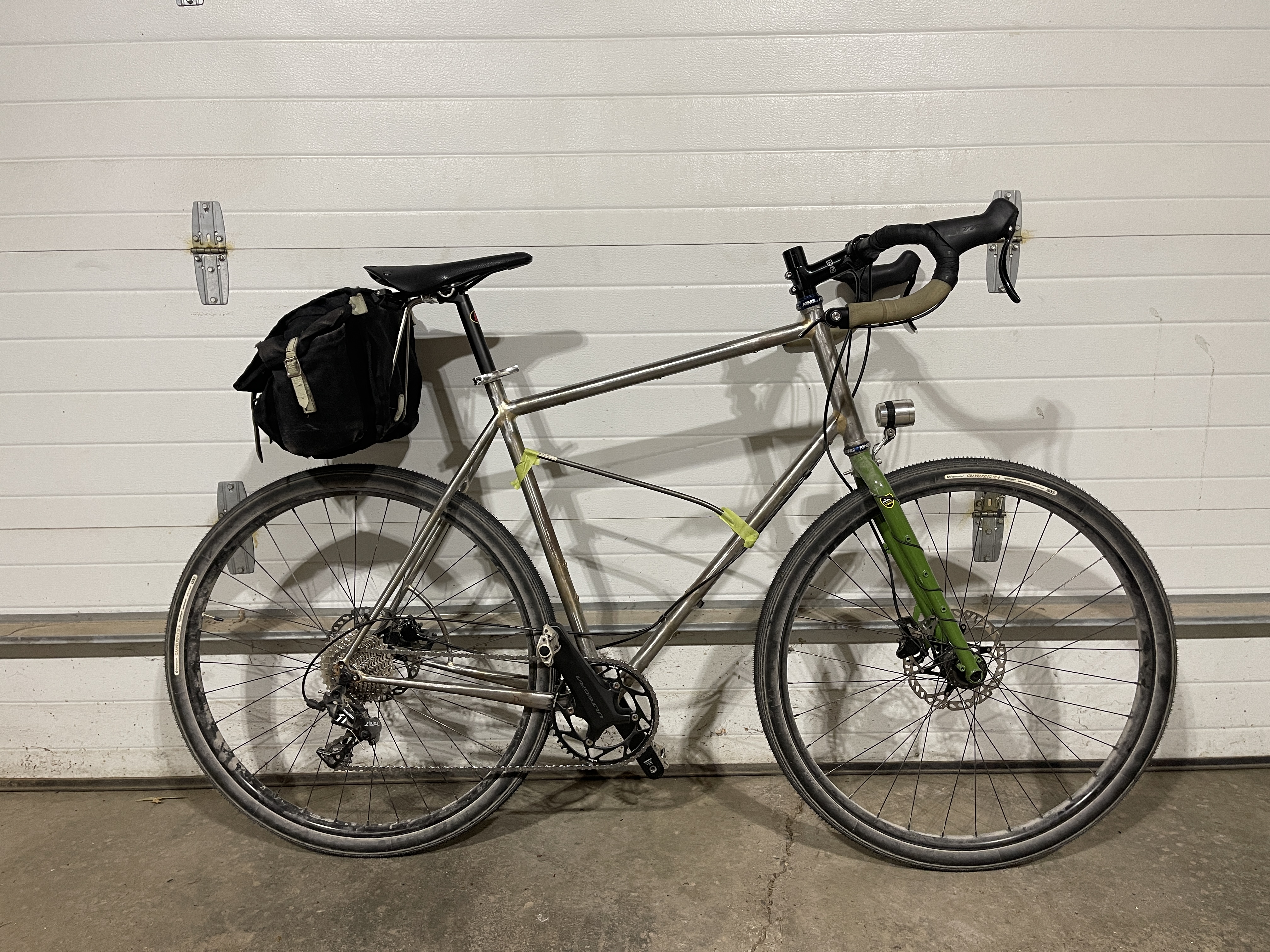
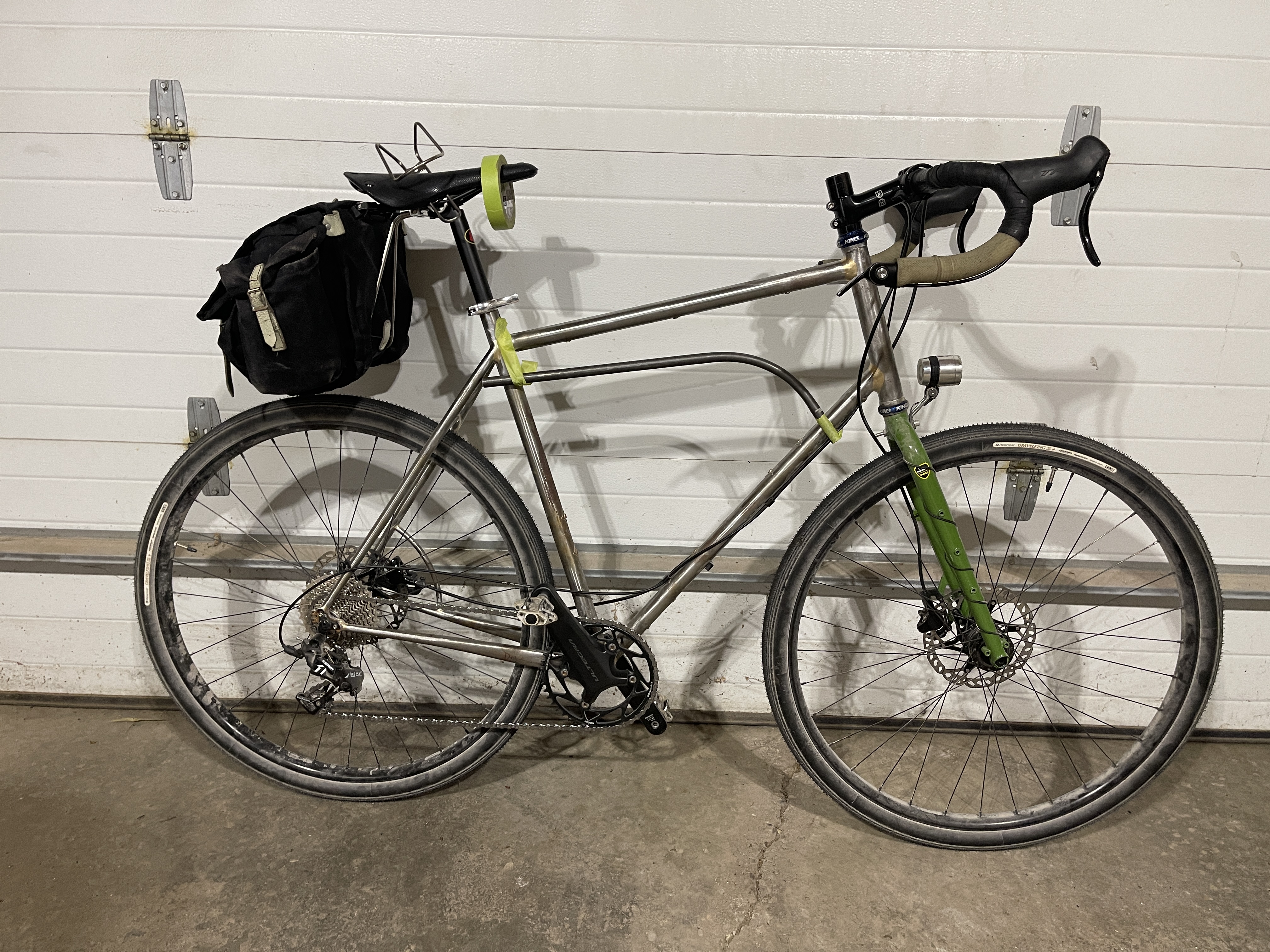
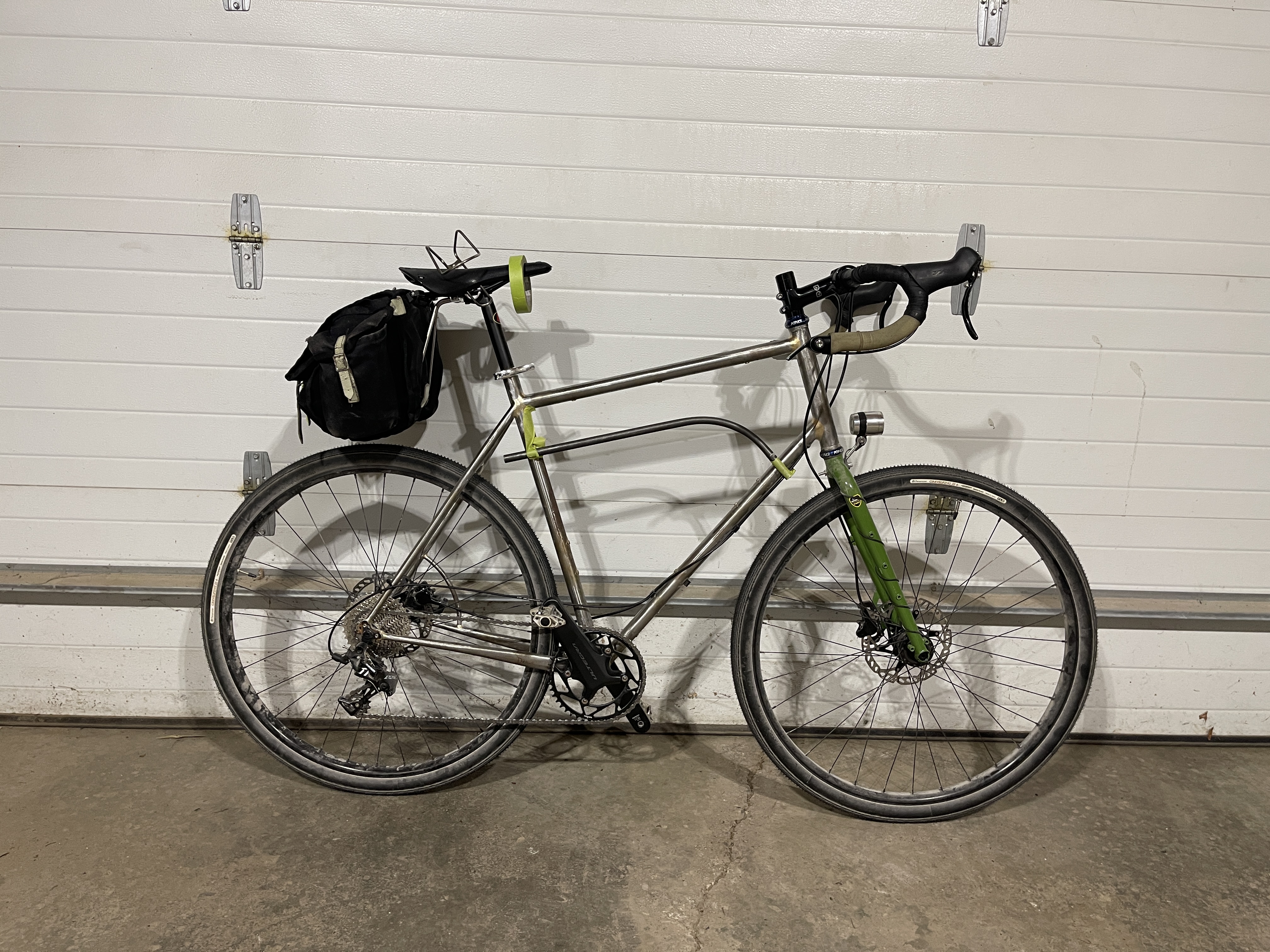
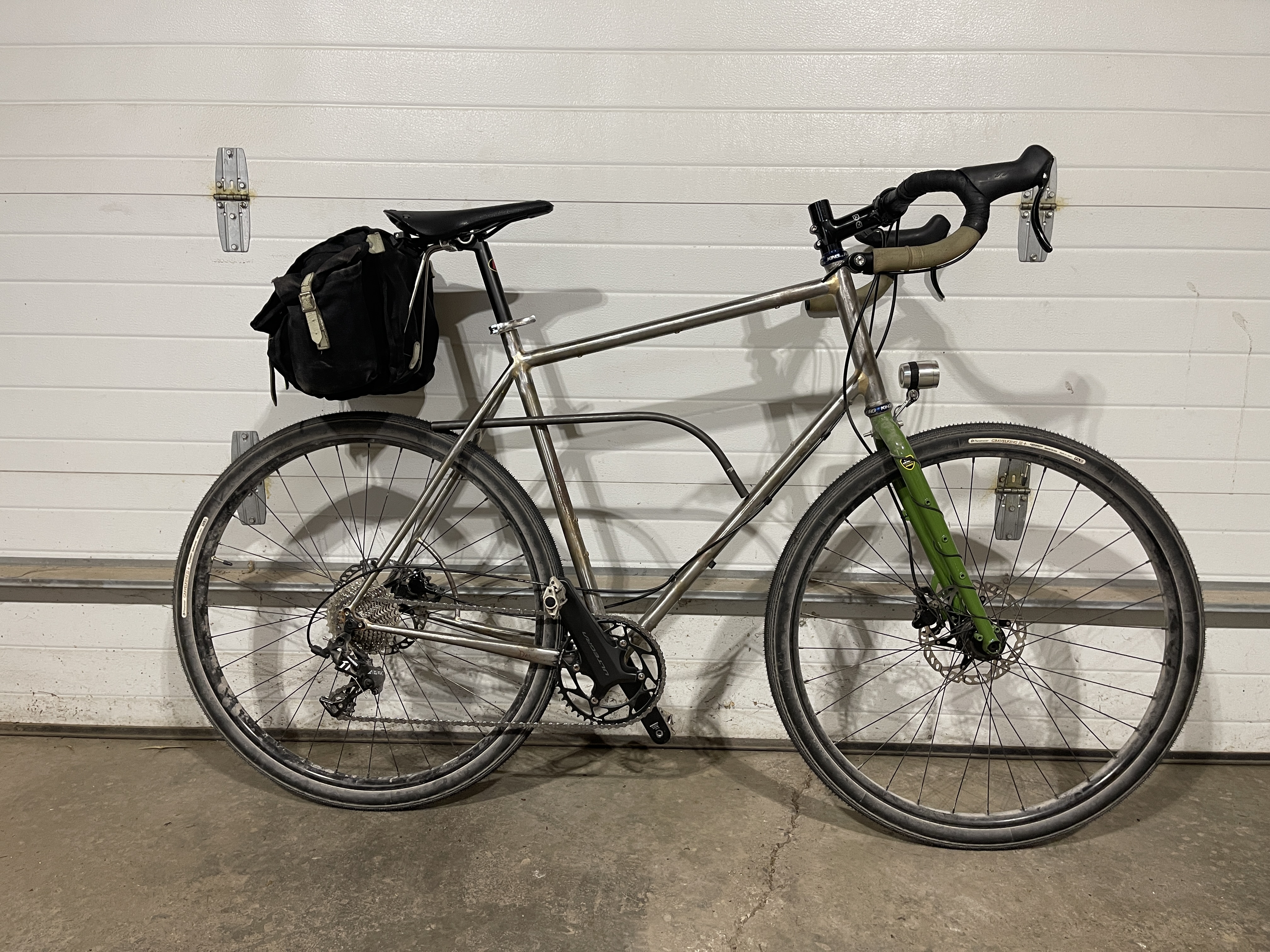
Frame 3: Framebuildering Takes Hold

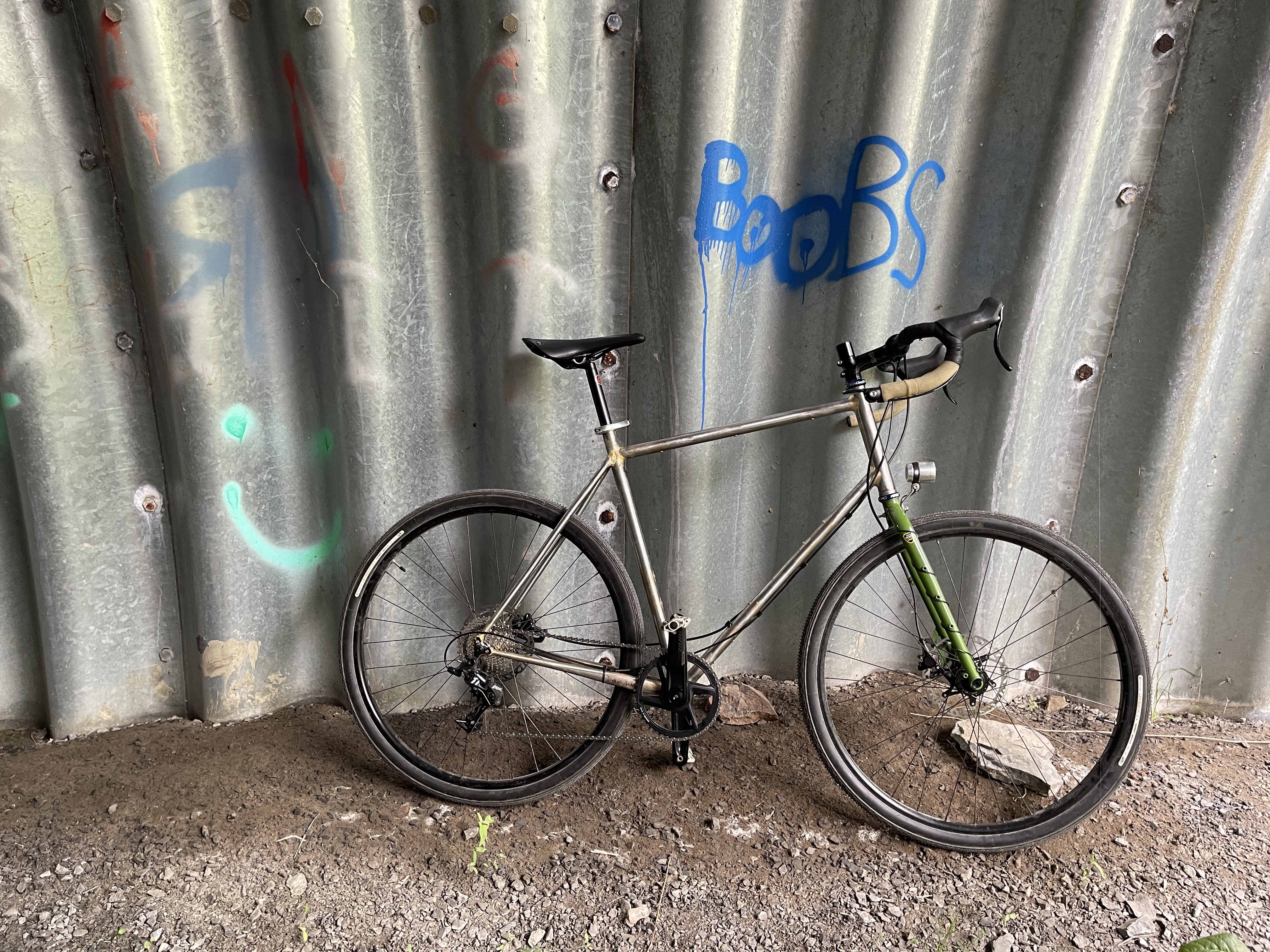
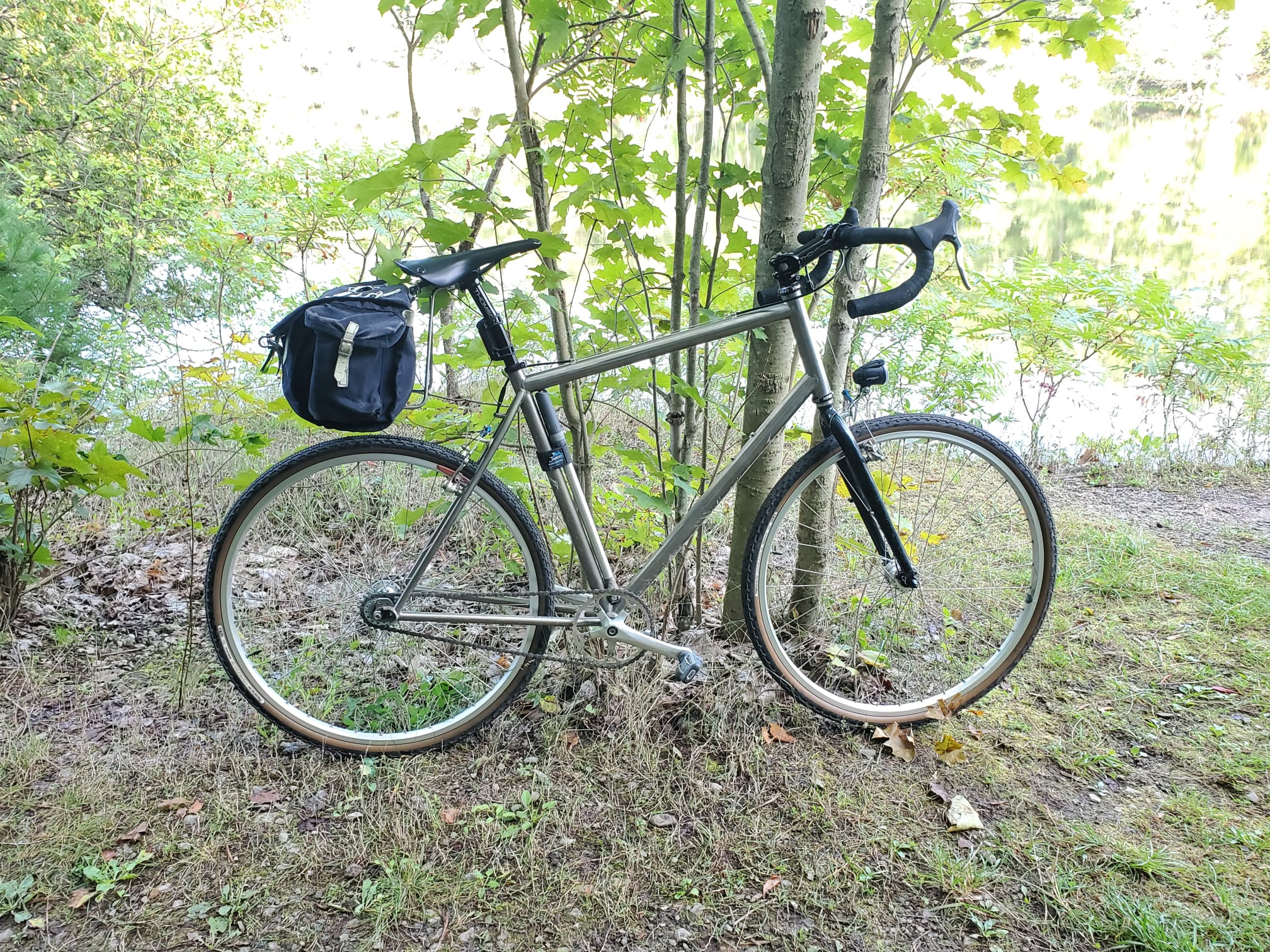
Frame 2: The First Homebuildering was a sophomoric exercise. I used fancy steel, made bilaminates, and was generally more ambitious than my skill level allowed me to execute proficiently. Knowing eyes will easily see its faults and my sloppiness, but fundamentally, it is a rideable bicycle that I learned a lot from, will continue to learn from, and enjoy.

Enter Frame 3.
Frame 3 copies the geometry for the most part from Frame 2. Frame 2 fits me quite well and I love that about it. Frame 3 however, is intended to use less expensive tubing and be simpler in its finishing. I want it to be able to blend in amongst a group of Surly’s at the rail trail headworks.
Top tube, down tube, and seat tubes will still all be 28.6mm, but whereas Frame 2 used Columbus SL tubing, Frame 3 uses Founderland 9-6-9, 4130 Taiwanese tubing from CL Cycles in Montreal. Both have the same 36mm Zona head tube stock with top and bottom reinforcement rings. Building nearly the same frame geo but with different tubing, I’m curious to see what if any differences I’ll notice.

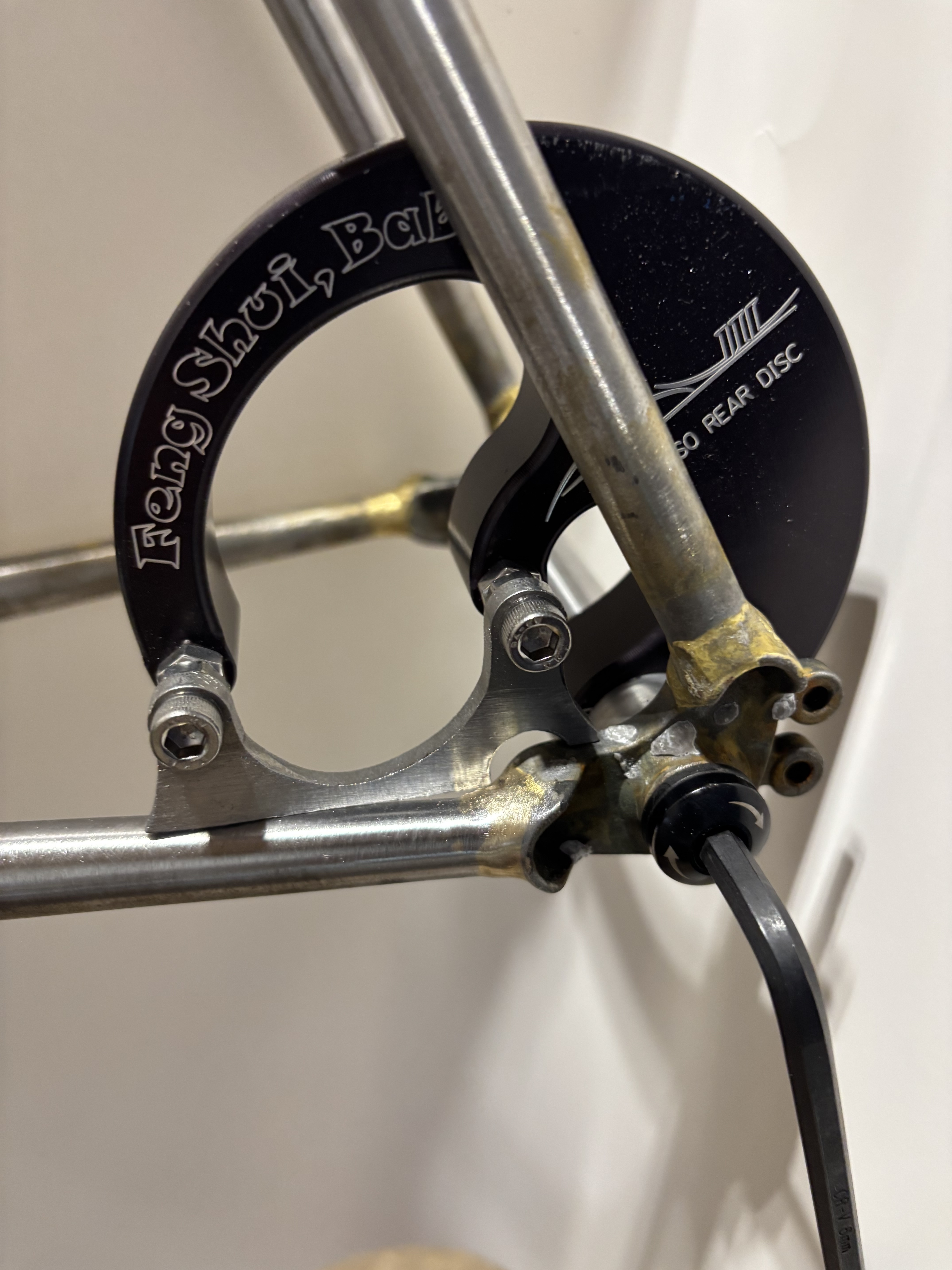
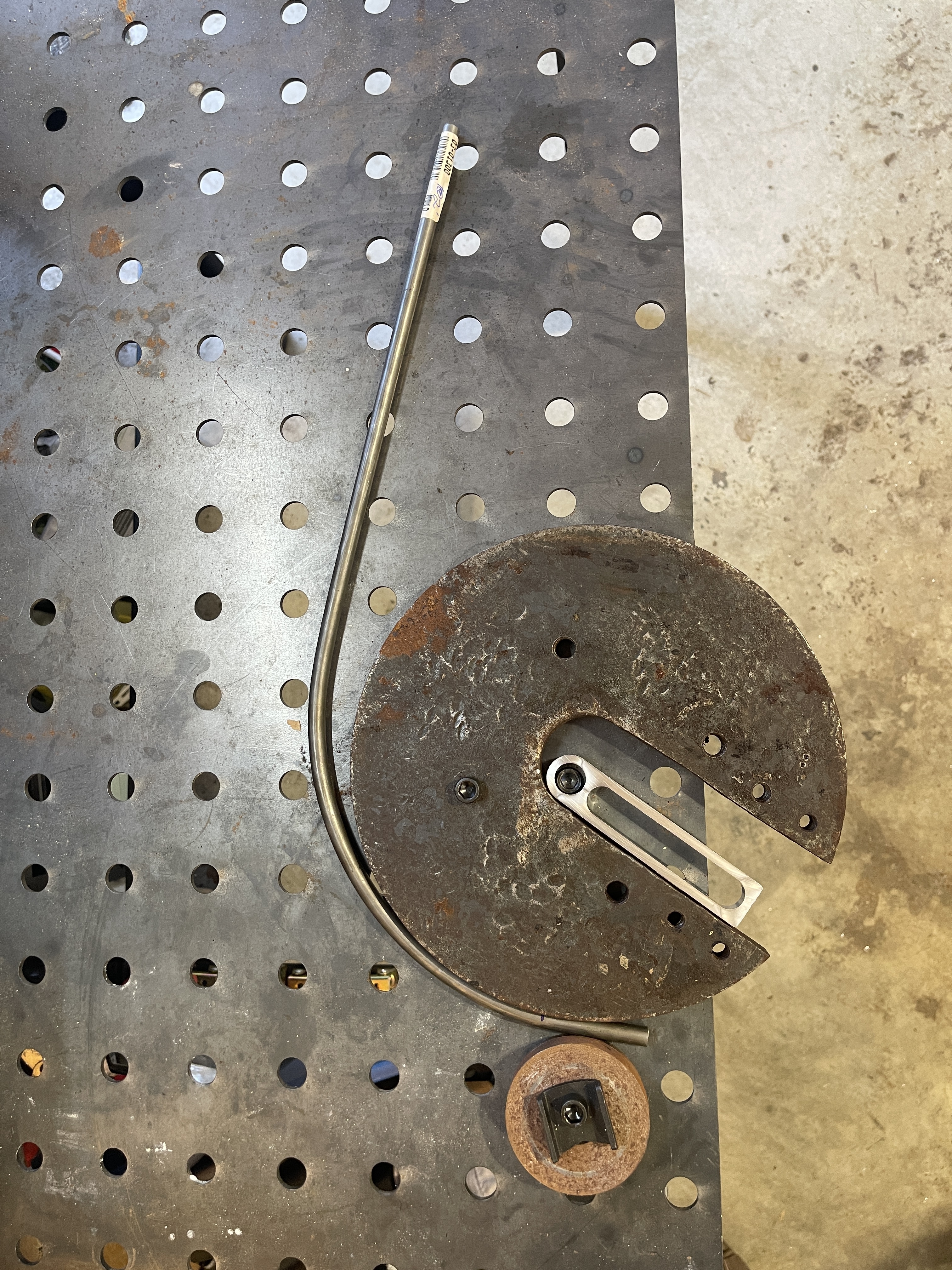
For Frame 3, I want to keep sourcing to Canadian retailers as much as possible. Most of the steel and fittings have come from CL Cycles. For the seat and chain stays, I had initially planned to use some straight gauge 4130 from Aircraft Spruce and bend it myself, but while I was figuring that out, Danielle Schon opened https://www.framesetsupply.ca/. I am excited some Deda CX chain and seat stays will be arriving soon. Frame 2 has canti’s, but Frame 3 will have an ISO disk brake mount.

Frame 2 used a lugged bottom bracket. I remember reading it was a more forgiving approach and found that to be true. For skill development and in keeping with Frame 3’s design approach, its chain stays will be fillet brazed like the rest of the frame.

I had intended for Frame 2 to accommodate 700x43c tires. It can, but its tight, and I neglected to create practical clearance around the rear brake to remove the wheel without deflating the tire. I’ll fix this problem with Frame 3, which should fit 50c’s, or 43c’s with good fender clearance.
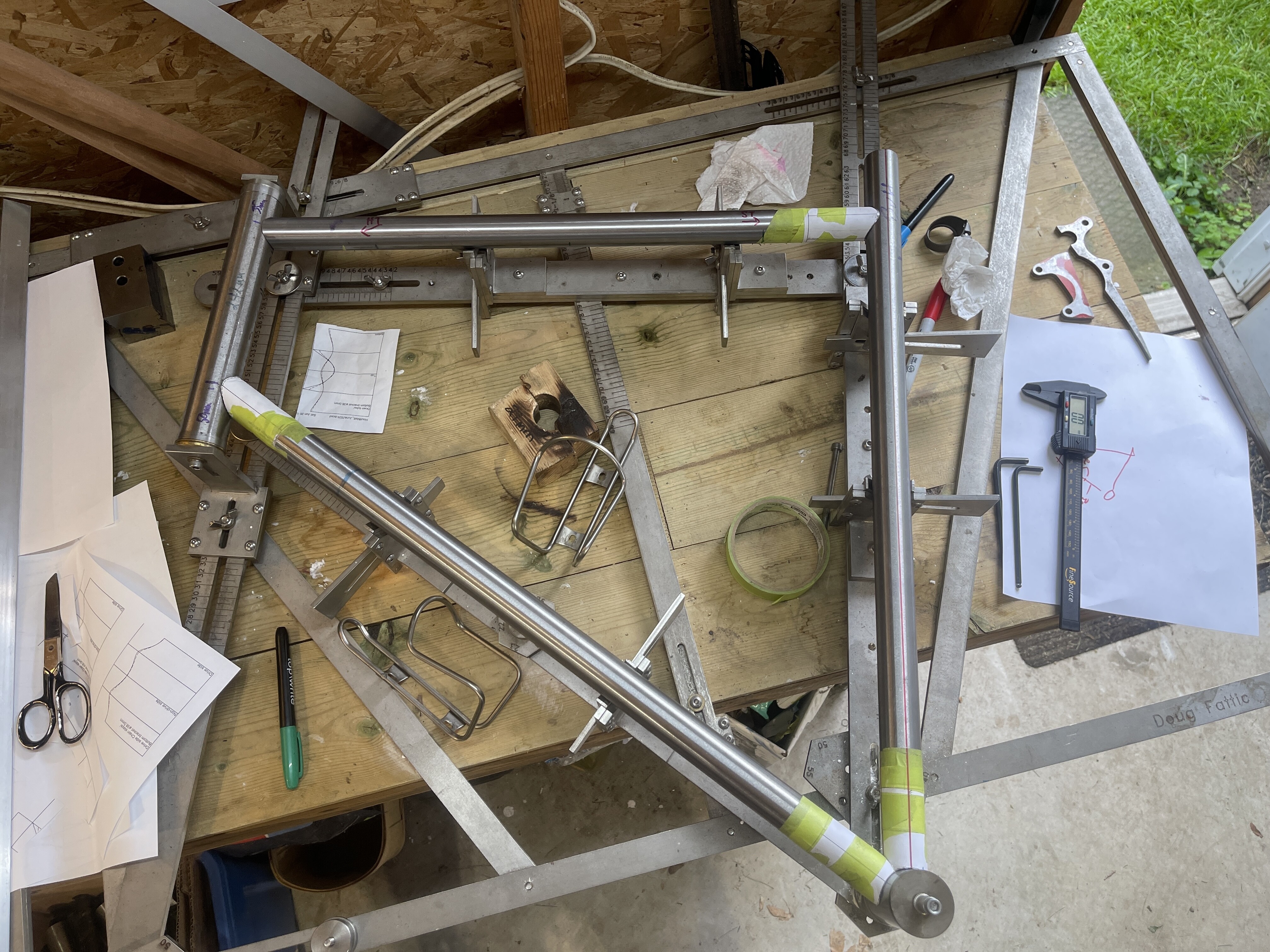
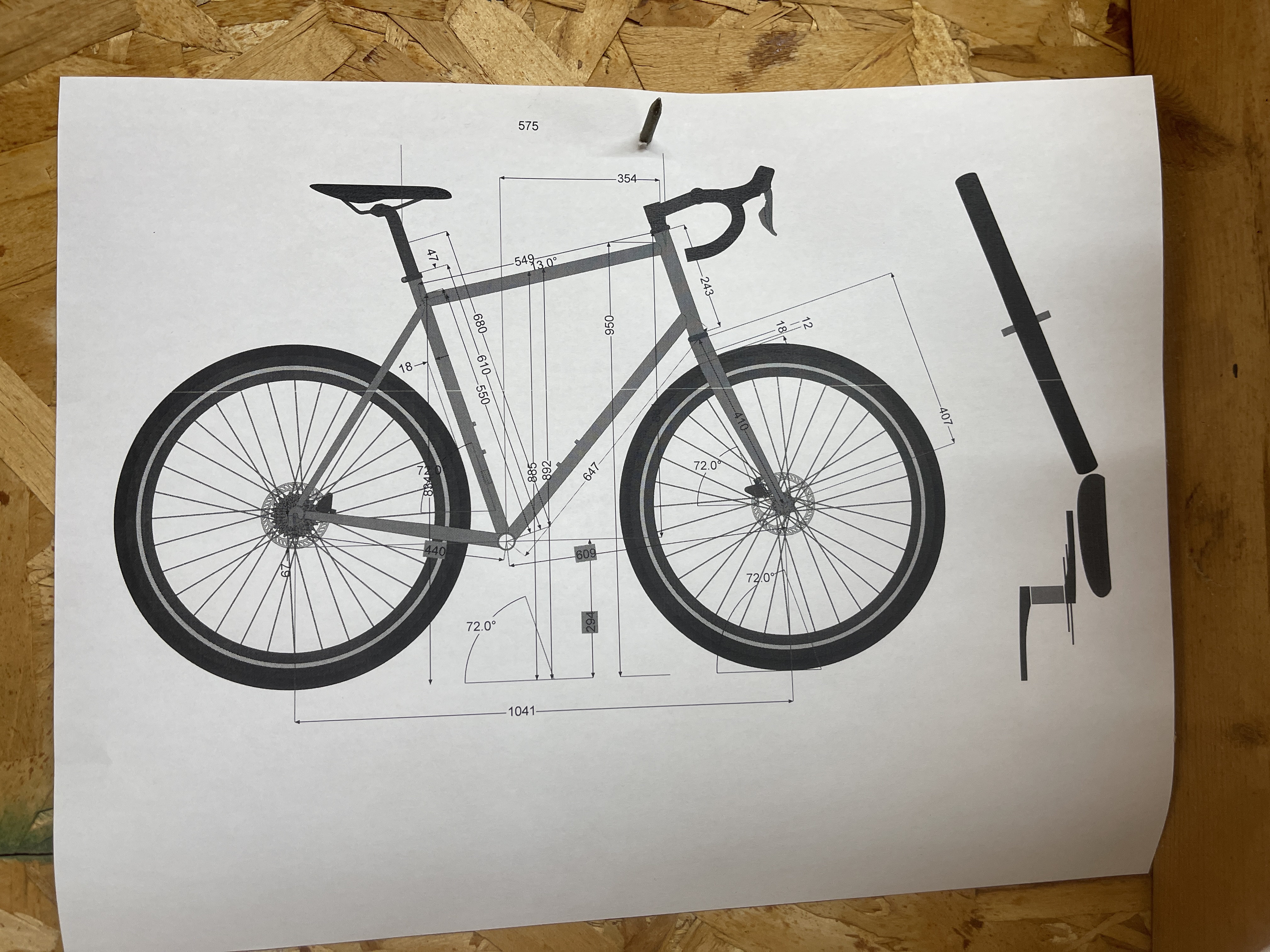
A Soma Wolverine fork from my parts bin should fit the frame well and get me rolling, but I do plan to make a fork to match. Most of the parts will transfer from another bike: TRP hydraulic road post mount disk brakes and Sram 1x11s with bar end shifter.

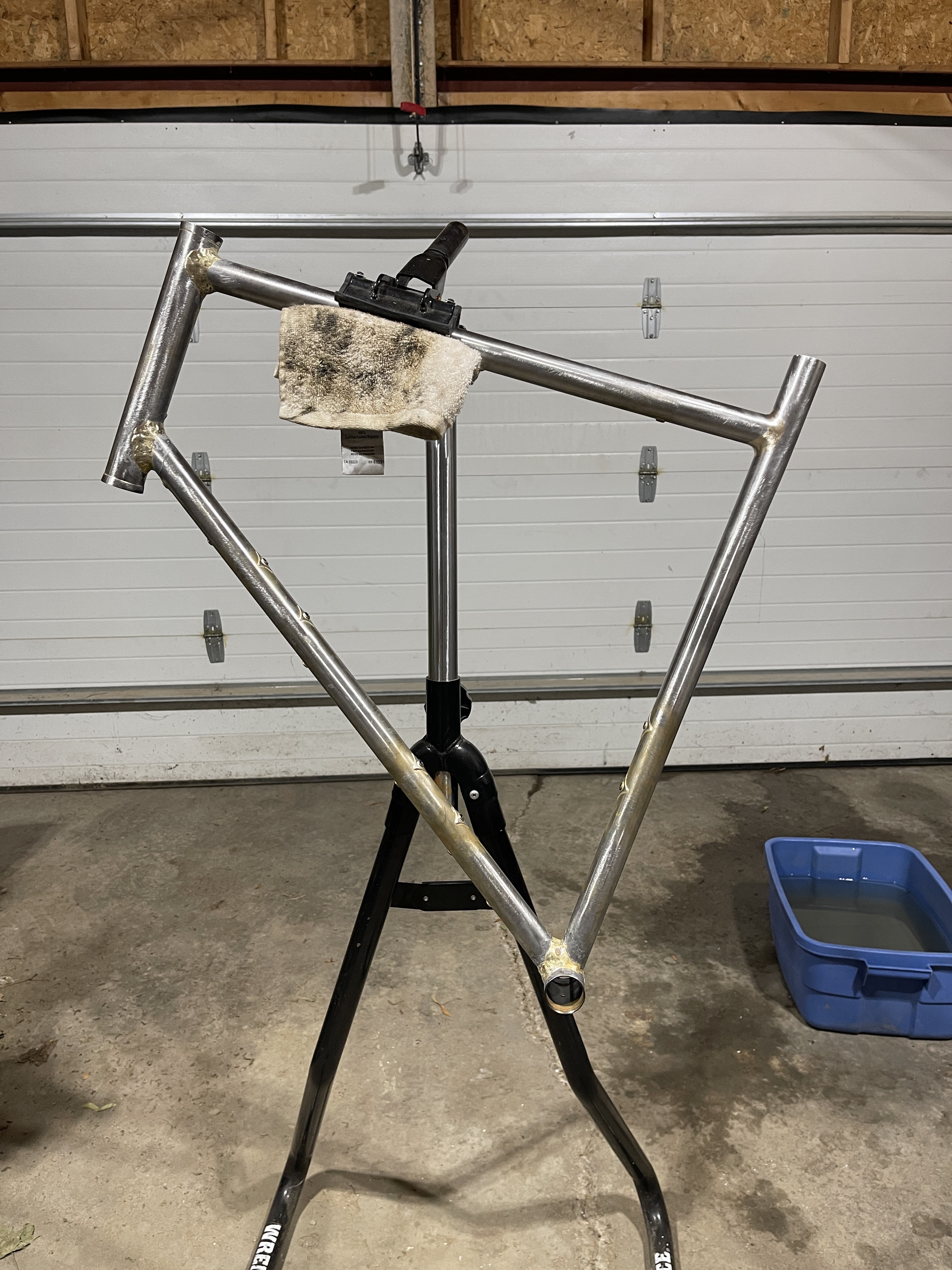
A used mini mill/lathe recently arrived in my workshop and I have been taking slow steps at learning how it works and how to set it up. The initial plan had been to use it for mitering, but hand files were in reach and the front triangle came together surprisingly quickly.

The next step is deciding on cable routing. I want to keep it external and like being able to comfortably shoulder carry.

More updates to follow. :bicycle: :factory_worker:

13 Likes

Very glad to see this as I’m also a very tall guy, thanks for taking the time to post your processes. I’m guessing the difference between Columbus SL tubing and Founderland 9-6-9 4130 Taiwanese tubing will be subtle if any unless the wall thicknesses are significantly different as well as the chainstay differences.

Brian

1 Like

Thanks!

I’m actually not super tall. Somewhere between 6’1” and 6’2”. My saddle height is usually between 800 and 820 mm depending on fit and crank length.

I really hate the look of flat top tubes with ~8cm of spacers to put the handlebars where they need to be for comfort. My bars are a couple inches below my saddle height. Why not take up the space with headtube? Sloping tubes can look great. Big front triangles make excellent homes for frame bags. Why not use ‘em?

1 Like

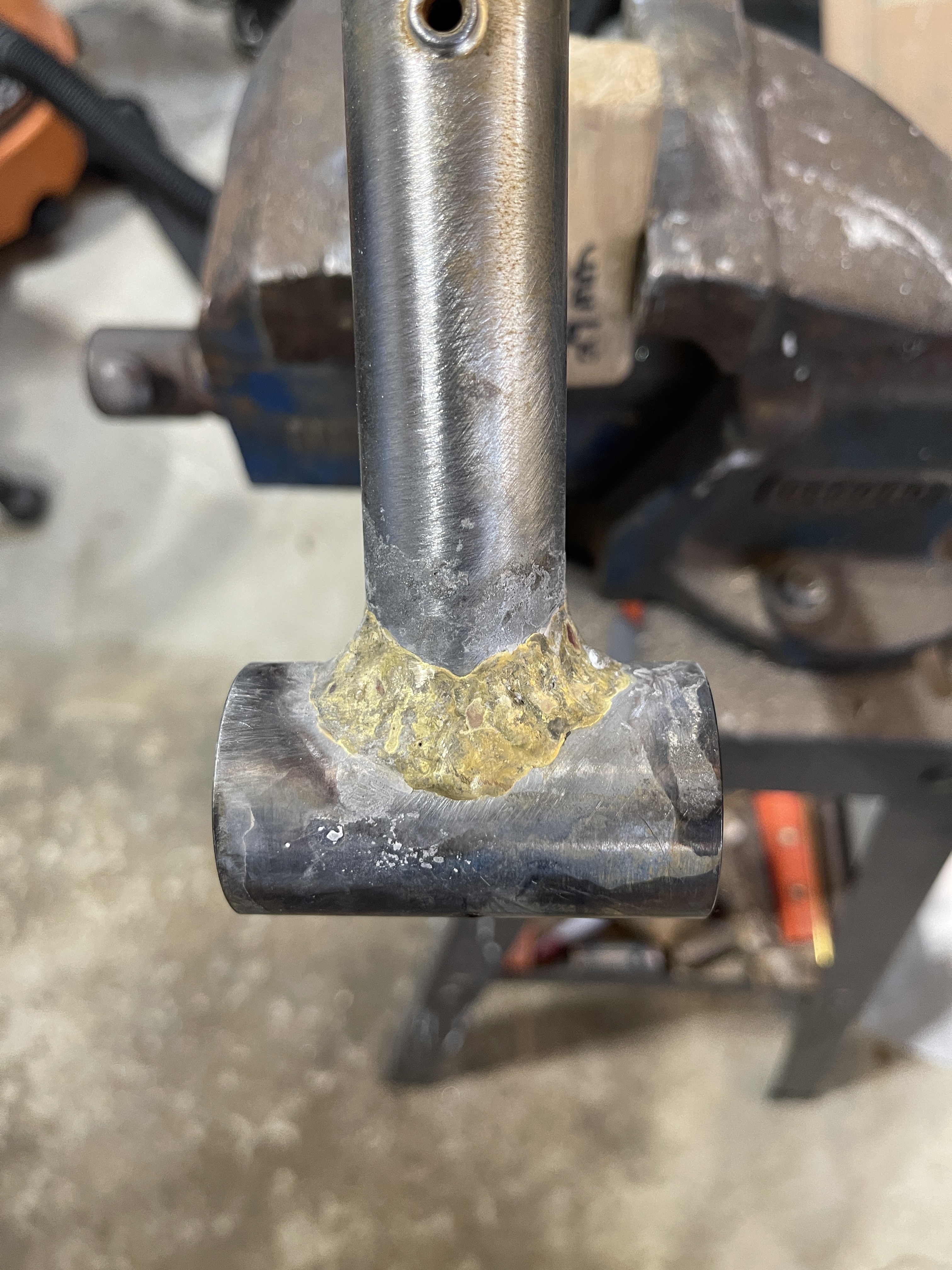
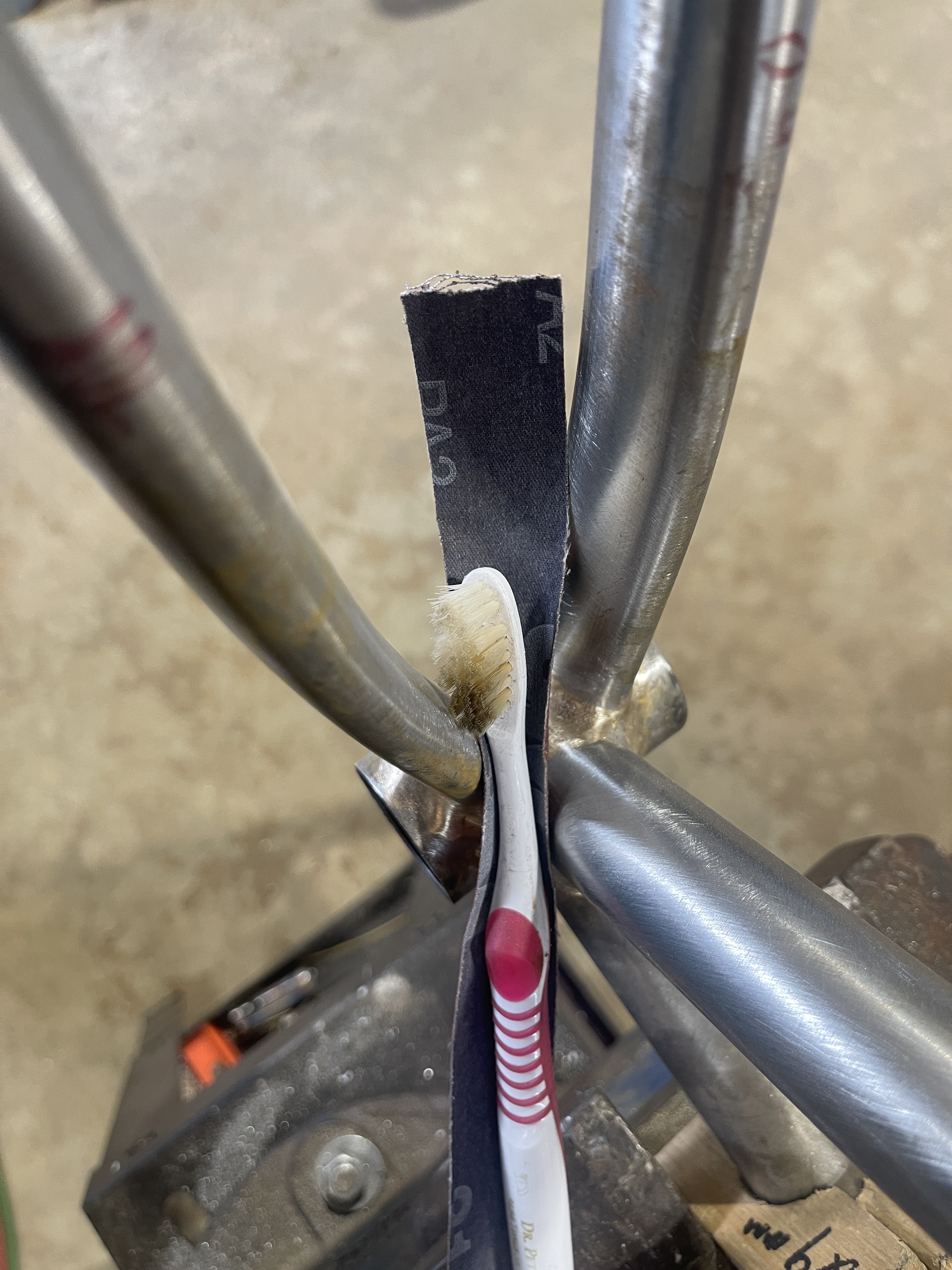
Coming along. My brazing is getting slowly better. My heat control still needs improvement, but my technique on this one is better than on previous frames.

2 Likes

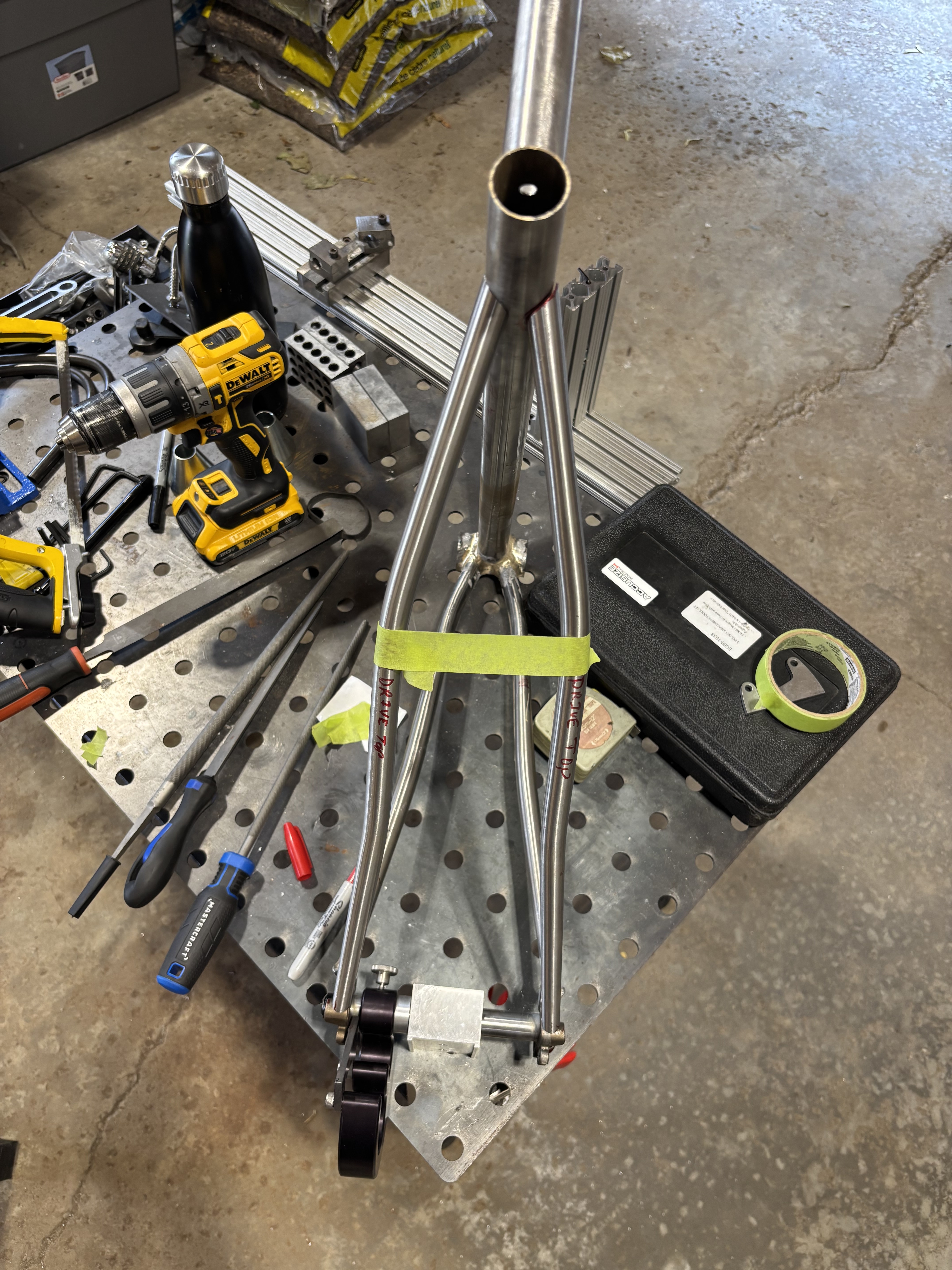
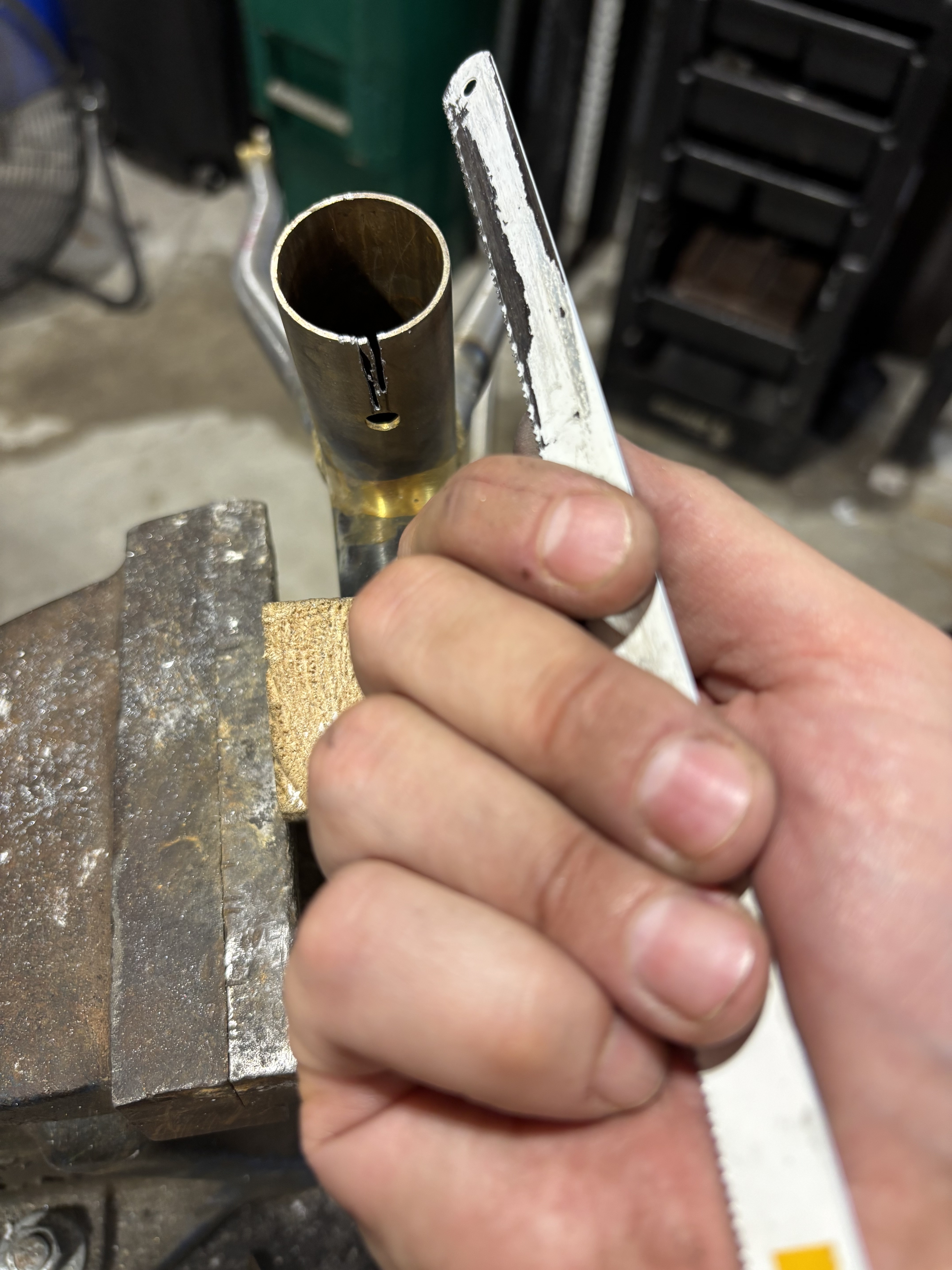
Some learning here. Please excuse the cluttered work area. It was a byproduct of troubleshooting.

My Doug Fattic frame jig does not have a way of holding chainstays. On the last frame, this was part of the reason I went with a lugged bb.

The Alex Meade stay jig I have similarly has a single clamp fixture and no connection point to secure the bb. I only have the clamp for round chainstays, so for these I adapted seat stay clamp fixtures with spacers. For layout, it worked great, but the system was not secure enough for hole saw use and the stay moved.

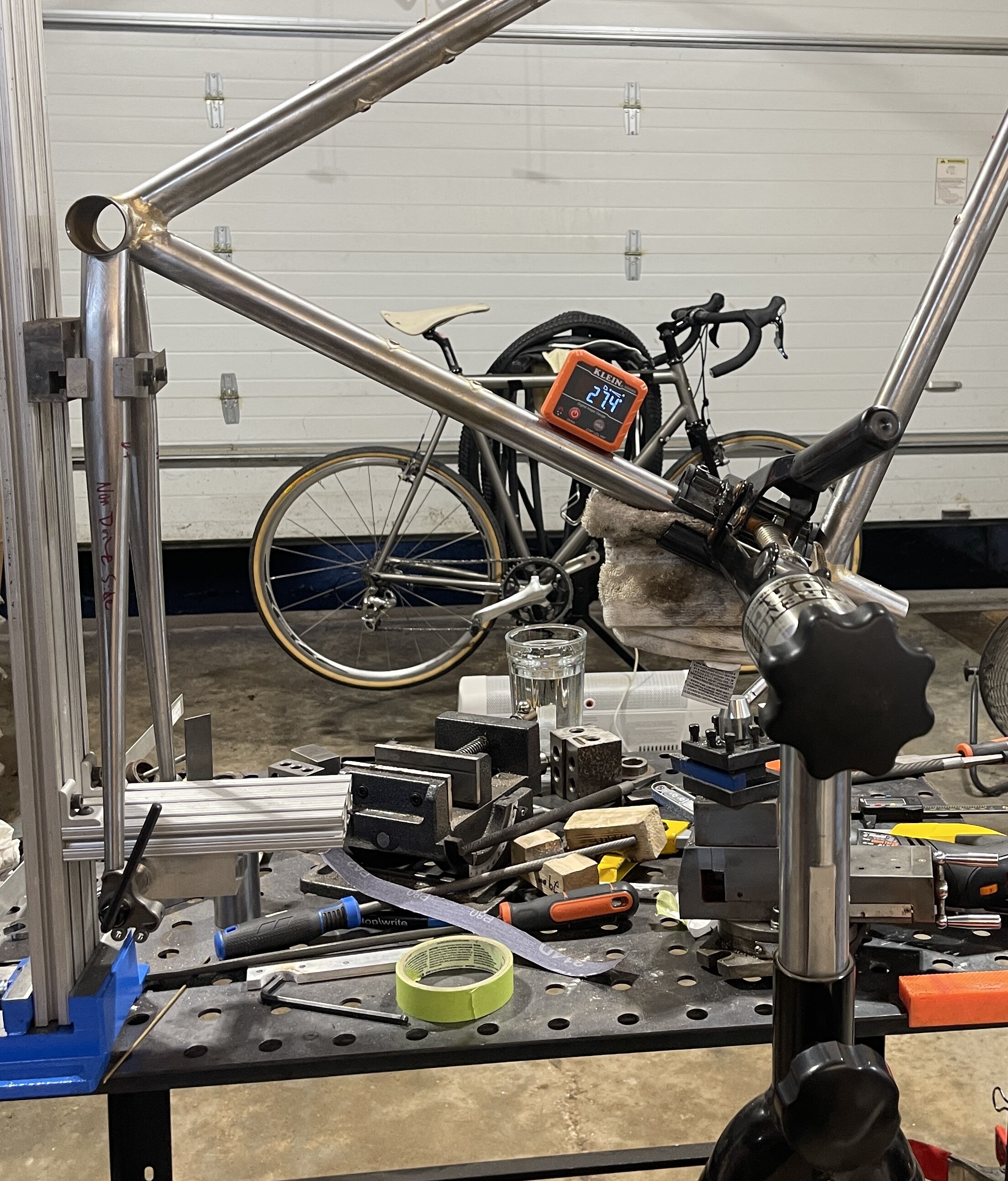
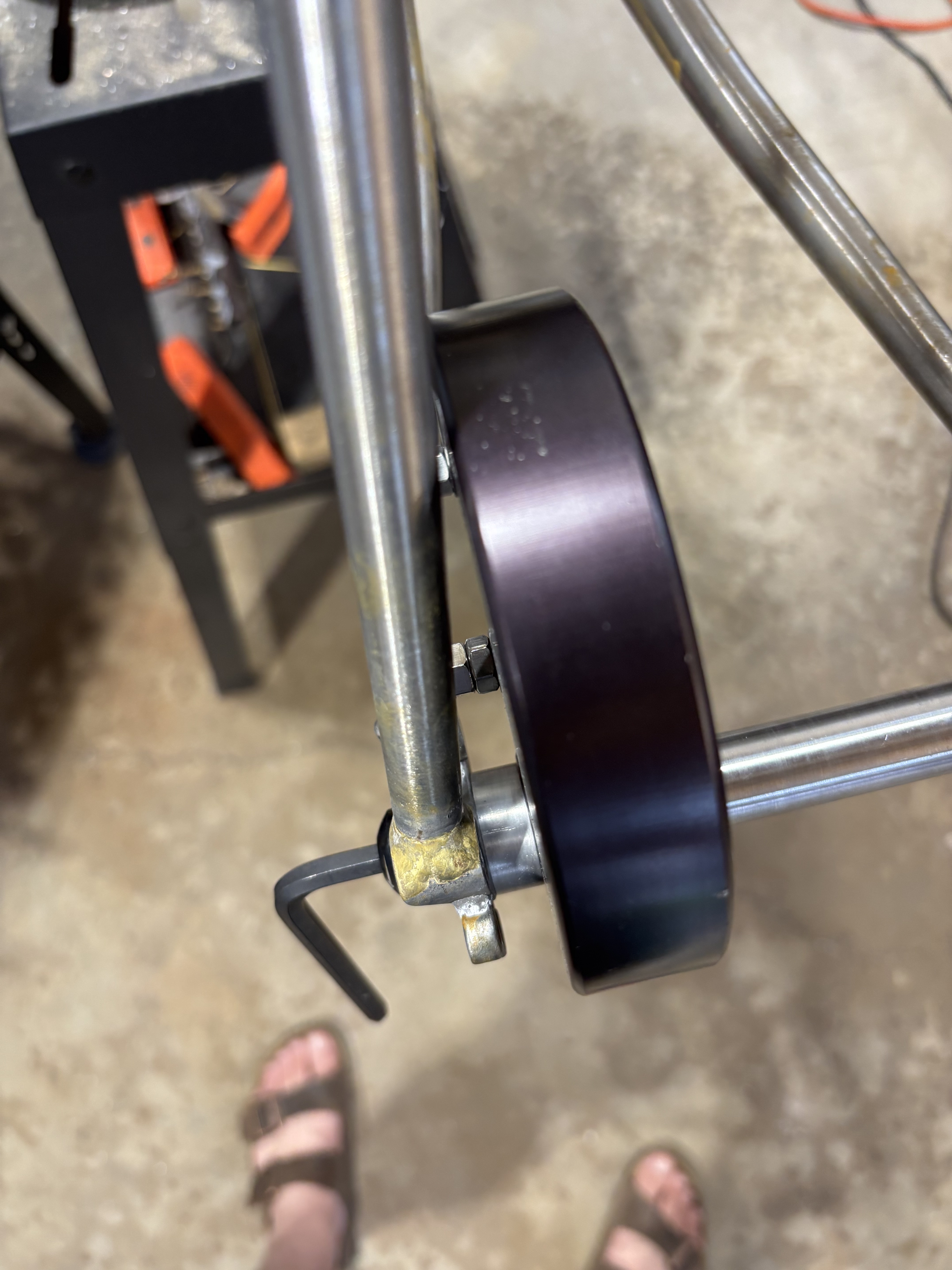
What ended up working was putting the stay fixture vertical and using the angle finder to ensure everything is vertical. I doubted my ability to align them and use them correctly, but tried using BikeCAD Coping templates for the chain stays. They worked quite well and I did better with them than expected.

To make sure things were square and even, I put a spare bb shell on the cope and checked the and filed adjustments until angle was 0 degrees and the gap between the fixture extrusion and bb was the same on either side. Seemed to work okay.

The hard part came after. Squaring on a spare bb shell is easy. Squaring on a complete triangle is much harder.

In the one picture, it shows how I used my work stand to position the front triangle at the correct angle.

I considered just brazing the stays to the spare bb and installing a new front triangle onto the assembly, but after I checked and rechecked all the spacing and securing, and went for it.

I need to do another alignment. Preliminary checks show some needs, but I think it will be okay. In the future, if I’m fillet brazing the bb area on a frame, I think I will start with the stays+bb assembly, then build the front triangle onto it.