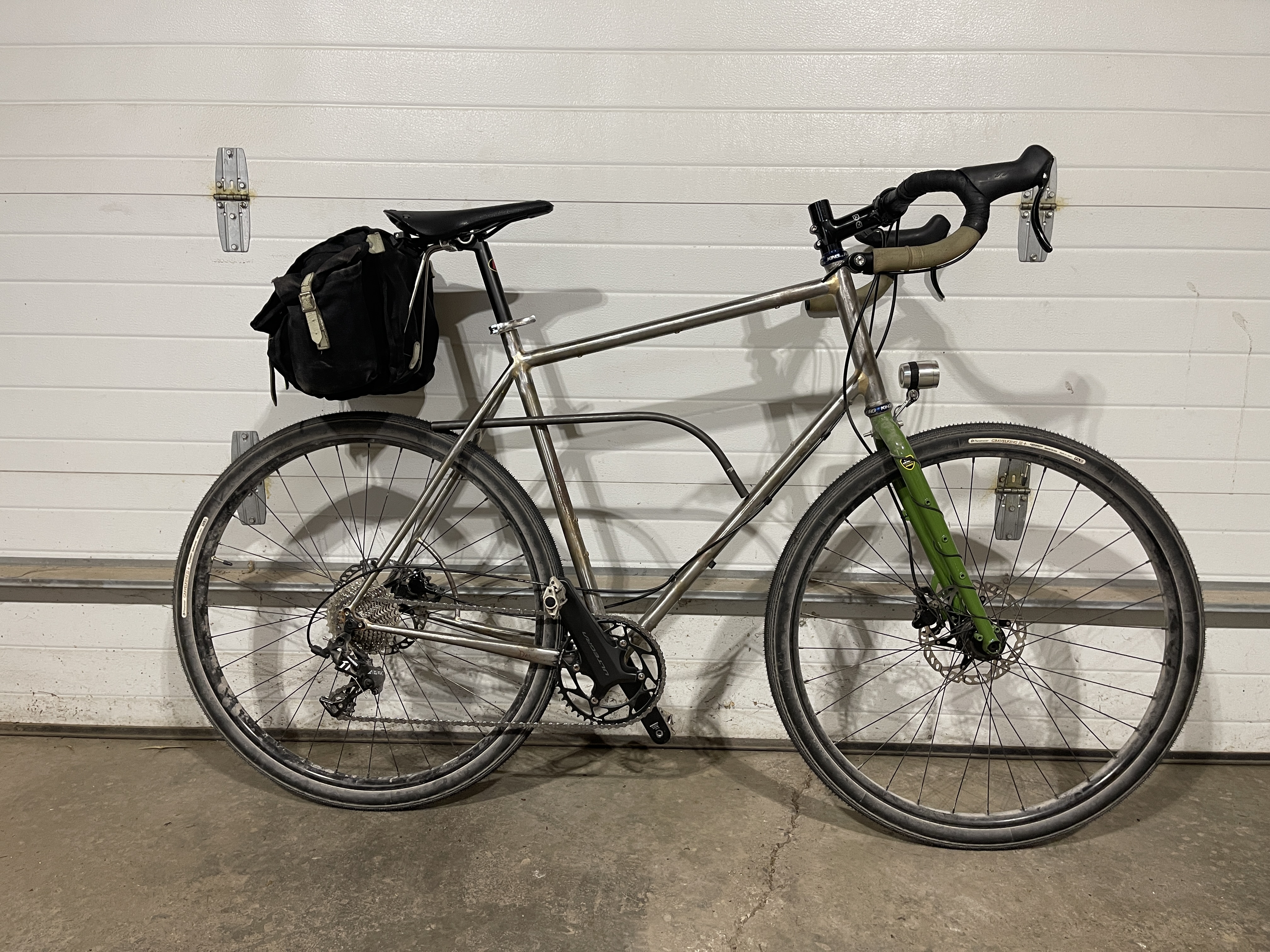
By the week after, I had filed the fillets and the frame was looking pretty well done. The last outstanding touches for the frame (or so I thought) were just a couple cable braze-ons.
The Monday rides have become a good testing ground for the frame. They’ve mostly been rail trail, but there are opportunities to try hopping curbs and the odd log and some mild climbing.
Even with 165mm cranks (I’ve always preferred short cranks), there is just a little pedal overlap. I later switched to 160mm cranks. When I build a fork to go with the frame (the John Deere green fork in the pictures is a Soma Wolverine fork with 50mm offset), I’ll look to add just a little more offset (50mm to 55mm). The head tube angle is 72 degrees. If I were to build the frame again, I’d likely go a little more slack by a degree or two. Maybe it is just the larger tires, but the handling does feel a bit more “road-ish” than I anticipated.
On the first test ride, I didn’t notice it so much, but on last night’s ride I noticed flex in a way I’d like to change. There is a popular expression “Laterally stiff, but vertically compliant.” This frame is not laterally stiff. “Laterally flexy, but vertically compliant” is perhaps a better description. I decided to use smaller diameter tubing (three main tubes are 28.6mm, 9-6-9) when I made the bike because I do prefer a good amount flex (I’m 6’1”, 220lbs). The downside of the smaller diameter tubes built into a larger frame (head tube is 242mm long) is the amount of lateral flex. This was good learning for me. I do enjoy the art and science of frame building!
Thank you to @Daniel_Y for this thread! I look forward to applying the concepts on the next frames.
Looking at one of my favourite bikes from which I took a lot of design inspiration (Matt Chester UtiliTiman(?)), I realized that the main tubes were made with rather stout, larger diameter, straight gauge tubes, but the stays MC chose were noticeably smaller in diameter than on another Ti frame I have.
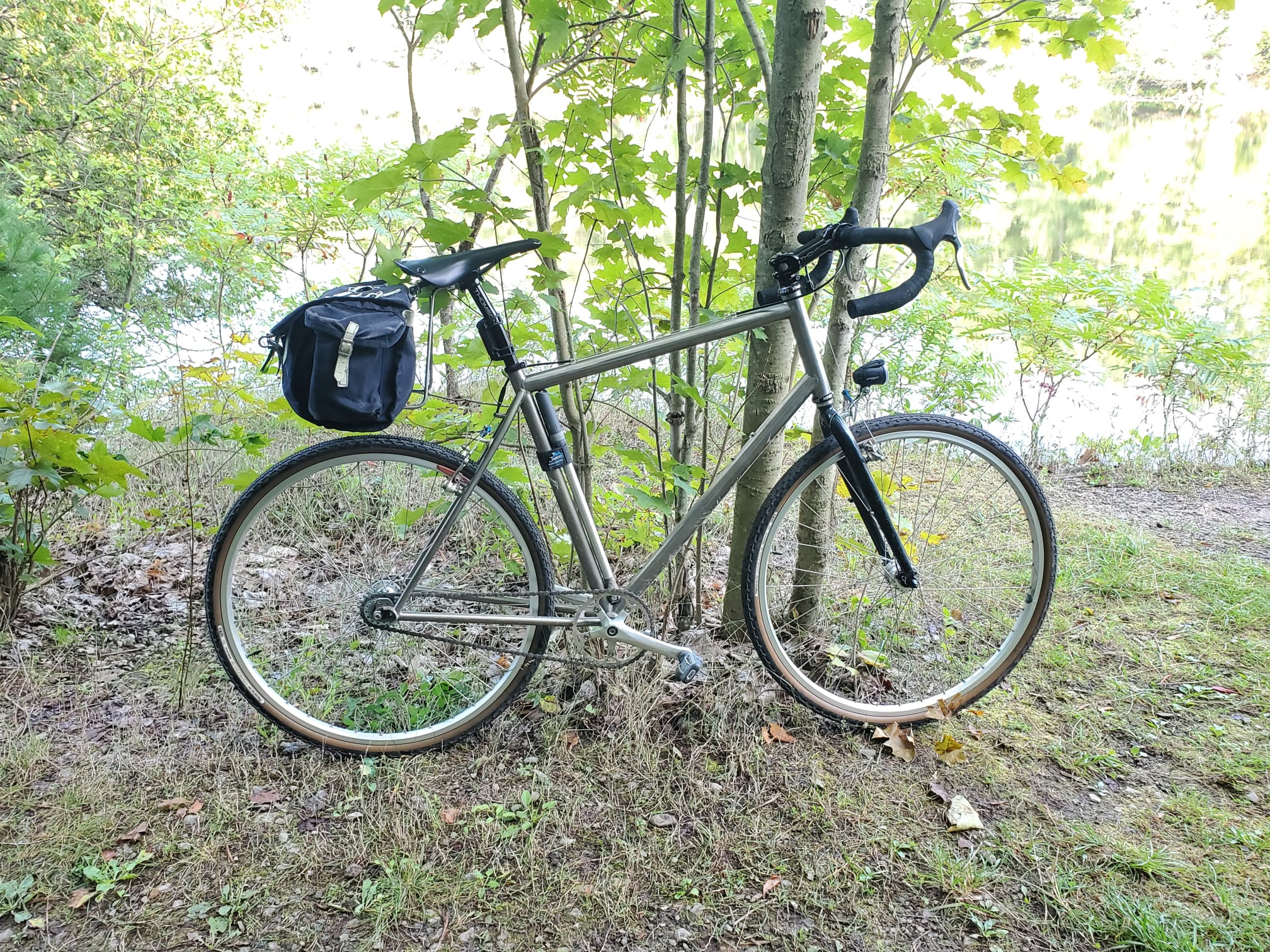
If I were to build Frame 3 again, I would opt for more rigid/larger diameter main tubes and stick with the nice 1mm-0.7mm stays. The 16mm seat stays do match the chain stays nicely, but maybe that’s the next experiment: 7/16” (11mm) or 1/2” (12mm) or 9/16” (14mm) seat stays. When I laid out the chain stays, I tried to maximize the amount of narrow end, removing the bulk from the bb end. I like that.
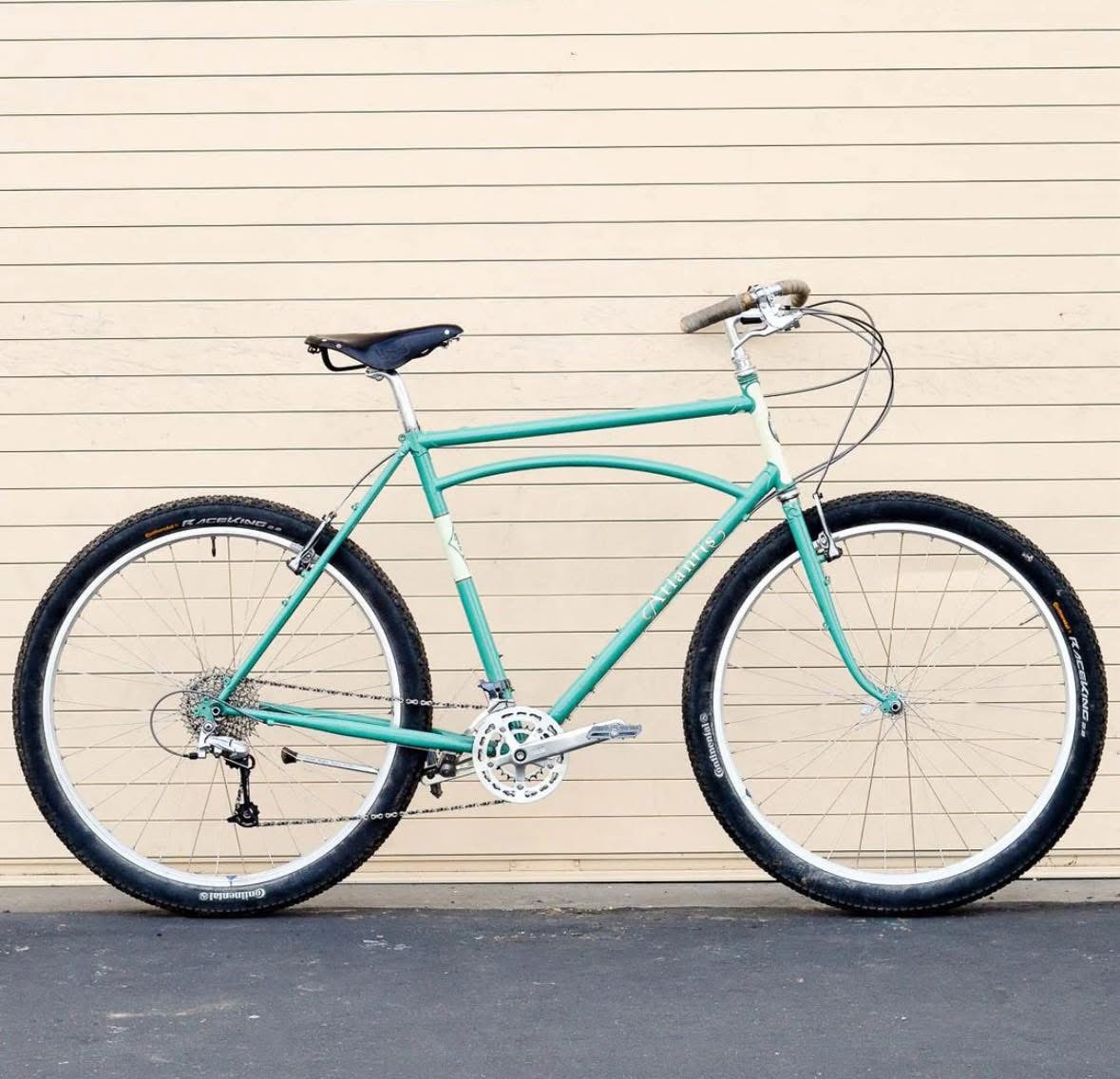
Now, I am faced with what to do with the flex, floppy frame that fits me so nicely and is otherwise quite comfortable. I remembered seeing Rivendell’s with double top tubes, presumably to assist with a similar big frame flex issue. I suspect the frame size, tube size, and diameters used are not altogether different. I never liked the aesthetics of the diagatube of the Bombadil, but the arched tube in the Atlantis looks pretty lovely:
My frame has three bottle bosses spaced out along the underside of the top tube and there are two sets of bottle bosses on the top of the downtube. My intention was to have a frame bag made that follows the general shape of the curved tube in the Atlantis, with the bag attaching to the top tube and the most forward set of bottle bosses–something like the profile shown in D) below.
I have a 5/8” 4130 tube that bent nicely around the 10” press plate. After the weekly ride, I tried marking up the frame with some concepts for where the extra tube might attach. I’m leaning to something like Option B), or maybe Option C). Sorry for the awkward shadows on the garage door. The downtube’s front-most bottle cage bosses might no longer be usable for a bottle, but should still work for something like a cargo deck.
Option A)
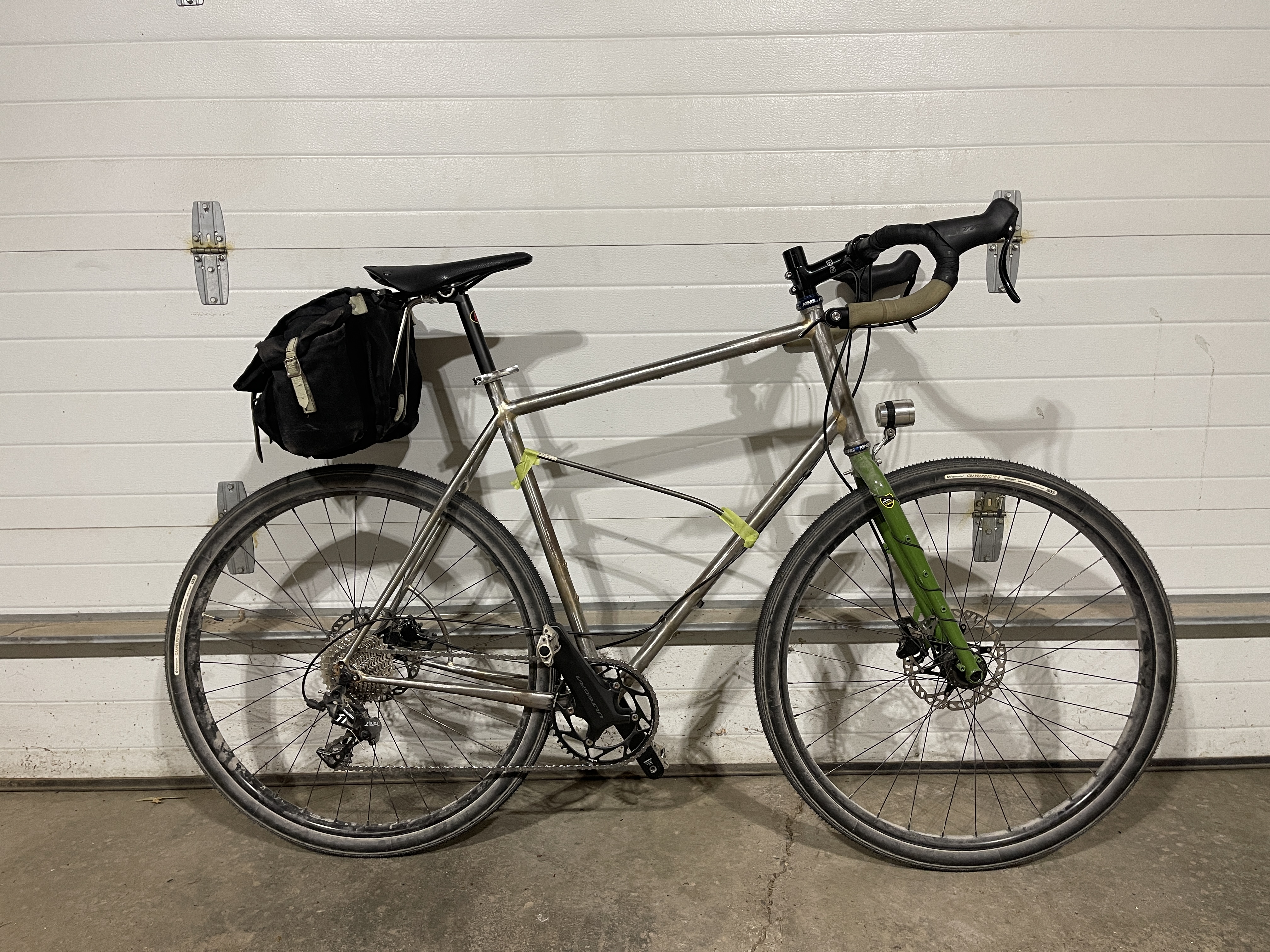
Option B)
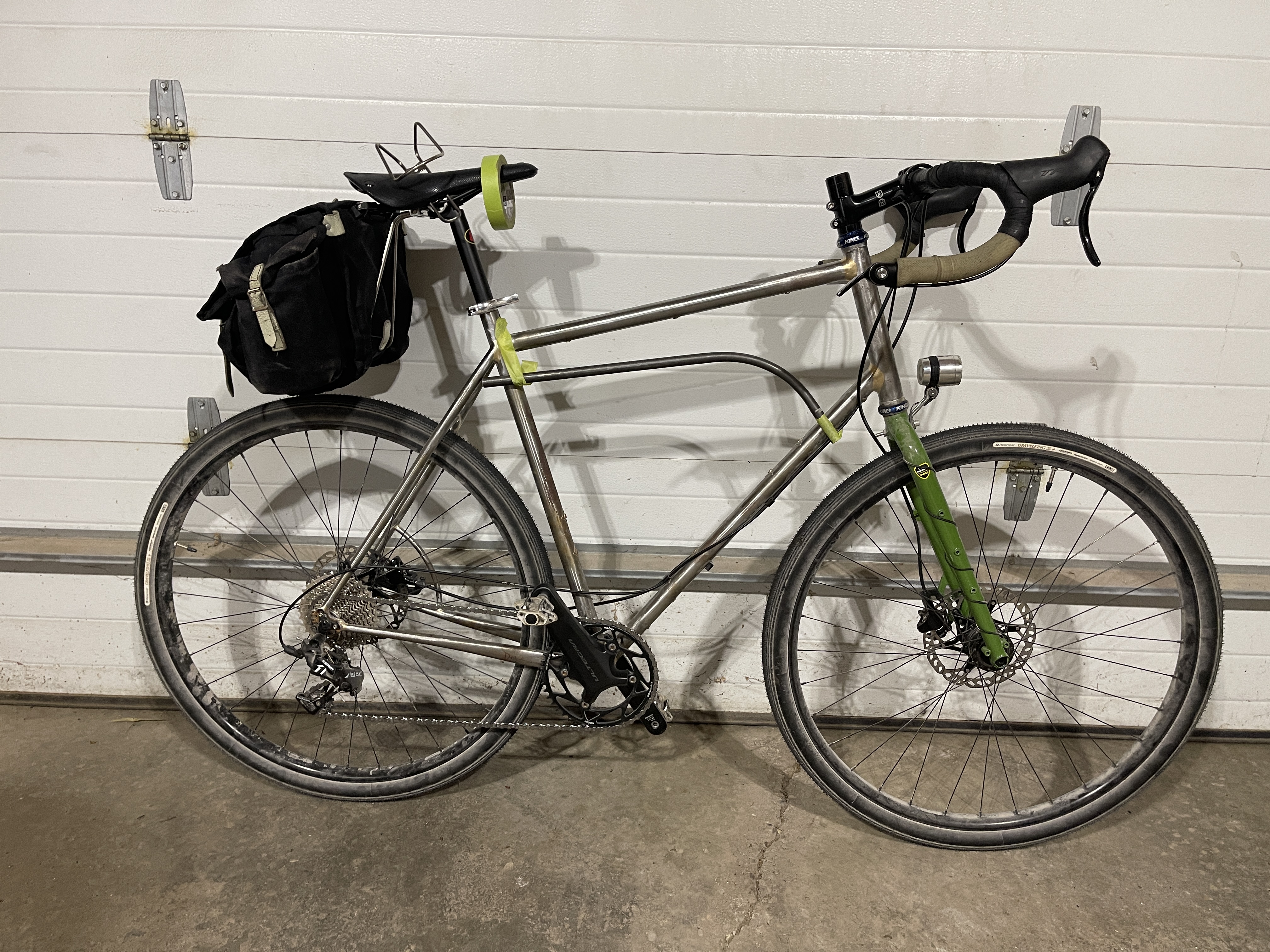
Option C)
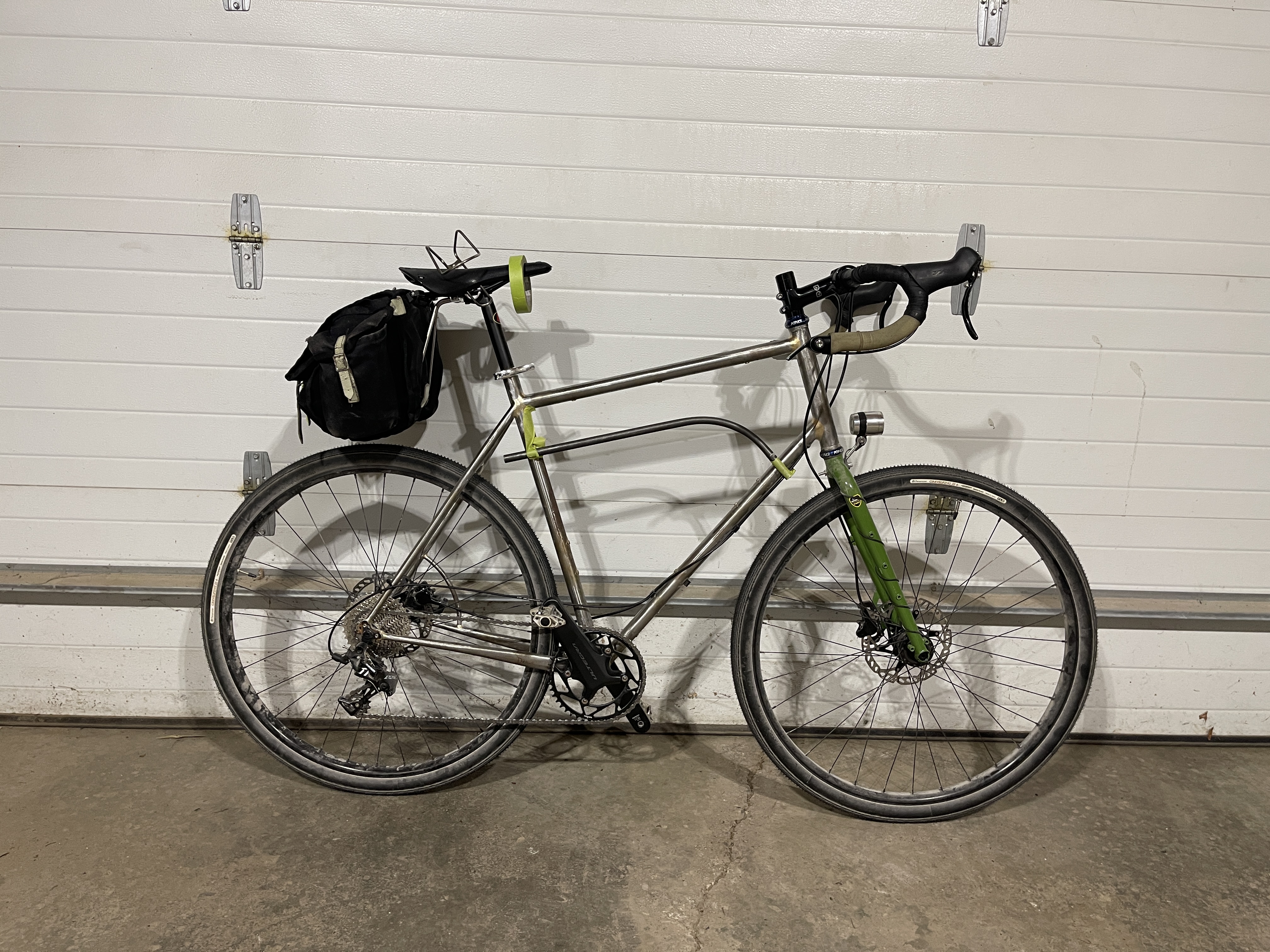
Option D)