~~~ Nikomi Bikes

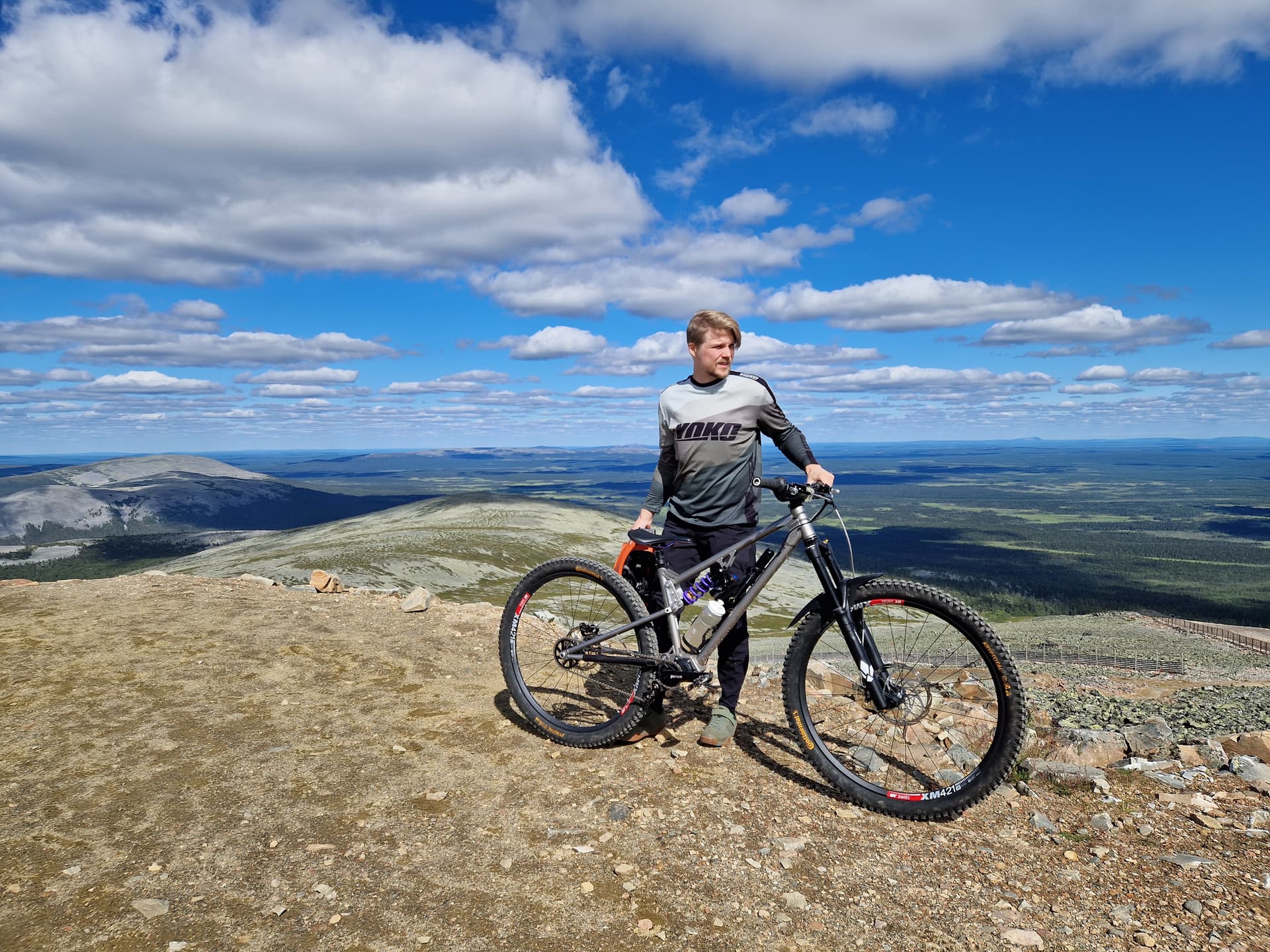
Hi, I’m Niko from Finland, long time lurker, first time poster! :smiley:

Thank you all for posting your stuff!

I have posted something in my IG: https://www.instagram.com/nikomibikes/

Quickly about my builds so far:

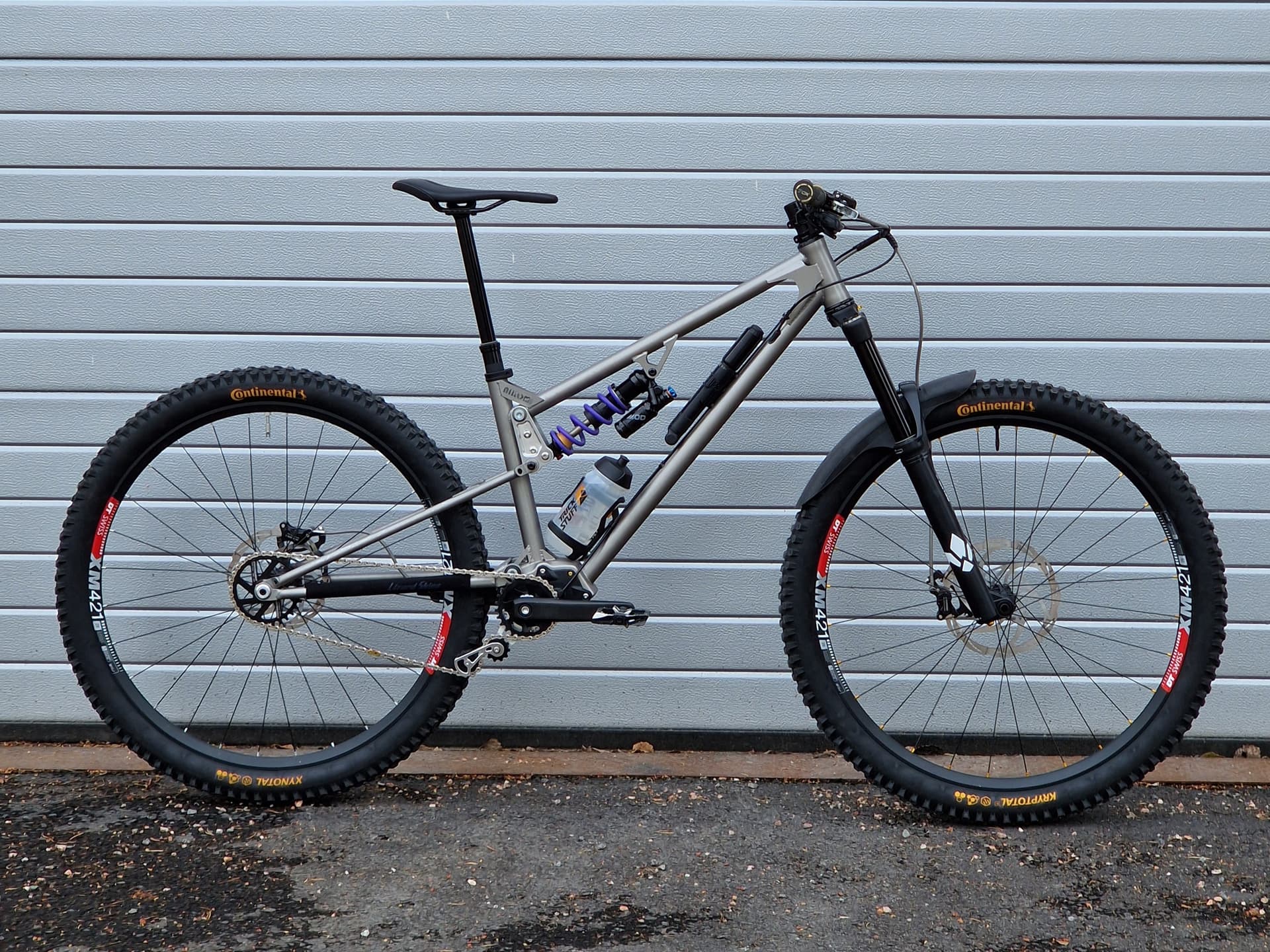
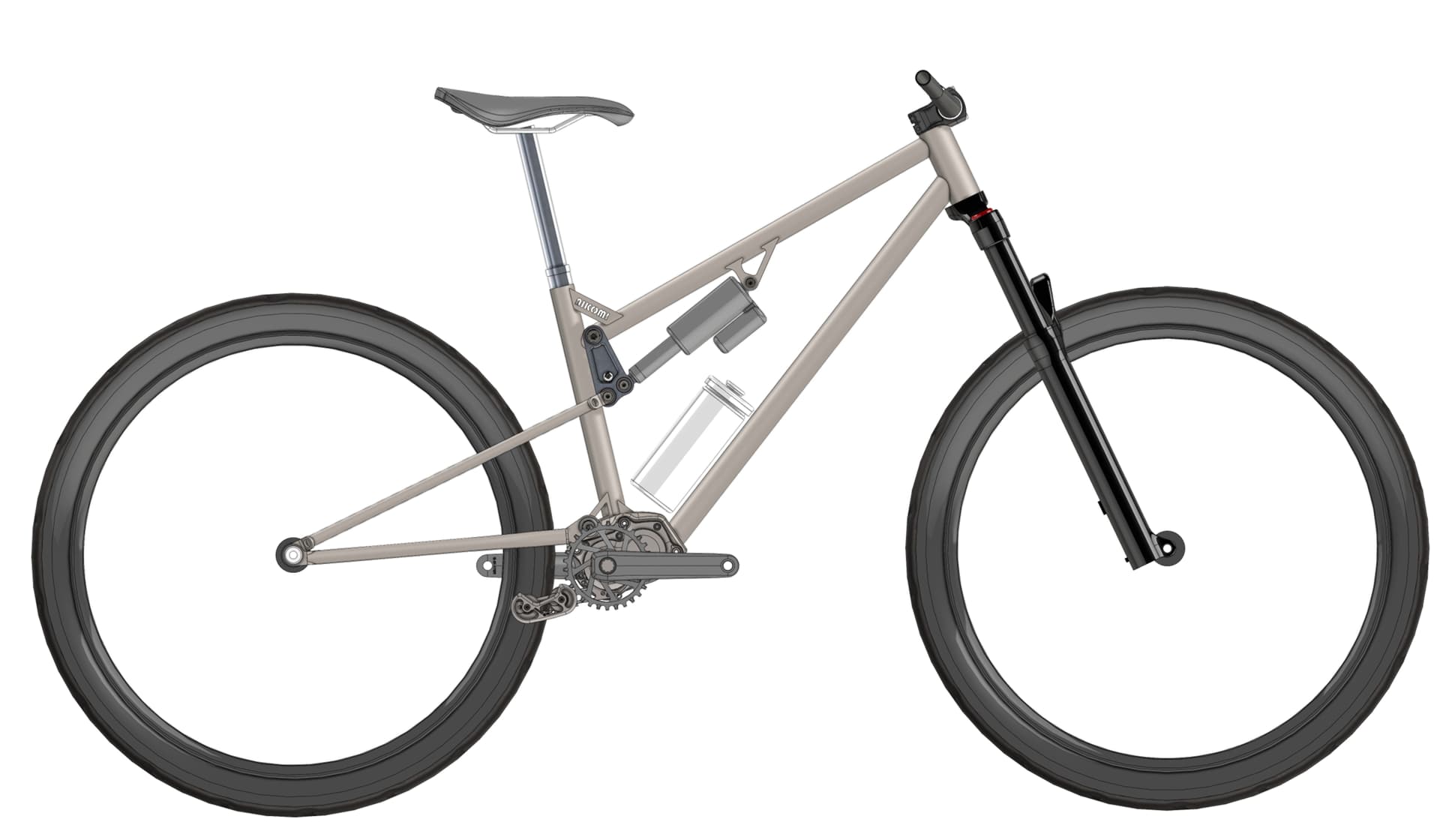
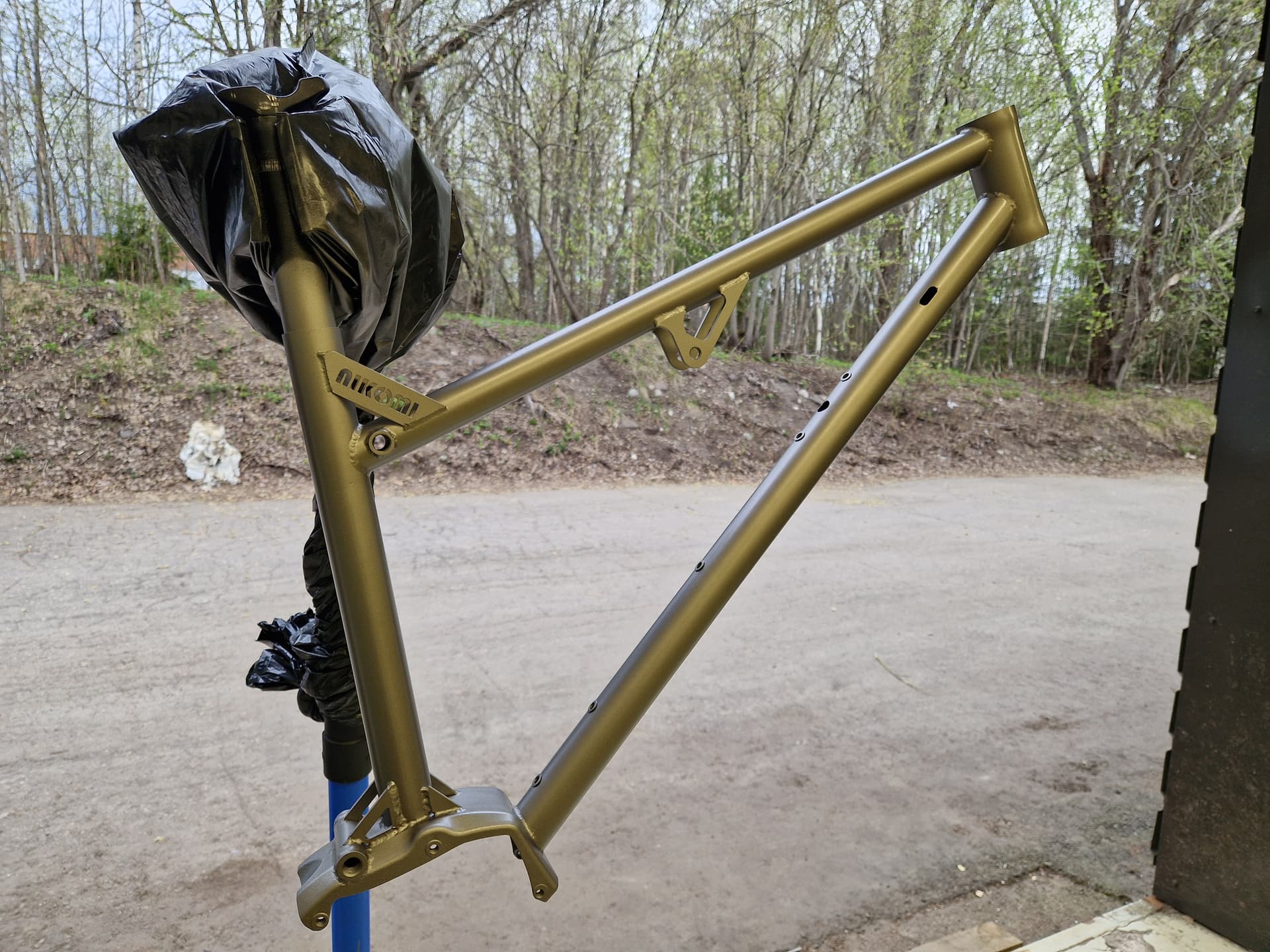
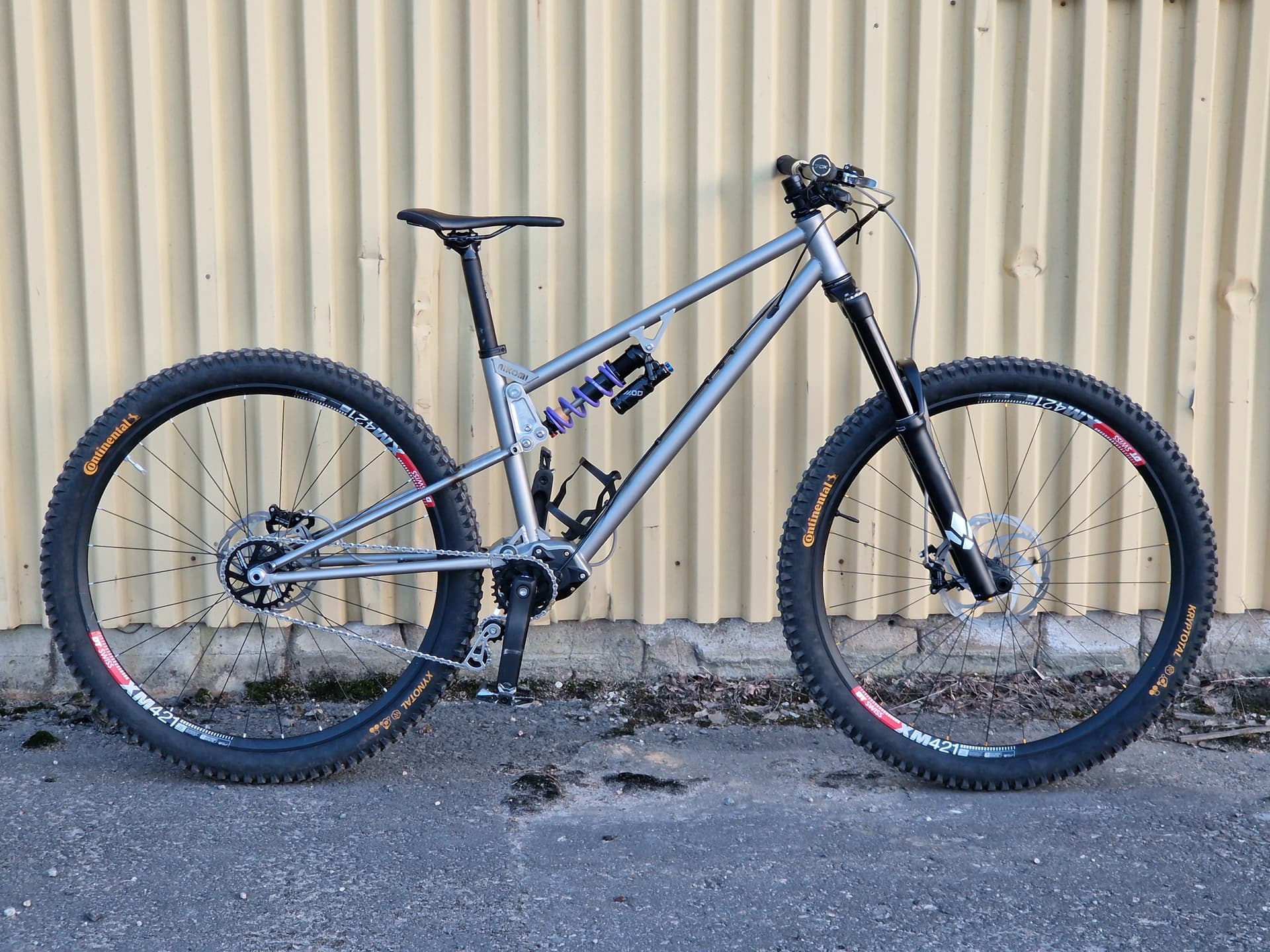
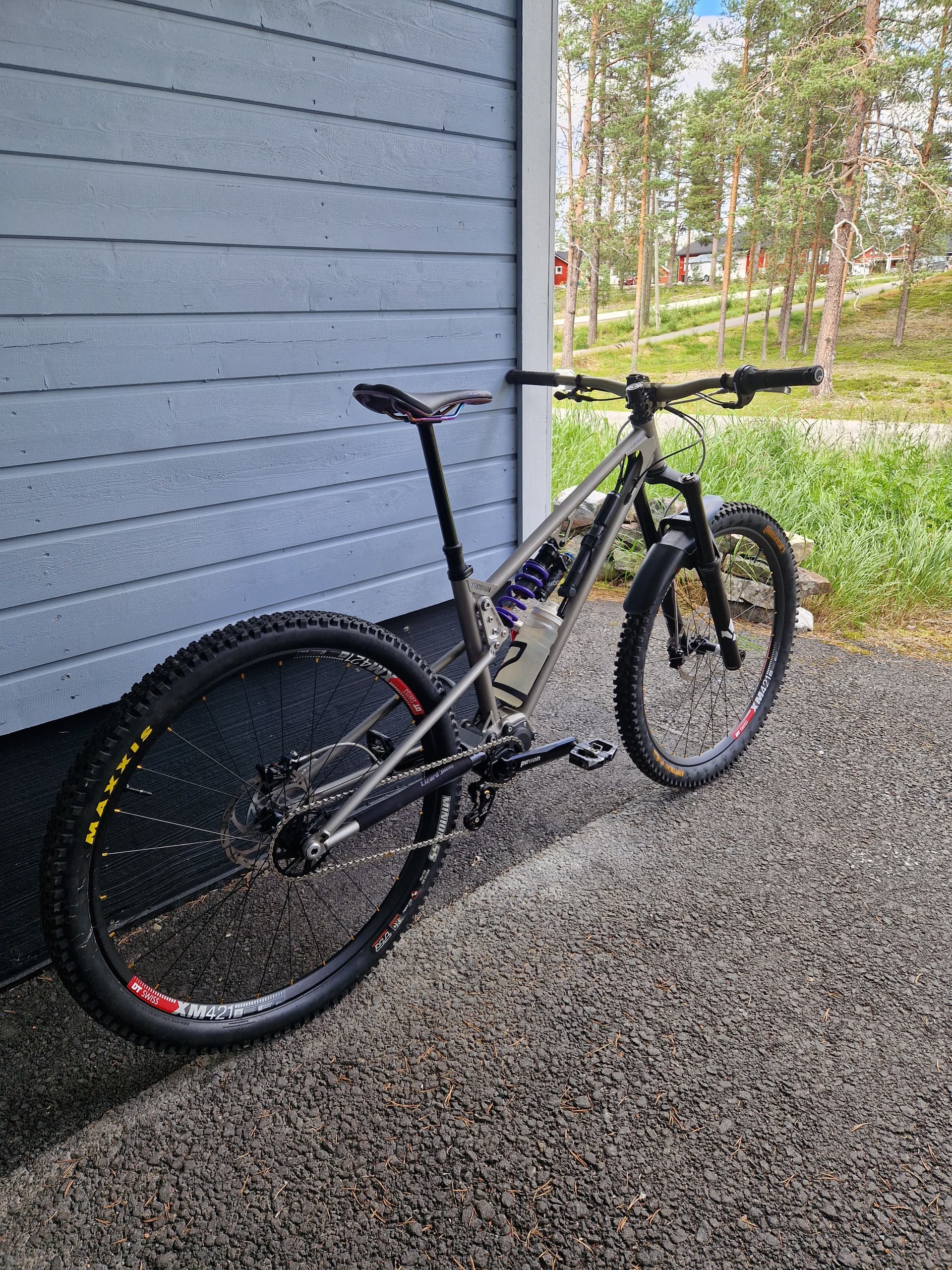
I started to design my first build, Nikomi v1, in early 2022, while studying mechanical engineering. It was finished in the early summer 2024, so yes, a bit ambitious :slight_smile:.

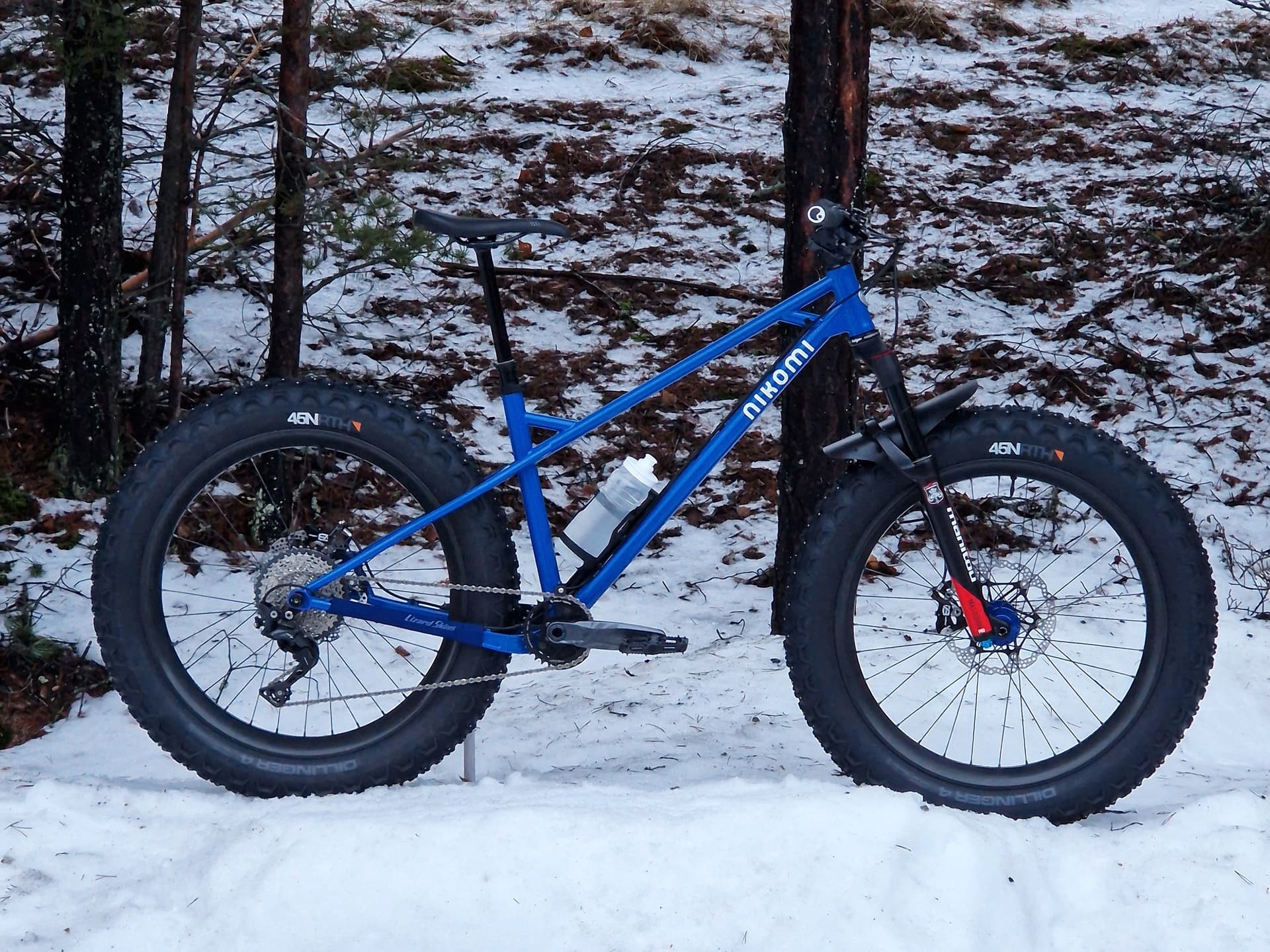
I finished the fat bike, Nikomi Pulska, late 2024.

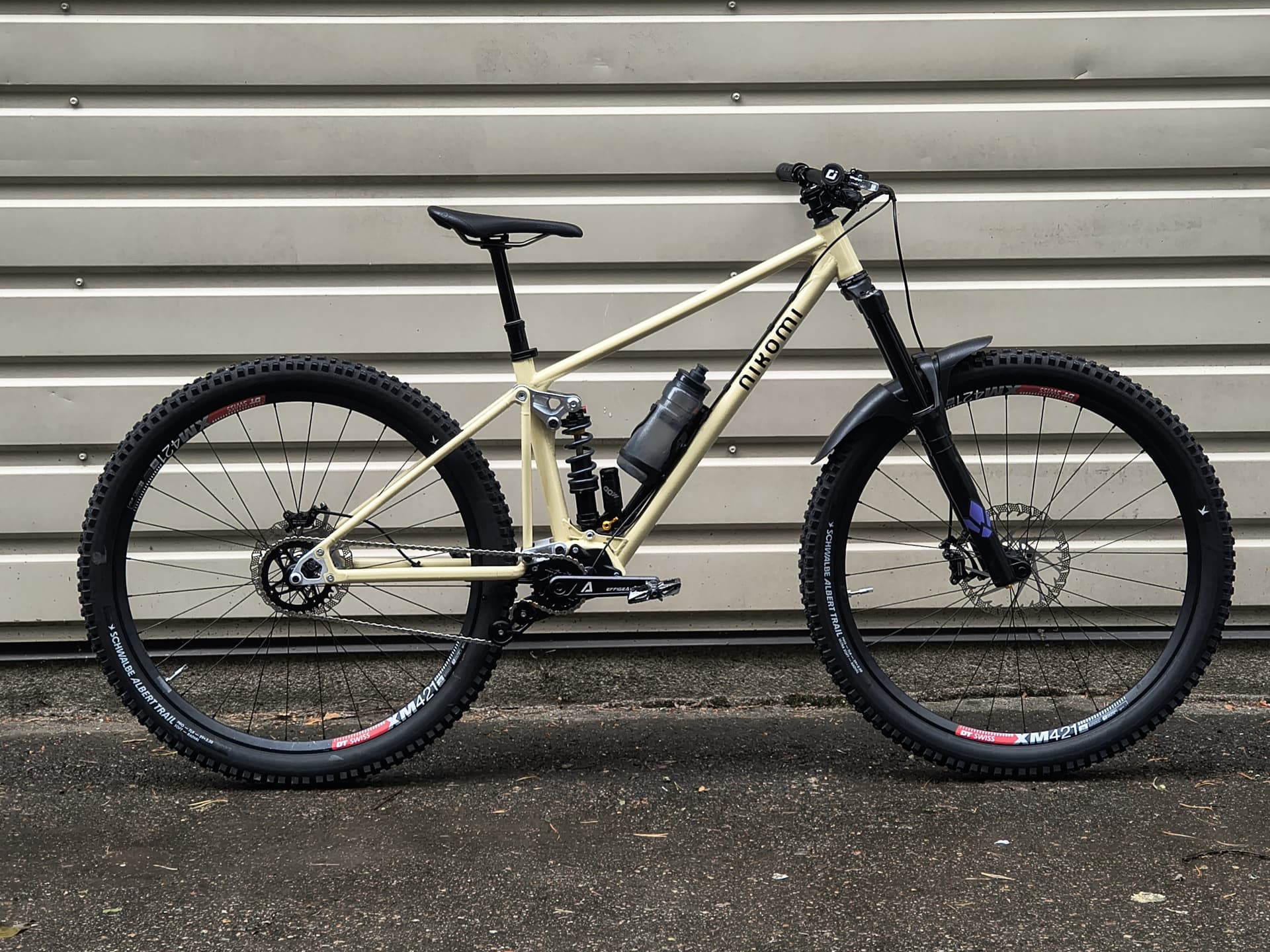
Nikomi v2 came to realization in July 2025, and right away I raced it in the National Enduro Championships :blush:

Sorry about the pictures, one person can only be so much :sweat_smile: I will go in to details later for each build.

23 Likes

Welcome! I was just in Helsinki for a couple weeks and met a couple other builders who are located north of Helsinki in Sippo! That first one looks sweet. Is that a motor or pinion gearing - i’m assuming it’s pinion gearing as I don’t see batteries. How do you like it?

Thanks!

If you are talking about the guys at 4130ranch, they hosted a “Meet your Maker” party last year, super nice people!

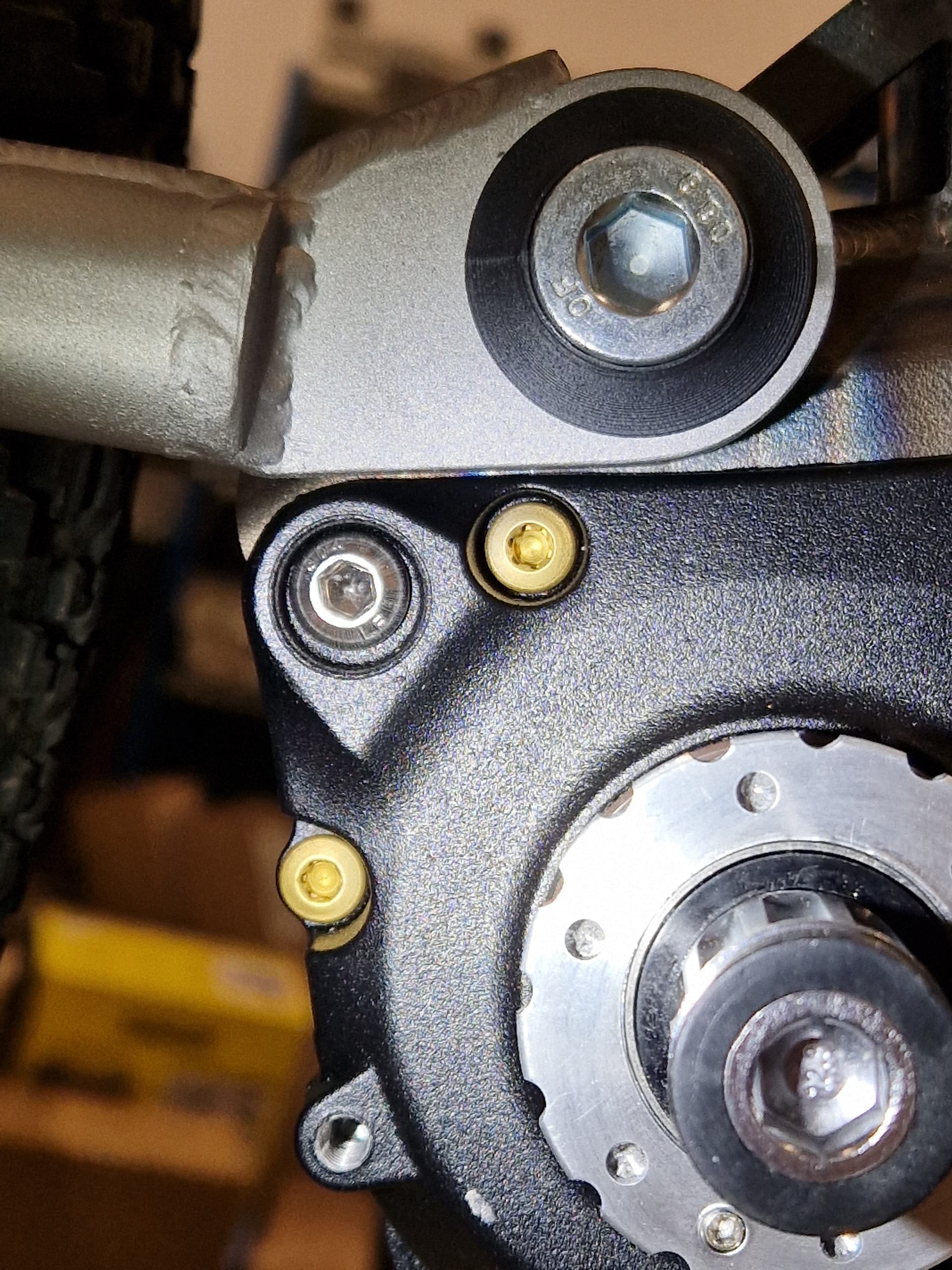
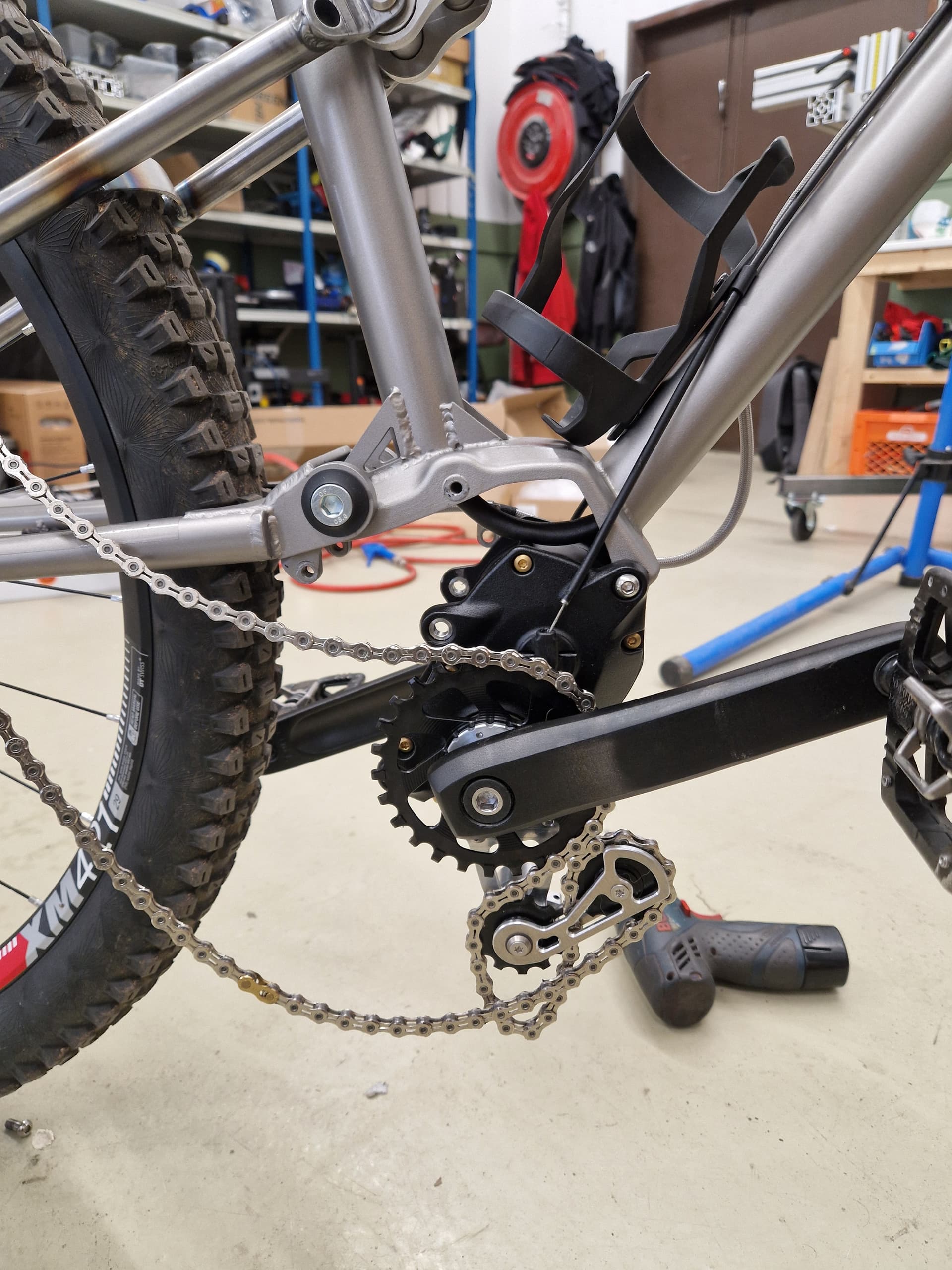
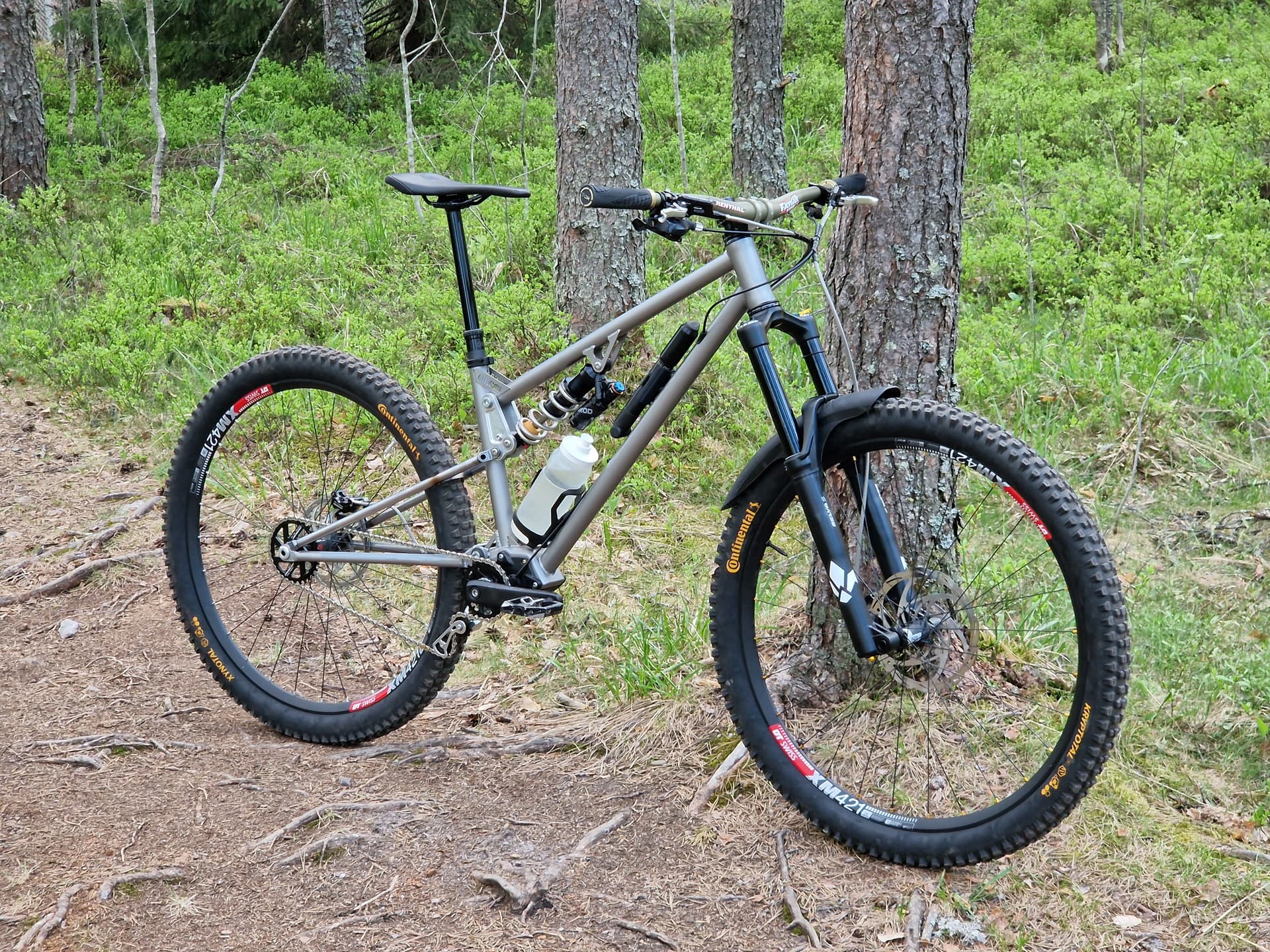
Both full suspension bikes have Effigear Mimic gearbox, it fits the same mount as Pinion. I like the gearbox quite a lot, no going back to derailleur for me, at least for an enduro bike!

2 Likes

Ok, before diving in, few words about my background…

I’m 38 years old and in my “previous” life, I worked as a motorcycle mechanic for 12 years. I also had some car projects, but they were overwhelming most of the time with little success.

In 2019, I got completely sober and started to prepare for studying applied sciences. I noticed I now had spare time, so I decided to start mountain biking :grinning_face_with_smiling_eyes: I did some BMX-racing and tricks when I was 14-15 years old, so there was quite a gap in my cycling period (+15 years).

I started racing enduro in 2021 and have done 28 races since, including national enduro, funduro and epic races. No single DNF :cowboy_hat_face:

While studying and racing, the idea of making my own bike stuck. At the same time while doing my internship, I met Olli who had also started to build a bike and he had made a frame fixture already. So we combined forces, and while I did all the designing, Olli helped a lot with general knowledge about materials, fabrication, machining etc.. He also had a small stock of SSAB Docol R8 tubing, which I have used since. So big thanks to Olli! He has a machining side business, check it out: https://www.instagram.com/okkoneistus?igsh=aXc5Mnk3YnVqbW12

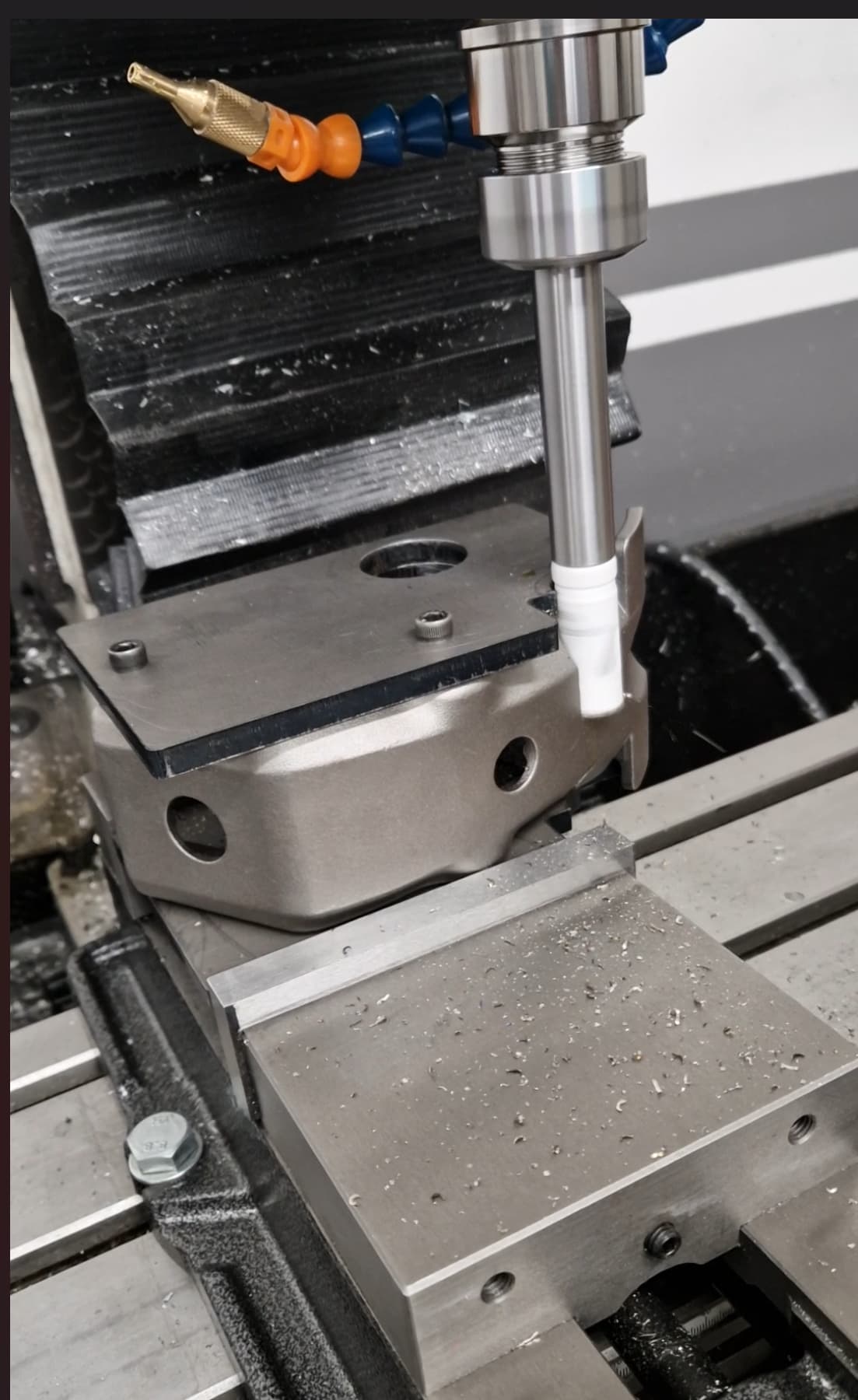
I must say, that before the first project, I had little to no experience in TIG welding or machining. Later I have purchased my own TIG machine, manual lathe and manual milling machine. So bear that in mind while I share pictures of the projects :sweat_smile:

About the design process, I had a good idea of the geometry I wanted. I like simple and effective designs, but maybe because of my background, the idea of cost-effectivity using sheet metal has been dictating the details maybe too much :joy: Later I have learned that for being cost-effective, you also need to minimize the time that is consumed during the build process.

Here’s some bikes I had and raced before:

  • Pole Evolink 158 (M)
  • Cube Stereo 150 (M)
  • Pole Evolink 140 (S)
  • Propain Tyee (M)

Funnily, I have never ridden any other mtb than a 29er :grinning_face_with_smiling_eyes:

Needless to say, I did not like derailleur when riding in rough terrain, so the first bike was designed with a gearbox. But more of that next time!

3 Likes

Nikomi v1 - part 1

I’m not going to go through all the 101 iterations of designing the bike, you all know how that goes :smiley: But being the first bike, I tried to do things cheap (laser cut sheet metal). I used Solidworks from my school and Linkage X3. I have learned a lot about 3D-modelling since but this got me started :slight_smile:

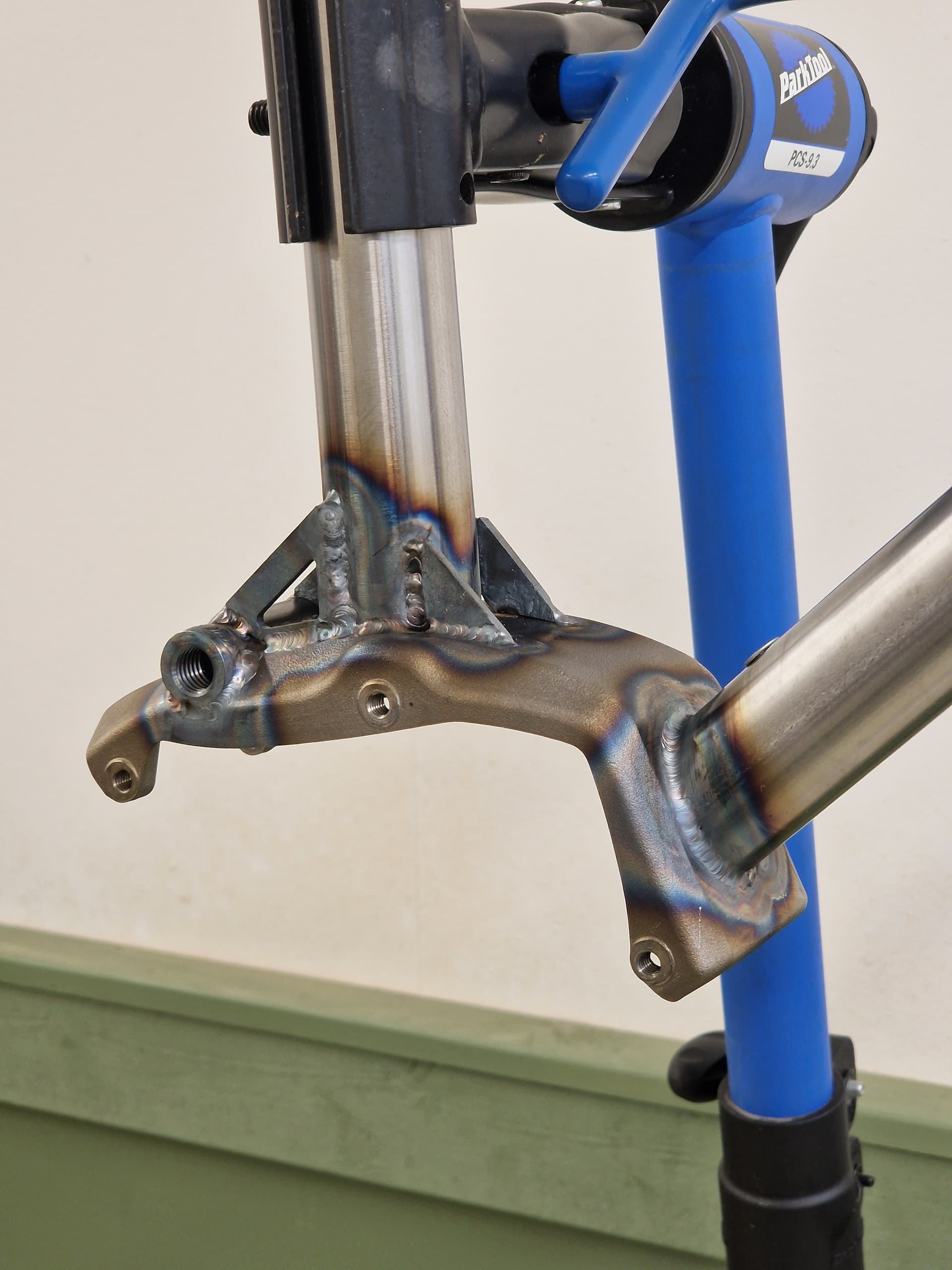
I did some FEA also, to optimize the shock mount, and also I realized I needed to add the gussets on the seat tube / gearbox bridge junction, for example. I used 6000N pushing down on the bottom bracket, and tried to iron out the points where excessive stress occurred. I’m 170cm and 65kg and this method has worked for me this far :grimacing: :crossed_fingers:

Basically the suspension design is Orbea chainstay and Rocky Mountain shock link. Maybe I’ll do the kinematics in another post…

At this point I want to say that I have paid for all the parts I have used in my bikes. No paid advertising here!!!

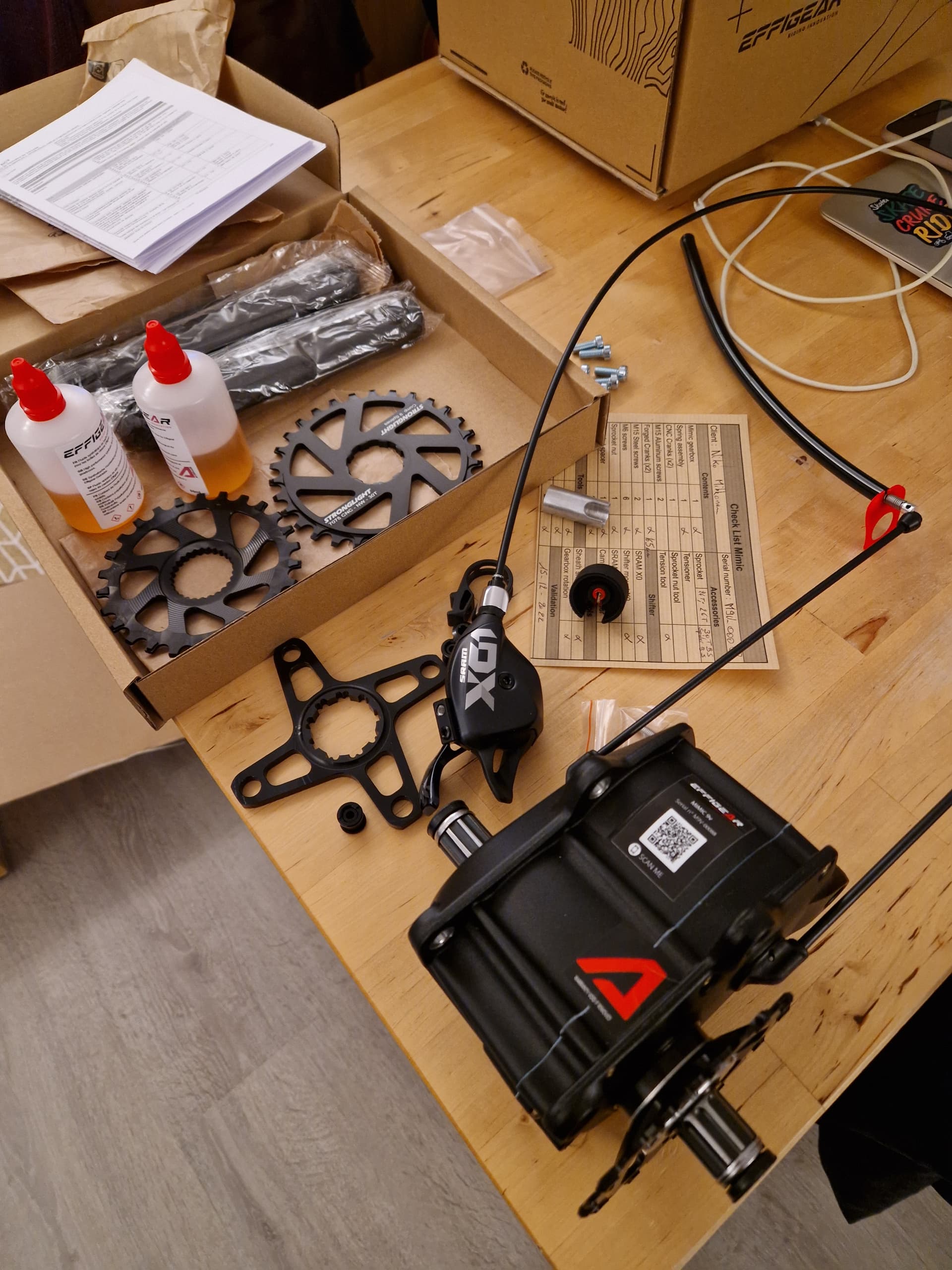
Goodies from Effigear to get me excited.

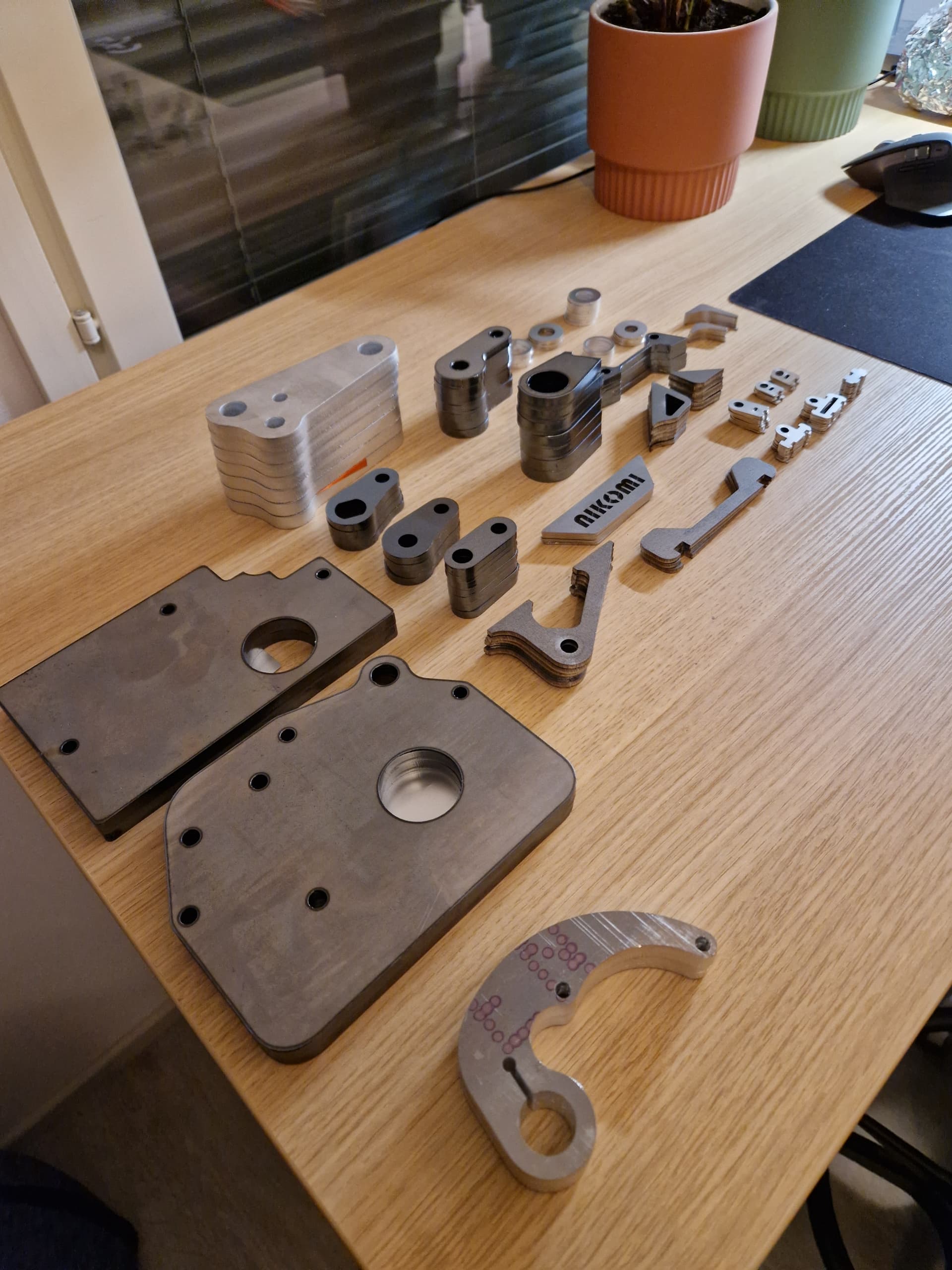
Laser cut parts. I didn’t end up making 3 bikes after all :smiley:

If you only make stuff for yourself, why bother :sweat_smile:

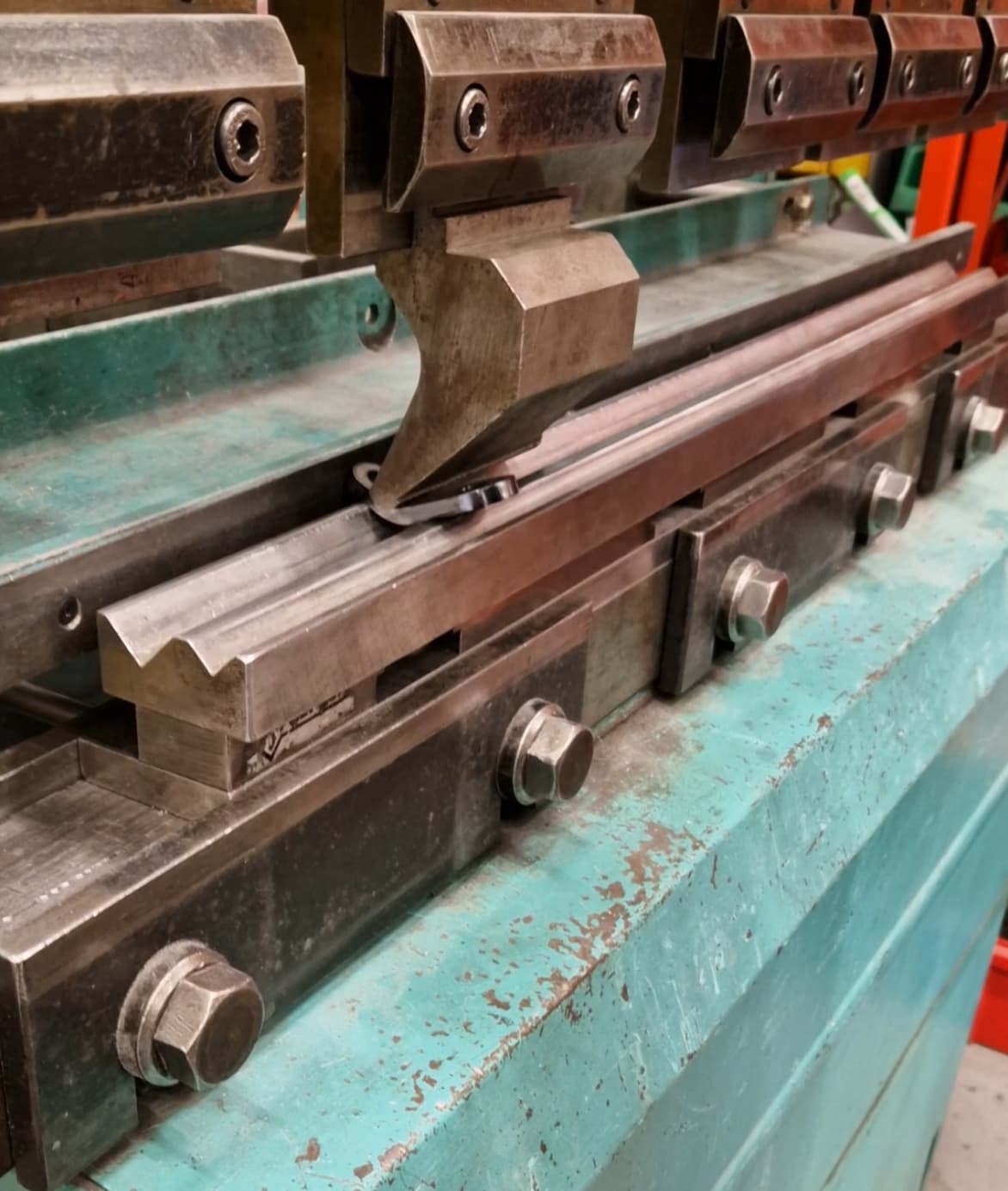
Press brake available in my day job’s proto lab.

Olli with his home-CNC. I got a Bambulab also during the project and it has proven to be invaluable!! If you missed, the jig is PETG.

Patch done.

I’m pretty sure the laser cutting was unnecessary…

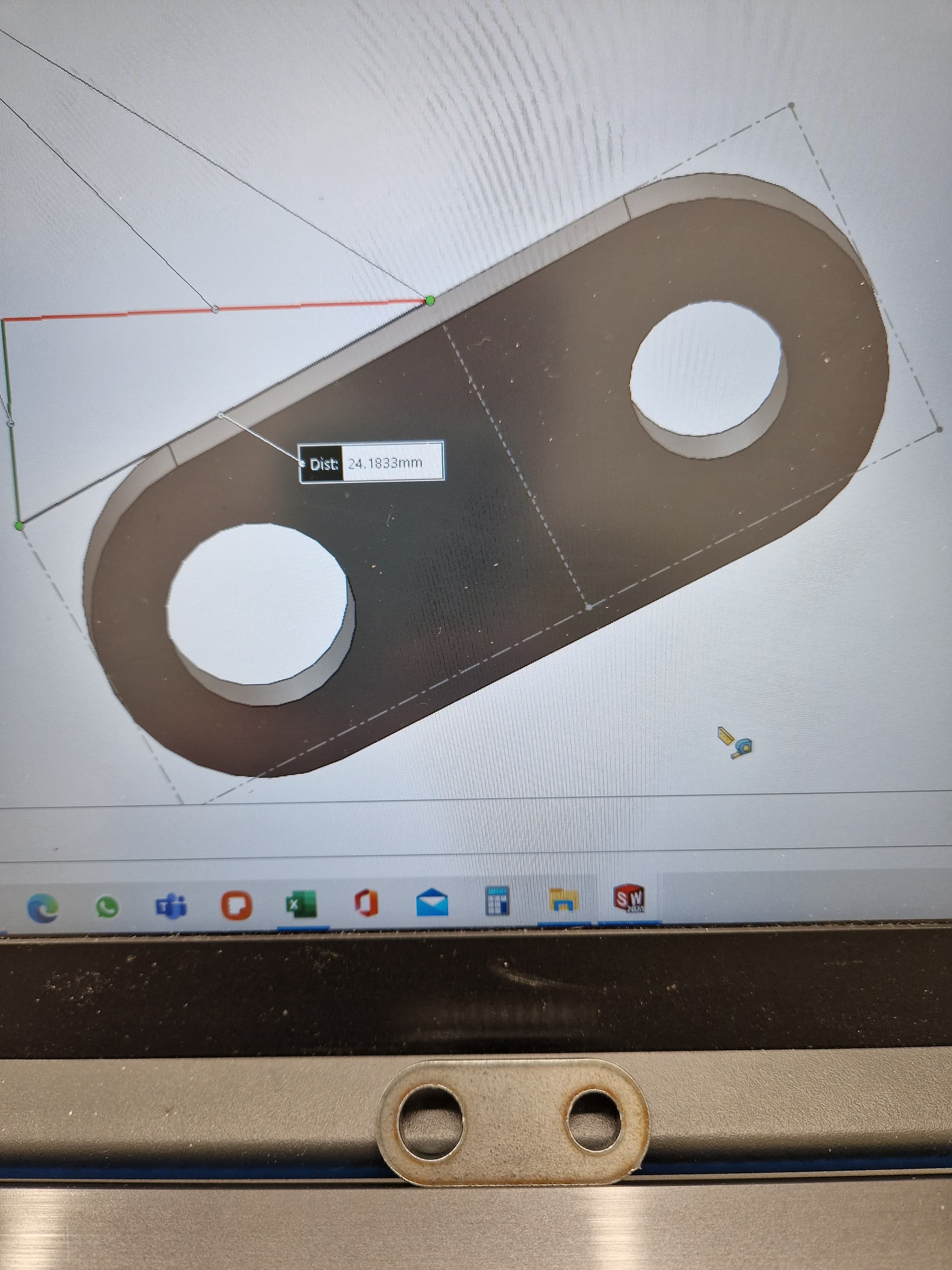
Experimenting with dust shielding. Went with the laser cut stainless steel ones.

Cutting room for main pivot to the Pinion bridge in the cutting jig.

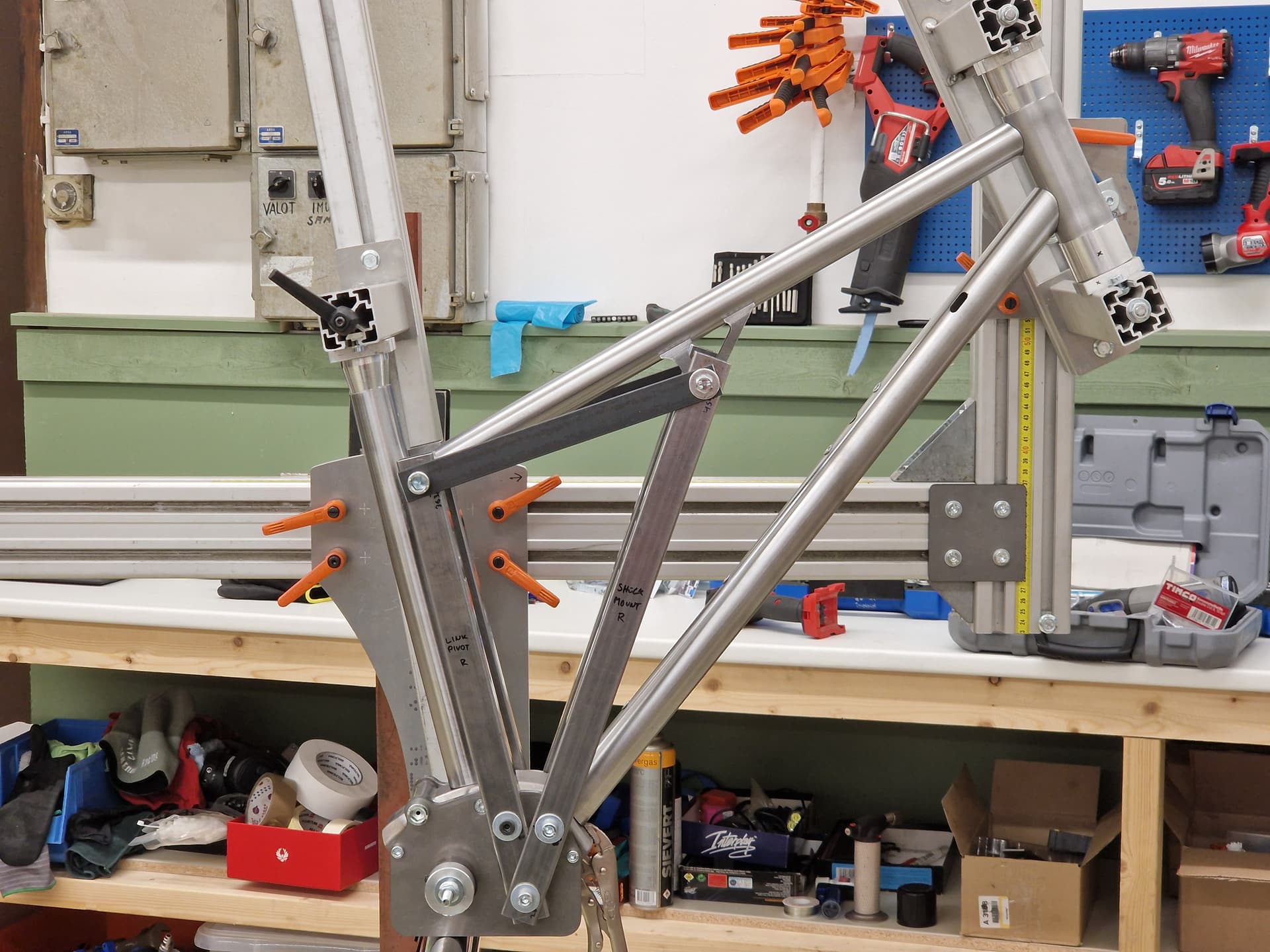
Fits with the welding jig.

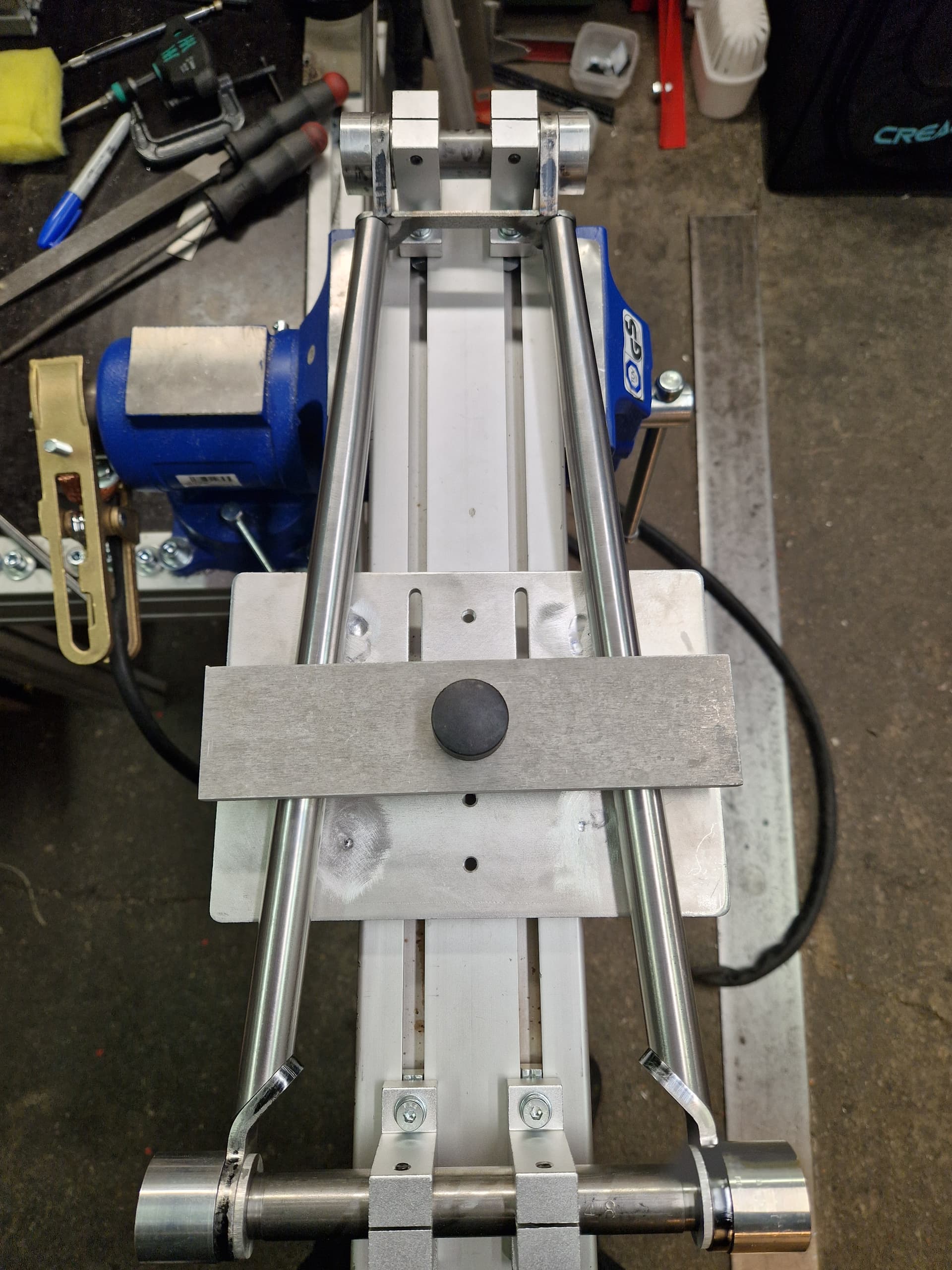
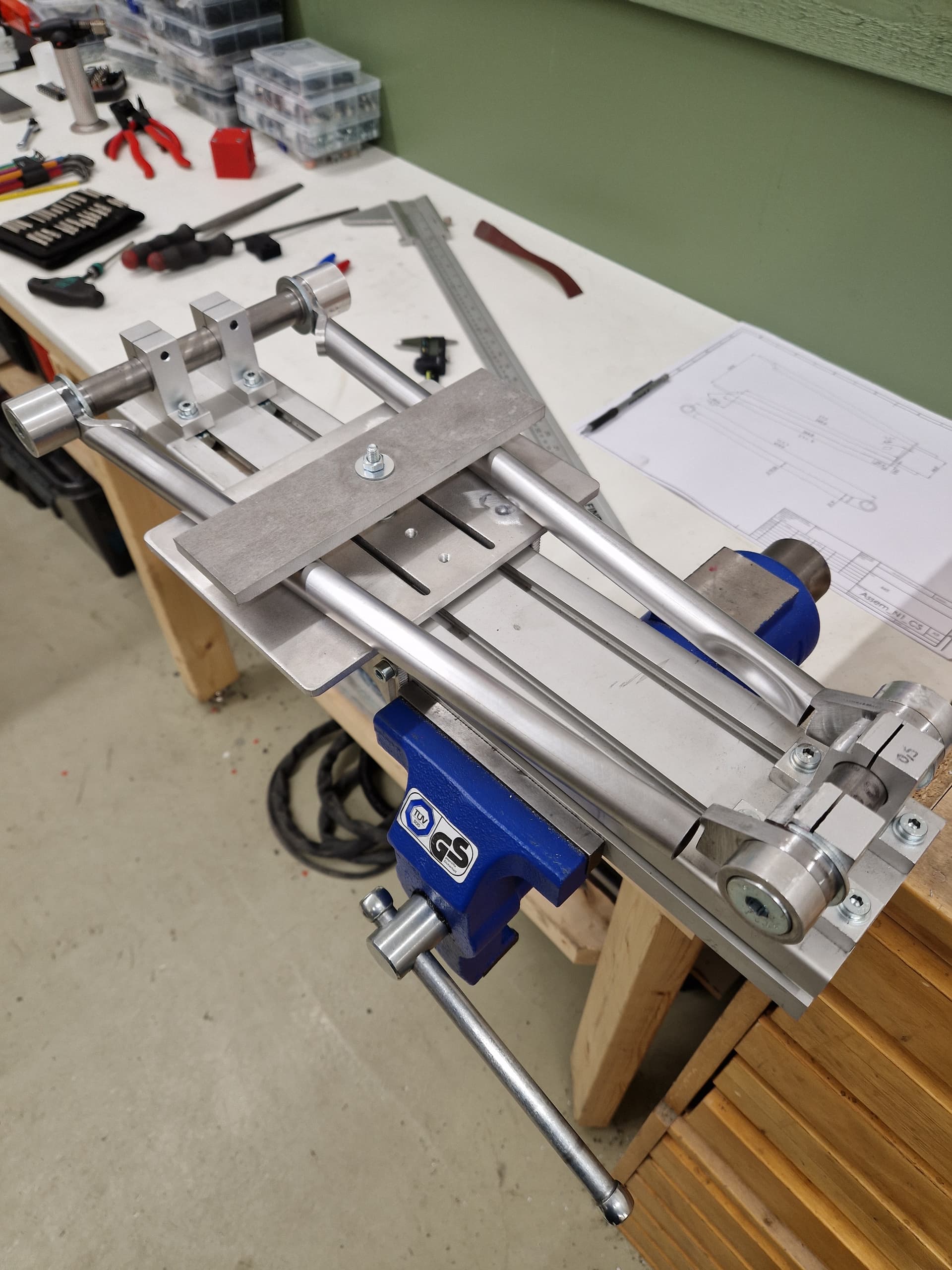
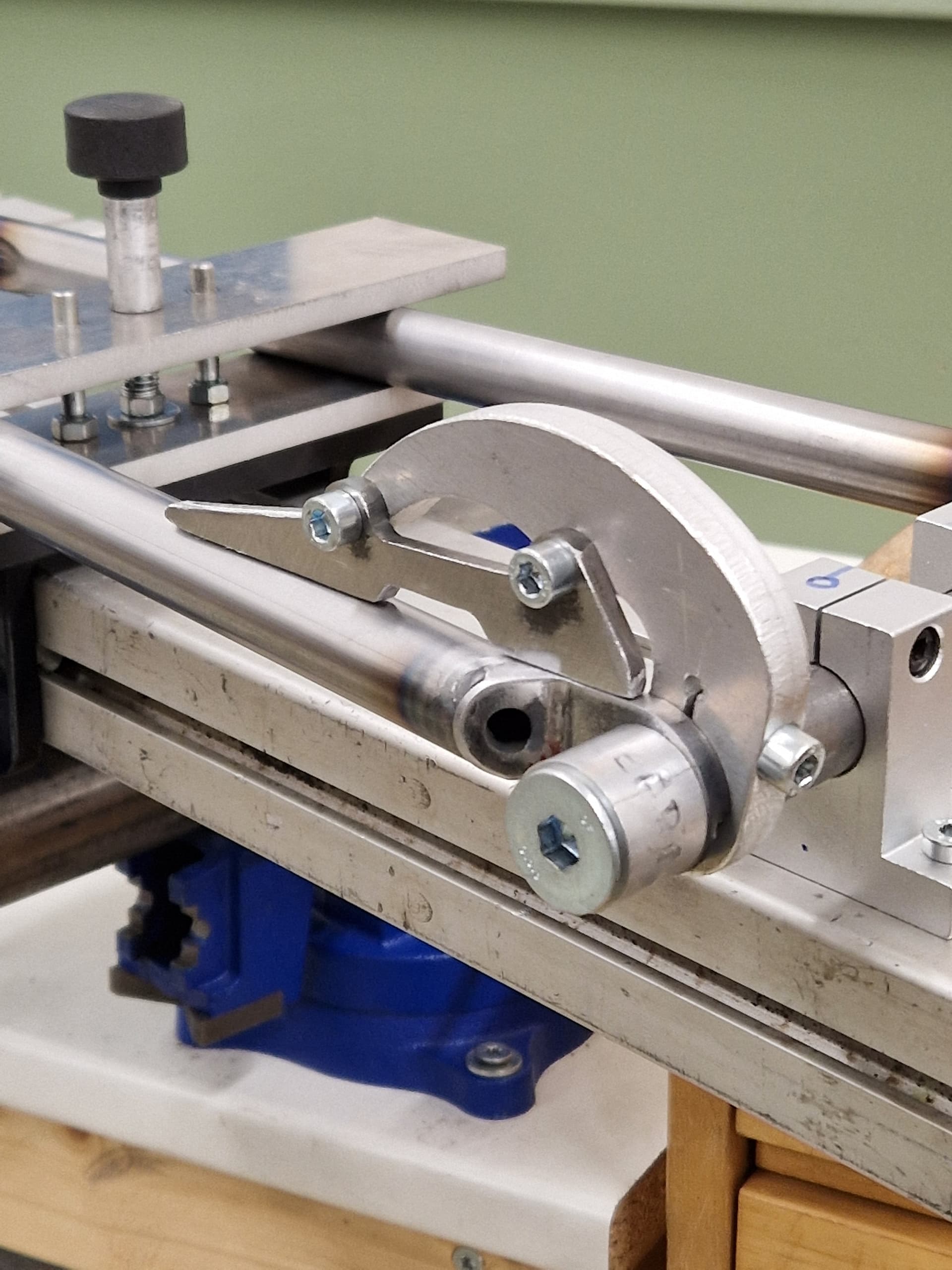
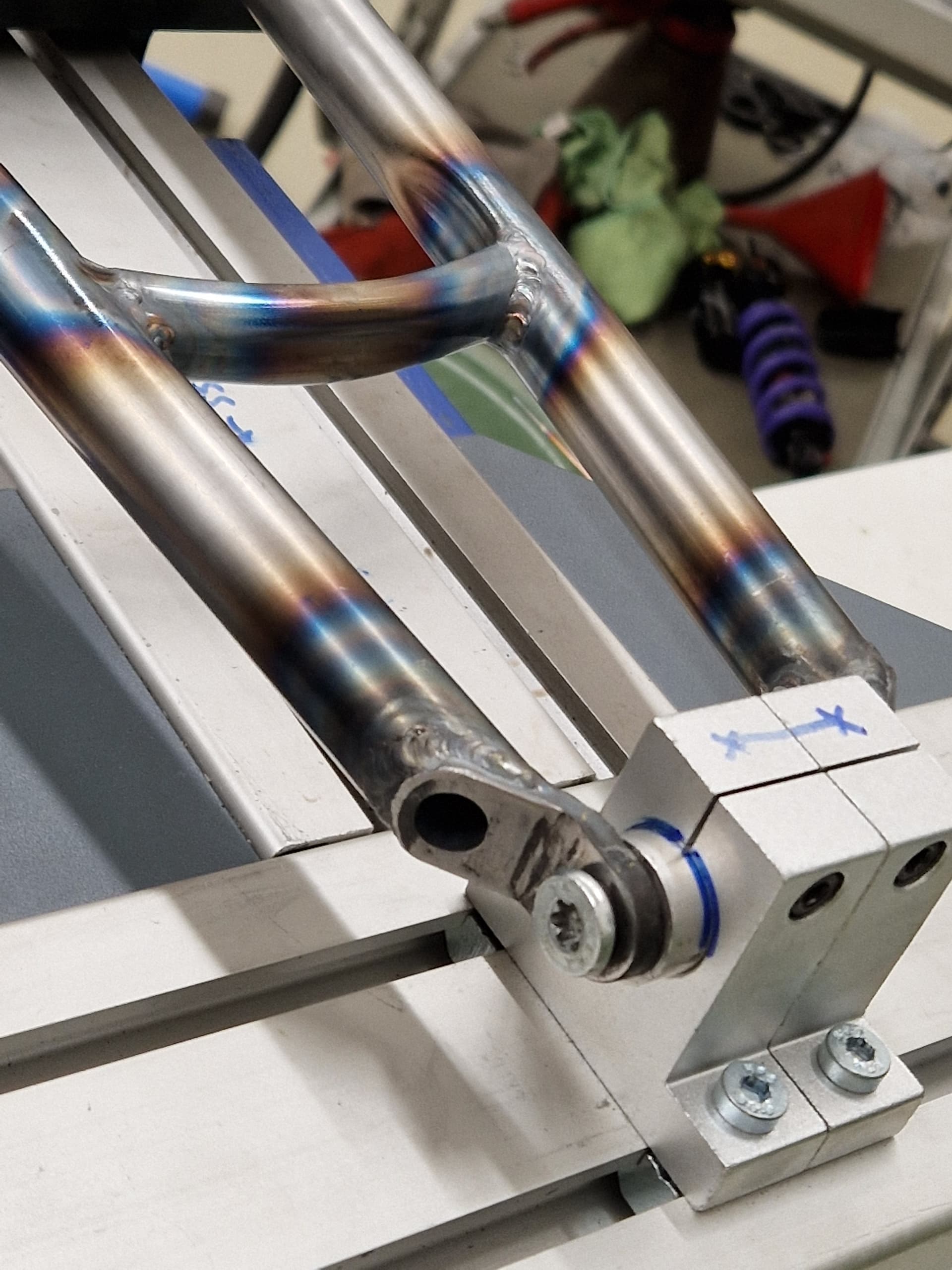
Tools for welding the rear triangle.

Rear triangle jig was a PITA to set up. I ended up making two misaligned rear traingles with this one :rofl:

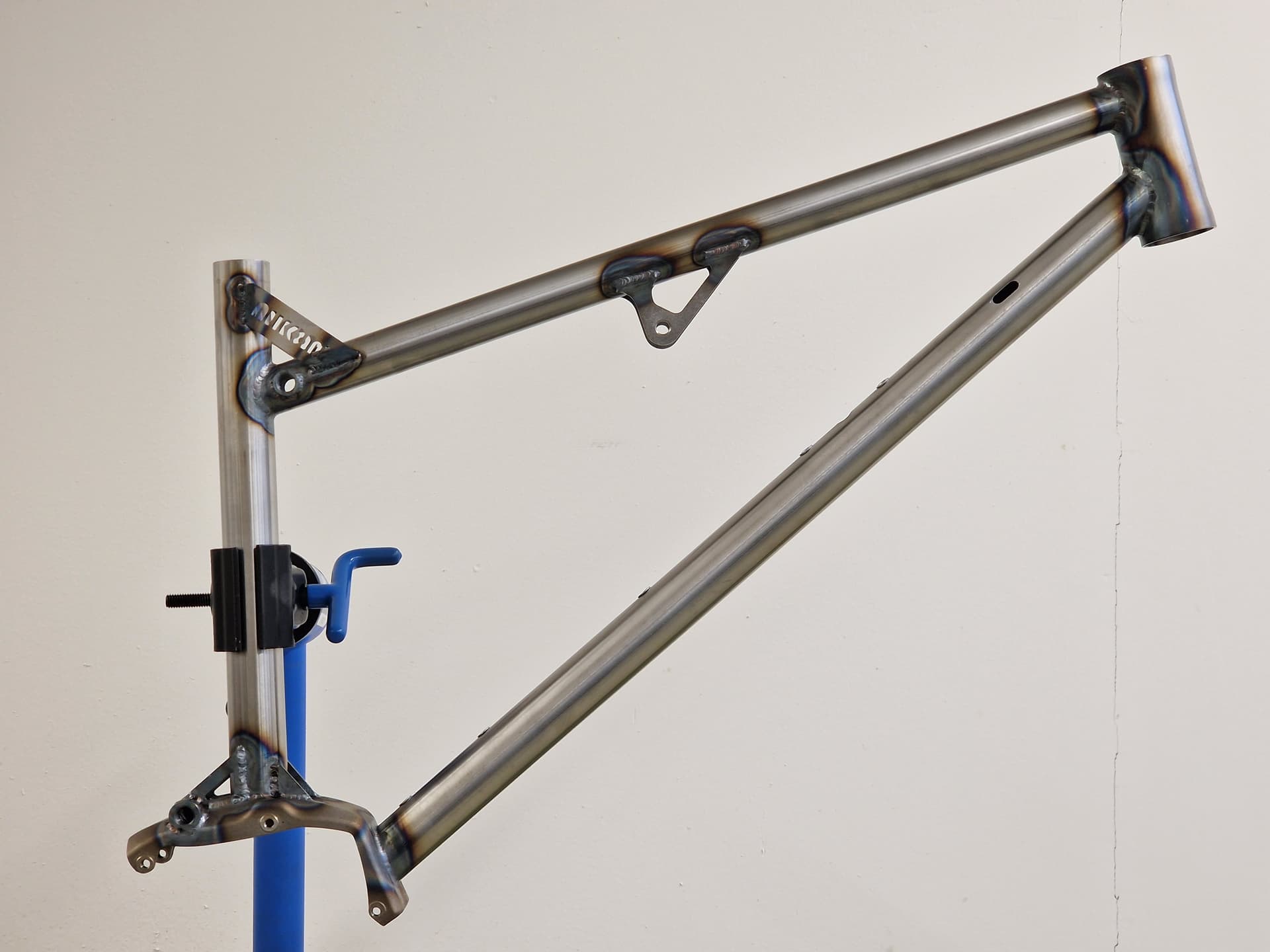
Welds were ok at best. Throughout my projects, I have wanted to weld mostly because I want to know how easy / hard the parts are to set up and weld, and how they keep the alignment. Not because I can make nice welds :sweat_smile:

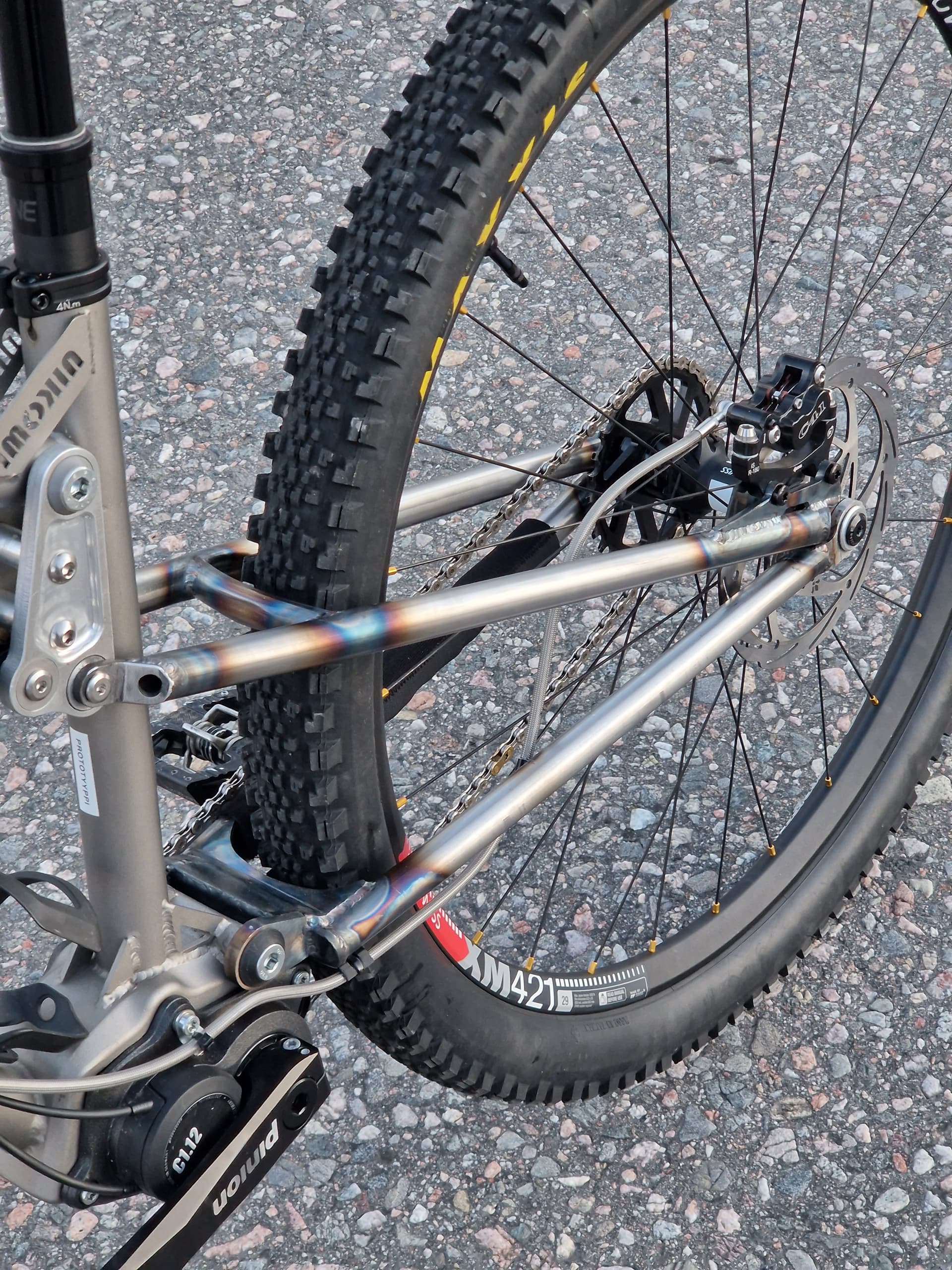
At this point I should say that the rear triangle of the v1 is FLEXY AS HELL! Not because the materials I’ve used but the design that allows the chainstay to rotate torsionally (wheel twists/flops side to side looking from back of the bike).

My initial thought was that the wider spaced main bearings would add stability, but no. If you have familiarised yourself with the design of the usual designs, the main pivot bearings are located in the front triangle. This design allows the main pivot bolt to have an interlocking feature of the chainstay, which very effectively resists this torsional rotation.

This is also not an issue with pure single pivots, since the rear triangle is solid, and will resist the twisting with the shock bolt and the usual gusset between shock mount and main pivot.

After the first test assembly, even before making the front triangle, I added some meat to help the flop issue. I had to ditch the Enduro Max bearings and replace them with regular ball bearings. With these “updates” I was able to move forwards.

Did I tell we made ALL the tooling :slight_smile:

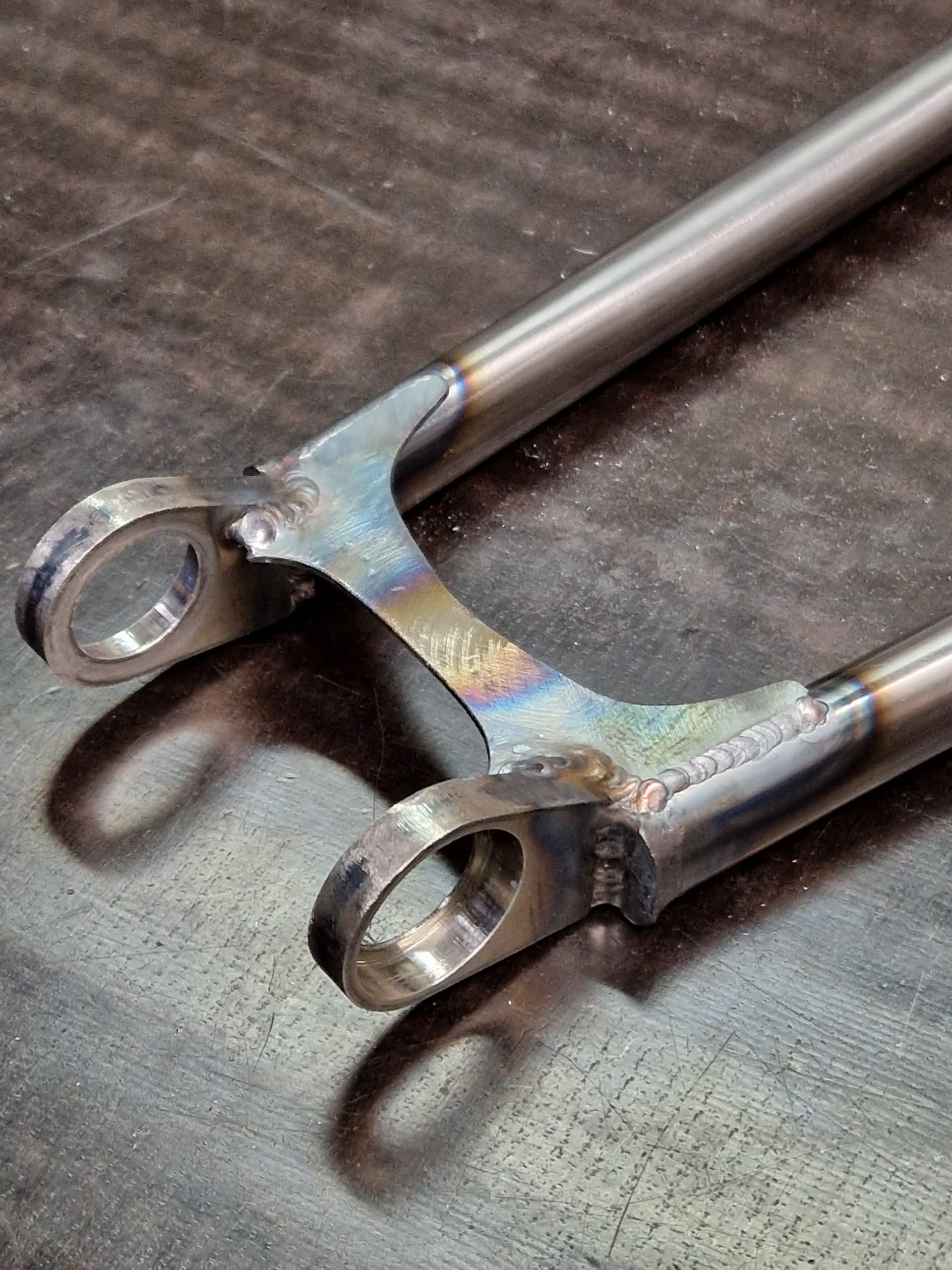
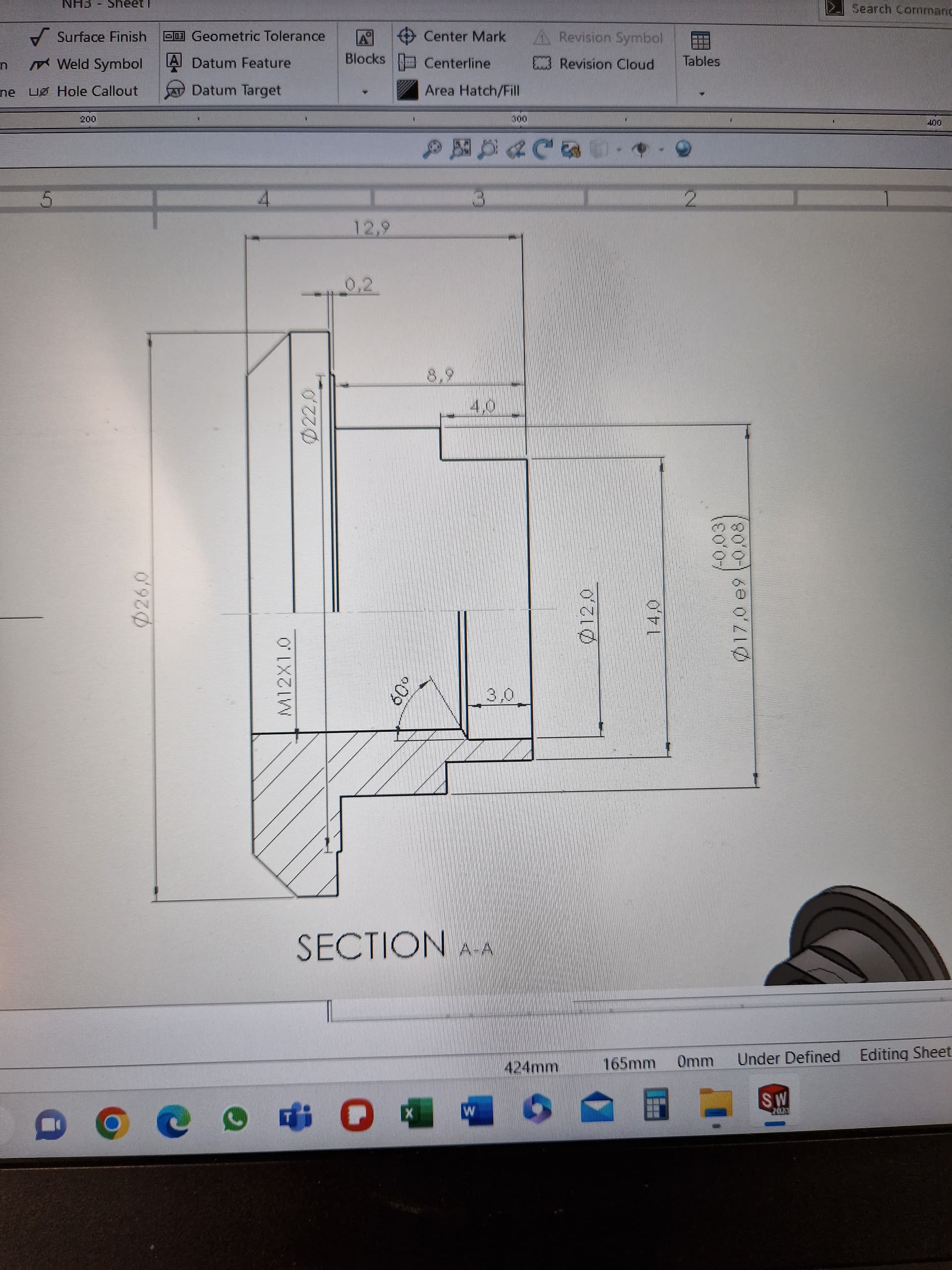
All turned parts for the v1 were done manually. This is the drive side rear wheel nut, which also doubles as the pivot.

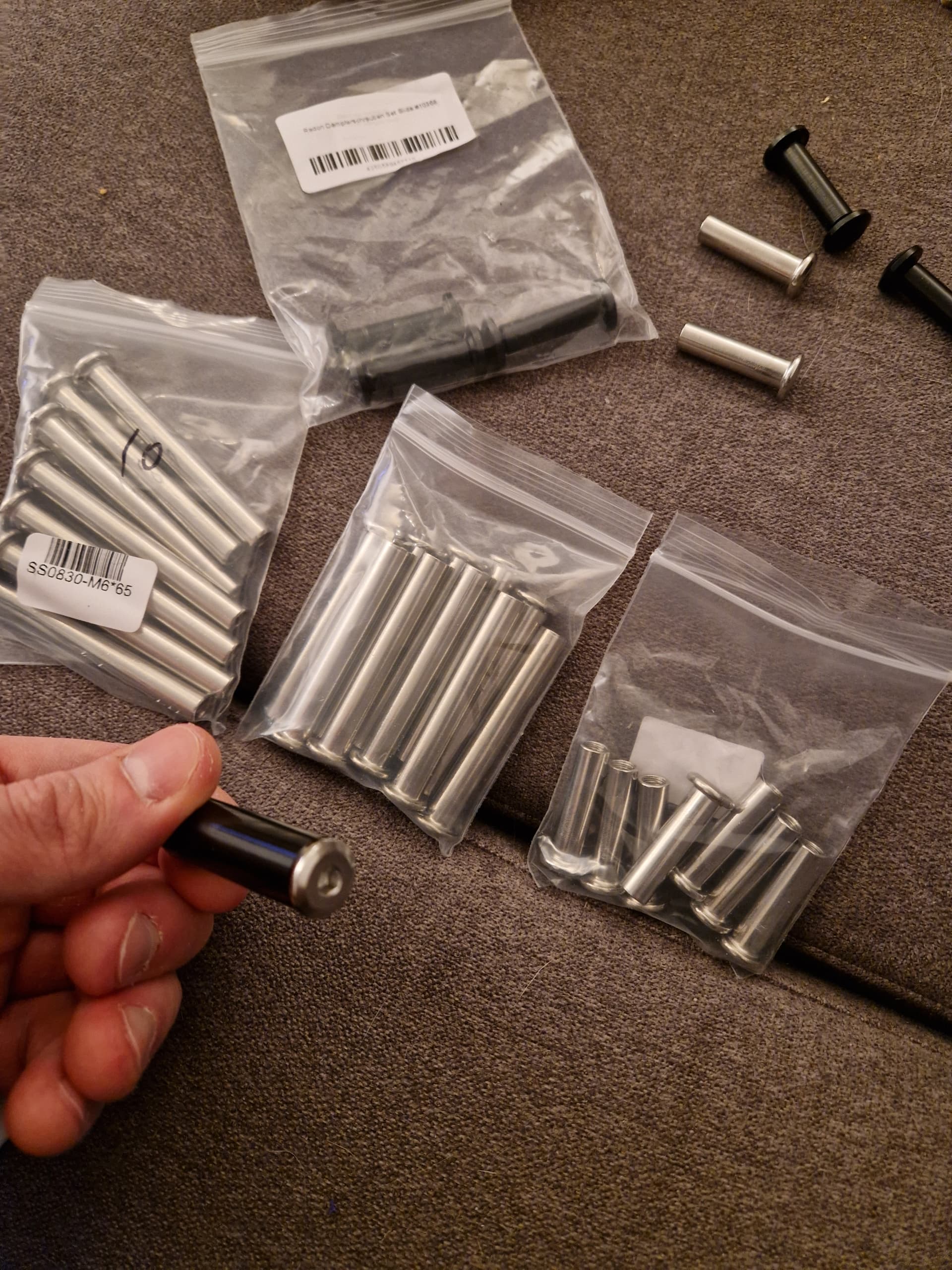
For the bolts I ordered some male/female bolts from Ali (stainless ones), which had pretty low standard for tolerance :exploding_head: The black ones are painted steel from Bike-Discount, for Radon bicycles. These were shortened to match the v1.

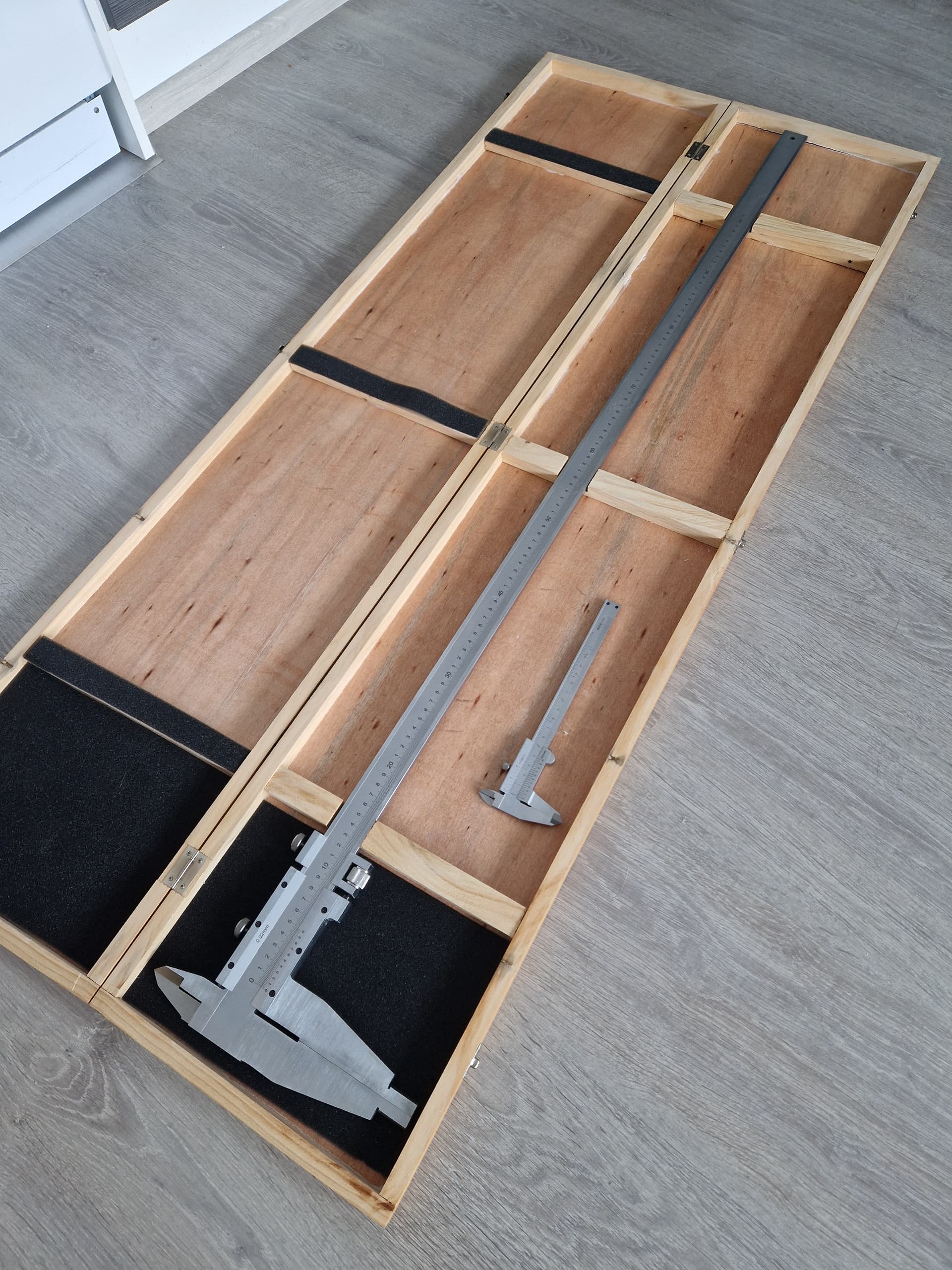
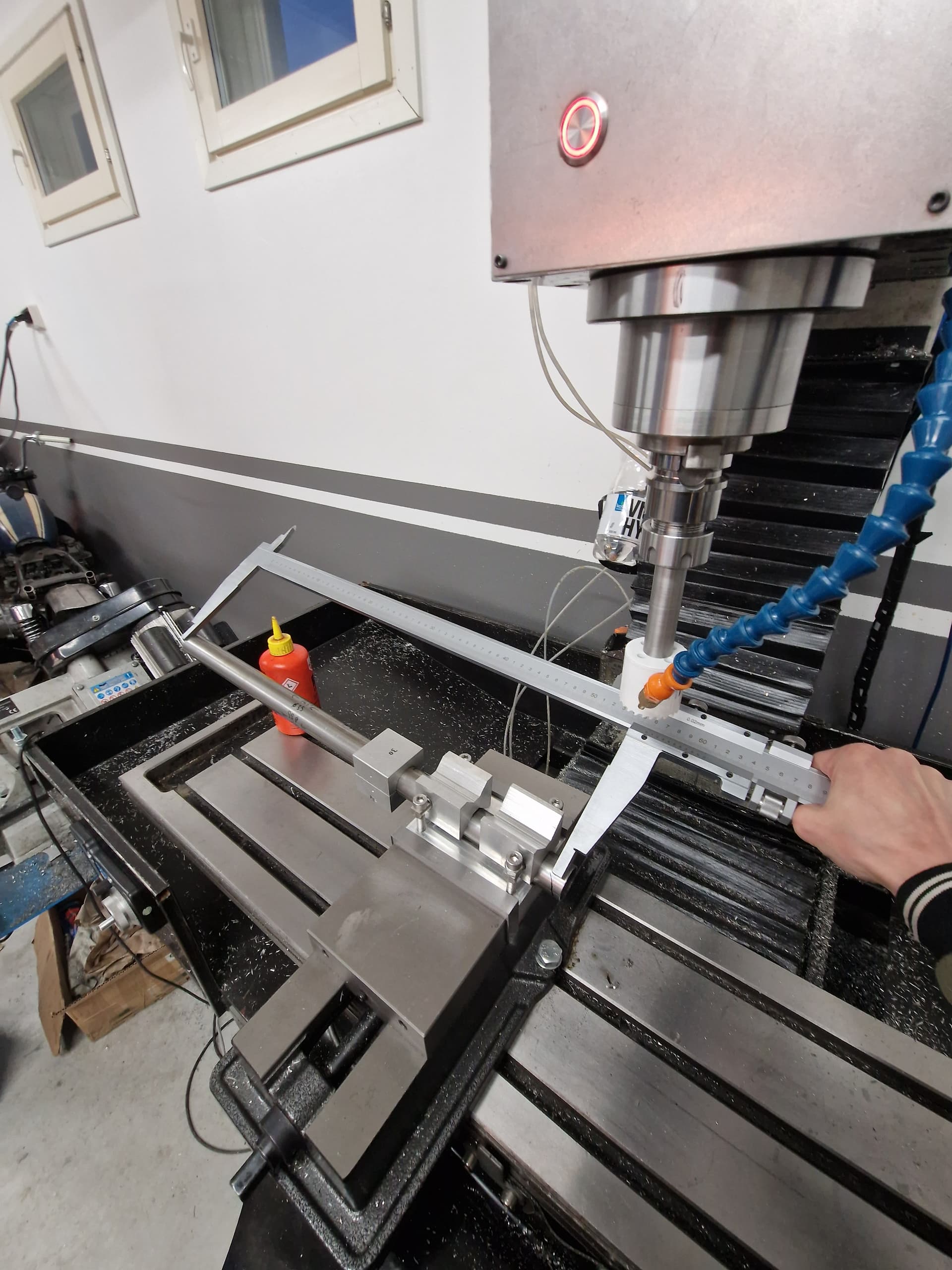
Got myself a 1000mm vernier for more accurate miter lengths.

It’s heavier than it looks :smiley:

IFYKYK.

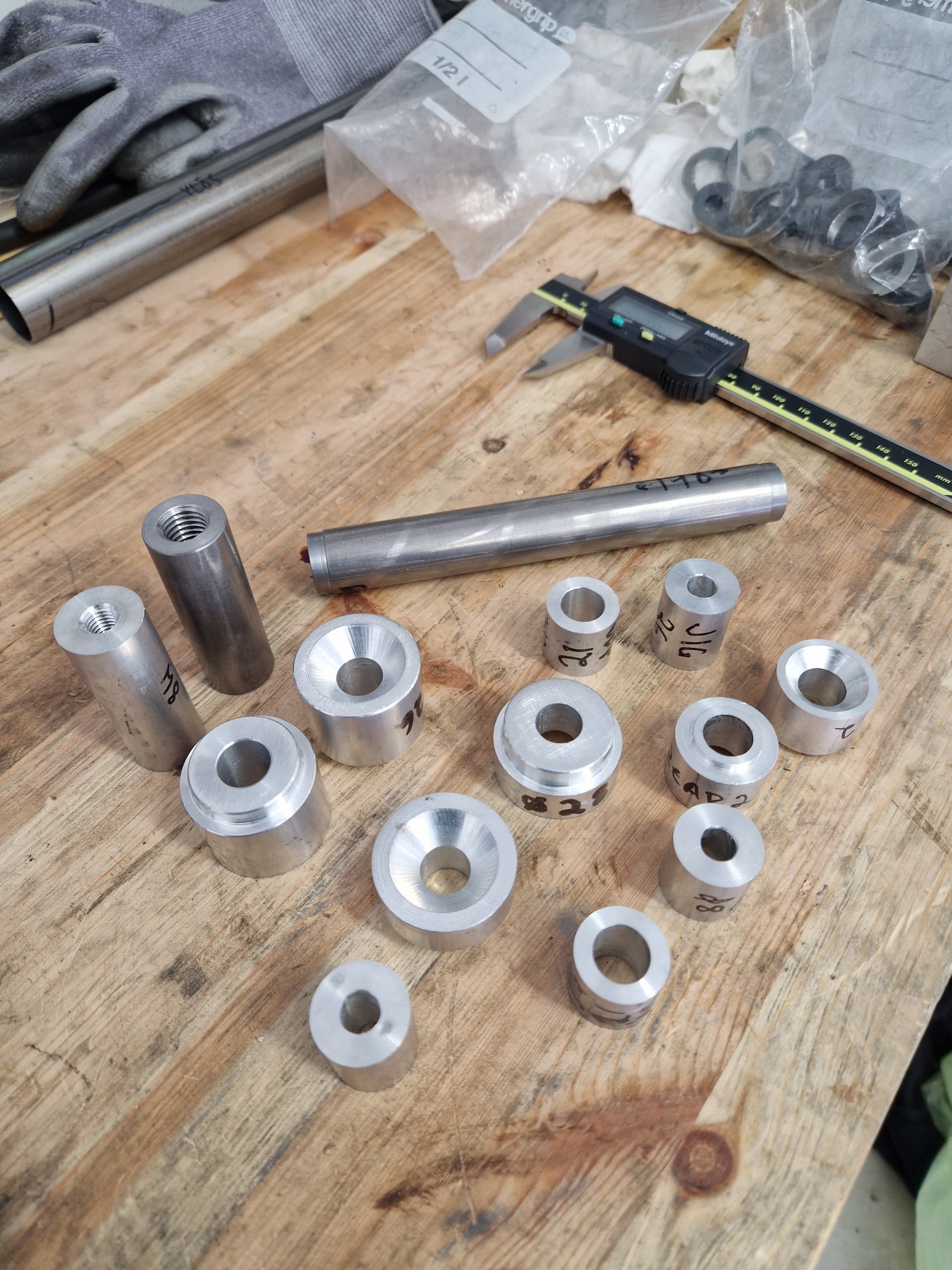
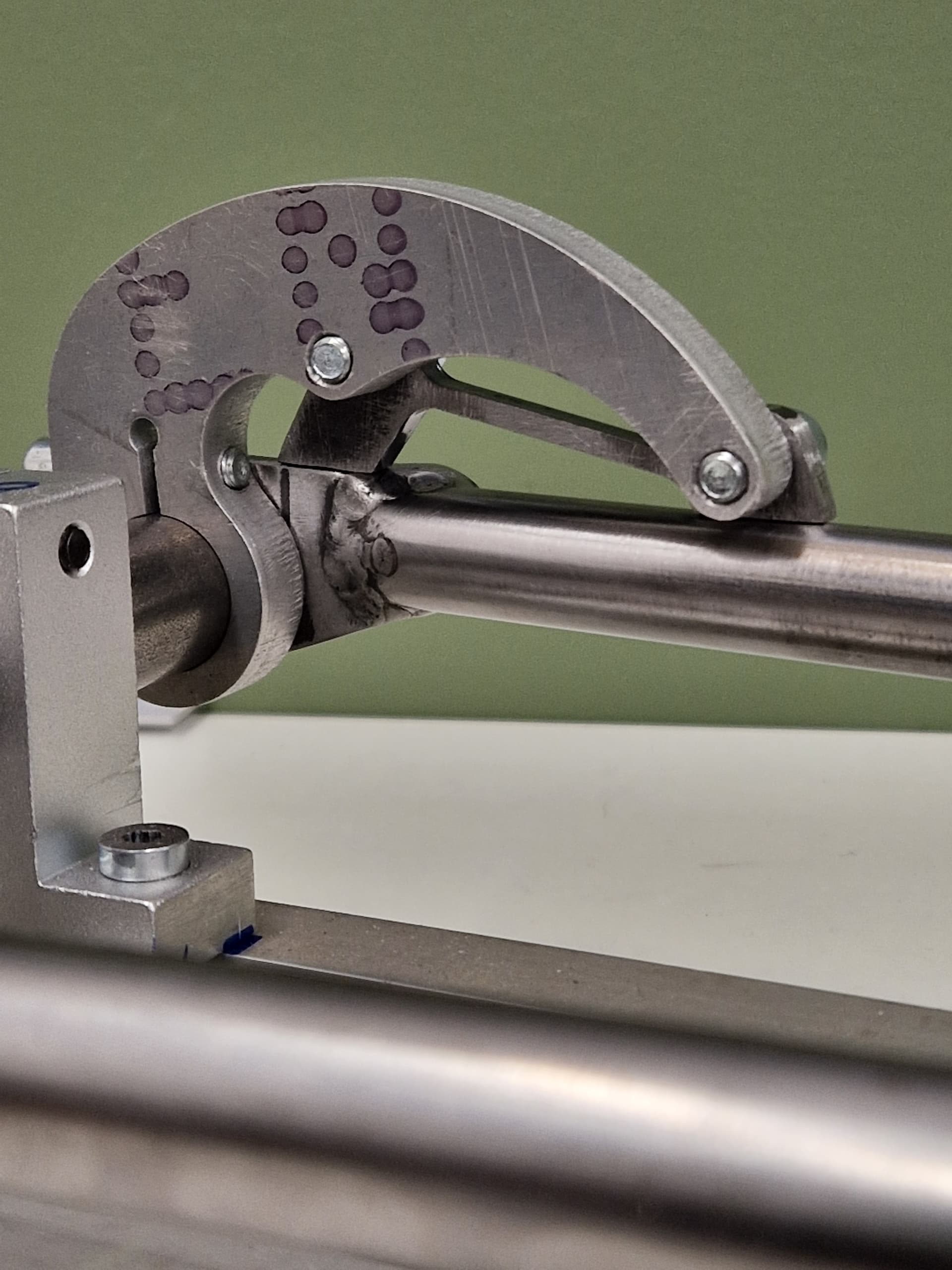
Here is the fixture Olli made, with my very special tooling for the pivot points.

Yay!

I tend to get a LOT of heat input :rofl: This was all without a pedal though.

Of course I do not know how things would have been with CroMo, but the Docol R8 has been holding up great even with my garbage welds.

Basic stuff.

Rattle can paint job. Clearly I did not have great exceptations how long the frame would last :sweat_smile:

They call me Mr. Zero-Tolerance

First (nervous) ride success!

Fitting the dropper. The internal routing works, but it is impossible to adjust the seat height without partially removing the gearbox, because the cable makes such tight bend. Later I have used external routing for the dropper also.

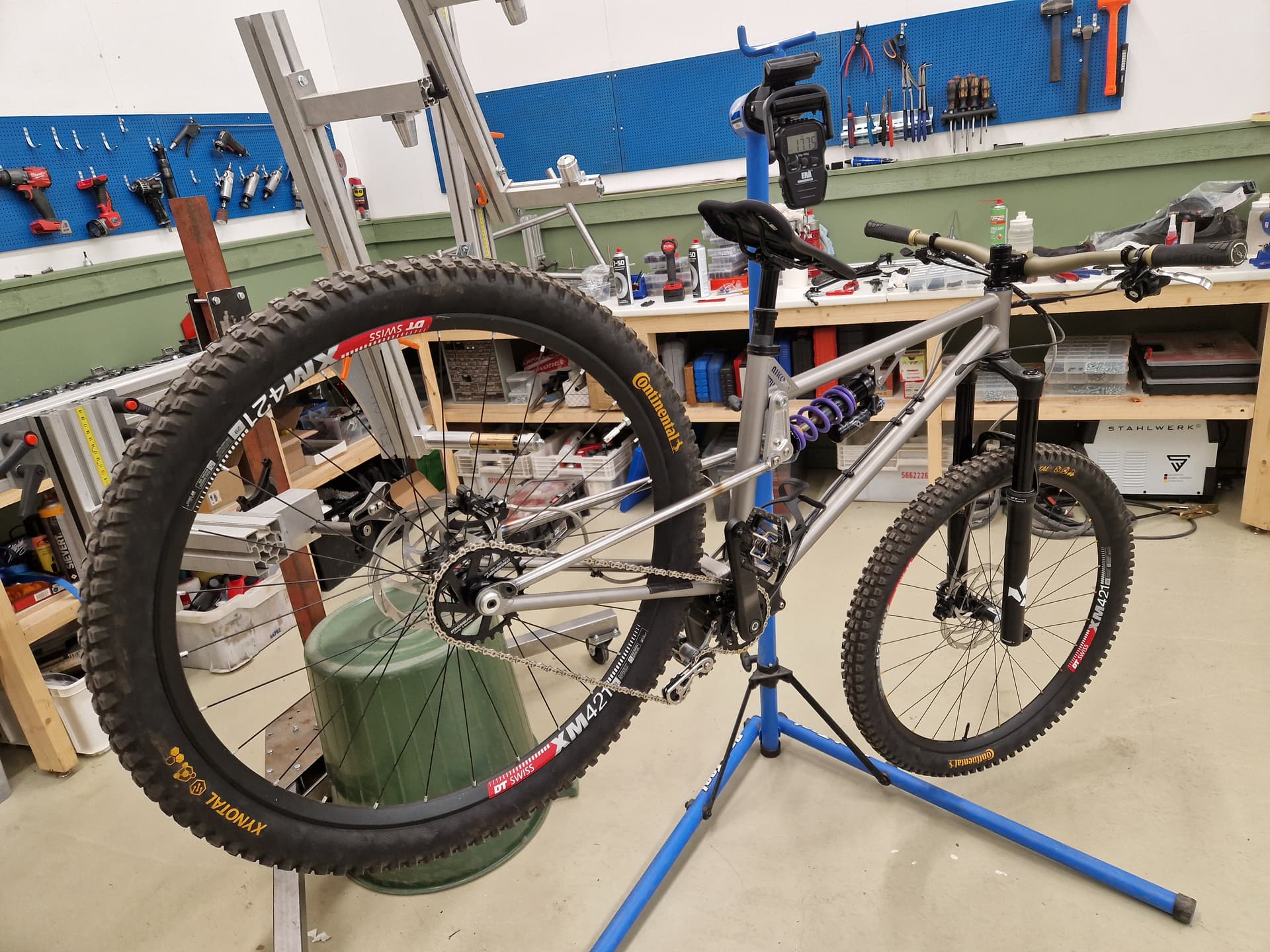
17,75kg with full-coil, full-steel, enduro casing tires and zero carbon fiber, not bad! Although, later I made a meatier rear triangle and added some gussets which added some weight.

First trail rides. Yes, I was happy the first bike turned out to be at least rideable!

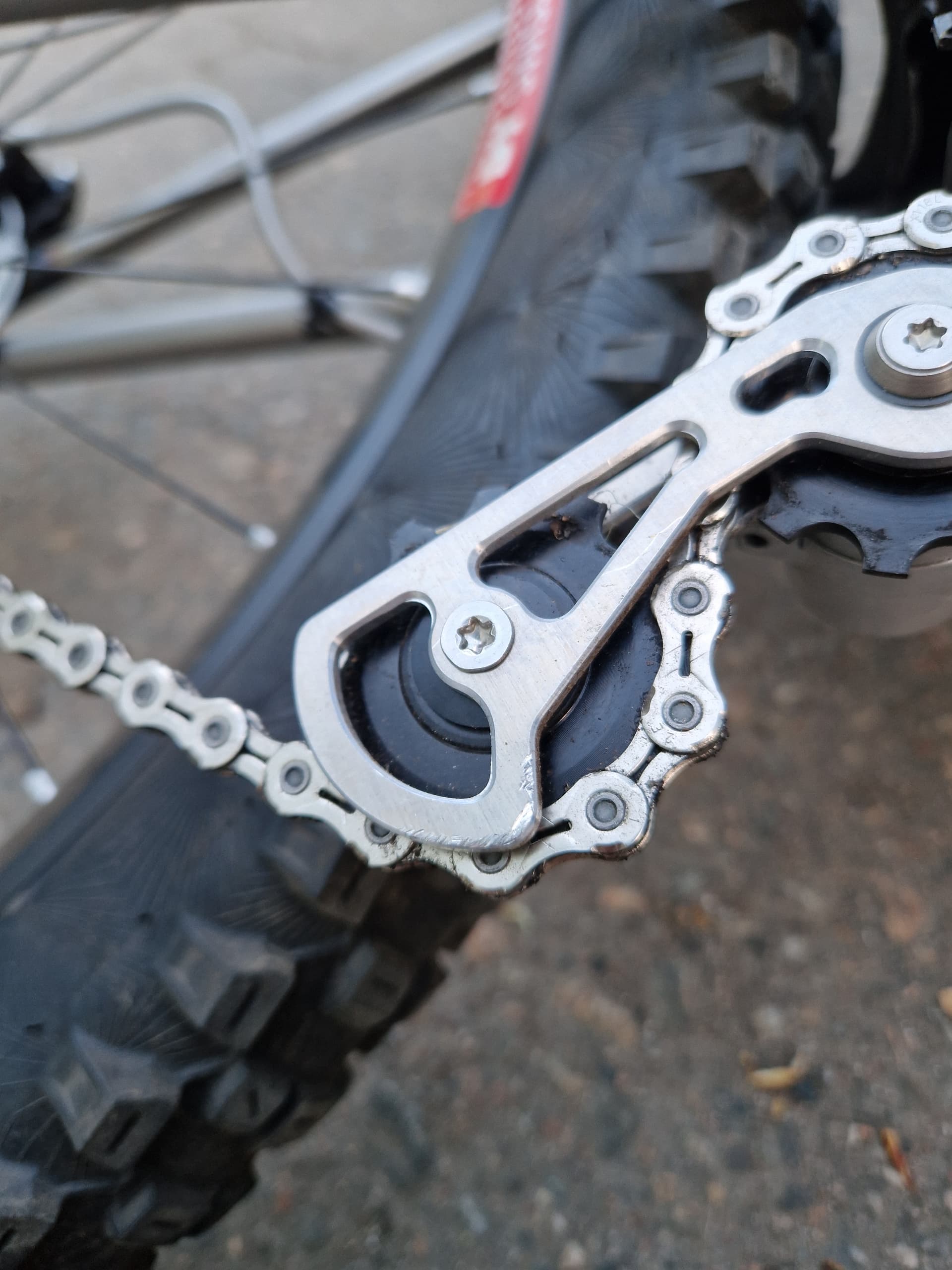
And yes, the Effigear chain tensioner is a “low-hanging fruit”.

Did I mention 3d-printing?

After the first rides, I added some sheet here and there.

For a “normal” trail bike it probably doesn’t matter that much, but when trying to ride through rock gardens, I felt that the front end twists from side hits, and I had to steer in order to gain back the balance. That of course is not that nice feeling, so I added this gusset. I guess it helps in some extent.

I also added another spacer to the shock link to increase stiffness. I what I’m trying to say is that you cannot make an enduro bike laterally too stiff, especially when the main tube diameters are lacking :grin:

One could ask why I didn’t use FEA to design the lateral stiffness. Well, first of all, it is quite impossible to determine what are the lateral / twisting forces to start with. Secondly, how to fix the frame in 3D in this situation. While I did some studies, the results are quite useless. Thirdly, as you might suspect there was a lot of work already. So, some research was left to real-world testing…

So roughly 2 years later, in June 2024, the bike was good enough for bike park :cowboy_hat_face:

To be continued…

13 Likes

What a project. Well done!
I also have one of those large verniers at work. We use them to measure wheel/tyre OD.
It’s always a fun time getting them out.

1 Like

Great post and fantastic build! Had never heard of Docol R8 but looking it up it has a similar Fe percentage as Reynolds 631 (about 97%) compared to about 95% for 4130. The main alloying elements are Si and Mn, as opposed to Cr, Mn and Mo for 631.

The reason people like it for motorsport seems to be the high energy absorption (10-12% elongation is “typical” according to the data sheet, but 8% is the minimum– actually what Reynolds also give as the minimum for heat-treated 4130 or for 853, vs 10% for non-heat-treated variants).

The quoted ultimate tensile strength is exactly the same as that of Reynolds 631 (which is indeed a bit higher than that of 4130 CrMo).

The heat-treated variants of bicycle tubes (853 is heat-treated 631) give you a bit more strength, either so you can use thinner walls, or for a bit of dent-resistance. Nobody seems concerned about the energy absorption. But I do wonder whether in a crash you aren’t better to have your frame bend a bit and thus absorb some energy if that reduces your own injuries.

The Docol R8 tubes however appear to be just made of sheet that’s rolled and electrically welded. This means you lose a bit of strength compared to a DOM tube, or, ideally a cold-drawn seamless one. It also means they’re plain gauge as opposed to butted, so you’re carrying a bit of extra weight, might end up putting a bit more stress on the welds, and might sacrifice some of the “buttery smooth” ride quality. But plain gauge is easier if you want to attach strut mounts and things, as you have done, because you don’t have to worry about whether that part of the tube is thick enough to support them.

And being intended for motorsport, they’re a bit heavy for a bike: 0.049” is the thinnest wall thickness available according to the data sheet. That’s 1.2mm. A typical bicycle tube is 0.8mm at the ends and about 0.5mm in the middle (although for an MTB you’d probably use 0.9/0.7 or a triple-butted one that’s up to 1.1 or so at the ends). But being a bit thicker does make it much easier to weld, never a bad thing on a first frame.

1 Like

Hi Guy, thanks for the reply.

Here is the list of materials I used for the v1:

___

All tubing Docol R8 (from Me-Racing Sweden)

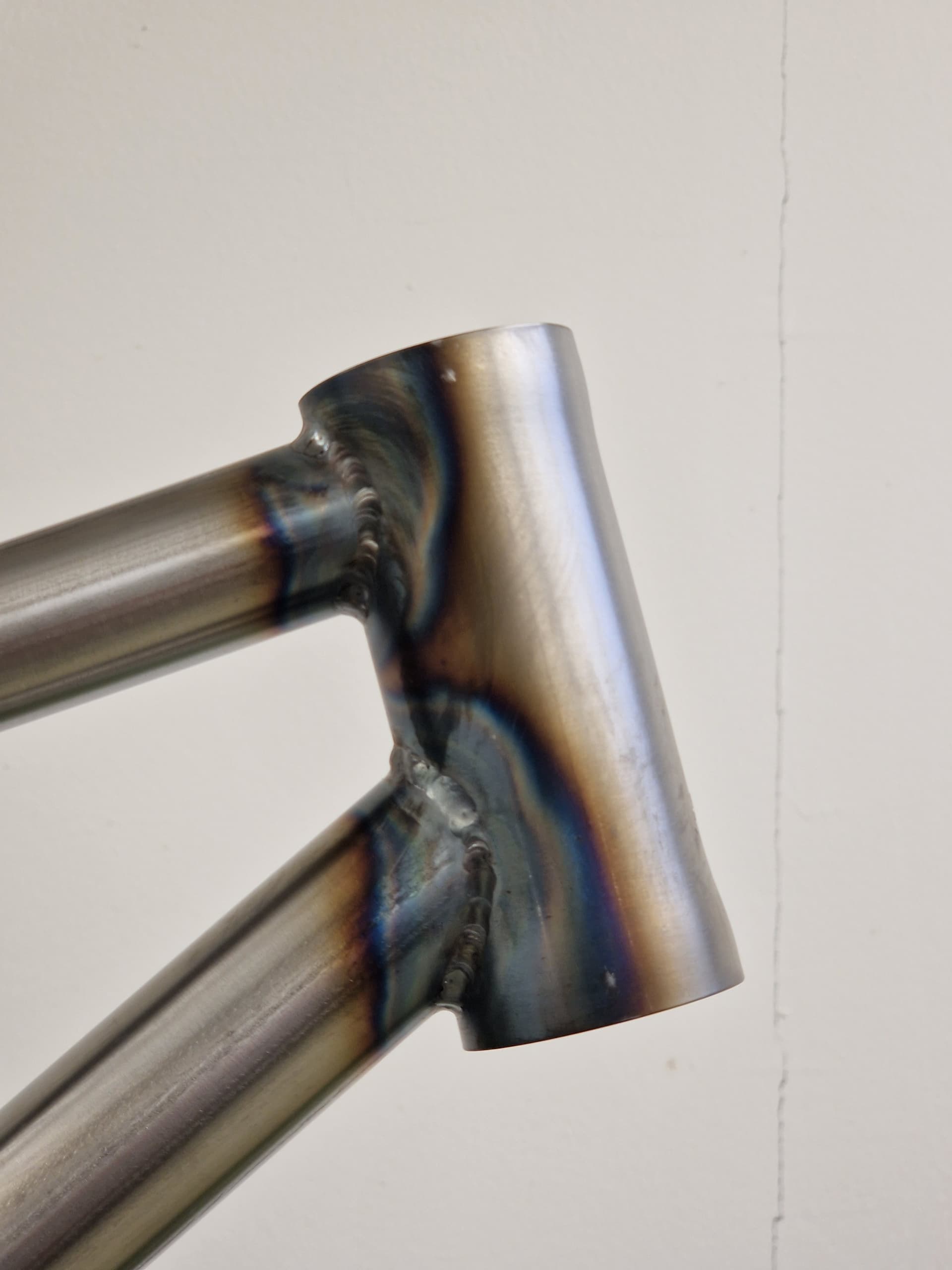
Headtube 45x1,5 (ends streched with a mandrel)

Downtube 35x1

Toptube 30x1

Seattube 35x1 + 34,92x1,24

Chainstay 19,05x0,89

Seatstay 15,88x0,89

___

Sheet metal Strenx S650 where available, other S355

Aluminium 6082-T6


I am aware of bicycle specific and 4130 tubing. Atleast for this part of the world, the Docol R8 is affordable and available. I have found it easy to work with and reliable. If I were to make an XC-bike I would consider something else, also maybe for the downtube of a larger size enduro frame (I haven’t been able to source 40x1 Docol yet).

Yes, it is best to align the weld seam of Docol to the least stressed direction. But, you can also have non-concentric inner and outer geometry in a seamless tubing. Also, the small alloy percentage in Docol makes it more likely to soften in the HAZ, which makes it less brittle in that area. But then again, if welded properly without excessive heat input, does not probably differ significantly from the usual materials. After all, where else does a welded bicycle frame crack, other than in the HAZ?

1 Like

Reynolds 631 and 853 are supposed to be “air hardening” meaning that they actually get stronger in the HAZ after welding. But I think in the real world fatigue failures are really the biggest risk and those can start at welding defects that are concentrating stress due to porosity or undercuts or whatever. Although I suppose increasing the strength probably usually also increases fatigue life, all other things being equal.

I use 631 for most of my builds but it’s actually one of the most affordable options here in :united_kingdom:. I could get 525 (which is 4130) for a bit less but there isn’t a huge difference. I haven’t found anywhere that will sell just regular CrMo tubes without a large minimum order quantity.

At 1mm wall I think you should have plenty of strength even though it’s a welded tube. And the alloy itself is a bit stronger than 4130. I can’t see the weld down the length of the tube failing in any situation in which the tube wasn’t already yielded so far that the frame was essentially destroyed anyway.

1 Like

Yep, they were the ones! I’m hoping to come back for a week long gravel tour next fall. Would be fun to meet up!

1 Like

Continuing on the v1…

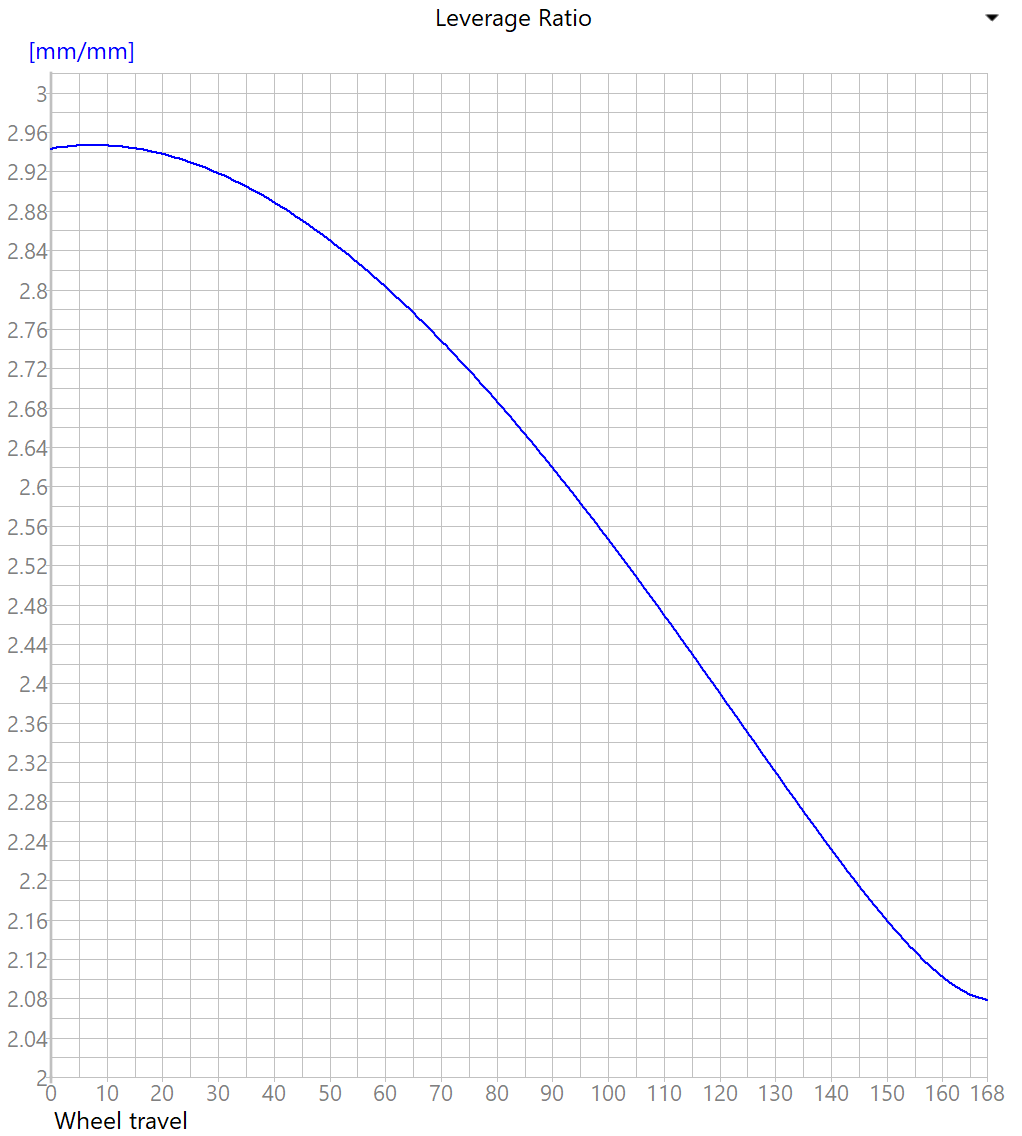
I have really liked the kinematics on this one, and could not distinguish what to improve. But it could be the same as always, you only know when something is better when you get to ride it :smiley:

_______

Geometry with 170mm fork:

Reach: 460

Stack: 628

Chainstay: 455

HTA: 64,5

STA @ 700mm: 79

ST: 400

BB Drop: 15

_______

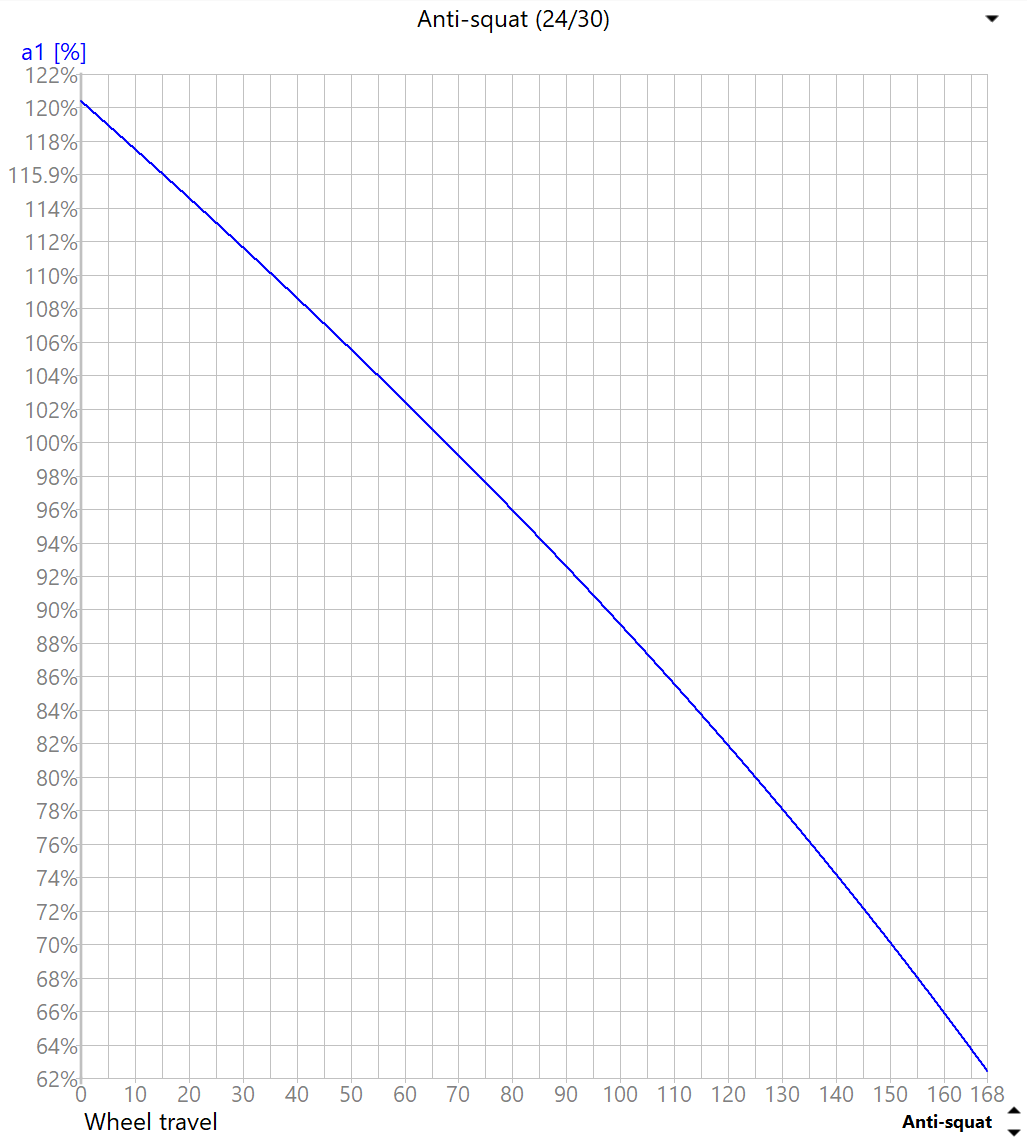
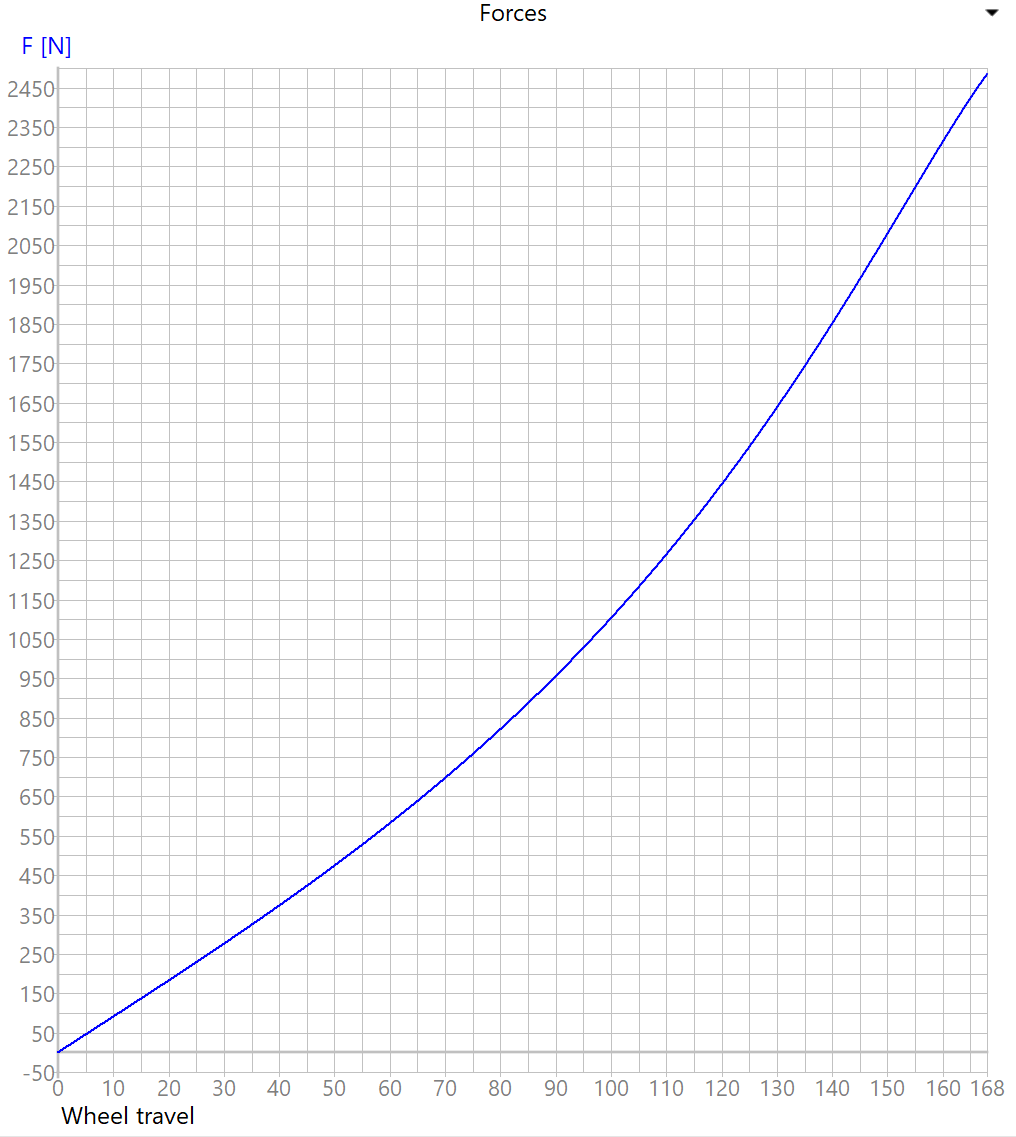
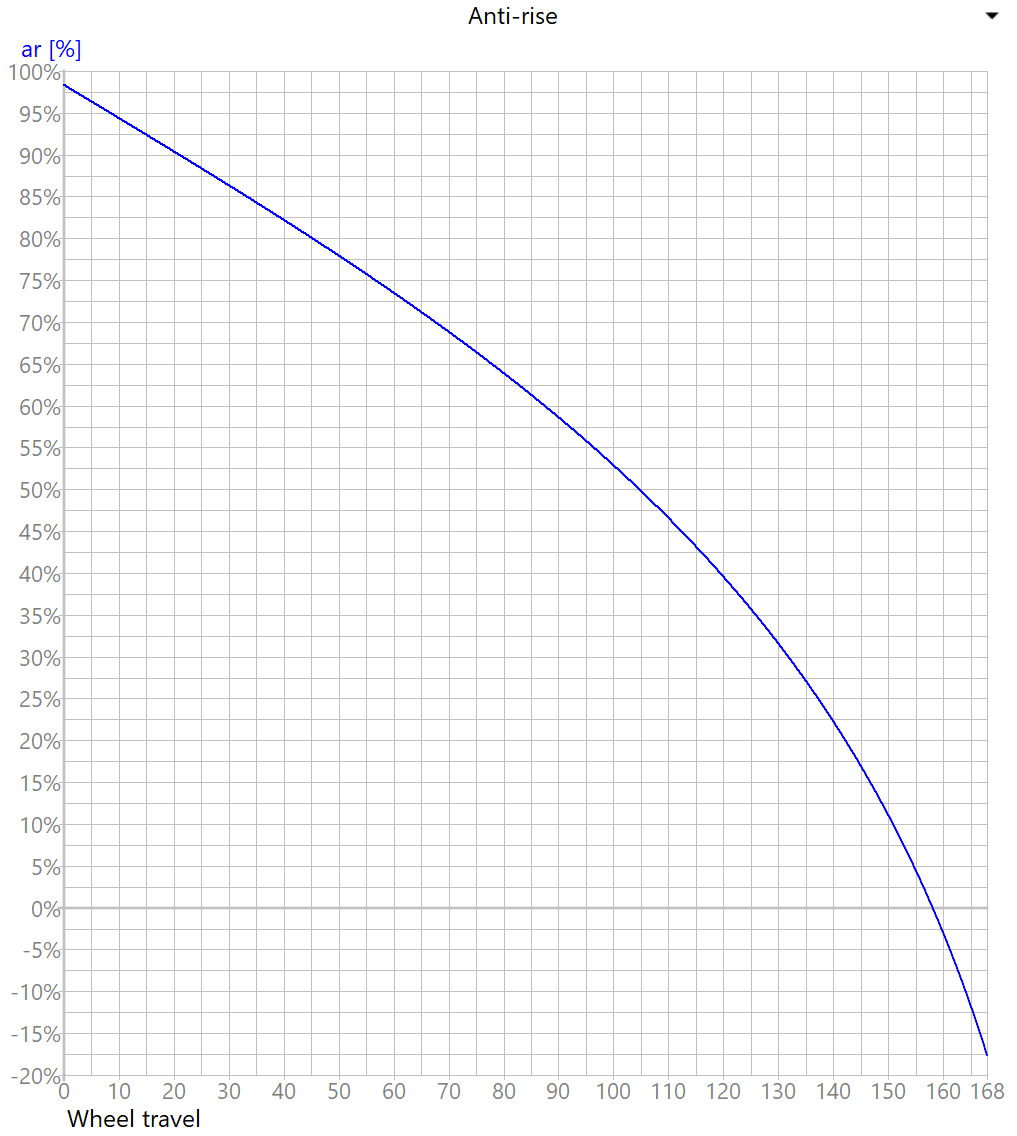
About pedal-kickback, I am pretty certain most of what we feel on the pedals, is the derailleur and chain slapping around. I had very little sensations of pedal-kickback on this bike. Only in few occasions (slow speed drop to some rough stuff), I could hear the DT Swiss ratchet make a clunking sound, but still very little sensations to pedals. So while the graph may give the impression that the pedal-kickback is huge, it is really not and the suspension feels amazing!

I’ve used the same DT Swiss wheelsets with 36T ratchets on multiple bikes, so the setup is the same in that regards. I’ve mostly used the Effigear and it has much higher POE (48) than the Pinion, so the setup is definitely not sloppy either.

Of course I am hugely biased and did not own a gearbox bike before this one :smiley:

The bike pedals surprisingly well, especially on trails with roots and rocks. The speed seems to slow down much less with the gearbox, because of the reduced mass on the rear wheel. Of course on flat and smooth terrain, you can feel the drag of the gearbox working against you.

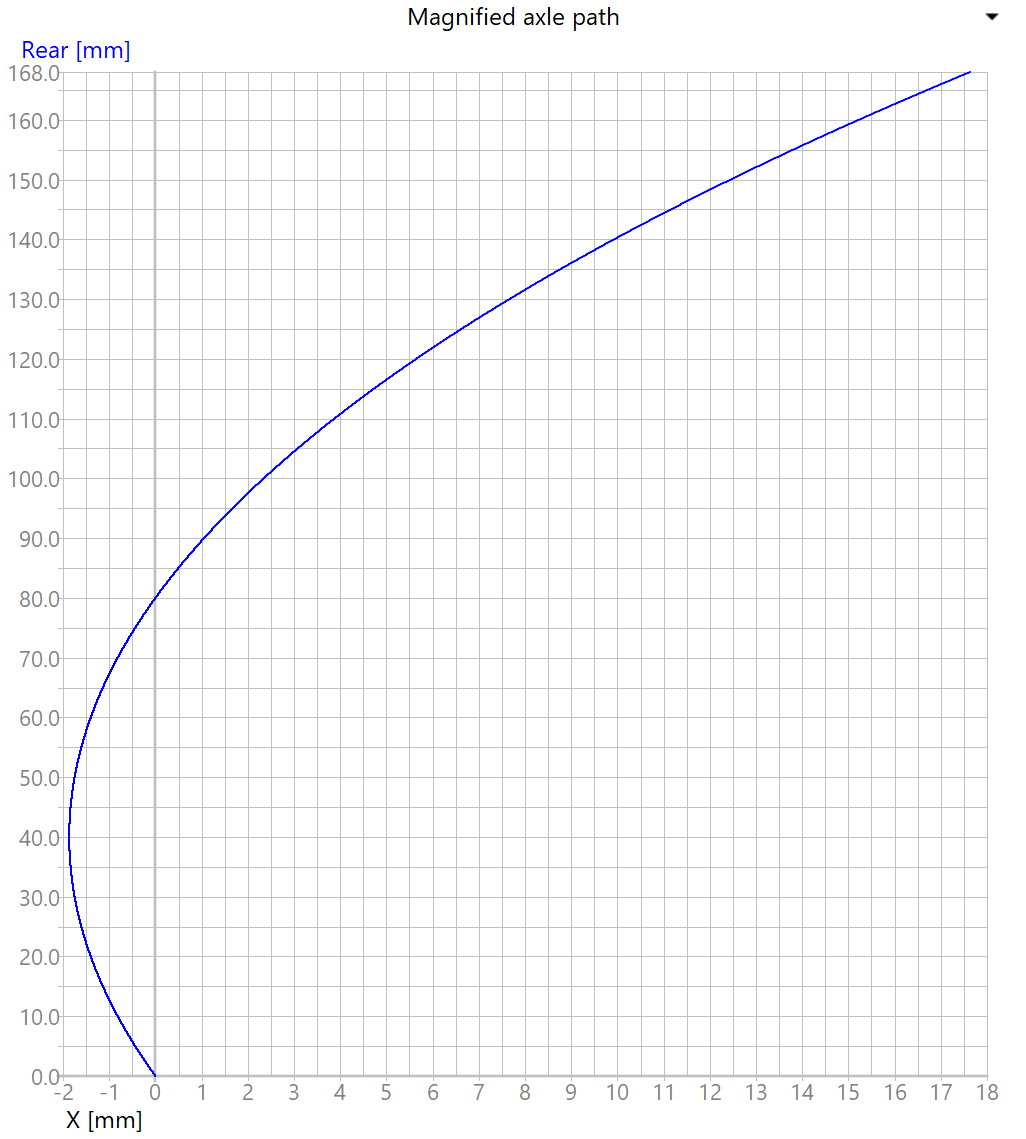
Here’s some graphs from Linkage:

3 Likes

you must have some heavy equipment to stretch that headtube!

Well not actually…

ID of the 45x1,5 tube is 42mm. The mandrel I made is 43,6 OD. Goes easily with a regular workshop press.
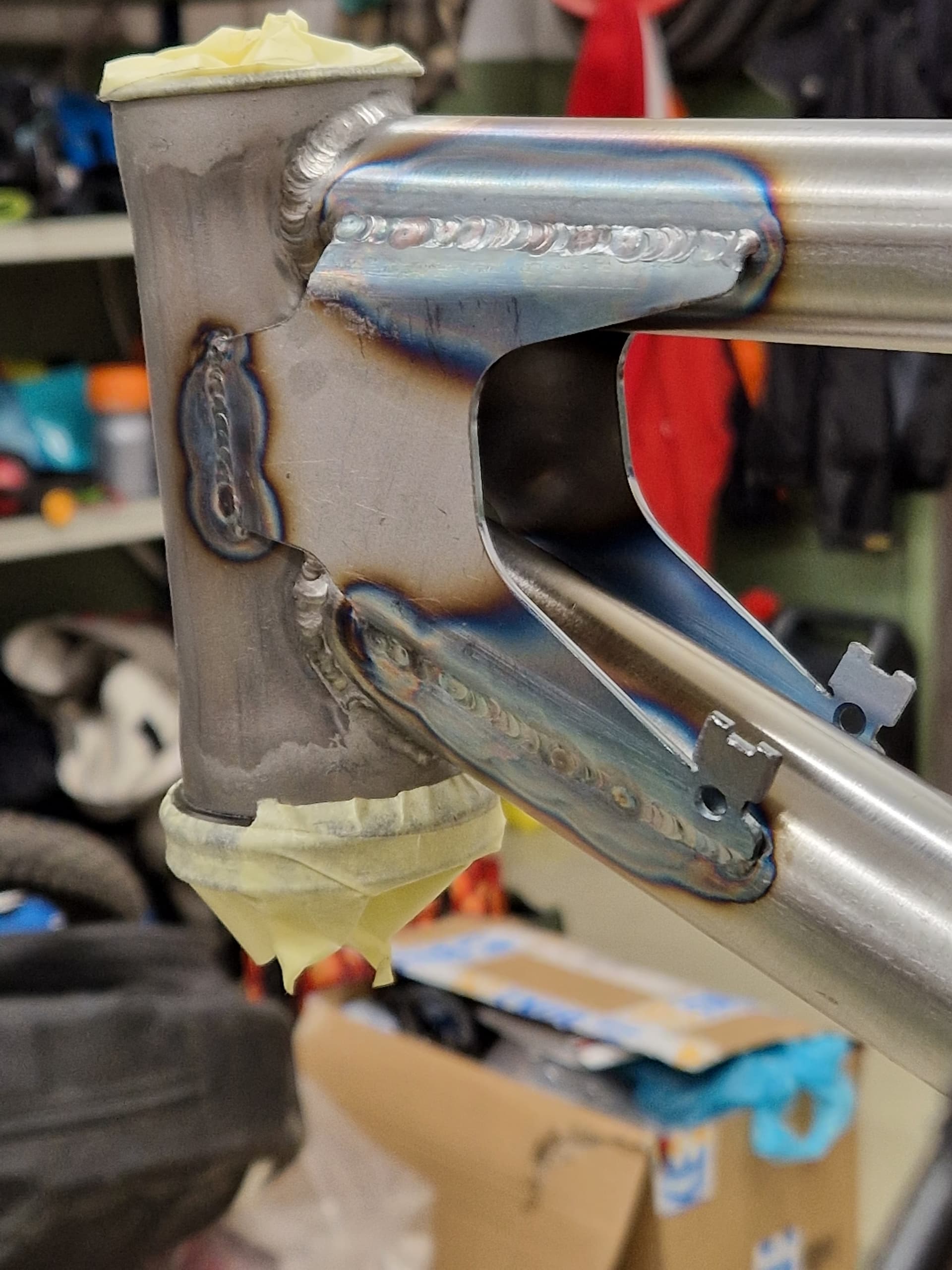
For the next project I’m considering a machined headtube anyhow. The constant wall thickness tube tends to ovalize a bit during the weld, so somekind of reinforcement ring would be good (which is built-in in the machined ones).

2 Likes

I don’t think ovalization really matters. All it has to do is grip the headset cup, which will force it to be round again.

Interestingly Reynolds head-tubes are manufactured with a 34mm ID, so you don’t need to ream them. You just make the frame, face the head tube, and press in the cups. Works perfectly every time.

However it is possible things are different with much larger diameter head-tubes. I’ve made one MTB frame on which I used a Columbus tapered HT and you had to braze in little inserts. I was never sure whether you were supposed to do that before or after welding (I think I did it after).

2 Likes

That’s what I thought :laughing: But, the Cane Creek EC44 (bottom) cup has such thin wall, it sure did crack after a while. In the first assembly I was so excited that I didn’t even measure the roundness of the headtube after the weld. After the headset cup cracked, I de-ovalized the headtube in vice, reamed again, and installed a new headset with Loc-Tite. It has been fine since.

Like I said before, I am no welder, so there is a lot of heat input in my welds. Also I had the downtube and toptube very close to the ends of the headtube. I believe all these accumulated in my case.

Of course this is something I would never sell to a customer, and I think these kind of mistakes are important to discover while prototyping and making stuff for yourself.

2 Likes

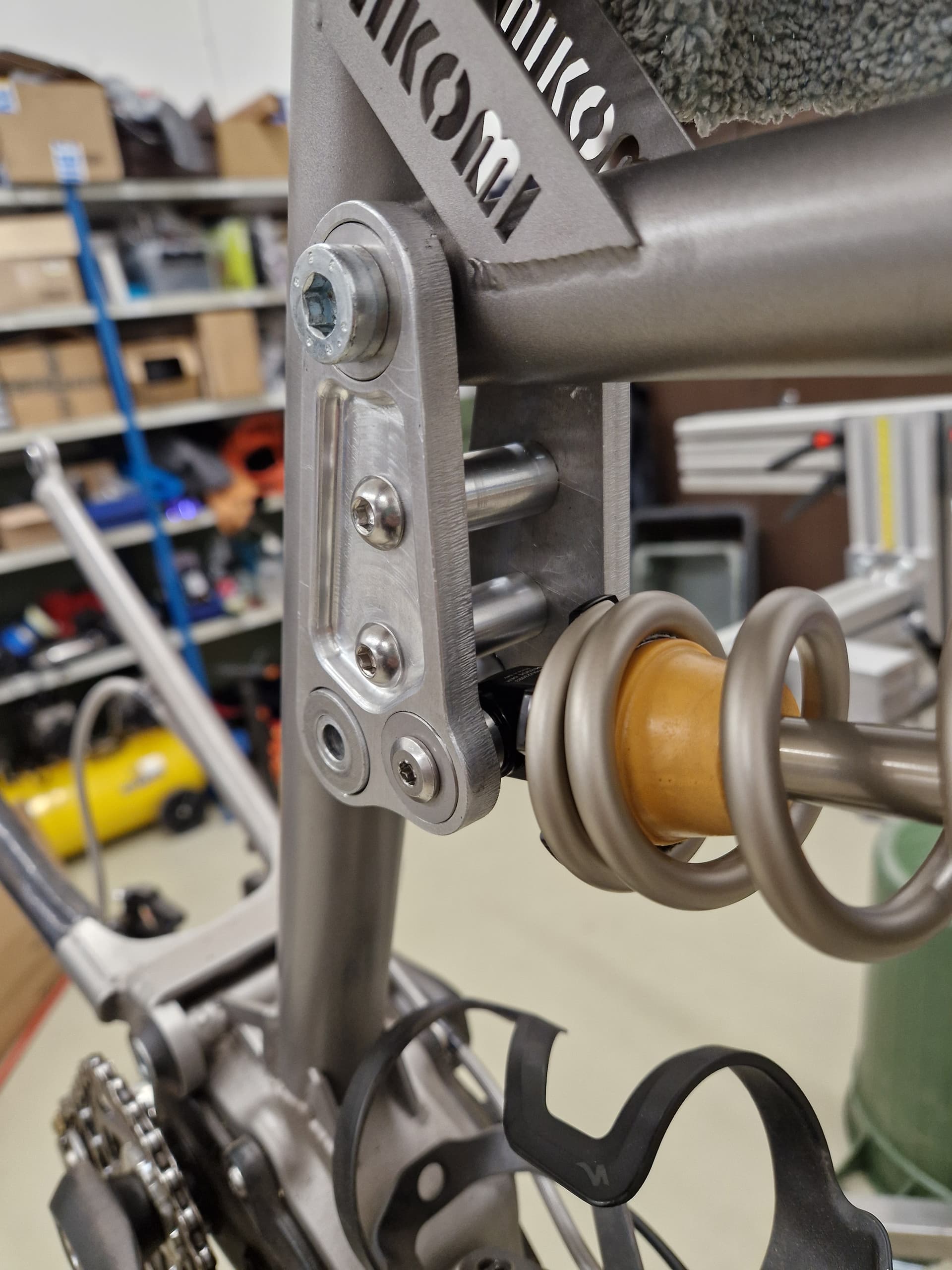
It’s true those welds are close to the ends! I usually leave 10mm at the top and 13mm at the bottom (unless I’m making a “high-stack” bike when there’s about 150mm at the top :slight_smile: And maybe a bit hot it’s true but a foot-pedal will help with that. Very good for a first frame. But it’s probably also just because you have a much larger diameter HT. An EC34 one will distort less. The tapered one I used did distort a bit and needed a bit of work to get the inserts in. That’s why maybe they should go in first but my concern then was that the welding would melt the silver solder.
1 Like

This is awesome. My one questions is on the Effigear. Seems like a way more reasonably priced gearbox compared to Pinion. Looks like you found a brindge for the mounting of the Effigear. Is that from Effigear or did an aftermarket pinion bridge work for the mounting?

1 Like

At least back then, the prices were very similar. I have not asked the Effigear price this year.

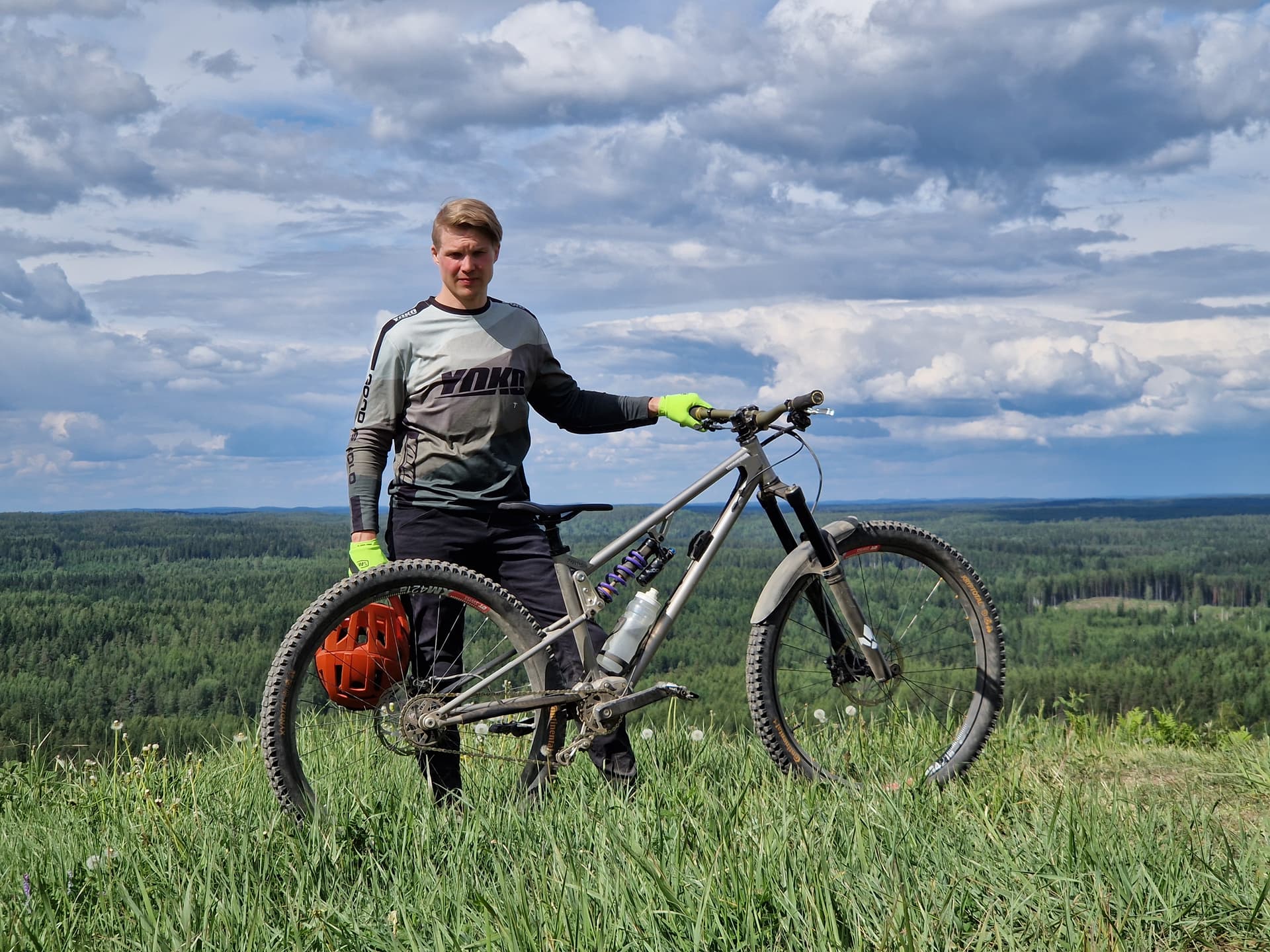
I got a few Pinion (Pinion cast CrMo) gearbox bridges for the v1, this one was from @Jukka4130

Also, from the beginning, Effigear has been very kind to me, probably because they are the smaller brand. For the v1, I could not get a Pinion from Pinion, because they wanted a reference from me. But I get it they want to control in what context their products are represented in the social media. But they did give me access to the CAD data which is nice!

I did get a Pinion C1.12 from pinion-bikes.de and I used it for a month or so. For mountainbiking, I didn’t like the GripShift. But I must say the Pinion feels more robust than Effigear, but of course, Pinion have had more time to iron out the issues.
3 Likes

Thanks for sharing your experience! Makes sense about Pinion being more established and it’s cool that Effigear was so helpful with the CAD data.

1 Like

Hi, sorry about not posting for a while, but we bought an actual house with my s/o, and my focus has been on that for a while :smiley: Yes, there is a small garage also, let’s see what kind of setup I will fit here…

But back on the chronological order (May-June 2024) and last post about the v1…

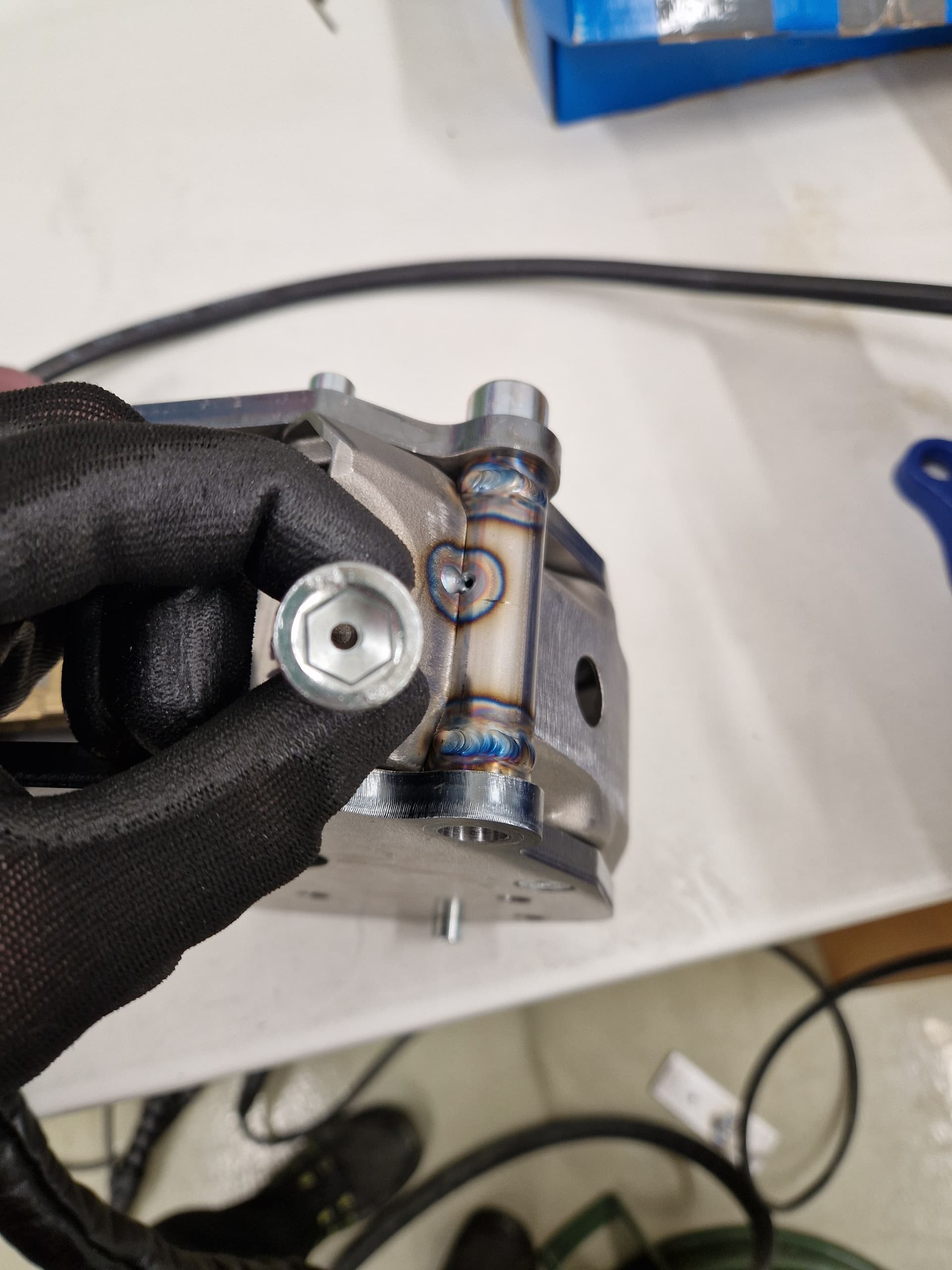
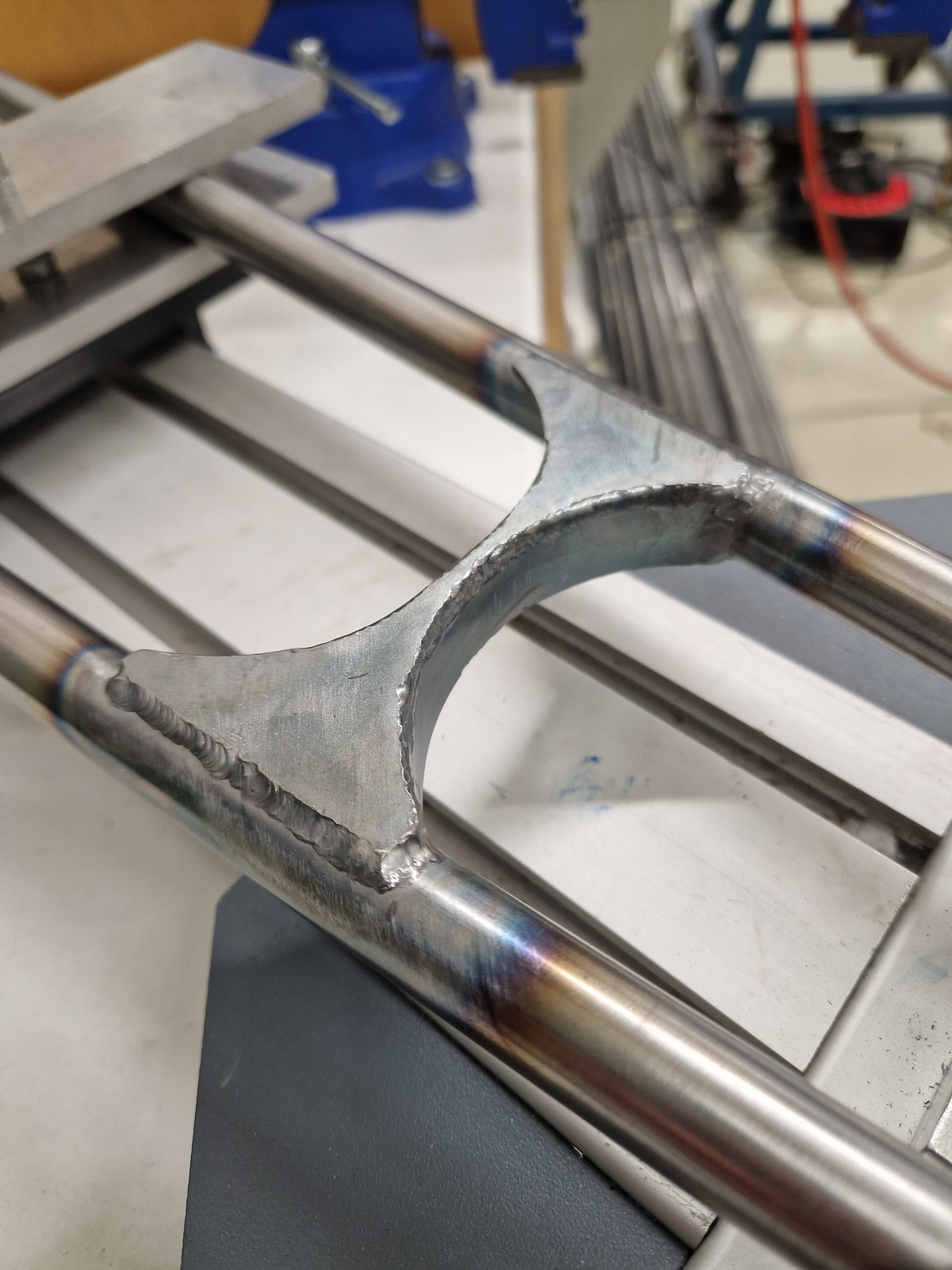
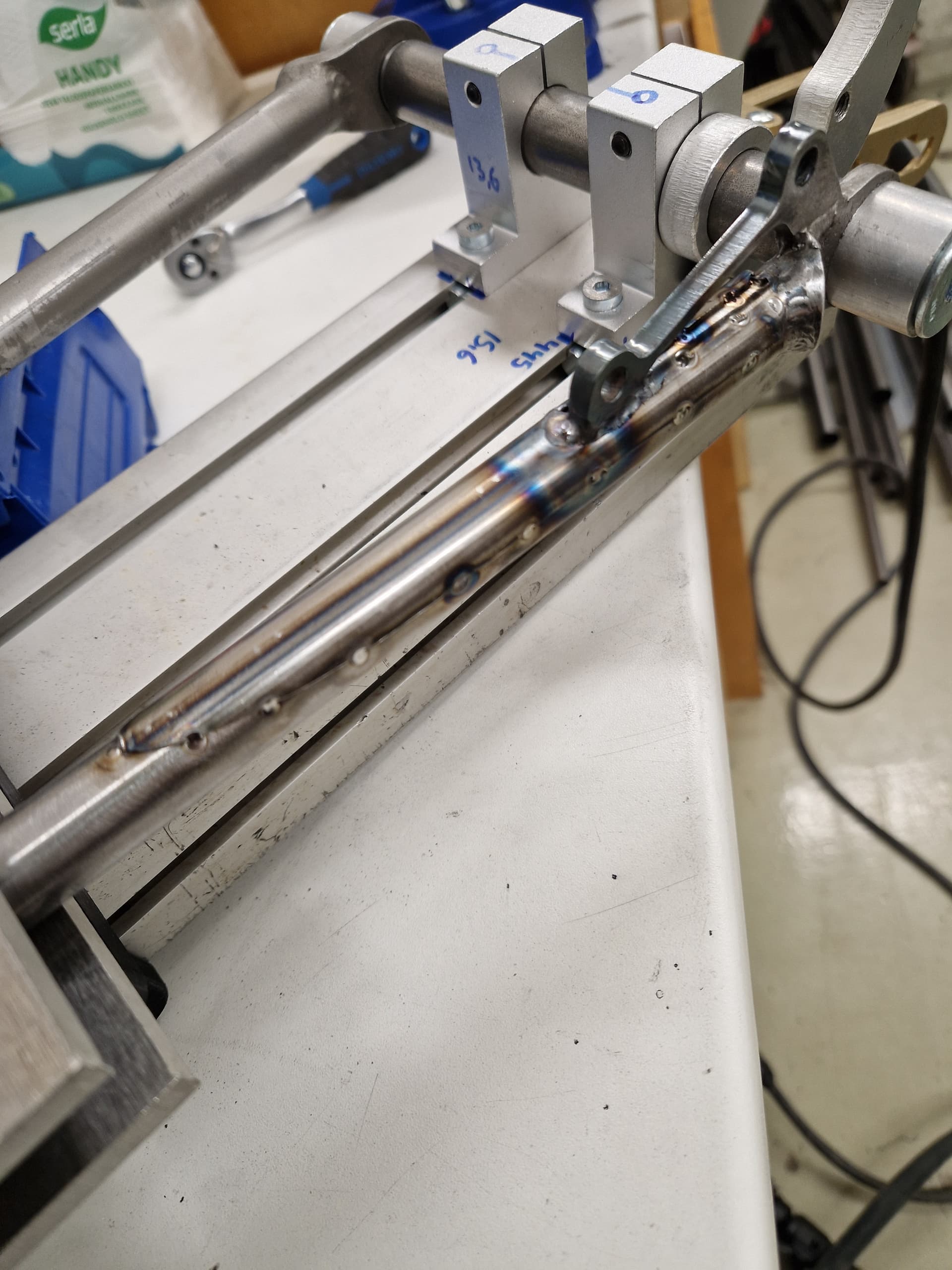
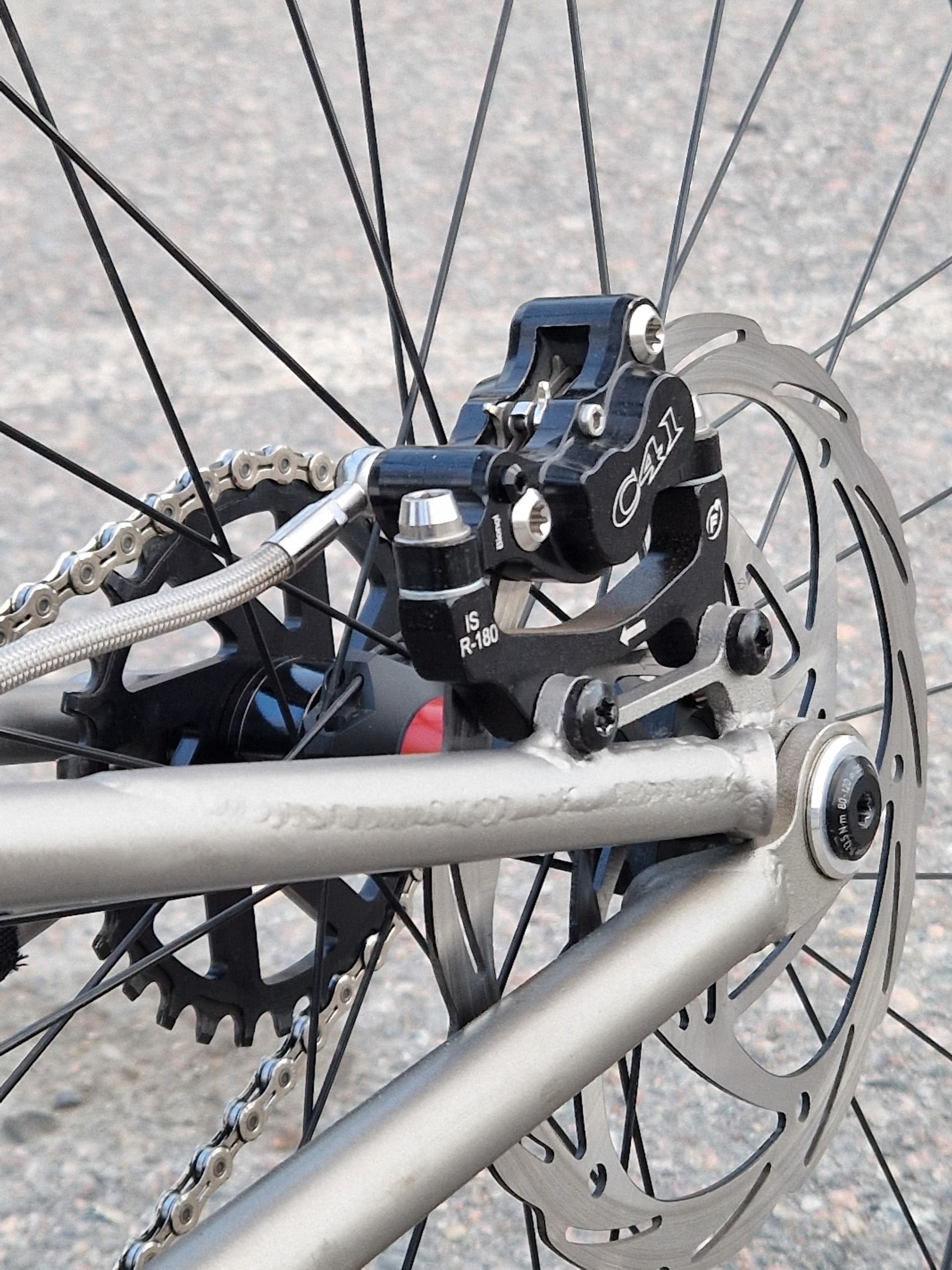
So, on the first version, the chainstays were 19,05x0,89 and seatstays 15,88x0,89. The split pivot design does not “brace” the rear brake mount at all, and also as you can see, I had a lot of trouble welding the 5mm brake mount to the thin seat stay and blew a huge hole in the tube also :smiley: :smiley:

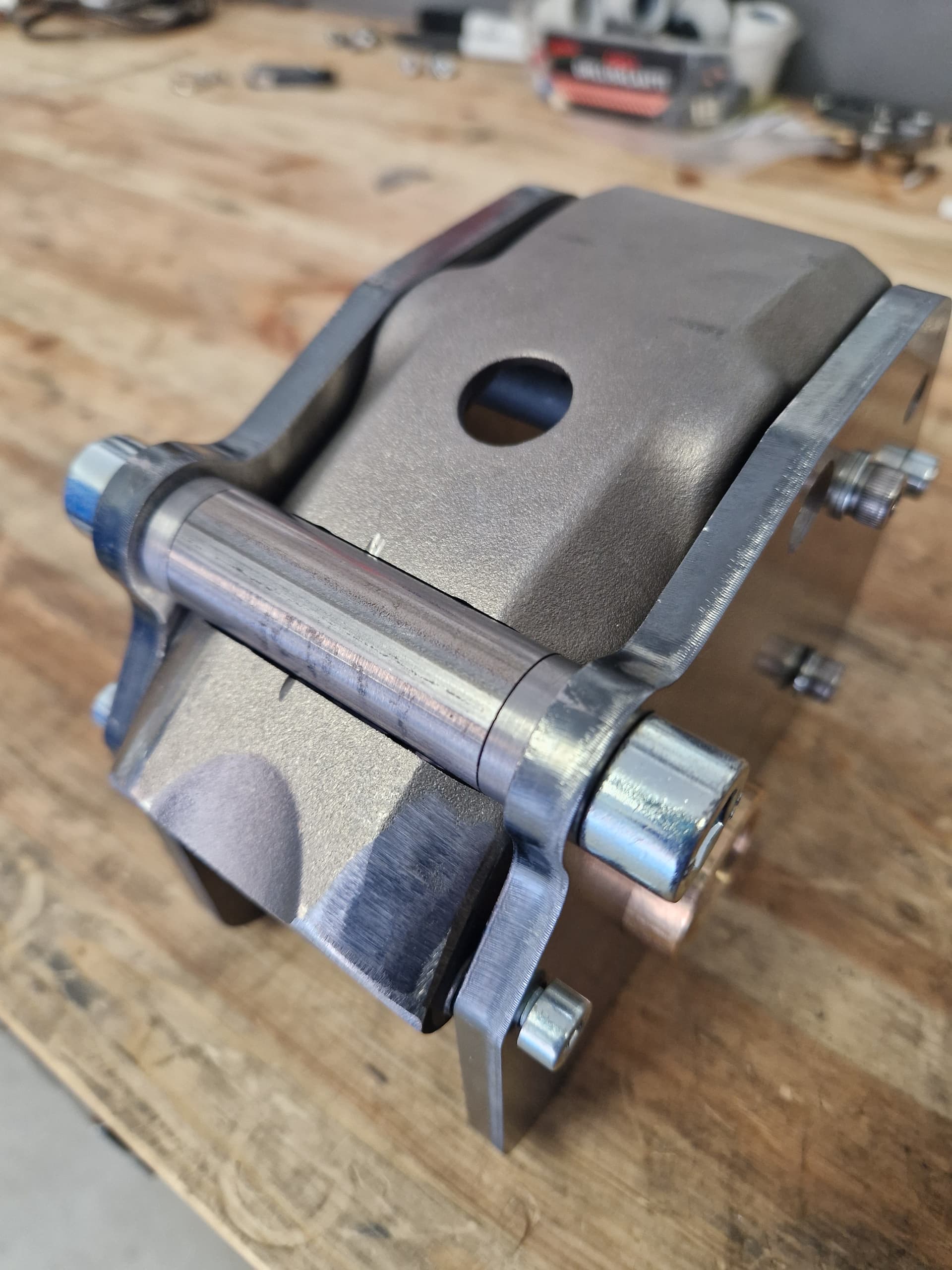
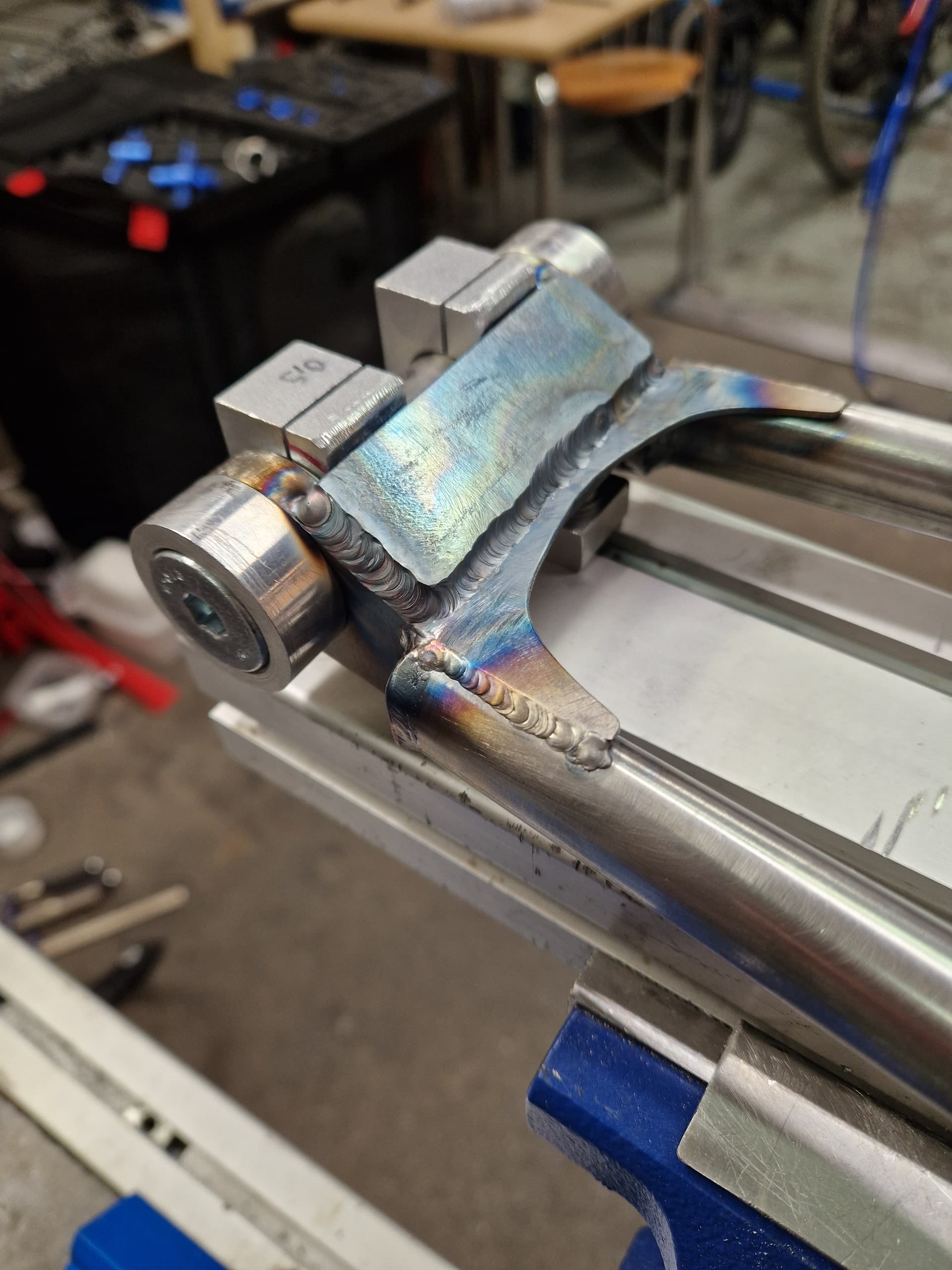
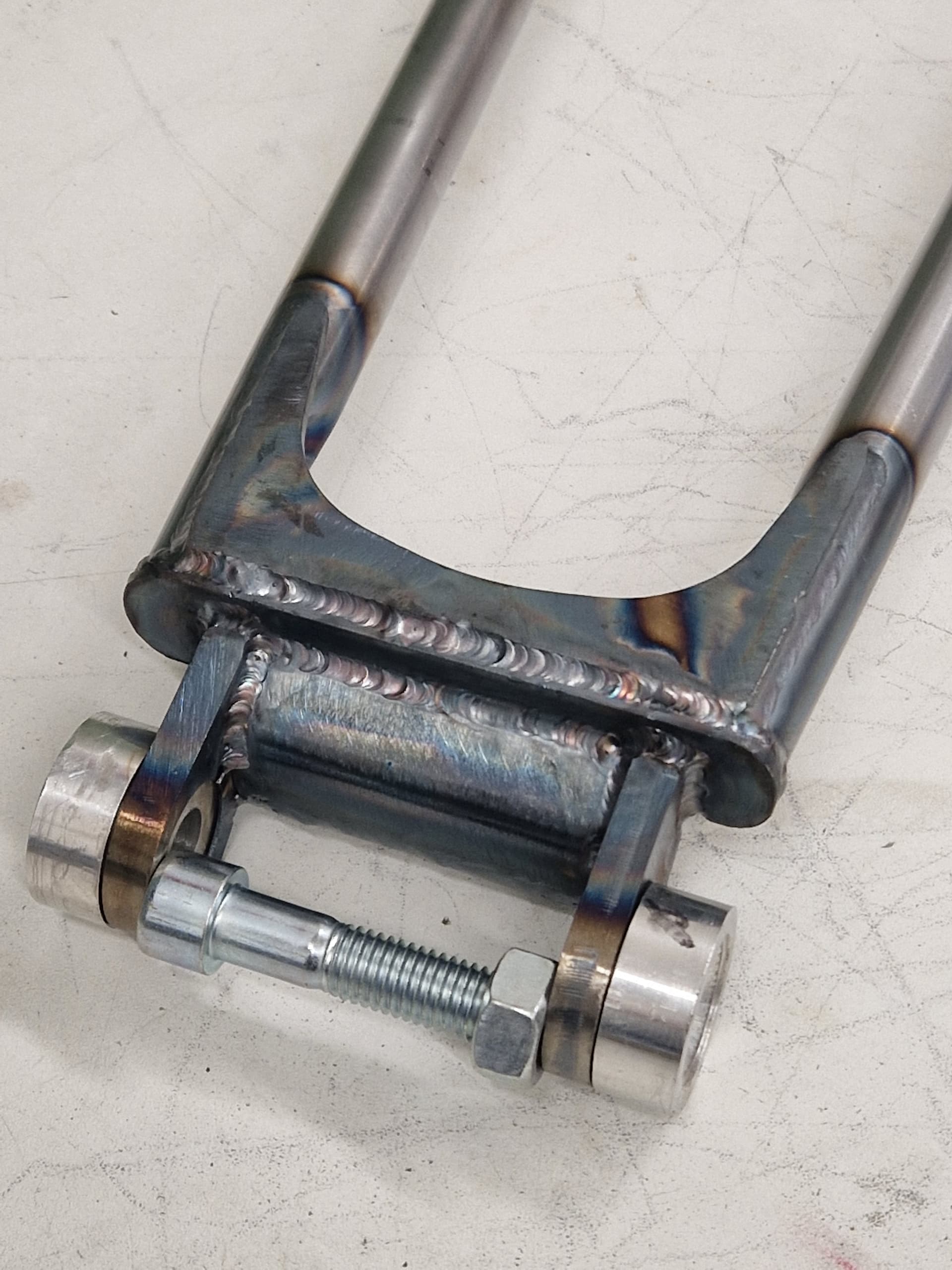
The rear brake did resonate quite a lot, but I sent it anyway. After one month (June 2024), I noticed that the seat stay had cracked :frowning: I patched it up with doubling the tube. The brake did still resonate, and I ended up making a whole new rear triangle with beefier everything (20x1 chainstays and 19,05x0,89 seatstays). Also the mainpivot section is boxed to resist twisting with the poor initial design.
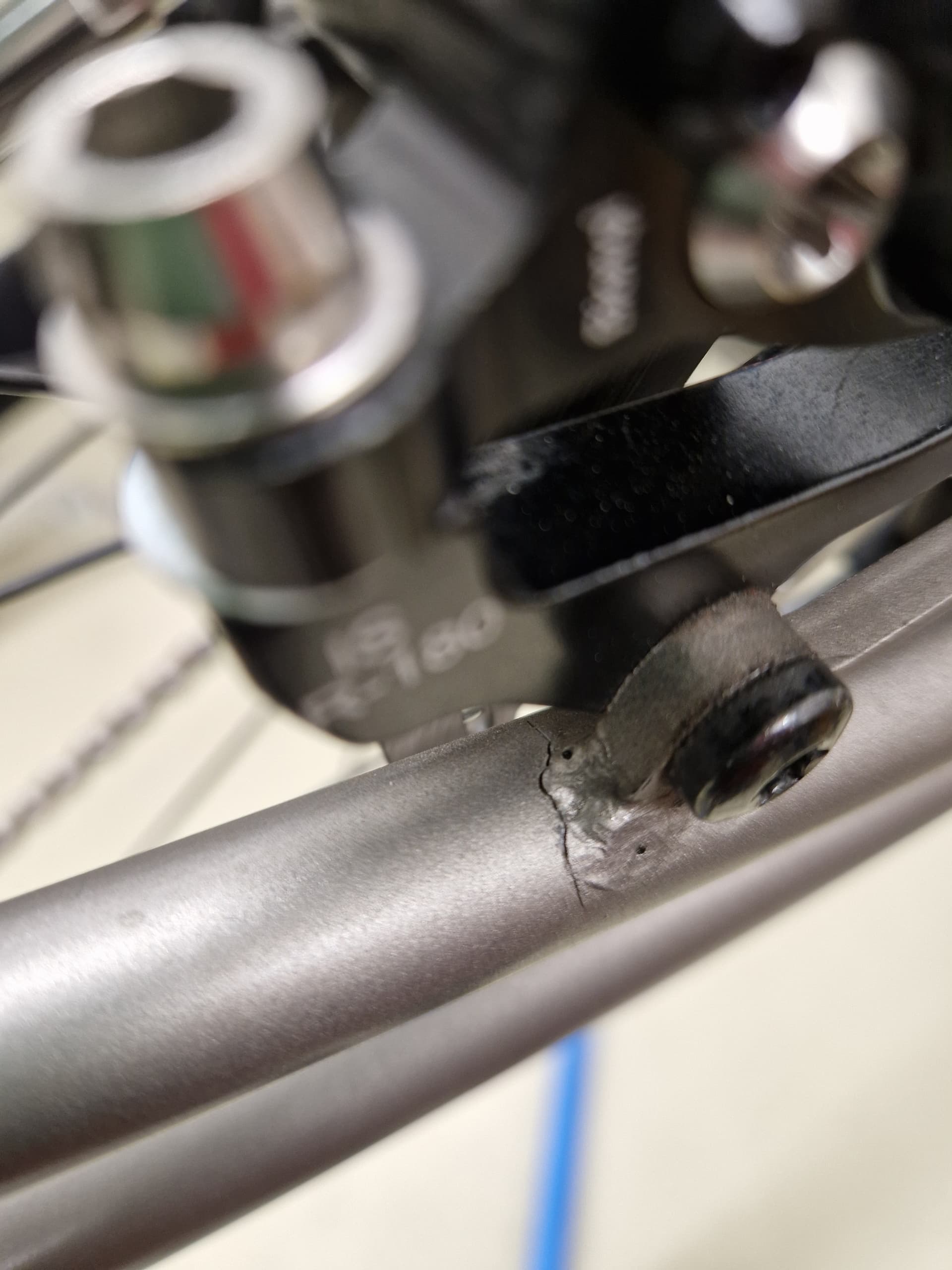
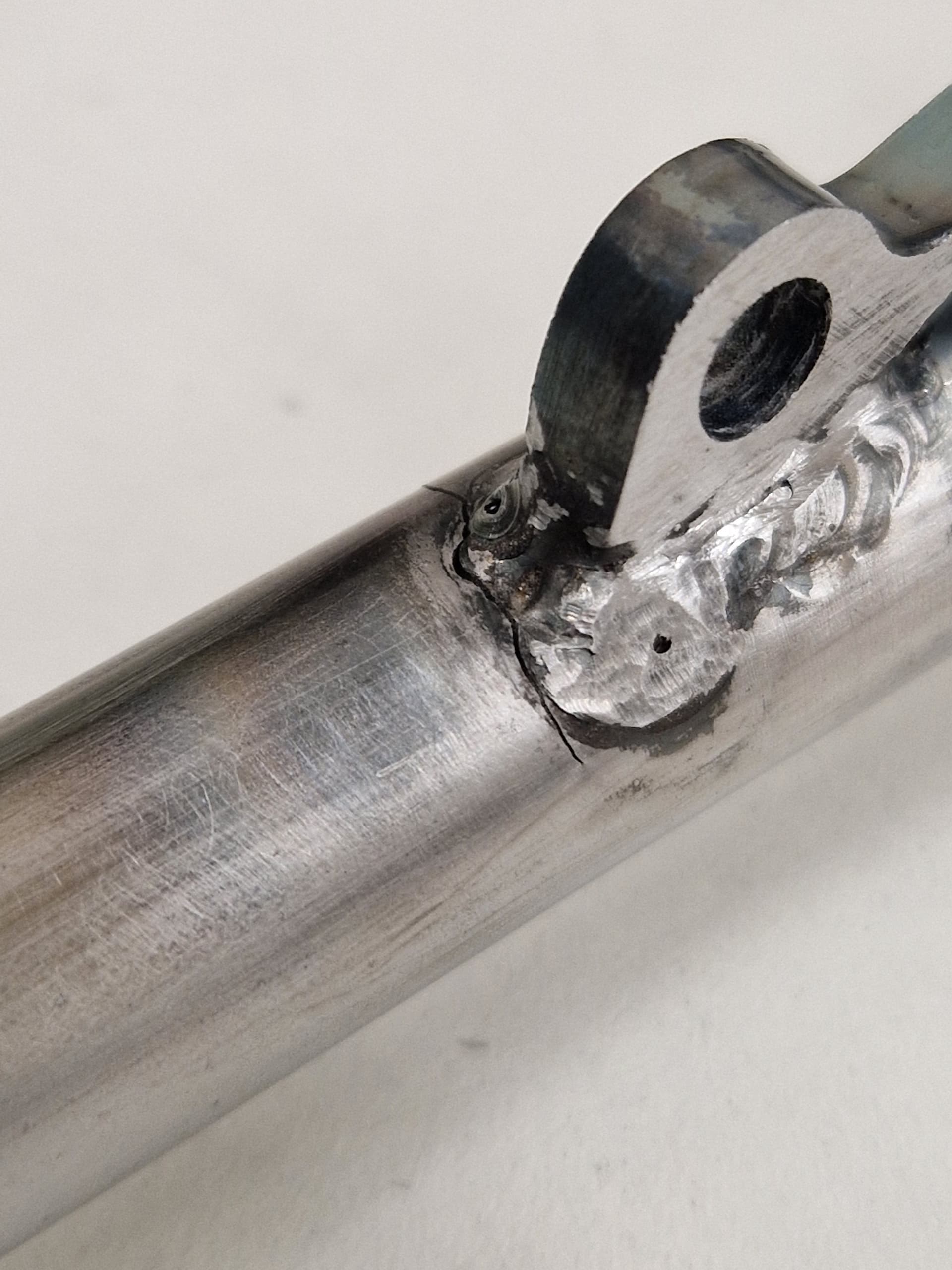
The second version is still in one piece and improved the stiffness quite a lot. I was sending this version in Lapland already in July 2024. :call_me_hand:

Crack and fix:

New rear triangle:

4 Likes