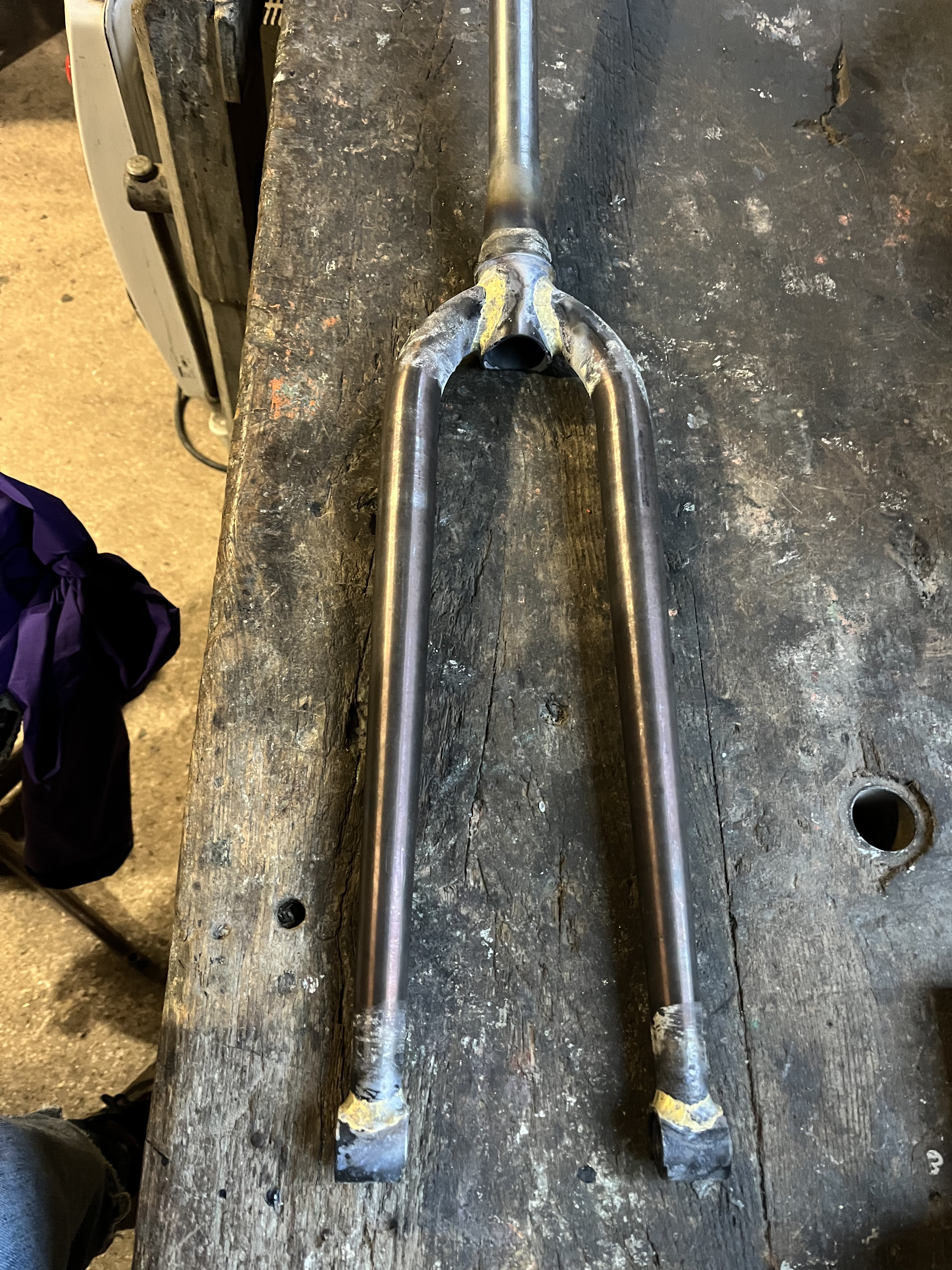
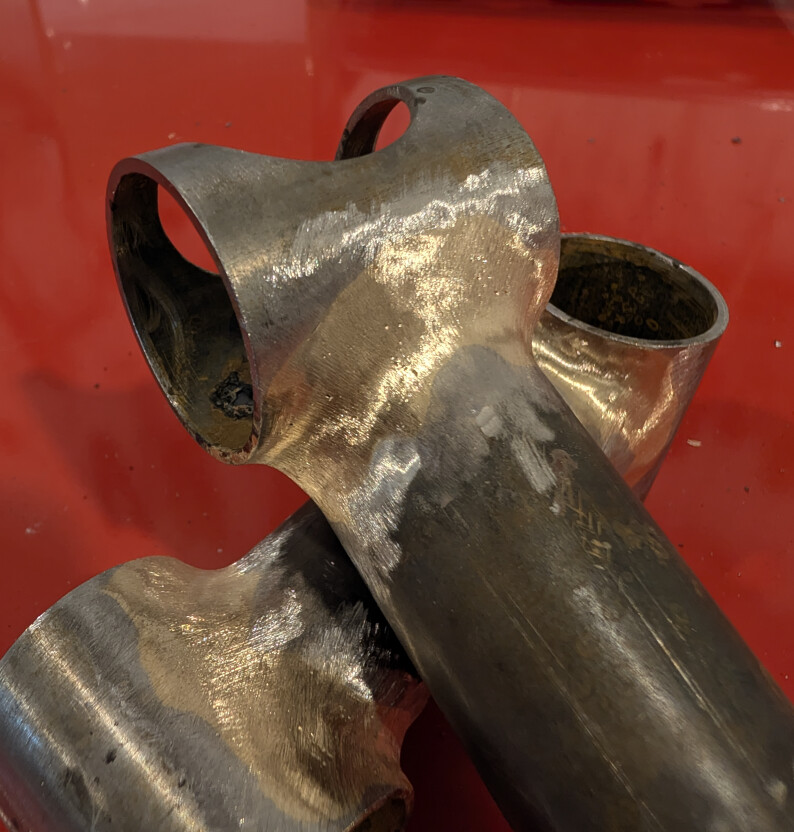
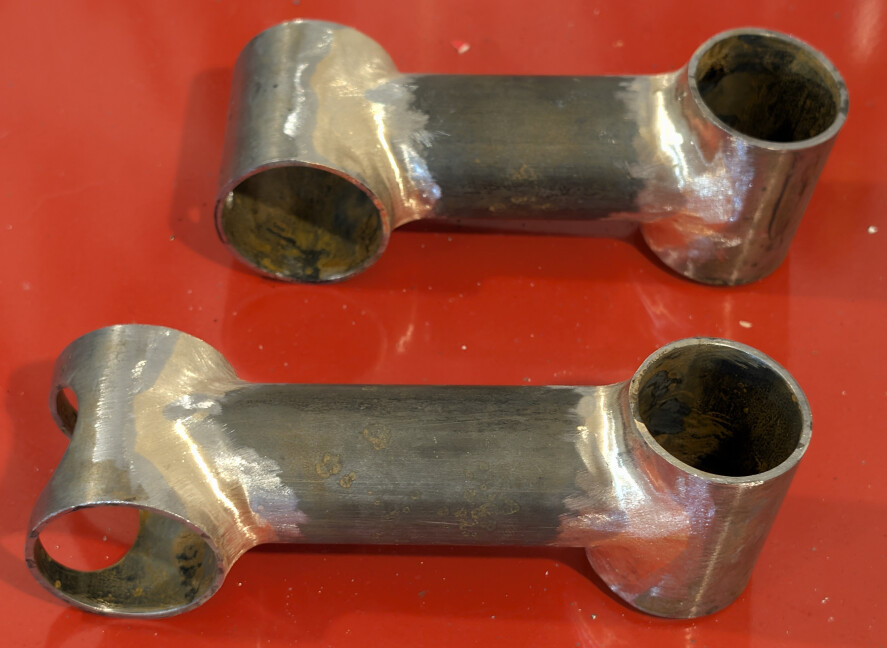
What Duane said. I’ll just add don’t point the flame at the fillet to re-melt it. I’m not sure but I think some of the bubbles are from zinc boiling out of the brass (some say bronze). A little re-melting is unavoidable, like when you come back around to your start point, but keep it to a minimum. Lay it down as cleanly as you can and move on, do not go back to try to smooth a lump.
Brazing as fast as you can, paradoxically, makes better-looking fillets — eventually, when you get good. But in the meantime, it also makes a stronger frame, and likely with less distortion too due to less heat input and shorter time-at-temperature.
Instagram-worthy fillets take a lot of practice, and sadly a hobbyist likely will never get there. When I was a full-timer, tandems were a specialty, all fillet-brazed steel, and some of the singles I made were too, especially MTB, timetrial funnybikes and such. So I was fillet brazing most days for 20 years, often for hours at a time. You’re not going to get that level of repetition.
The other thing I had, at least the first couple years, was more experienced FBs looking over my shoulder. That was a shop that made 100% fillet-brazed frames. Apprenticeship like that just doesn’t exist anymore, not in the US anyway. You’re not Taiwanese by any chance?
About the fillet-smoothing: unless you’re using pretty thick-wall tube, you have to try harder to stay offa the steel. Leave some for the painter to fix with putty. I don’t know what that means if you’re powder-coating, ‘cuz I have little to no experience with it. Is there a painter’s putty that withstands the PC process? someone here knows. I always had the luxury of an in-house painter whose job it was to make me look good!
Last bit of advice, strive to keep your fillets smaller, unless you need that “Schwinn Varsity” look of giant fillets. If you braze a bunch of samples and break them in a vise with cheaterbar, I think you’ll find that the minimum fillet size needed, to be stronger than the tube, is pretty small. Any larger than that is more heat, more time-at-temprature, bigger HAZ, and slower cooling which leaves the tempered zone softer. And fillets pretty enough to do zero cleanup are easier when they’re small. And zero cleanup lets you use thinner tubes, win-win.