Were they trying to pull it out by brute force?
1 Like
They were using a seat post pulling tool similar to this:
The tool held up great, the frame as you can see did not. Surprisingly the seat post did not budge at all. I would have guessed that the aluminum post would have let go before the seat tube.
2 Likes
Just remembered I have this one from December 2023. First time ever brazing anything onto a bike frame and I forgot about gravity  sure did waste some silver on that trying to get it to flow properly along the edge.
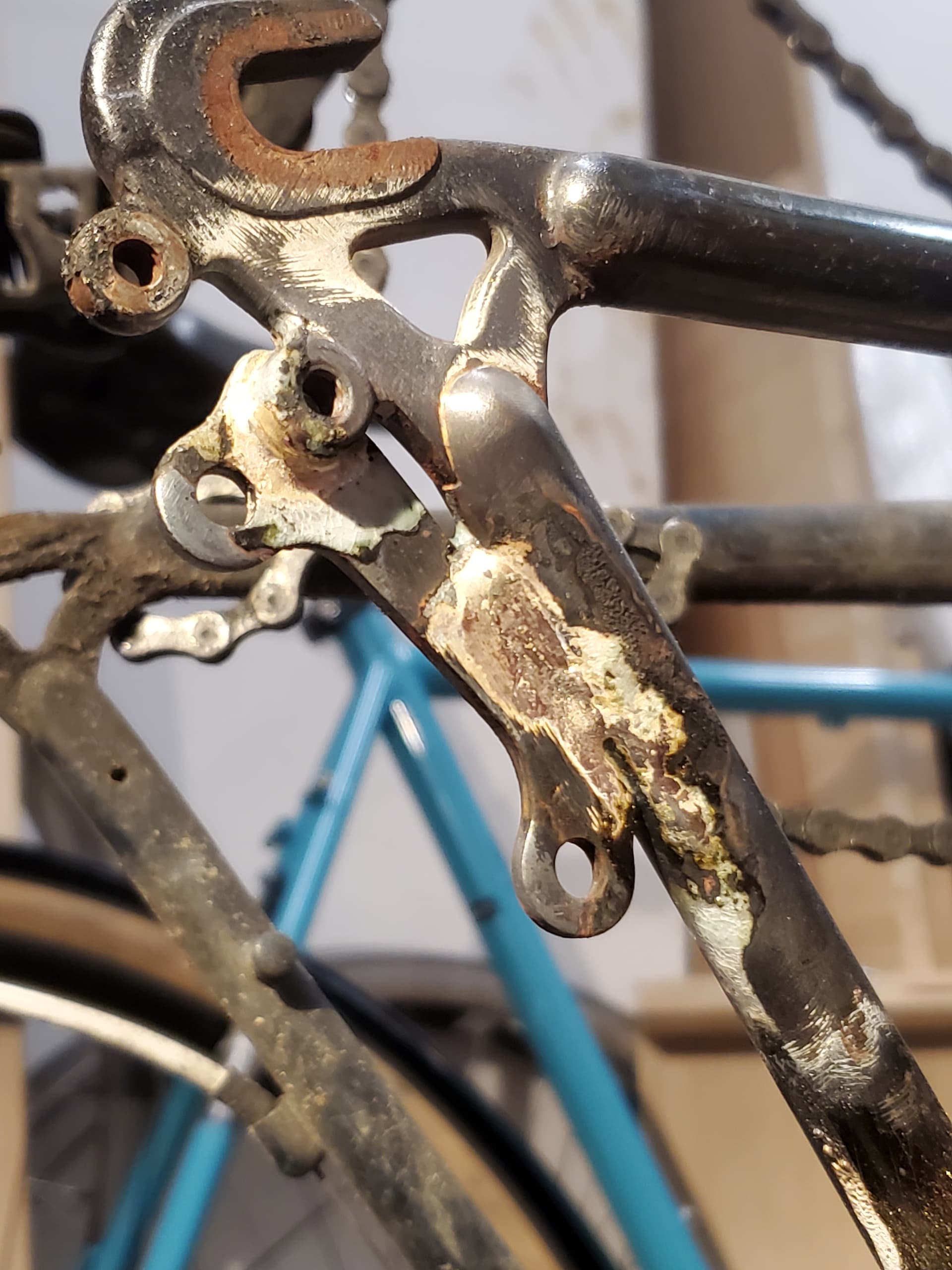
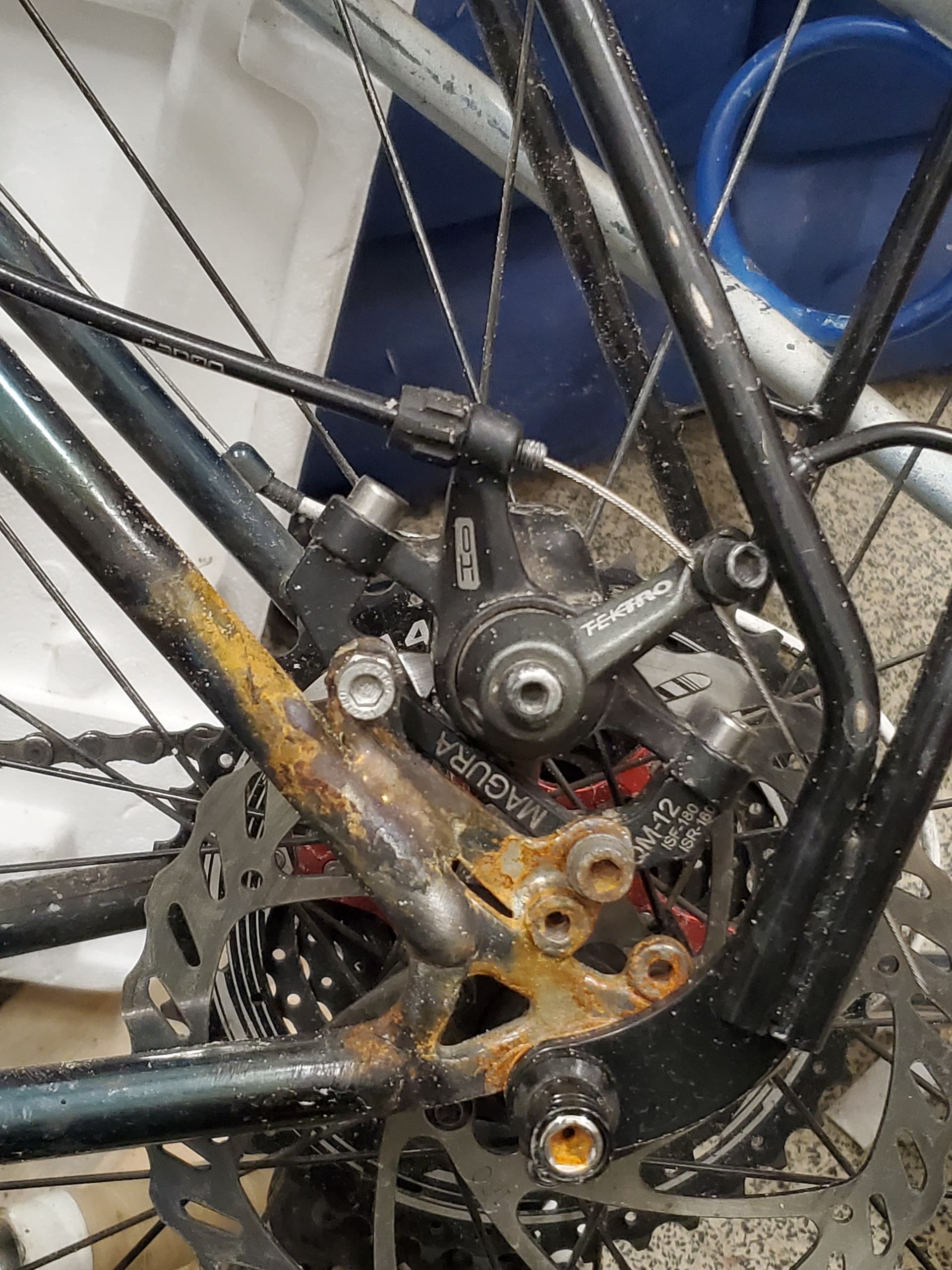
I mean it works though with me being a lightweight guy and only using a 160mm rotor and a weak caliper I had laying around. I’ll do better next time.
3 Likes
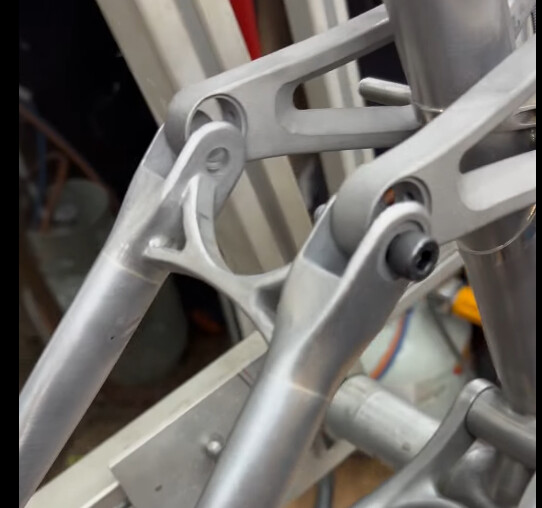
Bah! Brazed the seat stay bridge section in teh wrong way. It has a left/right orientation which is easy to miss if you aren’t concentrating. Just threw it all together loosely to check a few things and this was highlighted sraight away. Grrrr…
6 Likes
If you’re 3D printing stuff maybe it is an idea to imprint with an arrow or an “up” marking ?
I’ve lost count of how many times I’ve done stuff like this. Hopefully you can save the yoke. Keep going and don’t let this kind of shit get you down.
I’m not down. Had a laugh when I realised. Already ran through a few ideas to stop doing that again.
4 Likes
Friend of mine had a BJ road frame once (2008ish), the fork steerer came right out of the crown JRA - he said it was only held in by the paint! I had just bought a track frame from them, sold it sharpish after that. I think they’re now back in business but under new management, IIRC.
1 Like
[quote=“JoeNation, post:227, topic:880”]
Friend of mine had a BJ road frame once (2008ish), the fork steerer came right out of the crown JRA - he said it was only held in by the paint! [/quote]
Shocking but not surprising!
In fairness there were periods when they had at least one good builder and made respectable frames. Kevin Sayles for example. Trouble is, most people will have no way of knowing whether a particular bike is safe to ride or not.
I’ve also seen a Cinelli where the steerer came out of the crown, showing little evidence of ever having been brazed, so careless idiots were not limited to working only at Bob Jackson.
1 Like
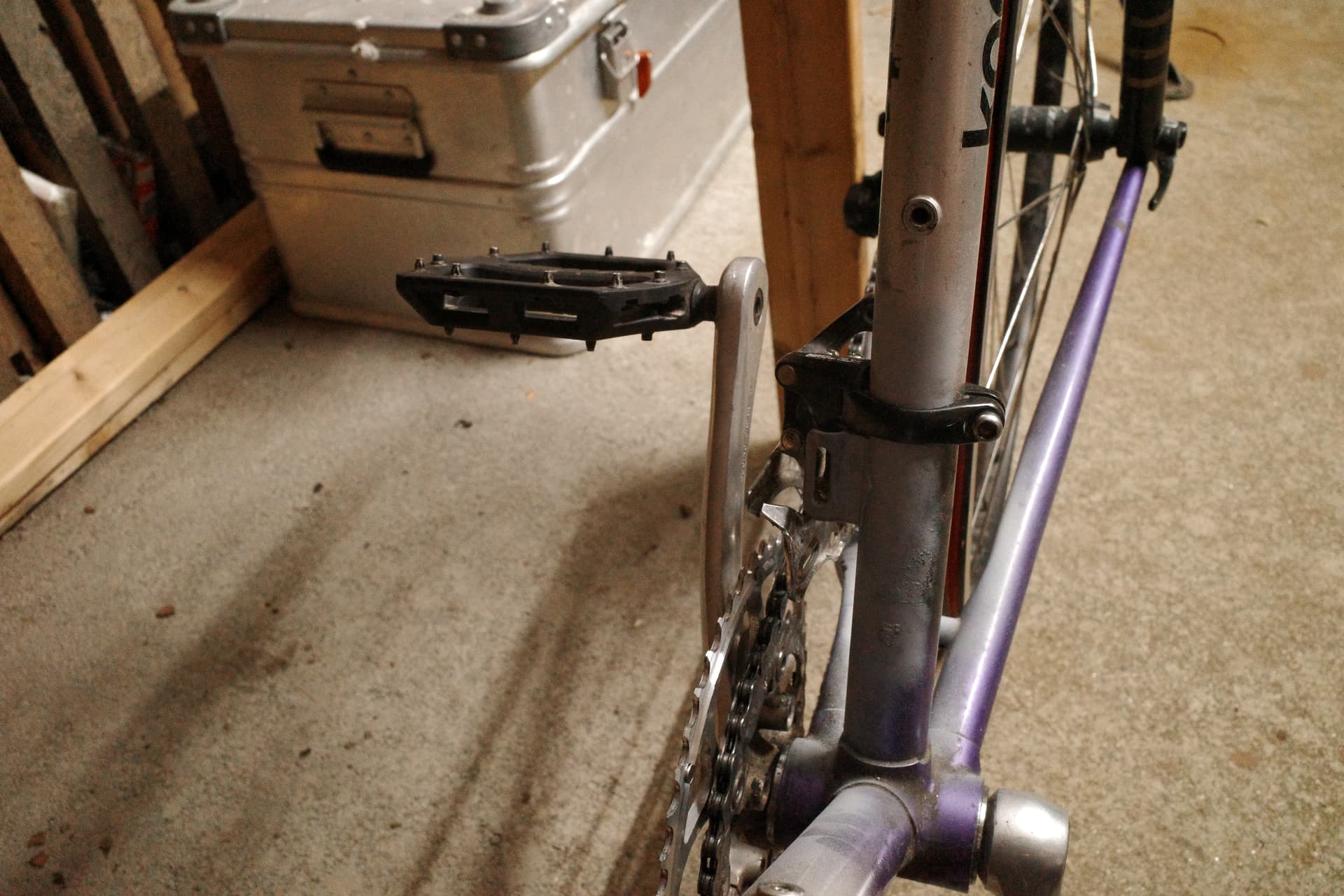
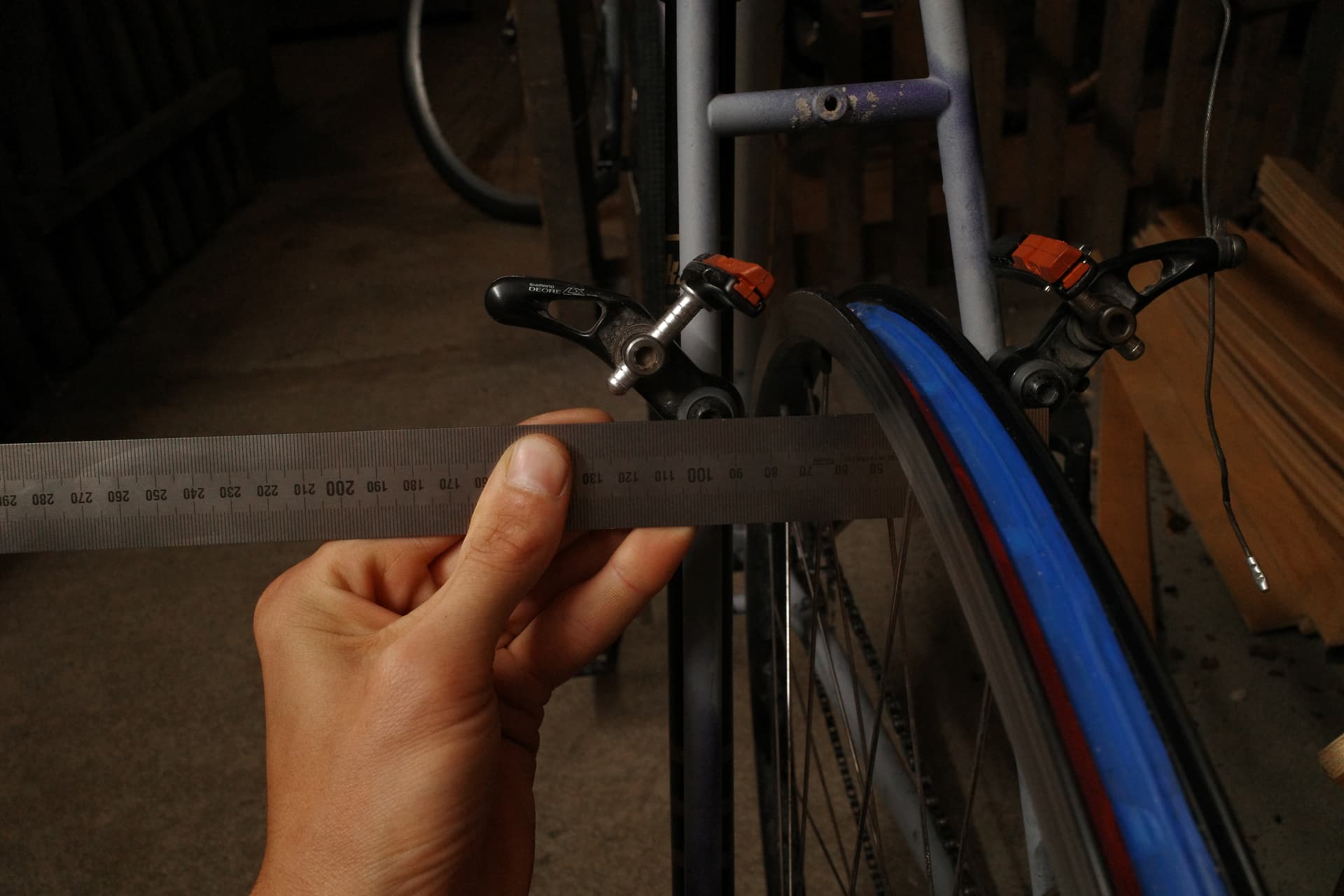
In April I touched my torch the first time, to do some frame-mods. Add some Cantiposts, front derailleur braze on, and some bottle bosses, as well as a patch at the top tube.
While the brazing itself was not too bad, I probably should work on my measurements…
10 Likes
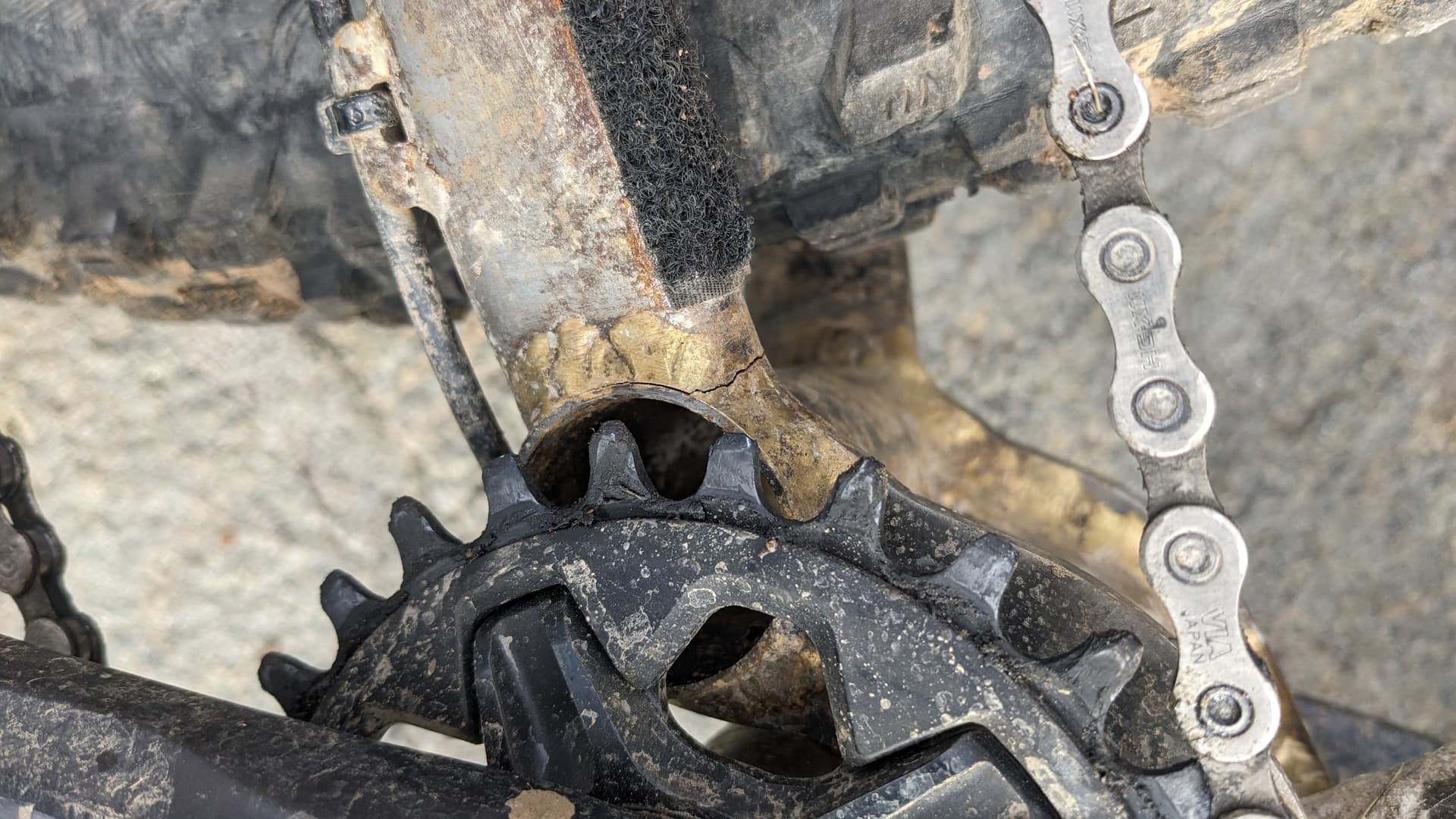

Oh, that’s interesting!
I don’t think I’ve ever seen a fillet fail that way before (granted, I don’t have decades of experience).
Good thing it’s steel and probably a relatively easy repair.
2 Likes
yeah it does look a bit odd, the way the brass basically peeled off the round tube… Maybe it was a bit cold or some contamination. I’ll look into it once I get back to my workshop. Until then, there is italian food and gelato to be consumed here. That’s the great thing about Finale. It’s noit just a great place to ride bikes. It’s a great place to hang out in general 
8 Likes
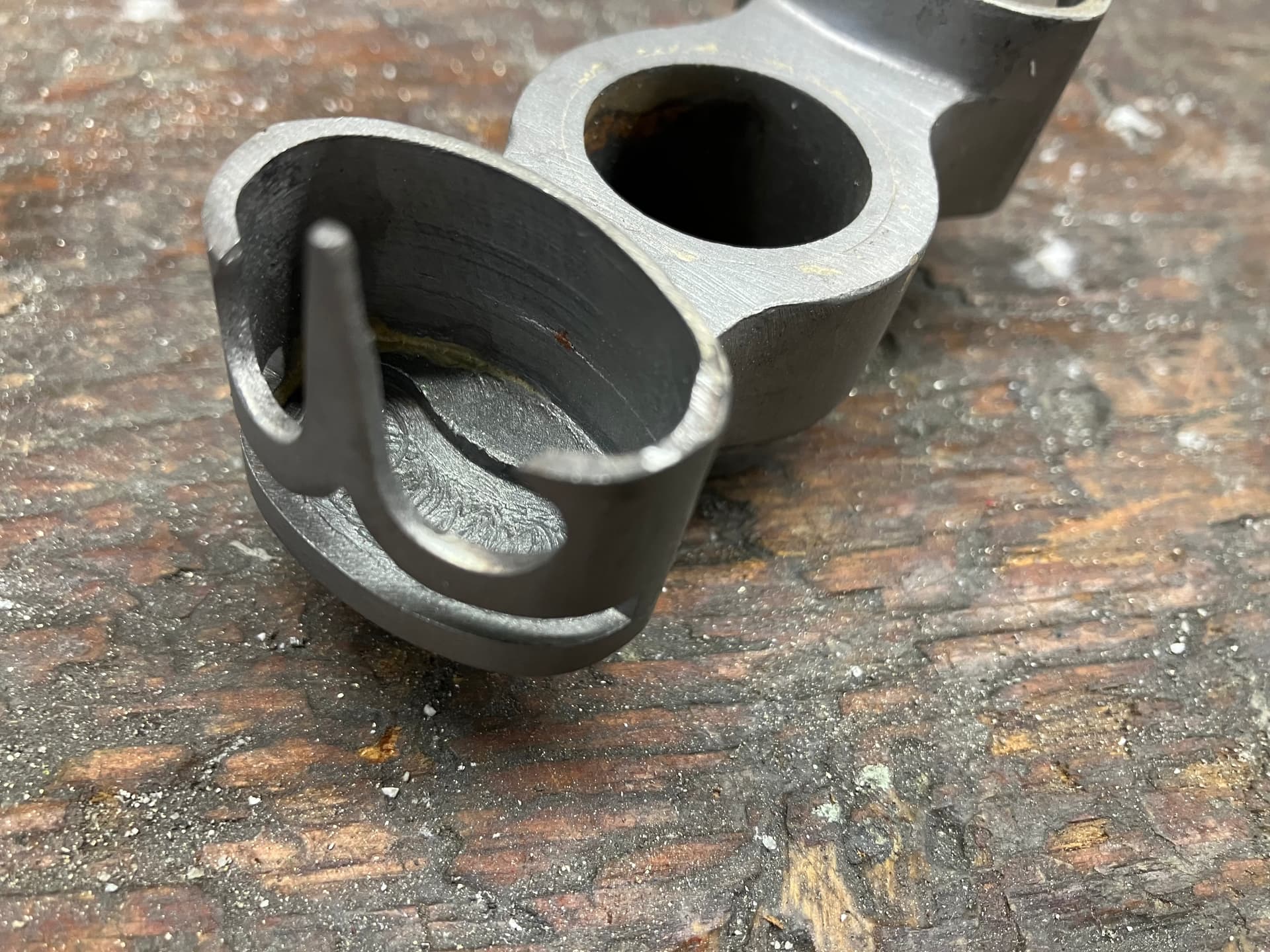
Well, not so much as a framebuilding fail as (a) me not paying attention and (b) discovering a manufacturing fail from seventy years ago.
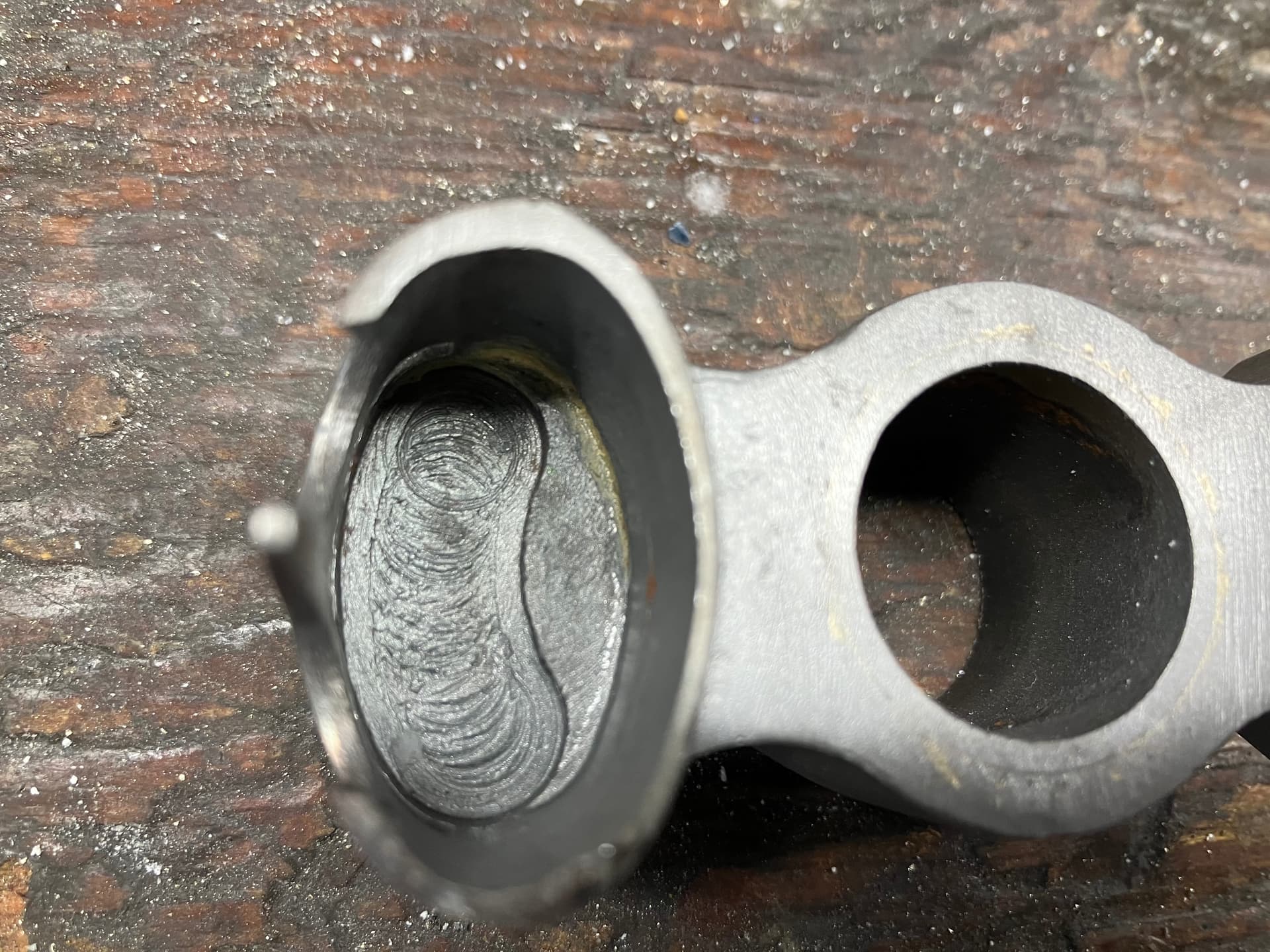
I’d picked up some old Ekla fork crowns and brazed one into a steerer, only to discover that one of the sockets wasn’t completely machined out inside, leaving a 2mm ridge inside. I guess you get spoiled working with investment cast stuff, I didn’t think to look inside the sockets to see whether there was a seventy year old cock-up inside!
Fortunately I had another identical crown, which was machined correctly. Built that one into the fork just fine. Live and learn.
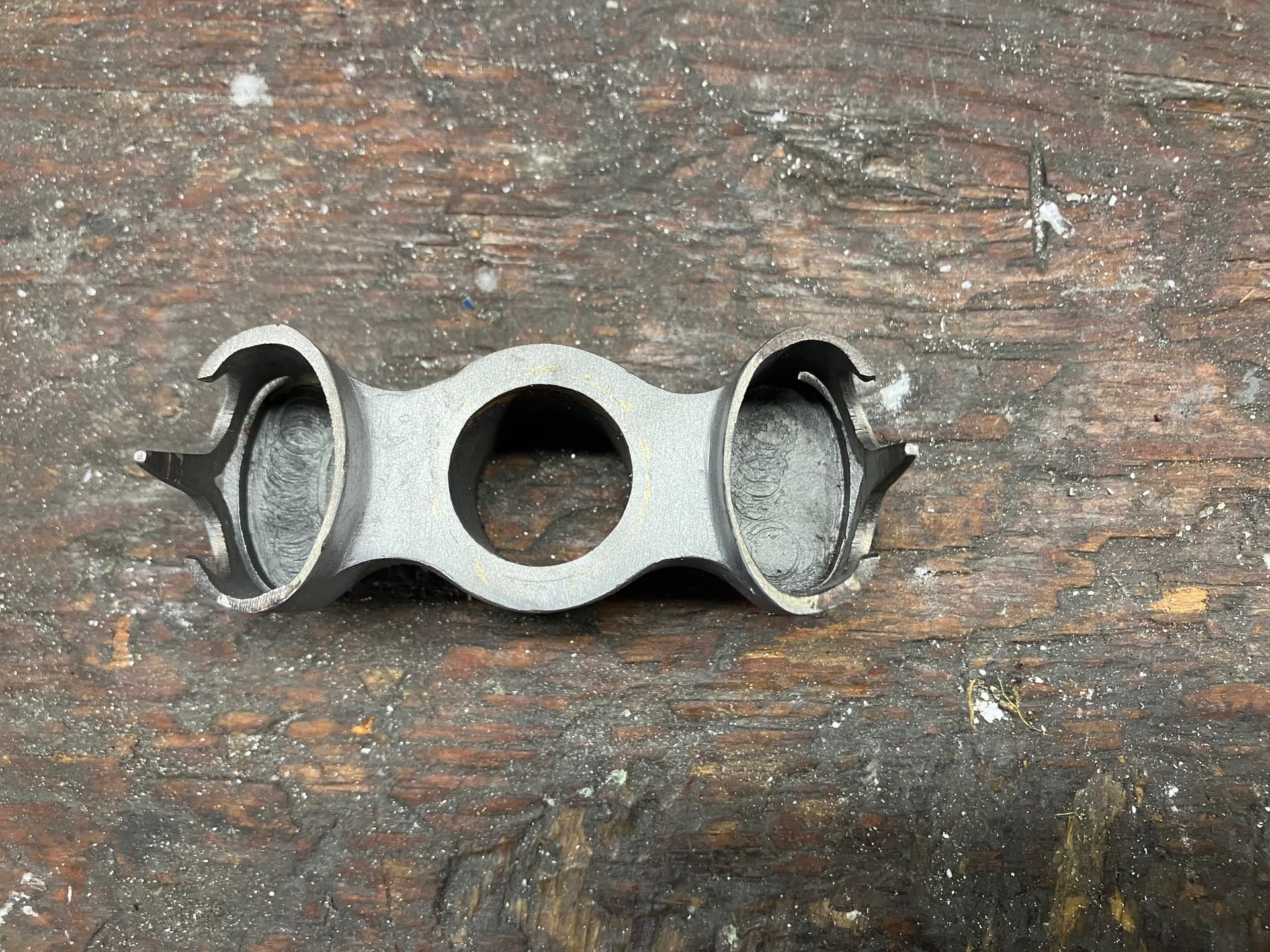
The socket on the right was ok…

the one on the left, not so much!
6 Likes
I am working on a traditional touring frame for myself mainly to use some old bulge formed lugs and rough cast BB shell. Anyway, I spent a bunch of time cleaning up the shell, the curves are good etc etc. I did the design in BikeCAD but put the DT at 0 offset from the BB. The DT socket is offset. I get it all cut to measure and mock it up and it doesn’t fit right!! So I order a batch of DTs and cut another using my big 24” Mito calipers measuring to the .xmm and it’s again, too short!! AUGH!!! Then I notice the socket is offset… So the front end is going to be a couple mm shorter than the original design. 
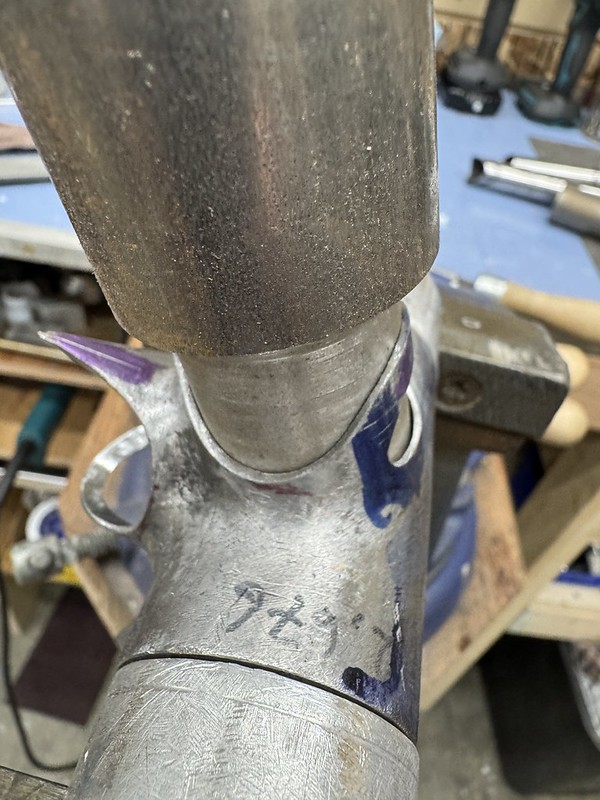 Final BB Shell socket adjustments by Duane Draper, on Flickr
5 Likes
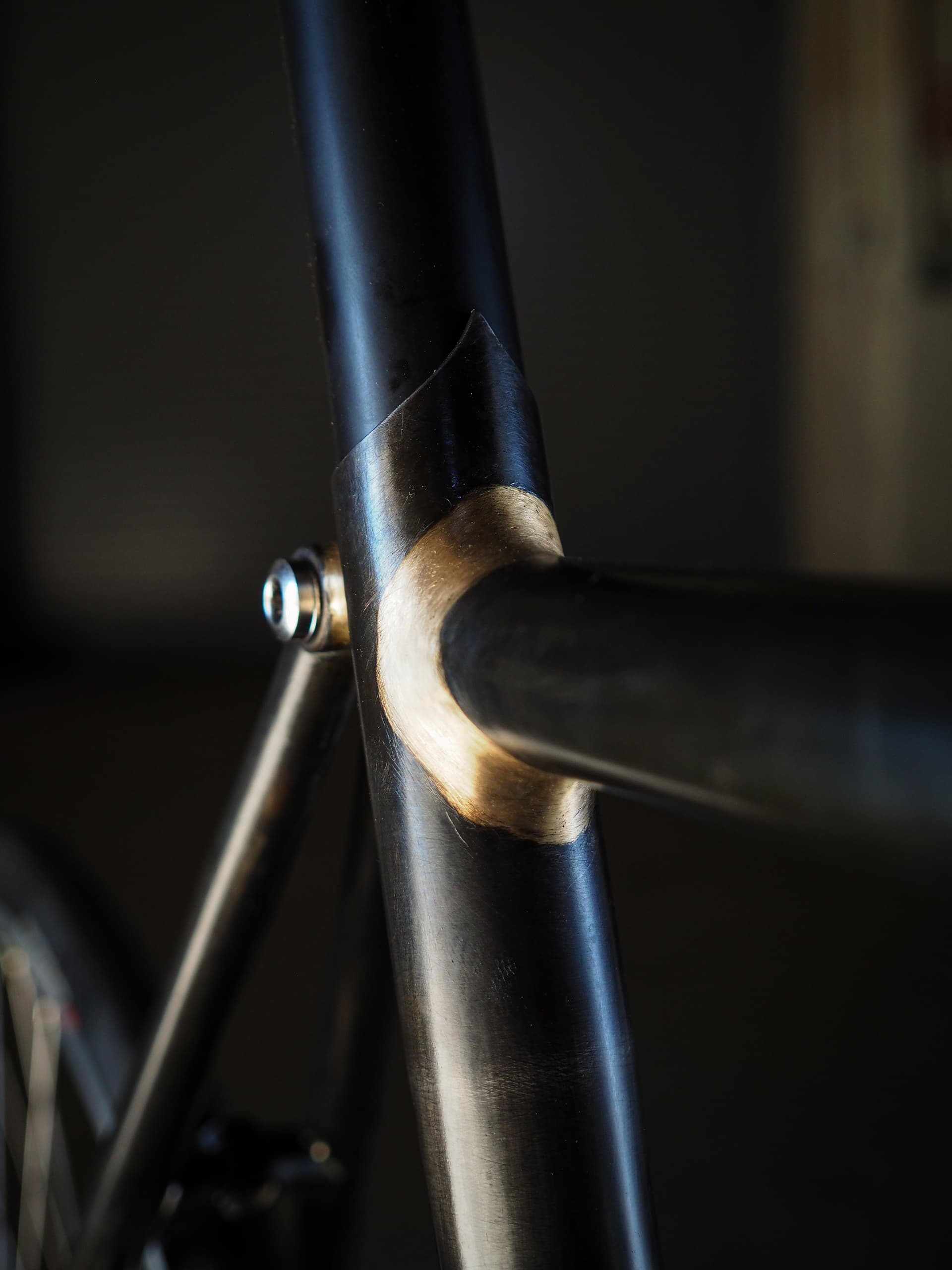
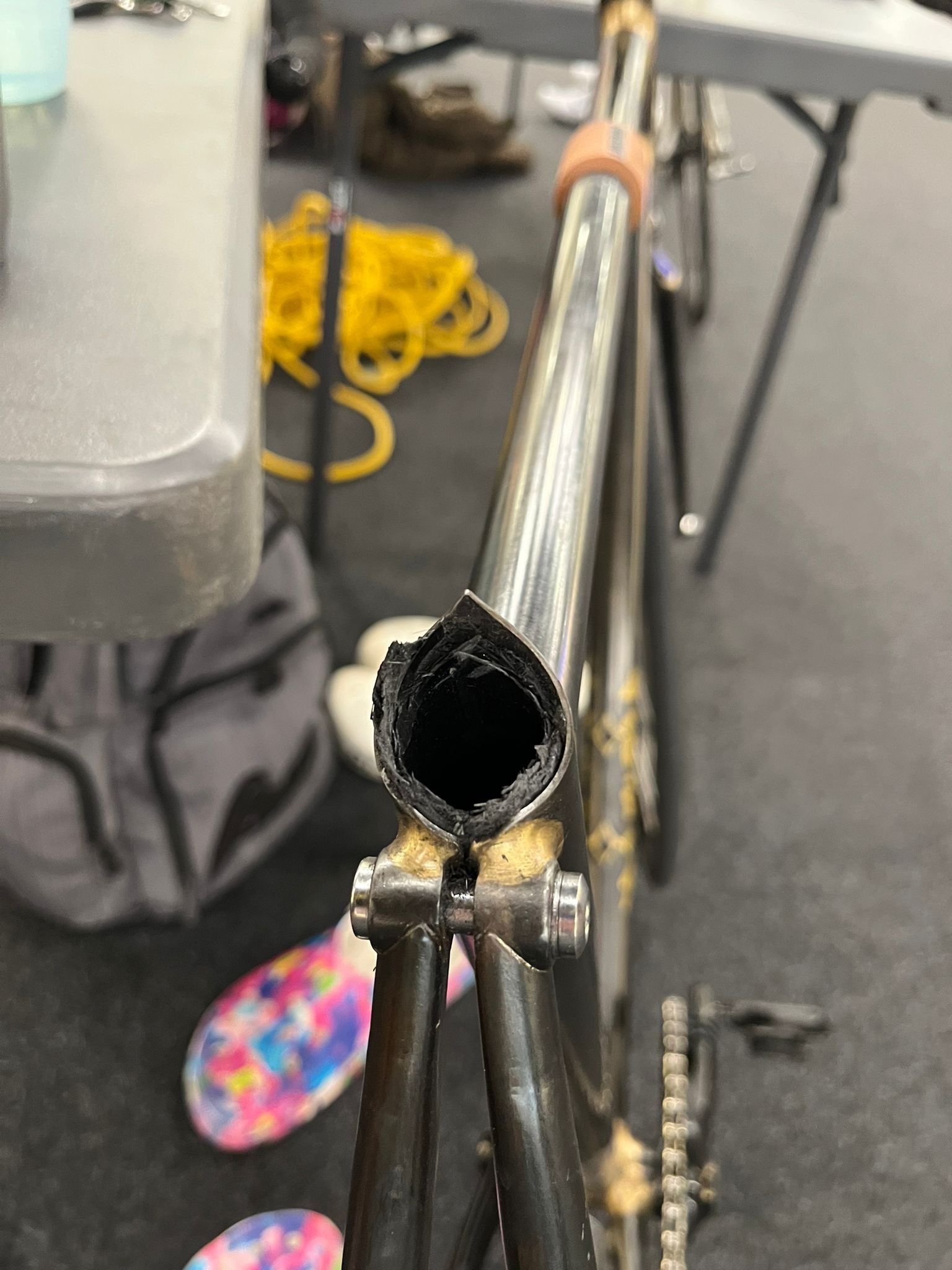
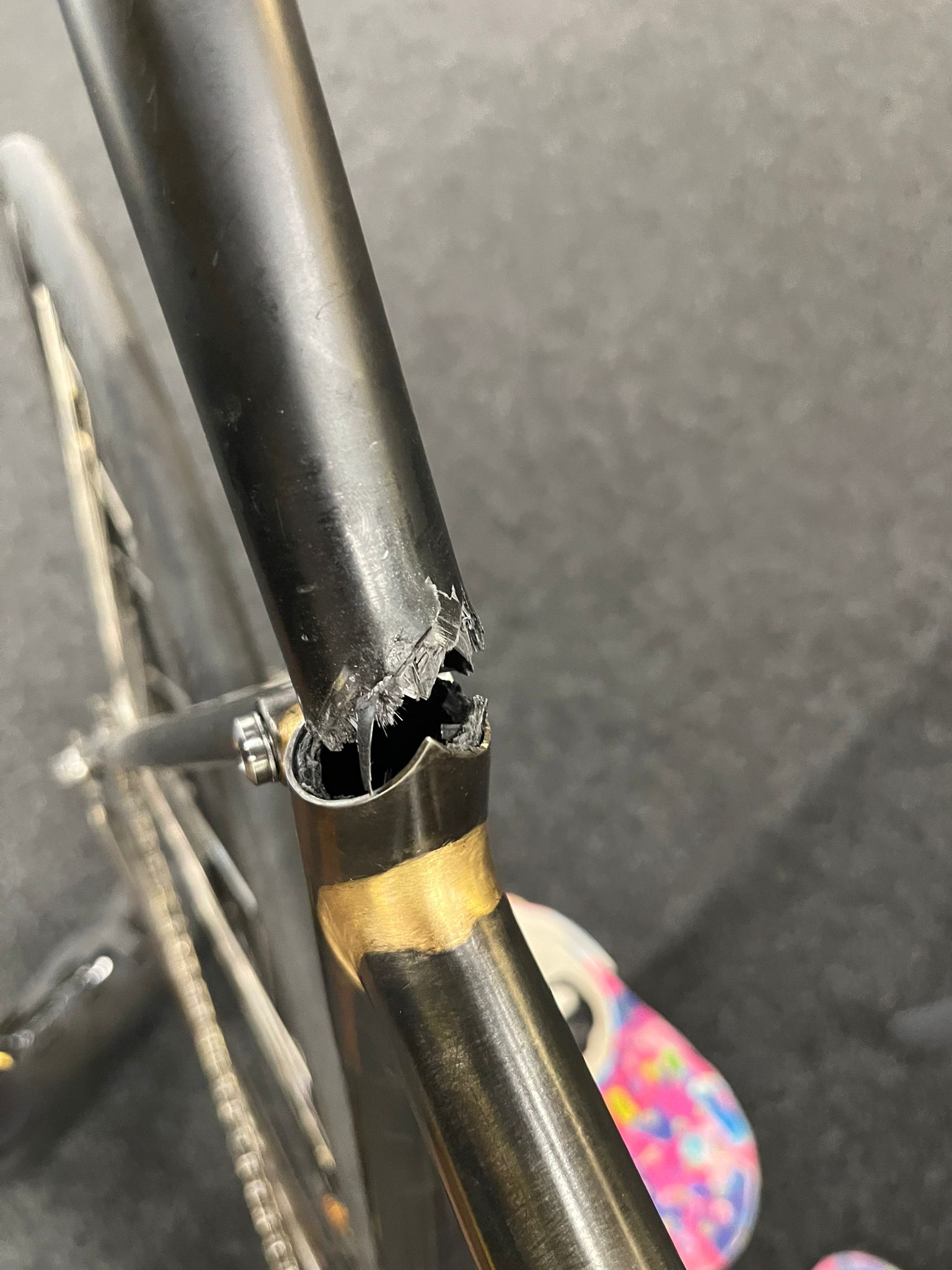
Not a frame failure, but I think this thread is the best place to ask for opinions on what caused this carbon seatpost to fail. Built this track frame for a friend, and the seatpost cracked during a race at the new velodrome in town this weekend. His hypothesis is that the point on the seat tube top caused the crack, but I’m not so sure looking at how it cracked essentially along the contour of the seatube top all the way around. If anything I feel like maybe I should have left the back of the seattube a bit higher, so it supported the seatpost better from backwards flex. I would assume if the point was the issue that the crack would start up there & the post would have cracked forward? I don’t know much about carbon failures though. He wants me to round off the point on the front to protect against this in the future just in case, but having seen similar (and longer/pointy-er) points on other folks tube tops out there, I’m wondering what some of your opinions are before just doing it?
1 Like
I suspect the point did contribute to the failure. If your friend insists on using a carbon post on their track bike, I think you will need to round the point off. However, I would rather have a stiffer post like a Thomson on a track bike.
1 Like
If one considers the loading on the seatpost, from rider weight and rider power, I suspect that the forward raised point didn’t cause what’s happened here. Rider weight will be concentrated on the back of the post, not the front. Rider power will tend to flex the seatpost side to side, not forward. But if the owner wants to use a carbon post, certainly file and smooth all the exit points of the seat lug all the way around the lug. Or, as others have mentioned, use an aluminum post like a Thomson.
3 Likes
I generally agree, but we are talking about events taking place on a steep bank rather than a flat plane. I had a lot of strange and unfamiliar failures the season I was able to ride on a velodrome.
1 Like
The frame is fine, the fault is with the post. I agree with “I should have left the back of the seattube a bit higher”, but the way you built it is well within the realm of standard practice, a frame design that any competent seatpost would have no trouble with
But if the customer wants the point rounded off, then I guess you should do it. It will not prevent another such failure, since the point wasn’t involved in this failure, but there’s no point (NPI) in arguing.
4 Likes
I hope this type of cross-posting is allowed over here. Also not my Post, but I think it’s interesting:
Hairline crack in brazed joint
2 Likes